


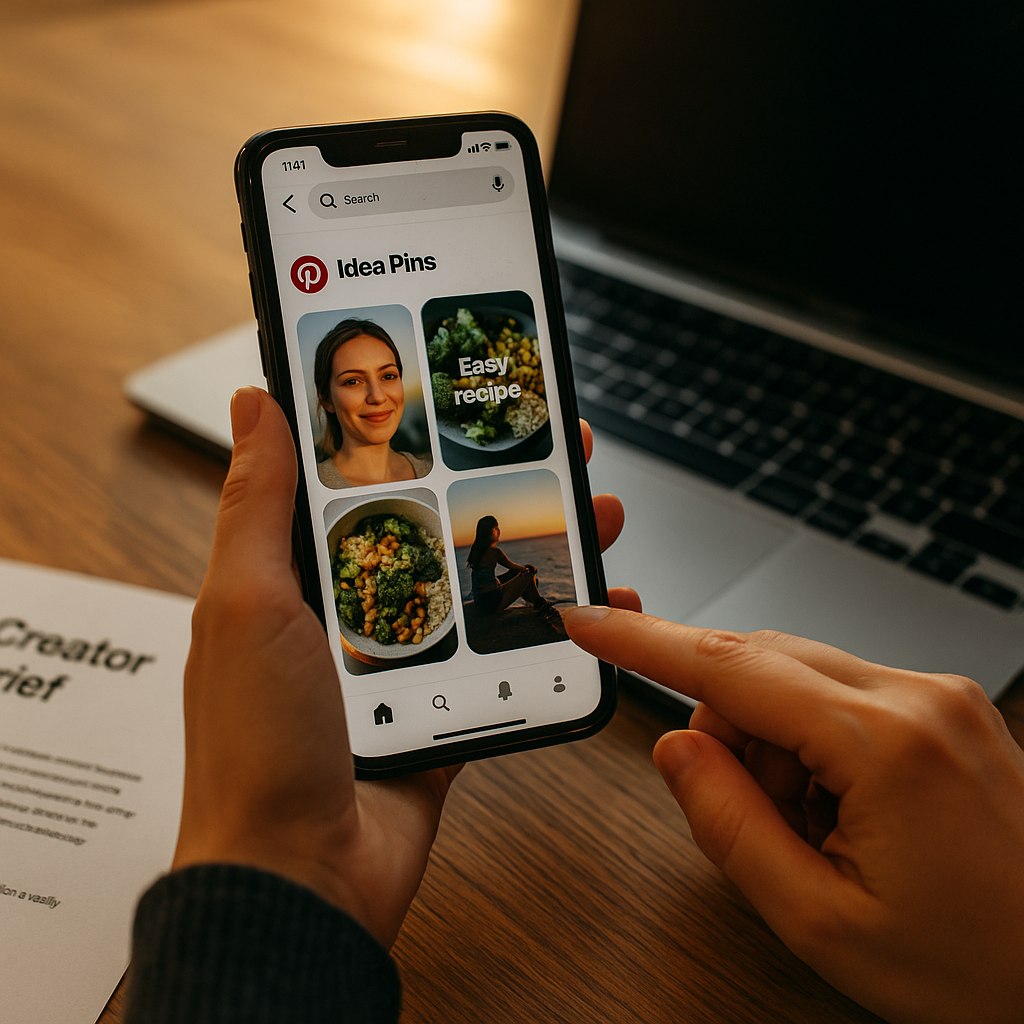
Pinterest processes over half a billion searches a month, and most brands still treat their Idea Pins like Instagram Reels with a different aspect ratio. That’s a mistake. Idea Pins (now folded into Pinterest’s standard multi-page Pin format) live inside a search engine, not a social feed. Optimize them like search content, and creator collaborations start surfacing months, sometimes years, after publish date.
Pinterest Is a Search Engine Wearing a Social Costume
Marketers keep briefing Pinterest creators the same way they brief TikTok talent: hook in three seconds, trending audio, quick cuts. That playbook works for algorithmic feeds built on recency and engagement velocity. Pinterest works differently. Its ranking system leans heavily on keyword relevance, board context, and long-tail query matching, closer to Google Images than to TikTok’s For You Page.
That distinction matters for budget allocation. A Reel dies in 48 hours if it doesn’t hit. A well-optimized Idea Pin can keep driving traffic a full year later, especially around seasonal moments like back-to-school, holiday gifting, or wedding season. Brands running always-on content calendars get outsized ROI from Pinterest simply because the content compounds instead of decaying.
Pinterest content has a discovery half-life measured in months, not hours, which means your SEO tactics matter more than your production budget.
What This Means for Creator Briefs
Stop briefing creators purely on visual style. Start briefing them on search intent. Ask: what would someone type into Pinterest to find this content? “Fall capsule wardrobe under $200” beats “cozy vibes only” every time. This shift alone forces a rewrite of most influencer contracts, similar to how structuring creator video for AI shopping assistants requires rethinking what “good content” even means.
The Format-Specific SEO Stack
Idea Pins have five distinct SEO surfaces, and most creators only optimize one or two. Here’s the full stack, in order of ranking weight based on internal testing patterns brands have shared across agency Slack channels and case studies:
- Pin title: This is the single highest-weighted field. Front-load the primary keyword phrase. “5 Minute Skincare Routine for Oily Skin” outperforms “My Nighttime Routine” by a wide margin in search impressions.
- Description field: Pinterest still allows up to 500 characters here. Write it like a meta description, natural language, keyword-rich, no hashtag stuffing. Include the product name, use case, and a secondary long-tail phrase.
- On-screen text overlay: Pinterest’s visual recognition reads embedded text and factors it into topic classification. If the overlay says “budget dupe” but the title says “designer alternative,” you’re diluting your own relevance signal.
- Alt text: Often skipped by creators entirely. This field feeds directly into Pinterest Lens and voice search matching. Treat it like image SEO, not an accessibility afterthought.
- First-page hook: Because Idea Pins are multi-page, the opening frame needs to match the search query visually, not just verbally. A mismatch between what someone searched and what they see first spikes bounce rate, which quietly tanks distribution.
Brands that hand creators a keyword sheet alongside the creative brief see measurably better long-tail discovery. It’s a five-minute addition to the briefing doc that most teams skip because it feels unglamorous.
Board Placement Still Decides Half the Battle
Here’s something most brand marketers get wrong: the Pin’s content matters less than the board it lives on if the board taxonomy is sloppy. Pinterest’s algorithm uses board context as a strong relevance signal. A skincare Idea Pin dropped into a generic “Favorites” board loses topical authority compared to the same Pin placed on a board titled “Oily Skin Routines and Product Reviews.”
This means creator partnerships need board-level guidelines, not just Pin-level ones. Require partner creators to either post directly to a branded board or repin into a topically tight board within 24 hours of publish. Sounds minor. It isn’t. Agencies running Pinterest programs at scale report board taxonomy cleanup alone moving impression counts by double digits within a quarter.
Hashtags vs. Keywords: Pick a Lane
Pinterest deprecated meaningful hashtag search years ago, but plenty of creators still caption Pins like it’s 2019 Instagram. Hashtags on Pinterest function more like weak topic tags now, not discovery drivers. Keyword phrases embedded naturally in titles and descriptions carry far more ranking weight. If a creator’s caption is 70% hashtags and 30% actual sentence, that’s a rewrite request, not a nitpick.
Measuring What Actually Drives Discovery
Standard influencer KPIs (engagement rate, saves, reach) don’t tell the full SEO story on Pinterest. Brands need to track:
- Search impression share for the target keyword phrase, available in Pinterest Analytics under the “Search” filter.
- Outbound click rate specifically from search surfaces, separated from home feed and related pins traffic.
- Time-to-first-impression, since well-optimized Pins often get indexed and surfaced weeks after posting, unlike the instant spike-and-decay pattern of TikTok or Reels.
This mirrors a broader shift happening across the industry, where teams are being forced to rebuild KPI frameworks entirely. It’s the same pressure documented in coverage of how the YouTube view count overhaul forces brands to rebuild creator KPIs, and the TikTok Shop instant-view metric rebuild. Platform-specific measurement isn’t optional anymore. It’s table stakes for anyone running multi-platform creator budgets.
If your Pinterest reporting dashboard looks identical to your TikTok dashboard, you’re measuring the wrong things on at least one of those platforms.
Compliance Doesn’t Disappear Just Because It’s “Search Content”
Sponsored Idea Pins still fall under FTC disclosure requirements, and Pinterest’s paid partnership tag needs to be applied consistently, not just when a creator remembers. Because Idea Pins get discovered so long after posting, a missing disclosure tag can sit live and non-compliant for a year or more if nobody audits older content. Build a quarterly disclosure audit into any always-on Pinterest program. Review current FTC endorsement guidance alongside Pinterest’s own partnership tools to make sure both are aligned, since platform tools and regulatory requirements don’t always update in lockstep.
The disclosure sequencing problem isn’t unique to Pinterest either. It’s part of a broader compliance headache brands are navigating across shoppable formats, similar to the issues raised around YouTube shoppable overlays and FTC disclosure sequencing.
Where This Fits in a Broader Creator Content Strategy
Pinterest shouldn’t operate as a standalone channel with its own creator roster and its own weird briefing doc nobody else reads. The smartest brands are repurposing existing creator video assets (the same footage used for Reels or TikTok Shop) into Idea Pin sequences, re-editing for the search-first format rather than commissioning entirely separate content. This lines up with the same repurposing logic behind Reels-first distribution strategies, where one asset gets reformatted across multiple discovery surfaces instead of treated as single-use.
According to eMarketer’s creator economy research, brands running cross-platform repurposing programs report meaningfully lower cost-per-asset than those commissioning platform-exclusive content. Pinterest, with its long content half-life, is arguably the best return on a repurposed asset in the entire mix. For deeper guidance on optimizing social content for search intent broadly, Sprout Social’s resources on social SEO are a solid reference point for briefing teams still building out their playbook.
Frequently Asked Questions
FAQs
Are Idea Pins still a separate format on Pinterest?
Pinterest merged Idea Pins into its standard multi-page Pin format, but the underlying SEO mechanics (title weight, description relevance, board context) still function the same way. Brands should treat any multi-page, story-style Pin using these tactics.
How is Pinterest SEO different from Instagram or TikTok optimization?
Pinterest ranks content primarily on keyword relevance and board taxonomy, similar to a search engine. Instagram and TikTok rank primarily on engagement velocity and recency. That means Pinterest content can surface in search results months after publishing, while social feed content typically peaks within days.
Do hashtags still matter for Pinterest discovery?
Hashtags carry minimal ranking weight on Pinterest today. Natural-language keyword phrases in titles, descriptions, and alt text drive far more discovery than hashtag volume.
What’s the biggest mistake brands make when briefing creators for Pinterest?
Briefing for visual style instead of search intent. Creators need keyword guidance (what someone would actually type to find this content) alongside standard creative direction.
How often should brands audit sponsored Pinterest content for disclosure compliance?
Quarterly, at minimum. Because Idea Pins can stay discoverable and driving traffic for a year or more, a missing or outdated paid partnership tag can remain non-compliant far longer than it would on a faster-decaying platform like TikTok or Instagram Stories.
Next step: pull your last quarter of Pinterest creator content, run titles and descriptions through a keyword gap check, and rebuild board taxonomy before commissioning a single new Pin. The SEO fixes cost nothing and outperform new production spend almost every time.
Top Influencer Marketing Agencies
The leading agencies shaping influencer marketing in 2026
Agencies ranked by campaign performance, client diversity, platform expertise, proven ROI, industry recognition, and client satisfaction. Assessed through verified case studies, reviews, and industry consultations.
Moburst

-
2

The Shelf
Boutique Beauty & Lifestyle Influencer AgencyA data-driven boutique agency specializing exclusively in beauty, wellness, and lifestyle influencer campaigns on Instagram and TikTok. Best for brands already focused on the beauty/personal care space that need curated, aesthetic-driven content.Clients: Pepsi, The Honest Company, Hims, Elf Cosmetics, Pure LeafVisit The Shelf → -
3

Audiencly
Niche Gaming & Esports Influencer AgencyA specialized agency focused exclusively on gaming and esports creators on YouTube, Twitch, and TikTok. Ideal if your campaign is 100% gaming-focused — from game launches to hardware and esports events.Clients: Epic Games, NordVPN, Ubisoft, Wargaming, Tencent GamesVisit Audiencly → -
4

Viral Nation
Global Influencer Marketing & Talent AgencyA dual talent management and marketing agency with proprietary brand safety tools and a global creator network spanning nano-influencers to celebrities across all major platforms.Clients: Meta, Activision Blizzard, Energizer, Aston Martin, WalmartVisit Viral Nation → -
5

The Influencer Marketing Factory
TikTok, Instagram & YouTube CampaignsA full-service agency with strong TikTok expertise, offering end-to-end campaign management from influencer discovery through performance reporting with a focus on platform-native content.Clients: Google, Snapchat, Universal Music, Bumble, YelpVisit TIMF → -
6

NeoReach
Enterprise Analytics & Influencer CampaignsAn enterprise-focused agency combining managed campaigns with a powerful self-service data platform for influencer search, audience analytics, and attribution modeling.Clients: Amazon, Airbnb, Netflix, Honda, The New York TimesVisit NeoReach → -
7

Ubiquitous
Creator-First Marketing PlatformA tech-driven platform combining self-service tools with managed campaign options, emphasizing speed and scalability for brands managing multiple influencer relationships.Clients: Lyft, Disney, Target, American Eagle, NetflixVisit Ubiquitous → -
8

Obviously
Scalable Enterprise Influencer CampaignsA tech-enabled agency built for high-volume campaigns, coordinating hundreds of creators simultaneously with end-to-end logistics, content rights management, and product seeding.Clients: Google, Ulta Beauty, Converse, AmazonVisit Obviously →