


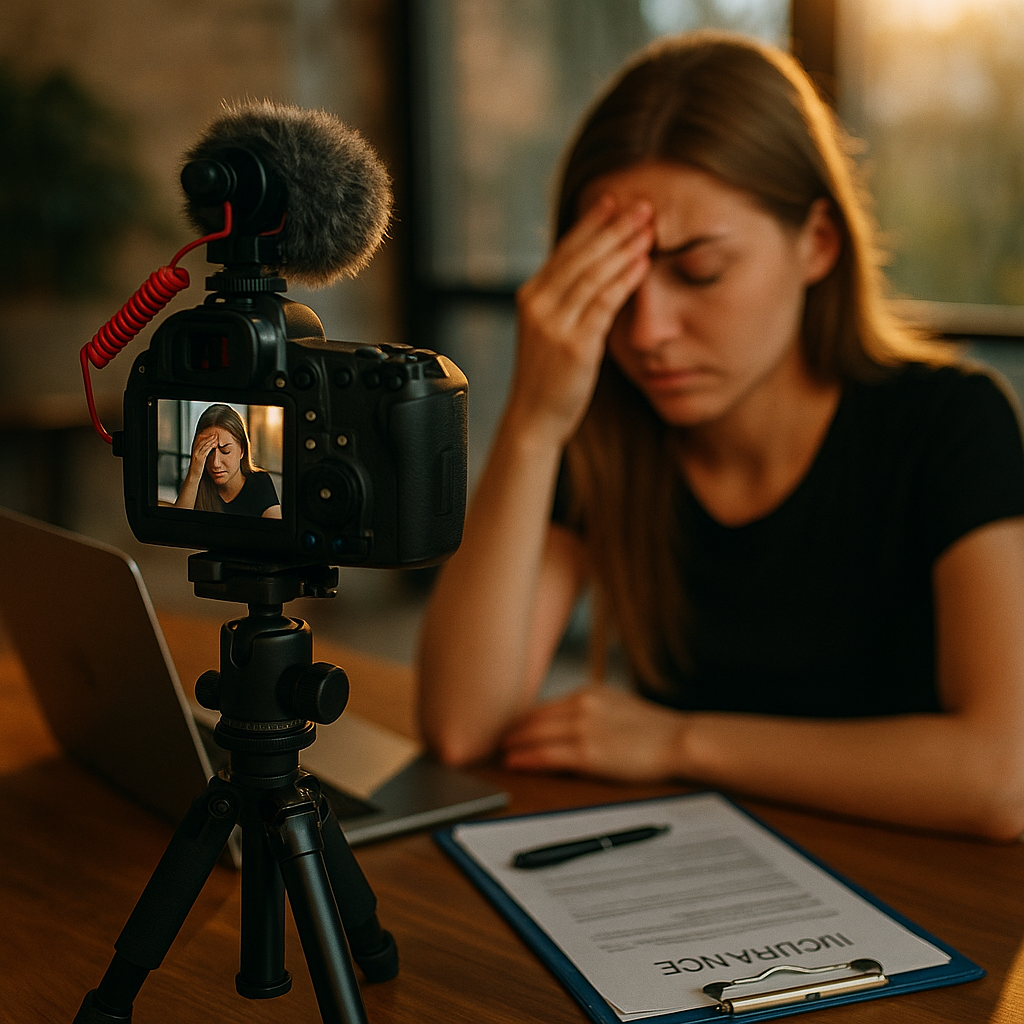
One bad influencer post can wipe seven figures off a brand’s market value in a single afternoon, yet most marketing insurance policies were written before “creator crisis” was even a category. Insurance liability for creator crisis content sits in a coverage gap that most CMOs and risk officers only discover after a claim gets denied. If your current policy still treats influencers like traditional media buys, you are not covered the way you think you are.
Why Standard Media Liability Policies Fail Creator Programs
Traditional media liability and advertiser’s liability policies were built for a world of agency-produced commercials and print ads, reviewed by legal before they ever ran. Creator content flips that process on its head. Posts go live in real time, often with minimal pre-approval, and the brand’s name gets attached to whatever the creator says, wears, or implies on camera.
That structural mismatch creates three recurring exclusions insurers lean on when denying claims:
- Lack of pre-publication review. Many policies require proof the brand exercised “reasonable editorial control.” Unscripted creator content rarely meets that bar.
- Independent contractor carve-outs. If the creator is classified as a third-party contractor rather than an agent of the brand, some carriers argue the brand has no insurable interest in their statements at all.
- Social media content exclusions. A surprising number of general commercial liability and even dedicated media policies still explicitly exclude “user-generated” or “social platform” content, a holdover from when insurers viewed social as low-risk chatter rather than a primary marketing channel.
Add in the misclassification questions raised by shared creator pools, and you’ve got a coverage picture that’s murkier than most brand teams assume.
Insurers increasingly treat creator content the way they treat employee conduct: coverage depends entirely on how much control and documentation the brand can prove, not on intent.
What Counts as a “Creator Crisis” in the First Place?
Not every awkward post rises to the level of an insurable event. Underwriters and risk teams generally sort creator crises into four buckets, and each one triggers different policy language.
- Reputational spillover. The creator says or does something offensive unrelated to the brand, and the partnership itself becomes the story.
- Product misrepresentation. The creator overstates claims, results, or safety, exposing the brand to FTC scrutiny and consumer deception suits, a risk explored in depth in our breakdown of FTC fake review rules.
- AI-generated or synthetic content disputes. Deepfakes, voice clones, or AI-assisted posts create ambiguity about who actually said what, a growing concern covered in our piece on AI voice clone endorsements.
- Data or privacy incidents. Creator dashboards, affiliate tracking, or AI analytics tools mishandle consumer data during a campaign, an exposure detailed in our analysis of real time AI pipelines and breach notification risk.
Each of these needs distinct policy language. A single “influencer marketing rider” bolted onto a generic media policy rarely addresses more than one of these buckets, which is exactly why claims get contested.
The Five Clauses Your Policy Probably Doesn’t Have
Ask your broker to walk through these line by line. If any answer is vague or “we’d have to check,” that’s your gap.
- Affirmative creator content inclusion. Explicit language stating that content produced by contracted creators, including UGC-style posts, livestreams, and Stories, falls within covered “advertising material,” not outside it.
- Rapid response cost coverage. A defined sublimit for crisis PR, legal review, and content takedown costs incurred in the first 48 to 72 hours, before litigation even starts. This is often the single most useful clause and the one most brands skip.
- AI attribution ambiguity provisions. Coverage that doesn’t hinge on proving whether a human or an AI tool generated the offending statement, since that distinction is getting harder to establish and courts haven’t settled it consistently.
- Sublicensed and whitelisted content. Extension of coverage to paid dark posts and whitelisted ads run through the creator’s handle, an area our whitelisting dark posts coverage flags as a recurring disclosure blind spot.
- Multi-jurisdiction defense costs. Since a single viral post can trigger complaints in multiple states or countries simultaneously, confirm the policy doesn’t cap defense spend per jurisdiction in a way that leaves later claims unfunded.
Brokers who specialize in media and technology E&O, rather than generalist commercial lines, are far more likely to have templates that already include these. Ask for one built specifically for creator economy risk, not repurposed ad agency language.
Contracts Are Your First Line of Defense, Not the Insurer
Insurance is a backstop, not a substitute for contract discipline. Underwriters price policies based partly on how tight your creator agreements already are, and a weak contract can void coverage entirely if it fails to establish the “reasonable control” insurers look for.
At minimum, creator agreements feeding into any crisis coverage should include indemnification language, a defined content approval workflow, and clear morality or conduct clauses tied to specific, enumerated behaviors rather than vague “brand reputation” language courts find unenforceable. Ownership and IP terms matter too. Our guide to IP assignment clauses covers how ambiguous ownership terms can complicate a crisis response when a brand needs to pull content fast but doesn’t clearly hold the rights to force a takedown.
If your creators sit closer to employee status than independent contractor status, and increasingly they do given evolving gig classification rules, review how that shift affects both your employee influencer program exposure and your insurance eligibility. Some policies exclude claims tied to misclassified workers entirely.
The 48 Hour Test
Here’s a simple exercise for your next risk review meeting: could your team execute a full takedown, legal hold, and stakeholder notification within 48 hours of a creator crisis breaking, using only the resources your current policy funds? Most teams can’t answer yes. That’s the gap insurance is supposed to close, and it’s the gap most policies quietly leave open.
Building the Policy Checklist Legal and Marketing Can Actually Use
Coverage decisions shouldn’t live in a legal silo. Marketing teams know where the operational risk actually sits, insurance and legal teams know where the contractual risk sits, and neither group alone can build a policy that covers both. A joint checklist works better than a single department’s wishlist.
Practical items worth putting in front of your broker this renewal cycle:
- Does the policy cover content across every platform your creators actually use, including TikTok Shop, Instagram Reels, and livestream commerce, not just “social media” as a generic category?
- Is there a defined process and cost coverage for issuing corrective disclosures if a creator violates FTC guidance, a scenario our FTC disclosure standards piece breaks down in detail?
- Are international creators and campaigns covered, given how disclosure standards differ by market, as outlined in our state by state compliance map?
- Does the policy require notification within an unreasonably short window that most marketing teams can’t realistically meet during an active crisis?
According to eMarketer, influencer marketing spend continues to climb year over year across nearly every major brand category, which means the dollar exposure behind a single uncovered crisis keeps growing too. Risk teams that treat this as a one-time policy purchase rather than an annual audit are underestimating how fast the creator content landscape shifts.
An insurance policy that hasn’t been reviewed since your last major platform shift is functionally an outdated policy, even if the premium hasn’t changed.
What Happens When Coverage and Compliance Fall Out of Sync
Compliance frameworks move faster than insurance renewal cycles, and that mismatch is where brands get burned. A brand might update its disclosure policy in line with the FTC’s endorsement guidelines or a new framework like the IAB AI disclosure framework, but never circle back to check whether the insurance policy’s definitions still match the new compliance language. If your compliance team defines “AI-assisted content” one way and your policy defines it another, you’ve created an argument for denial before a claim is even filed.
Build a standing quarterly touchpoint between legal, compliance, and risk management specifically to reconcile policy language against current disclosure and content practices. It’s a small operational lift compared to the cost of discovering the gap mid-crisis. Tools like Sprout Social and similar social listening platforms can also help risk teams catch emerging issues before they escalate into claims territory, giving your crisis response window more room to breathe.
Next step: pull your current media liability and advertiser’s liability policies this week and check them against the five clauses above. If even two are missing, schedule a call with a creator economy specialist broker before your next campaign launch, not after your next crisis.
FAQs
Does general liability insurance cover influencer marketing crises?
Usually not fully. Standard general commercial liability policies often exclude social media and user-generated content, and many were never underwritten with creator partnerships in mind. Brands typically need a dedicated media liability or advertiser’s liability rider with explicit creator content language.
Who is liable when a creator posts something that damages a brand’s reputation?
Liability depends on the contract terms, the level of creative control the brand exercised, and whether the creator is classified as an employee or independent contractor. Courts and insurers both look closely at indemnification clauses and approval workflows to determine where responsibility sits.
Can a brand get insurance coverage for AI-generated creator content disputes?
Some specialized media and technology E&O policies now include provisions for AI-assisted or AI-generated content, but coverage varies widely by carrier. Brands should specifically ask whether coverage depends on proving human versus AI authorship, since that distinction is often unclear in a live crisis.
What is a rapid response sublimit in a crisis content policy?
It’s a defined coverage amount specifically for the first 48 to 72 hours after a crisis breaks, covering costs like crisis PR, legal review, and content takedown before formal litigation begins. It’s one of the most valuable and most frequently missing clauses in creator-related insurance.
How often should brands review their creator insurance policies?
At minimum annually, ideally tied to renewal cycles, but a quarterly check against current disclosure and compliance practices helps catch gaps caused by fast-moving regulatory or platform changes before they become uninsured exposures.
Top Influencer Marketing Agencies
The leading agencies shaping influencer marketing in 2026
Agencies ranked by campaign performance, client diversity, platform expertise, proven ROI, industry recognition, and client satisfaction. Assessed through verified case studies, reviews, and industry consultations.
Moburst

-
2

The Shelf
Boutique Beauty & Lifestyle Influencer AgencyA data-driven boutique agency specializing exclusively in beauty, wellness, and lifestyle influencer campaigns on Instagram and TikTok. Best for brands already focused on the beauty/personal care space that need curated, aesthetic-driven content.Clients: Pepsi, The Honest Company, Hims, Elf Cosmetics, Pure LeafVisit The Shelf → -
3

Audiencly
Niche Gaming & Esports Influencer AgencyA specialized agency focused exclusively on gaming and esports creators on YouTube, Twitch, and TikTok. Ideal if your campaign is 100% gaming-focused — from game launches to hardware and esports events.Clients: Epic Games, NordVPN, Ubisoft, Wargaming, Tencent GamesVisit Audiencly → -
4

Viral Nation
Global Influencer Marketing & Talent AgencyA dual talent management and marketing agency with proprietary brand safety tools and a global creator network spanning nano-influencers to celebrities across all major platforms.Clients: Meta, Activision Blizzard, Energizer, Aston Martin, WalmartVisit Viral Nation → -
5

The Influencer Marketing Factory
TikTok, Instagram & YouTube CampaignsA full-service agency with strong TikTok expertise, offering end-to-end campaign management from influencer discovery through performance reporting with a focus on platform-native content.Clients: Google, Snapchat, Universal Music, Bumble, YelpVisit TIMF → -
6

NeoReach
Enterprise Analytics & Influencer CampaignsAn enterprise-focused agency combining managed campaigns with a powerful self-service data platform for influencer search, audience analytics, and attribution modeling.Clients: Amazon, Airbnb, Netflix, Honda, The New York TimesVisit NeoReach → -
7

Ubiquitous
Creator-First Marketing PlatformA tech-driven platform combining self-service tools with managed campaign options, emphasizing speed and scalability for brands managing multiple influencer relationships.Clients: Lyft, Disney, Target, American Eagle, NetflixVisit Ubiquitous → -
8

Obviously
Scalable Enterprise Influencer CampaignsA tech-enabled agency built for high-volume campaigns, coordinating hundreds of creators simultaneously with end-to-end logistics, content rights management, and product seeding.Clients: Google, Ulta Beauty, Converse, AmazonVisit Obviously →