


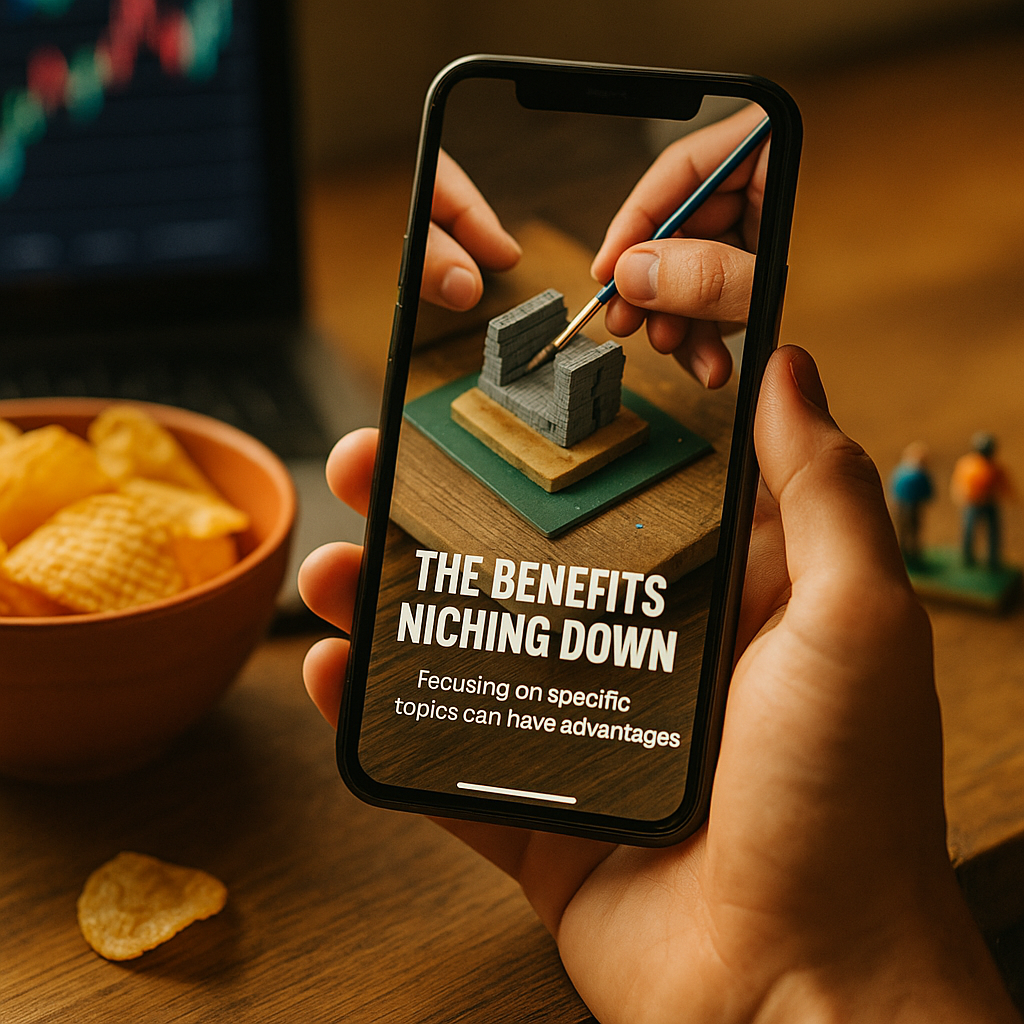
One creator with 40,000 niche followers just outsold a campaign built on a million broad-reach impressions. That is not a fluke anymore. It is the new math of snackable vertical explainers, the tight, 30 to 90 second niche breakdowns that answer one specific question for one specific audience segment, and they are quietly rewriting how smart brands allocate creator budgets.
Why Broad Reach Stopped Paying Off
For years, the reach number was the pitch. Bigger following, bigger placement, bigger invoice. But reach never guaranteed comprehension, and comprehension is what drives purchase intent. Brands poured budget into wide-net creators whose audiences were mostly passive scrollers, not buyers.
Platform algorithms have also changed the incentive structure. TikTok, Instagram, and YouTube Shorts now reward completion rate and rewatch behavior far more than raw view counts. A vertical explainer that holds a niche viewer for 45 seconds signals relevance to the algorithm in a way a skimmed 15-second broad-appeal clip never will. According to Sprout Social’s platform research, engagement depth is now a stronger predictor of distribution than follower count across nearly every major short-form network.
A niche audience that watches to the end is worth more to an algorithm, and to a brand’s bottom line, than a mass audience that scrolls past in three seconds.
The Micro Content Advantage, Defined
Snackable vertical explainers work because they compress expertise into a single, digestible unit. Think “why your cast iron pan is sticking” instead of “cooking tips for beginners.” The narrower the promise, the higher the completion rate, and the more qualified the viewer who sticks around.
This is not a new creative trick. It is a structural shift in how attention gets allocated. Marketers who built their playbooks on broad reach formats are now retrofitting strategies that were designed for scale, not specificity. That retrofit is expensive and often too slow to matter.
What Makes a Vertical Explainer “Snackable”
Three ingredients separate a snackable explainer from a generic short video clip:
- A single, narrow claim. One idea, stated in the first three seconds, with no preamble.
- Visual proof, not just narration. The viewer sees the mechanism, not just hears about it.
- A natural stopping point. The video ends when the answer is delivered, not when a runtime quota is hit.
Brands that get this right often borrow structural cues from adjacent formats. The caption discipline used in caption heavy TikToks pairs well with vertical explainers because text reinforces the single claim without adding runtime. Similarly, the pacing lessons from carousel style TikToks translate directly. Both formats prove that constraint, not length, drives retention.
Niche Beats Broad: The ROI Case
Here is the uncomfortable part for media planners used to justifying spend with impressions. A niche creator with a tightly defined audience (say, a specific B2B SaaS vertical, or a very specific skincare concern) converts at rates broad lifestyle creators simply cannot match. Emarketer has repeatedly noted that audience specificity correlates more strongly with conversion than audience size in creator partnerships.
The reason is trust density. A niche audience already believes the creator understands their exact problem. There is no bridge to build, no general credibility to establish first. The explainer just has to deliver the specific answer, and the purchase decision follows naturally.
Trust density, not audience size, is the real currency of niche micro content. Brands buying reach are buying attention. Brands buying niche are buying belief.
This is also why cost-per-acquisition numbers on niche vertical explainer campaigns routinely beat broad influencer buys, even when the CPM looks worse on paper. HubSpot’s marketing benchmarking data has long shown that narrower targeting produces higher-quality leads, and the same logic now applies almost identically to creator content.
Operational Efficiency: Why Niche Content Is Cheaper to Produce
Beyond ROI, there is a production math problem that broad reach formats never solved well. Broad appeal content requires expensive production values to justify the spend and the exposure. Vertical explainers do not. A single creator with a phone, a script, and genuine subject-matter expertise can produce five niche explainers for the cost of one polished broad-reach campaign.
This lowers the bar for testing. Brands can commission niche explainers across ten micro-segments simultaneously, see which segment converts, and reallocate budget within days. That kind of rapid iteration is impossible with the lead times and costs tied to broad-format production. It is the same efficiency logic behind formats like faster niche content briefs, which prioritize speed over polish because speed is what lets brands find product-market fit in content, not just in product.
Faceless and low-production creator channels have accelerated this further. Brands sourcing through faceless creator channels can scale niche explainer production without the negotiation overhead of talent fees tied to personal brand equity. The content does the persuading, not the face behind it.
Where This Format Fits in a Creative Brief
Snackable vertical explainers work best as a mid-funnel asset. Top-of-funnel awareness still benefits from some broader formats, but the explainer’s job is to convert curiosity into confidence. That makes it a natural companion to formats like myth busting carousels, which soften objections, and first person POV storytelling, which builds emotional relevance before the explainer delivers the rational close.
A useful brief structure looks like this:
- State the single question the explainer answers, in one sentence.
- Identify the exact niche audience segment it targets, not a broad demographic.
- Specify the visual proof point required (a demo, a before/after, a side-by-side).
- Cap the runtime intentionally, based on what the answer actually requires, not a platform default.
Compliance teams should also weight in early. The FTC’s endorsement guidance applies just as strictly to a 30-second niche explainer as it does to a broad campaign, and niche audiences tend to scrutinize disclosure more closely, not less.
Risk Mitigation: The Underrated Benefit of Going Niche
Broad reach campaigns carry broad reputational exposure. When a mass-audience creator missteps, the fallout is public and fast. Niche vertical explainers, by contrast, operate in smaller, more self-correcting communities where feedback loops are tighter and backlash is more contained.
This does not mean niche content is risk-free. It means the risk profile is different, and often more manageable. Brands running niche programs should still build review workflows, but the review burden per asset is lighter because the claims are narrower and easier to fact-check. That efficiency compounds across a program with dozens of micro-segment explainers running concurrently.
It is worth noting that niche does not mean small forever. Several brands have used vertical explainers as a farm system, testing messaging on tight segments before scaling the winning explainer into a broader paid media push. The explainer becomes the R&D layer for the whole funnel.
How to Measure Success (Beyond Views)
Views are the least useful metric for this format. Track these instead:
- Completion rate, since it signals whether the single claim actually landed.
- Save and share rate, which indicates the explainer solved a real problem worth revisiting.
- Segment-level conversion, comparing niche explainer performance against broader format benchmarks in the same campaign.
- Cost per qualified lead, not cost per thousand impressions.
Brands still anchored to reach-based reporting will undervalue this format because the numbers look small next to a viral broad post. That is the wrong comparison. The right comparison is revenue per content dollar, and on that metric, niche vertical explainers routinely win.
Frequently Asked Questions
What exactly is a snackable vertical explainer?
It is a short, vertical video, typically 30 to 90 seconds, that answers one narrow, specific question for a clearly defined niche audience, using visual proof rather than broad narration.
Why do niche formats outperform broad reach content?
Niche formats build on existing trust density within a specific audience segment, which shortens the path from attention to conversion. Broad reach formats have to establish credibility first, which adds friction and cost.
Are vertical explainers more expensive to produce than broad content?
Generally no. Niche explainers rely on subject-matter expertise and simple production, which lowers costs and allows brands to test multiple micro-segments in parallel.
How should brands measure success for this format?
Prioritize completion rate, save and share rate, segment-level conversion, and cost per qualified lead over raw view counts or impressions.
Does this format still require FTC disclosure compliance?
Yes. Disclosure requirements apply regardless of runtime or audience size, and niche audiences often scrutinize sponsorship transparency more closely than broad audiences do.
The next media plan review is the right moment to ask a hard question: how much of that broad reach budget is buying belief, versus just buying attention? Redirect a test slice toward niche vertical explainers, measure completion and conversion against the broad benchmark, and let the data settle the debate.
Top Influencer Marketing Agencies
The leading agencies shaping influencer marketing in 2026
Agencies ranked by campaign performance, client diversity, platform expertise, proven ROI, industry recognition, and client satisfaction. Assessed through verified case studies, reviews, and industry consultations.
Moburst

-
2

The Shelf
Boutique Beauty & Lifestyle Influencer AgencyA data-driven boutique agency specializing exclusively in beauty, wellness, and lifestyle influencer campaigns on Instagram and TikTok. Best for brands already focused on the beauty/personal care space that need curated, aesthetic-driven content.Clients: Pepsi, The Honest Company, Hims, Elf Cosmetics, Pure LeafVisit The Shelf → -
3

Audiencly
Niche Gaming & Esports Influencer AgencyA specialized agency focused exclusively on gaming and esports creators on YouTube, Twitch, and TikTok. Ideal if your campaign is 100% gaming-focused — from game launches to hardware and esports events.Clients: Epic Games, NordVPN, Ubisoft, Wargaming, Tencent GamesVisit Audiencly → -
4

Viral Nation
Global Influencer Marketing & Talent AgencyA dual talent management and marketing agency with proprietary brand safety tools and a global creator network spanning nano-influencers to celebrities across all major platforms.Clients: Meta, Activision Blizzard, Energizer, Aston Martin, WalmartVisit Viral Nation → -
5

The Influencer Marketing Factory
TikTok, Instagram & YouTube CampaignsA full-service agency with strong TikTok expertise, offering end-to-end campaign management from influencer discovery through performance reporting with a focus on platform-native content.Clients: Google, Snapchat, Universal Music, Bumble, YelpVisit TIMF → -
6

NeoReach
Enterprise Analytics & Influencer CampaignsAn enterprise-focused agency combining managed campaigns with a powerful self-service data platform for influencer search, audience analytics, and attribution modeling.Clients: Amazon, Airbnb, Netflix, Honda, The New York TimesVisit NeoReach → -
7

Ubiquitous
Creator-First Marketing PlatformA tech-driven platform combining self-service tools with managed campaign options, emphasizing speed and scalability for brands managing multiple influencer relationships.Clients: Lyft, Disney, Target, American Eagle, NetflixVisit Ubiquitous → -
8

Obviously
Scalable Enterprise Influencer CampaignsA tech-enabled agency built for high-volume campaigns, coordinating hundreds of creators simultaneously with end-to-end logistics, content rights management, and product seeding.Clients: Google, Ulta Beauty, Converse, AmazonVisit Obviously →