


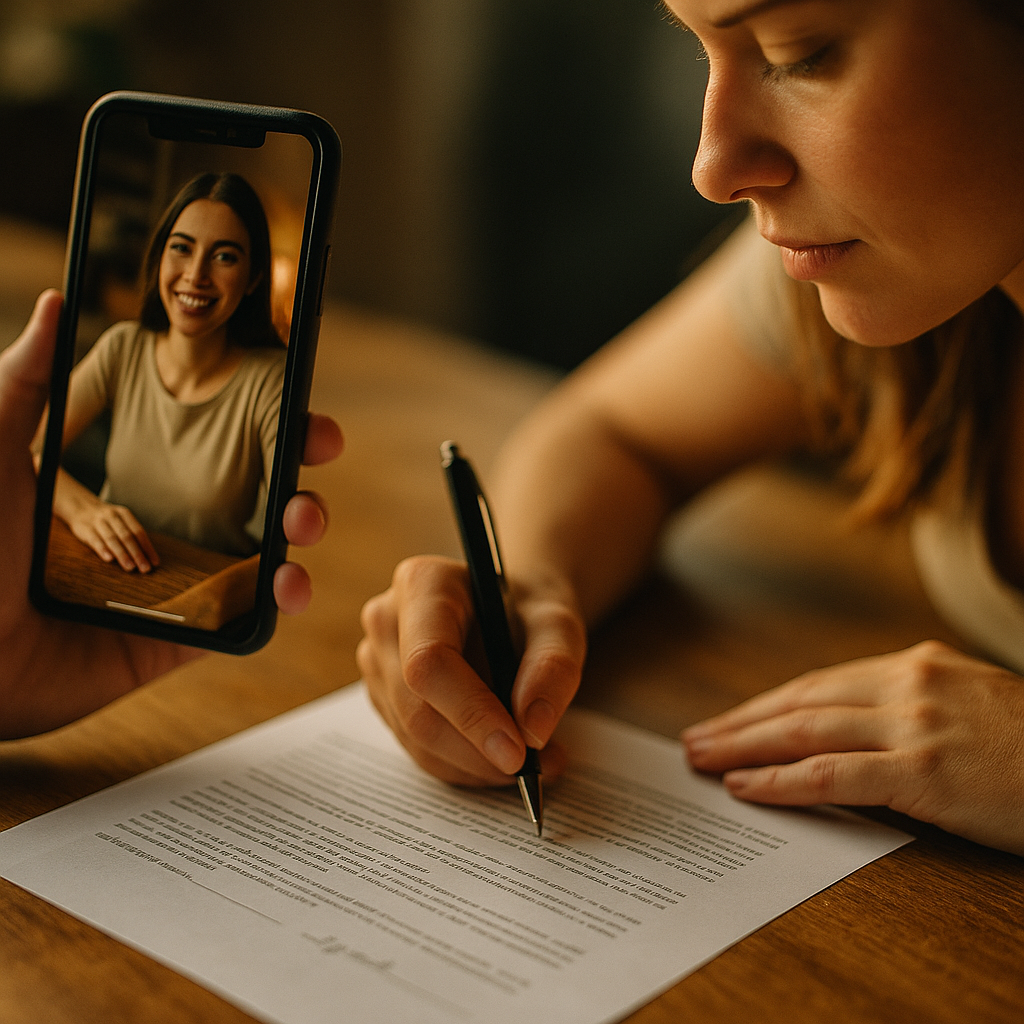
Right of publicity lawsuits tied to user-generated content jumped sharply as brands scaled UGC pipelines faster than their legal teams could review them. A customer posts a video tagging your product. Your team reshares it, drops it into a paid ad, maybe feeds it into an AI training set. Somewhere in that chain, you likely violated that person’s right of publicity, and they now have grounds to sue.
Most marketing teams treat a tagged post or a branded hashtag as implicit permission. It isn’t. Right of publicity law protects a person’s name, image, likeness, and sometimes voice from unauthorized commercial use, and it operates independently of copyright or platform terms of service. If your UGC pipeline pulls consumer content into ads, product pages, or AI training sets without a documented release, you’re exposed regardless of what the platform’s fine print says.
What Actually Triggers a Right of Publicity Claim?
Right of publicity is a state law creature, not federal, which is exactly why it trips up brands running national campaigns. Roughly half of U.S. states recognize it explicitly through statute, and courts in several others have carved it out under common law. California, New York, and Tennessee have some of the most aggressive statutes on the books, and Tennessee’s ELVIS Act expanded protections to voice and likeness in ways that directly implicate AI repurposing.
The claim itself is straightforward: someone’s identifiable persona was used for commercial advantage without consent. “Commercial” is the operative word. A consumer posting their own video is protected speech. The moment a brand repurposes that same video in a paid ad, a product listing, or a retargeting creative, it crosses into commercial use. That’s the line where “we found great UGC” becomes “we misappropriated someone’s likeness.”
A tagged post or comment doesn’t grant a license. Only an explicit, documented release does, and courts have consistently sided with consumers when brands assumed otherwise.
The Consent Gap Nobody’s Pipeline Accounts For
Here’s the uncomfortable truth: most UGC repurposing workflows were built by growth marketers optimizing for speed, not by legal teams thinking about likeness rights. A social team spots a viral unboxing video, clips it, drops a logo overlay, and it’s live in a paid social ad within 48 hours. Nobody asked the creator for a release. Nobody checked whether a minor appears in the background. Nobody verified the creator even owns the footage they posted.
Platform terms of service create a license between the user and the platform (Instagram, TikTok, whichever). That license lets the platform display and distribute the content. It does not transfer any rights to third-party brands who want to reuse that content commercially. This is a distinction that trips up even sophisticated legal teams, and plaintiff’s attorneys know it. Expect more suits built specifically around this gap.
Consumers are also more litigation-aware than they used to be. Right of publicity claims used to be the domain of celebrities and athletes protecting their brand value. Now it’s ordinary consumers who feel exploited when their face shows up in an ad campaign they never agreed to be part of. Add a state biometric privacy statute or a minor in the frame, and the exposure compounds fast.
The State Patchwork Makes Blanket Policies Risky
A UGC consent process built for California won’t necessarily satisfy Illinois or Tennessee. Some states require written consent for commercial use of likeness. Others allow implied consent under narrower circumstances. Damages structures vary too, with some states allowing statutory damages that make even small-scale misuse expensive to litigate. If your brand runs national UGC campaigns, you need a consent standard that meets the strictest applicable state, not the most convenient one. This is the same logic that governs state by state creator compliance mapping in other regulated categories: build to the ceiling, not the floor.
Where UGC Pipelines Actually Break
The failures follow predictable patterns. Knowing them helps you audit your own workflow before a plaintiff’s attorney does it for you.
- Assumed consent from tagging or hashtags. A branded hashtag is a marketing mechanism, not a legal release. Courts don’t treat it as one.
- No age verification on featured creators. Minors appearing in repurposed UGC introduce parental consent requirements that most brands never check. This overlaps heavily with the issues covered in teen creator age verification frameworks.
- Third parties in frame. A consumer consents to their own likeness use. They can’t consent on behalf of a friend, bystander, or family member visible in the same clip.
- Content sourced through influencer or affiliate networks. When agencies or platforms aggregate UGC for you, the consent chain often breaks somewhere between creator and brand, especially in shared creator pools where nobody owns the paperwork.
- AI training and synthetic reuse. Feeding UGC into an AI model to generate lookalike content or synthetic testimonials raises a separate, often thornier, likeness question addressed in our breakdown of AI likeness publicity law.
Each of these failure points is fixable, but only if someone owns the process end to end. Right now, at most brands, nobody does.
Building a Consent Pipeline That Actually Holds Up
The fix isn’t complicated in concept, though it does require discipline that most fast-moving marketing teams resist. Every piece of UGC that moves from organic post to paid or owned commercial use needs a documented release before it enters the pipeline, not after.
Practical steps that hold up under scrutiny:
- Standardize a release request template that specifies the exact commercial uses you intend (paid ads, product pages, email, AI training) rather than a vague blanket grant.
- Verify creator identity and age before featuring content, particularly for campaigns targeting younger audiences where minors are more likely to appear.
- Route third-party requests through a licensing tool rather than manual DM outreach, so there’s a timestamped audit trail if a claim surfaces later.
- Flag AI reuse separately. If UGC feeds into generative tools, disclose that explicitly in the release, and check state disclosure rules alongside frameworks like the IAB AI disclosure framework.
- Build a takedown process. Consumers who revoke consent need a clear path to have their content removed, mirroring the operational lessons from handling creator takedown requests post-contract.
None of this needs to slow your program to a crawl. Several licensing platforms now automate consent capture at the point of comment or reply, which keeps campaign velocity intact while creating the paper trail legal actually needs.
Where AI Complicates the Picture Further
Generative tools have made it trivial to extract a face, voice, or gesture from a piece of UGC and repurpose it into something the original poster never agreed to. That’s no longer a hypothetical. Tennessee’s ELVIS Act and similar statutes emerging in other states explicitly extend publicity protections to AI-generated likenesses and voice clones, and enforcement agencies are watching this space closely.
If your creative team uses UGC as training data, or generates “inspired by” synthetic variations of consumer content, that’s a materially different risk profile than simple resharing. The consent language you use for a static repost will not cover generative reuse. Treat these as two separate licensing tracks, and audit your creative and data science teams’ workflows the same way you’d audit an influencer contract. Our coverage of real time AI pipeline risk walks through similar downstream exposure when consumer data feeds automated systems without adequate guardrails.
What Regulators and Plaintiffs Are Watching
The FTC hasn’t issued a standalone rule on right of publicity (it’s largely a state tort issue), but the agency’s broader endorsement guidance and enforcement pattern around deceptive marketing practices increasingly intersects with unauthorized likeness use, particularly when consumers reasonably believed their content wouldn’t be commercialized. Meanwhile, plaintiff’s firms have gotten more sophisticated about identifying brands running paid social campaigns built on unlicensed consumer footage, often by reverse-searching viral clips against a brand’s ad library.
Platforms themselves are adjusting too. Meta’s business tools and TikTok’s ad platform both include content licensing features designed to formalize consent, though relying solely on platform-native tools without your own release documentation still leaves gaps. Marketing teams tracking broader creator economy risk trends can find useful benchmarking through eMarketer’s influencer marketing research and Sprout Social’s UGC industry reports.
Get the Paperwork Before You Get the Reach
Audit your last ninety days of repurposed UGC and check whether each piece has a documented, use-specific release attached. If it doesn’t, pull it from paid rotation now and put a licensing checkpoint in front of your pipeline before the next campaign launches.
Frequently Asked Questions
Does a public social media post automatically give brands permission to reuse it?
No. A public post is visible to anyone, but visibility isn’t consent for commercial use. Brands need a specific release authorizing reuse in ads, product pages, or other paid or owned commercial contexts.
What’s the difference between right of publicity and copyright when it comes to UGC?
Copyright protects the creator’s ownership of the content itself, like the video file. Right of publicity protects the identifiable person’s name, image, and likeness from unauthorized commercial use, even if the brand has copyright permission to use the footage.
Can a brand rely on platform terms of service instead of getting a separate release?
Generally, no. Platform terms of service govern the relationship between the user and the platform, not between the user and third-party brands. A separate, documented release is the safer and more legally defensible path.
Do minors appearing in UGC require special handling?
Yes. If a minor is identifiable in content a brand wants to repurpose, parental or guardian consent is typically required, and several states impose additional requirements beyond standard release language.
How does AI training on UGC change the right of publicity risk?
Feeding consumer content into an AI model to generate synthetic likenesses, voices, or “inspired by” creative introduces a separate and often higher-risk use case. Standard reshare consent language usually doesn’t cover this, and several states have passed statutes specifically addressing AI-generated likeness misuse.
Top Influencer Marketing Agencies
The leading agencies shaping influencer marketing in 2026
Agencies ranked by campaign performance, client diversity, platform expertise, proven ROI, industry recognition, and client satisfaction. Assessed through verified case studies, reviews, and industry consultations.
Moburst

-
2

The Shelf
Boutique Beauty & Lifestyle Influencer AgencyA data-driven boutique agency specializing exclusively in beauty, wellness, and lifestyle influencer campaigns on Instagram and TikTok. Best for brands already focused on the beauty/personal care space that need curated, aesthetic-driven content.Clients: Pepsi, The Honest Company, Hims, Elf Cosmetics, Pure LeafVisit The Shelf → -
3

Audiencly
Niche Gaming & Esports Influencer AgencyA specialized agency focused exclusively on gaming and esports creators on YouTube, Twitch, and TikTok. Ideal if your campaign is 100% gaming-focused — from game launches to hardware and esports events.Clients: Epic Games, NordVPN, Ubisoft, Wargaming, Tencent GamesVisit Audiencly → -
4

Viral Nation
Global Influencer Marketing & Talent AgencyA dual talent management and marketing agency with proprietary brand safety tools and a global creator network spanning nano-influencers to celebrities across all major platforms.Clients: Meta, Activision Blizzard, Energizer, Aston Martin, WalmartVisit Viral Nation → -
5

The Influencer Marketing Factory
TikTok, Instagram & YouTube CampaignsA full-service agency with strong TikTok expertise, offering end-to-end campaign management from influencer discovery through performance reporting with a focus on platform-native content.Clients: Google, Snapchat, Universal Music, Bumble, YelpVisit TIMF → -
6

NeoReach
Enterprise Analytics & Influencer CampaignsAn enterprise-focused agency combining managed campaigns with a powerful self-service data platform for influencer search, audience analytics, and attribution modeling.Clients: Amazon, Airbnb, Netflix, Honda, The New York TimesVisit NeoReach → -
7

Ubiquitous
Creator-First Marketing PlatformA tech-driven platform combining self-service tools with managed campaign options, emphasizing speed and scalability for brands managing multiple influencer relationships.Clients: Lyft, Disney, Target, American Eagle, NetflixVisit Ubiquitous → -
8

Obviously
Scalable Enterprise Influencer CampaignsA tech-enabled agency built for high-volume campaigns, coordinating hundreds of creators simultaneously with end-to-end logistics, content rights management, and product seeding.Clients: Google, Ulta Beauty, Converse, AmazonVisit Obviously →