


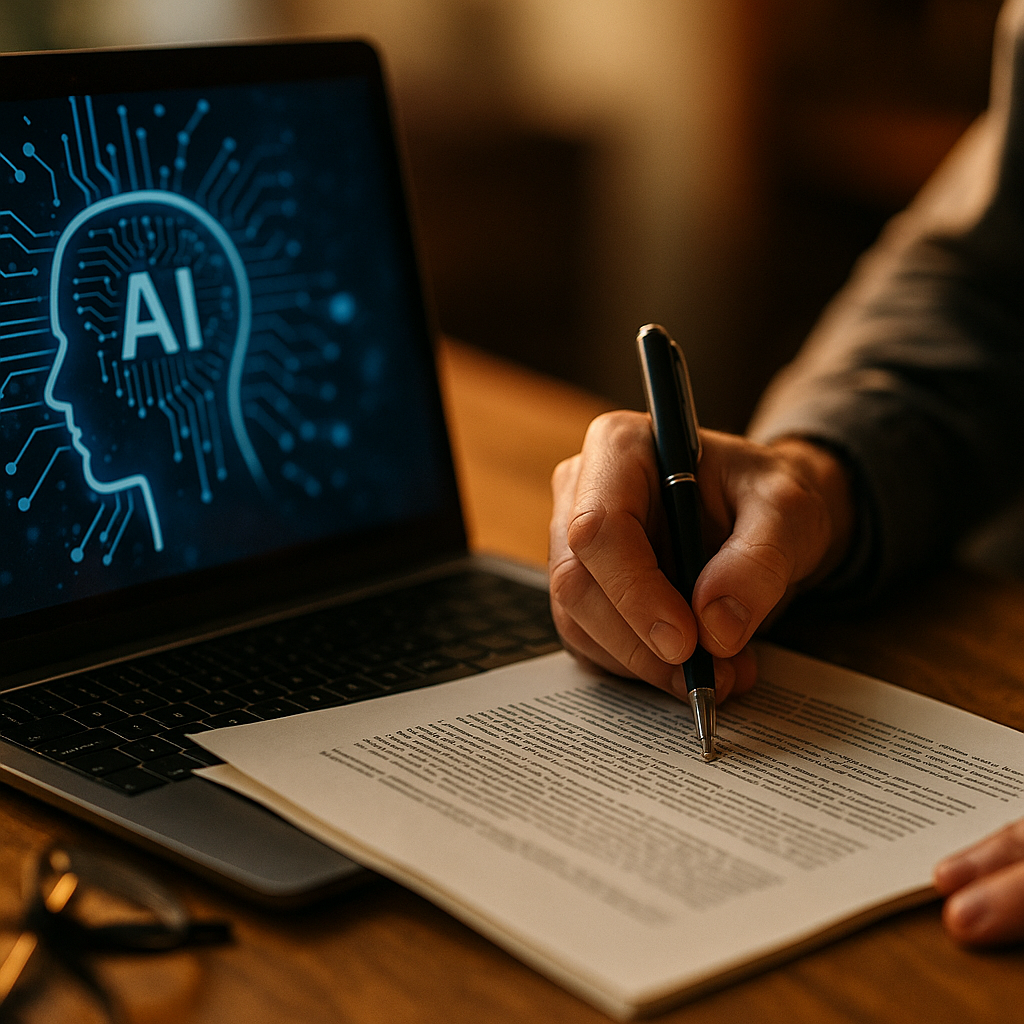
Storyboard18 flagged it plainly: most influencer contracts were written for a world where “usage rights” meant reposting a video, not feeding it into a generative model. That gap is now costing brands real money. A single ambiguous clause can turn a routine AI-derivative reuse clause dispute into a six-figure settlement, and legal teams are only now catching up to the scale of the exposure.
The question every brand counsel should be asking isn’t whether AI-derivative reuse clauses matter. It’s whether the ones already signed will hold up when a creator’s likeness shows up in a synthetic ad they never approved.
What Storyboard18 Actually Flagged
Storyboard18’s analysis pointed to a pattern that will feel familiar to anyone auditing creator agreements this year: contracts drafted between 2019 and 2023 rarely anticipated generative AI at all. Usage clauses granted rights to “content” or “footage” without defining whether that extended to AI-trained derivatives, voice clones, or synthetic composites built from a creator’s likeness.
The result is a precision gap. Brands assumed broad usage rights covered AI repurposing. Creators assumed their likeness stopped at the original deliverable. Neither assumption was written down clearly enough to survive a dispute.
A contract silent on AI derivatives isn’t neutral. It’s a liability waiting for a creator’s lawyer to notice.
This isn’t theoretical. Multiple agencies have already reported creators sending cease-and-desist letters after discovering their face or voice repurposed in AI-generated variants of a campaign they shot months earlier. Our earlier piece on ambiguous usage clauses traced how this exposure builds quietly across a portfolio of contracts, one vague sentence at a time.
Why “Usage Rights” No Longer Means What It Used To
Traditional usage clauses were built around media types: social, paid, broadcast, owned channels. That taxonomy made sense when content moved linearly from shoot to publish. Generative AI breaks the linearity. A single piece of UGC can now be:
- Fed into a training set for a brand’s internal creative model
- Used to generate synthetic variations for A/B testing at scale
- Repurposed into a voice clone for dynamic ad personalization
- Combined with other creators’ assets to produce a composite persona
None of that fits neatly into “social usage” or “paid media usage.” Which means most contracts are answering a question nobody asked, while staying silent on the one that actually matters: can this footage train or seed an AI model?
This is the same structural weakness we mapped in digital usage clause audits. The fix isn’t more boilerplate. It’s specificity about training data, derivative outputs, and downstream licensing.
The Three Clauses Most Contracts Are Missing
After reviewing patterns across dozens of flagged agreements, three gaps show up repeatedly:
- Training data consent. Does the creator explicitly permit their likeness, voice, or performance to be used as training input for generative models, not just as a finished asset for distribution?
- Derivative output scope. If a model generates a synthetic variant, who owns it, who can license it, and does the original creator get compensated or credited?
- Reversion and expiration. Does the reuse right expire, or does it survive indefinitely, letting a brand generate new derivatives years after the relationship ended?
Miss any of these, and you’re not negotiating a contract. You’re negotiating a lawsuit with better formatting.
How Brands Are Rewriting the Reuse Clause
The practitioners getting this right are treating AI-derivative reuse clauses as their own contract section, not an addendum buried in “grant of rights.” A few patterns worth adopting:
- Explicit AI carve-in language. Instead of assuming broad usage covers AI, contracts now name it directly: “Company may use Content, including as training or reference data for artificial intelligence or machine learning systems, to generate derivative works.”
- Tiered compensation for derivative reuse. Some agencies are building royalty-style triggers, so creators get paid again when their likeness seeds a new synthetic asset, similar to how revenue share creator deals handle ongoing disclosure obligations.
- Provenance documentation requirements. Brands are requiring internal teams to log which AI outputs derive from which contracts, closing the audit trail gap flagged in EU AI Act watermarking discussions.
- Explicit exclusions for sensitive categories. Voice cloning and facial likeness generation are increasingly carved out as separate, opt-in rights rather than bundled into general usage.
The brands avoiding disputes aren’t the ones with the most restrictive contracts. They’re the ones with the most specific ones.
Where the Legal Risk Actually Lives
It’s tempting to treat this as a creator relations issue. It’s really a right-of-publicity and consent issue, and those carry statutory teeth in several states. California, Tennessee, and New York have all expanded likeness protections in ways that intersect directly with AI reuse. Our breakdown of AI likeness publicity law covers how state-by-state variation turns a single ambiguous clause into a multi-jurisdiction exposure problem.
There’s also an FTC angle. If an AI-generated derivative implies endorsement the creator never gave, that’s a disclosure and endorsement problem, not just a contract problem. The FTC’s endorsement guidance already treats synthetic and AI-assisted content as subject to the same truthfulness standards as traditional posts. Brands that treat reuse clauses as purely a legal formality miss the marketing compliance layer sitting right behind it.
Voice cloning deserves its own callout here. It’s the fastest-growing category of dispute, and the clearest example of a right most contracts never addressed. If your agreements don’t distinguish “footage usage” from “voice model training,” you’re exposed in exactly the way AI voice clone endorsement cases have already tested.
What an Audit Actually Looks Like
Rewriting every contract from scratch isn’t realistic for a brand with hundreds of active creator relationships. A phased audit works better:
- Pull every active contract and flag any that predate widespread generative AI adoption in your creative workflow.
- Categorize by risk tier: high-visibility campaigns and paid ambassadors first, low-frequency UGC contributors last.
- Draft a standard AI-derivative reuse amendment and offer it as an opt-in addendum with modest compensation, rather than a unilateral rewrite.
- Document provenance for any AI outputs already generated from existing footage, even if the contract predates the practice.
- Loop in insurance. Several carriers are now asking about AI reuse practices during renewal, echoing the exposure gaps covered in automated UGC pipeline liability.
None of this is glamorous work. But it’s cheaper than litigating after the fact, and it signals to creators that the brand takes consent seriously, which matters more than ever as talent representation gets more sophisticated about AI terms.
The Negotiation Dynamic Is Shifting
Creators and their agents aren’t waiting for brands to fix this on their own. Talent agencies are increasingly pushing back on broad usage grants, insisting on explicit AI carve-outs before signing. That’s a meaningful shift from even a year or two ago, when most creators signed whatever usage language a brand’s legal team handed over without much scrutiny.
This mirrors what’s happening in employee creator ownership negotiations, where HR and legal teams are being forced to align on who controls derivative rights when an employee’s on-camera presence becomes training material for internal AI tools. The lesson generalizes: any time a human likeness feeds an AI system, the contract needs to say so explicitly, or someone will assume the answer that benefits them.
Industry data backs up the urgency. According to eMarketer, AI-assisted content production is expanding faster than contract standards can keep pace, and Statista‘s tracking of generative AI adoption in marketing shows most brands deploying these tools well before legal frameworks catch up. That timing mismatch is exactly where the precision gap Storyboard18 flagged comes from.
Platforms are starting to respond too. Meta’s business tools now include disclosure requirements for AI-generated content in ads, and similar frameworks are emerging across other ad platforms, which means the contractual gap upstream eventually becomes a platform compliance problem downstream if it isn’t closed first.
FAQs
The section below appears twice: once as visible content, once as structured data for search engines.
Frequently Asked Questions
What is an AI-derivative reuse clause?
It’s a contract provision that explicitly defines whether and how a brand can use creator content, including likeness, voice, or performance, as input for training AI models or generating synthetic derivative outputs. Without this clause, standard usage rights language rarely covers AI repurposing clearly enough to prevent disputes.
Why are older influencer contracts vulnerable to AI-derivative disputes?
Most contracts signed before generative AI became mainstream defined usage rights around media formats like social or paid distribution. They never anticipated a creator’s footage being fed into a model to generate new synthetic content, leaving that use case legally undefined and open to dispute.
Does a broad usage rights grant automatically cover AI training?
No. Courts and creator representatives increasingly treat AI training and derivative generation as a distinct use case from traditional content distribution. Brands that assume broad grants cover AI reuse without explicit language are taking on unnecessary legal risk.
How should brands compensate creators for AI-derivative reuse?
Approaches vary, but common models include a flat licensing fee for AI reuse rights, a royalty-style structure tied to how often derivatives are generated, or a one-time buyout clause with a defined expiration. The key is making the compensation structure explicit rather than assumed.
What happens if a brand uses AI derivatives without updated contract language?
Exposure ranges from cease-and-desist demands to right-of-publicity claims, particularly in states with strong likeness protection statutes. There’s also FTC endorsement risk if the derivative implies an endorsement the creator never actually gave.
Should brands audit existing contracts or wait for renewal?
Audit now. Waiting for renewal cycles leaves active AI usage unaddressed for months or years, during which exposure compounds. A phased audit prioritizing high-visibility campaigns first is the most efficient path.
Next step: pull your top twenty active creator contracts by spend, check for explicit AI training and derivative language, and draft a standard opt-in amendment before your next campaign cycle locks in more exposure.
Top Influencer Marketing Agencies
The leading agencies shaping influencer marketing in 2026
Agencies ranked by campaign performance, client diversity, platform expertise, proven ROI, industry recognition, and client satisfaction. Assessed through verified case studies, reviews, and industry consultations.
Moburst

-
2

The Shelf
Boutique Beauty & Lifestyle Influencer AgencyA data-driven boutique agency specializing exclusively in beauty, wellness, and lifestyle influencer campaigns on Instagram and TikTok. Best for brands already focused on the beauty/personal care space that need curated, aesthetic-driven content.Clients: Pepsi, The Honest Company, Hims, Elf Cosmetics, Pure LeafVisit The Shelf → -
3

Audiencly
Niche Gaming & Esports Influencer AgencyA specialized agency focused exclusively on gaming and esports creators on YouTube, Twitch, and TikTok. Ideal if your campaign is 100% gaming-focused — from game launches to hardware and esports events.Clients: Epic Games, NordVPN, Ubisoft, Wargaming, Tencent GamesVisit Audiencly → -
4

Viral Nation
Global Influencer Marketing & Talent AgencyA dual talent management and marketing agency with proprietary brand safety tools and a global creator network spanning nano-influencers to celebrities across all major platforms.Clients: Meta, Activision Blizzard, Energizer, Aston Martin, WalmartVisit Viral Nation → -
5

The Influencer Marketing Factory
TikTok, Instagram & YouTube CampaignsA full-service agency with strong TikTok expertise, offering end-to-end campaign management from influencer discovery through performance reporting with a focus on platform-native content.Clients: Google, Snapchat, Universal Music, Bumble, YelpVisit TIMF → -
6

NeoReach
Enterprise Analytics & Influencer CampaignsAn enterprise-focused agency combining managed campaigns with a powerful self-service data platform for influencer search, audience analytics, and attribution modeling.Clients: Amazon, Airbnb, Netflix, Honda, The New York TimesVisit NeoReach → -
7

Ubiquitous
Creator-First Marketing PlatformA tech-driven platform combining self-service tools with managed campaign options, emphasizing speed and scalability for brands managing multiple influencer relationships.Clients: Lyft, Disney, Target, American Eagle, NetflixVisit Ubiquitous → -
8

Obviously
Scalable Enterprise Influencer CampaignsA tech-enabled agency built for high-volume campaigns, coordinating hundreds of creators simultaneously with end-to-end logistics, content rights management, and product seeding.Clients: Google, Ulta Beauty, Converse, AmazonVisit Obviously →