


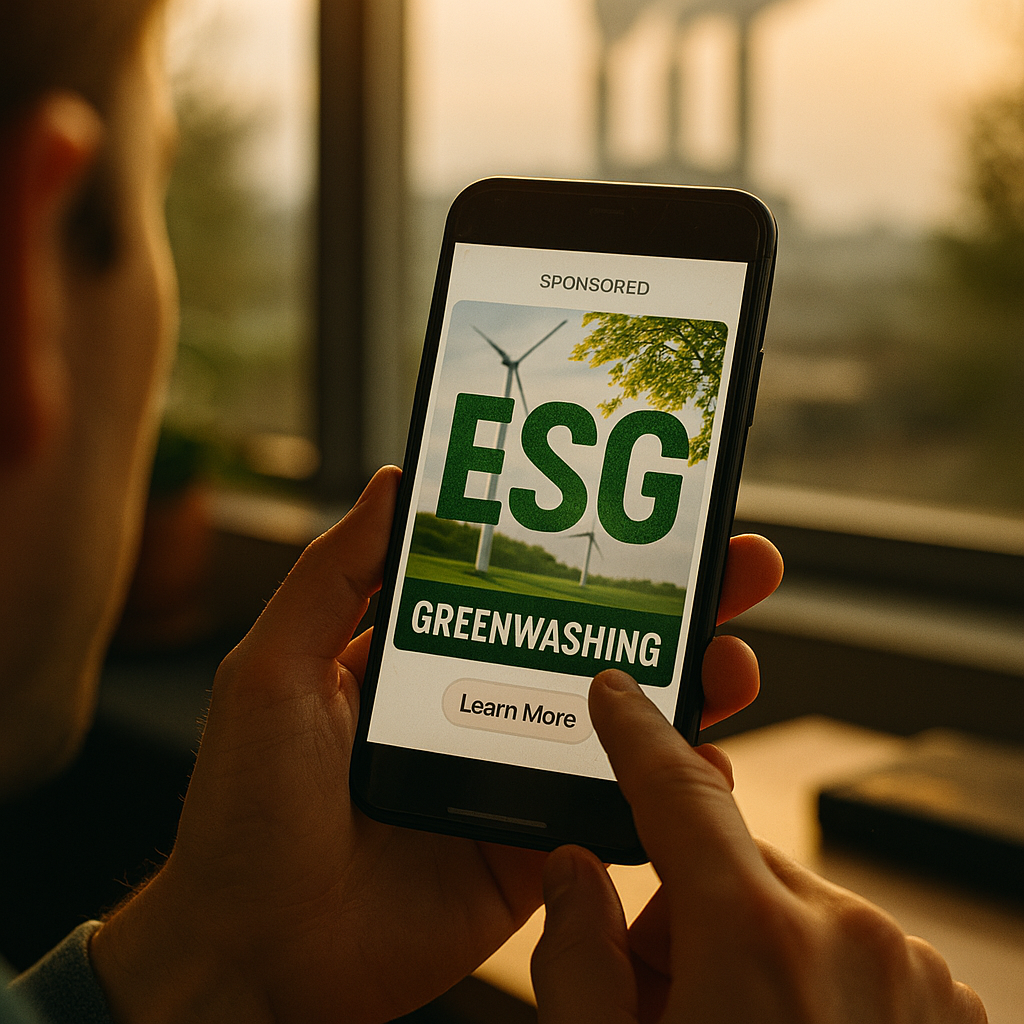
Greenwashing lawsuits jumped sharply across the past few years, and regulators on both sides of the Atlantic are now treating vague sustainability claims as seriously as false financial statements. So when a creator posts “this brand is carbon neutral” without a shred of substantiation, who absorbs the fallout? Usually not the creator. ESG claims in sponsored content have become one of the fastest-growing compliance exposures for brand marketing teams, and most influencer programs still don’t have a review process built for it.
Why Sustainability Claims Broke the Old Disclosure Playbook
Influencer compliance teams spent years building muscle around one thing: disclosure. #ad, #sponsored, clear and conspicuous placement. That framework works fine for “I love this product.” It falls apart when a creator adds “and it’s better for the planet.”
ESG messaging introduces a second layer of risk that sits on top of disclosure. It’s not just whether the audience knows the content is paid. It’s whether the claim itself is true, substantiated, and not misleading on its own terms. The FTC’s Green Guides set the bar here, and they’re explicit: general environmental benefit claims like “eco-friendly” or “sustainable” without qualification are viewed as deceptive if the marketer can’t back them up with competent scientific evidence.
That standard applies whether the words come from a brand’s own copywriter or a creator riffing off a talking-points doc in an Instagram Reel. The FTC has been consistent on this point in enforcement actions: brands are responsible for the claims made about their products, regardless of who’s holding the microphone.
A single unqualified “carbon neutral” claim in a creator’s caption can trigger the same enforcement exposure as a full ad campaign, because regulators evaluate the claim, not the format.
The Claims That Get Brands in Trouble
Not all ESG language carries equal risk. Some phrases are practically enforcement bait.
- Absolute claims: “Zero waste,” “100% sustainable,” “carbon neutral” require rigorous, verifiable substantiation, not a footnote linking to a corporate sustainability PDF nobody reads.
- Comparative claims: “Greener than the leading brand” invites a direct challenge from competitors, and competitor litigation is often faster and more aggressive than regulatory action.
- Aspirational claims dressed as fact: “On track to net zero by 2040” is a target, not a present-tense claim. Creators often collapse the distinction, turning a roadmap into an implied guarantee.
- Certification namedrops: Referencing a third-party certification the brand doesn’t actually hold, or one that’s expired, is a fast track to a deceptive endorsement claim.
This pattern mirrors what we’ve seen with other unverifiable claims creators make on brands’ behalf. Our coverage of creator growth rate claims found a nearly identical enforcement logic: brands share liability for any performance or benefit claim disseminated through paid content, even when the phrasing originated with the creator, not the marketing team.
Where the Legal Exposure Actually Lives
Marketing teams often assume ESG risk is a PR problem. Legal and compliance teams know better. There are three distinct exposure points, and they don’t overlap as neatly as you’d hope.
Regulatory enforcement. The FTC can pursue deceptive advertising actions under Section 5 of the FTC Act for unsubstantiated environmental claims, and state attorneys general have increasingly run parallel investigations under their own consumer protection statutes. The UK’s Information Commissioner’s Office and the Competition and Markets Authority have both signaled sustained scrutiny of environmental marketing claims made through influencer channels specifically, not just traditional ads.
Securities and shareholder risk. Publicly traded companies face a subtler exposure: if sponsored content overstates ESG performance, and that content contradicts SEC filings or investor disclosures, it can feed securities fraud claims. This is a newer wrinkle that most influencer marketing teams have never had to think about, because it sits entirely outside the traditional FTC disclosure lane.
Contract and indemnification gaps. Most influencer agreements were drafted for generic product claims. Few specify who owns liability when a creator makes an ESG statement that goes beyond approved messaging. This is the same structural weakness we flagged in coverage of ambiguous digital usage clauses, where silence in the contract becomes the brand’s problem the moment a claim gets challenged.
Build the Approved Claims Library Before the Campaign, Not After
The single highest-leverage fix for ESG compliance is boring: a pre-approved claims library that creators must pull language from, rather than paraphrasing sustainability messaging on the fly.
Here’s what that actually looks like in practice.
- Substantiate first, message second. Legal and sustainability teams sign off on specific, qualified language before it ever reaches a creative brief. “Reduced packaging waste by 30% compared to our previous line” survives scrutiny. “Eco-friendly packaging” doesn’t.
- Give creators exact phrasing, not talking points. Bullet-point briefs invite improvisation. Scripted claim language, with room for the creator’s own voice around it, cuts the risk of a creator “helpfully” upgrading a modest claim into a sweeping one.
- Flag every certification and third-party badge. If a creator wants to reference B Corp status, carbon offset programs, or a specific eco-label, confirm current, active certification status before approval. Expired or aspirational certifications are a recurring source of trouble.
- Require disclosure language that covers both dimensions. The FTC’s material connection disclosure and the substantiation requirement for the environmental claim are separate obligations. A post can nail the #ad tag and still be deceptive on the ESG claim itself.
This isn’t fundamentally different from the review process brands have had to build for other high-risk claim categories, like the state-by-state complexity covered in alcohol and cannabis creator campaigns. The regulatory logic is the same: heavily scrutinized categories need scripted, pre-cleared language, not creative freedom.
AI-Generated Sustainability Content Raises the Stakes
Brands increasingly use AI tools to generate variations of sponsored content at scale, repurposing a single creator’s ESG-adjacent post into dozens of derivative assets for paid media. That’s efficient. It’s also a compliance multiplier.
If an AI pipeline takes a creator’s carefully qualified claim (“this fabric uses 40% recycled polyester”) and, through summarization or rewriting, produces a punchier but inaccurate variant (“100% sustainable fabric”), the brand now owns a deceptive claim it never manually approved. This is the exact failure mode we detailed in reporting on AI derivative reuse clauses: automated content generation strips out the nuance that made the original claim defensible.
For ESG content specifically, that means any AI-assisted repurposing workflow needs a substantiation checkpoint before publication, not just a brand-voice check. A tone-and-style review catches awkward phrasing. It won’t catch a claim that quietly crossed the line from “reduced emissions” to “carbon neutral.”
Compliance teams that review AI-generated variants for brand voice but not for claim accuracy are leaving their single biggest ESG exposure point completely unchecked.
What Good ESG Disclosure Actually Looks Like
A few practical benchmarks separate defensible sponsored ESG content from the kind that draws a regulator’s attention.
- Claims are specific, quantified, and tied to a defined scope (“this product line,” not “our company”).
- Comparative language names the baseline being compared against.
- Certification references link to verifiable, current status, not a brand’s own self-description.
- Disclosure of material connection appears in the same format the platform’s audience actually sees first, following the same clear-and-conspicuous standard used in other high-scrutiny disclosure areas, like the framework outlined in IAB’s AI disclosure guidance.
- The brand retains a documented approval trail showing which team member signed off on the specific claim language used, not just the campaign brief.
That documentation trail matters more than most teams realize. Regulators and plaintiffs’ attorneys don’t just ask whether a claim was true. They ask whether the brand had a reasonable process for verifying it before publication. A messy approval history, or none at all, reads as negligence even when the underlying claim happens to be accurate.
Monitoring After Publication Is Not Optional
Sponsored ESG content doesn’t stay static. Creators respond to comments, post follow-up content, and sometimes double down on a claim when challenged by a skeptical audience member. A brand that only reviews content pre-publication is missing the second half of the exposure window.
Set up ongoing monitoring for comment-section claims specifically. It’s common for a creator to make a clean, approved post and then, three days later, respond to a follower’s question with an offhand, unsubstantiated environmental claim buried in a comment reply. That comment is still sponsored content in the eyes of most regulators. Build a monitoring cadence, even a lightweight one using social listening tools like those from Sprout Social, to catch claim drift after the initial post goes live.
This monitoring gap is structurally similar to the risk covered in whitelisting expiration audits, where the compliance failure happens not at launch but in the quiet period afterward, when nobody’s actively watching.
Building This Into Contracts, Not Just Briefs
Briefs get skimmed. Contracts get enforced. If ESG claim discipline lives only in a creative brief, it evaporates the moment a creator improvises on a livestream. Bake specific language into the influencer agreement itself: a defined list of approved claims, a requirement to use brand-provided sustainability language verbatim, and an indemnification clause that addresses environmental claims specifically, not just generic product misrepresentation.
Data on this pattern is limited, but industry surveys from eMarketer and marketing operations research from HubSpot consistently show that brands with formal creator content approval workflows report fewer compliance incidents than those relying on informal review. ESG claims are exactly the category where that gap shows up first, because the language sounds harmless right up until someone asks for the receipts.
Next step: Audit your last two quarters of sponsored ESG content against the FTC Green Guides substantiation standard, then build a locked claims library and contract addendum before the next campaign brief goes out. The cost of that audit is trivial compared to a deceptive advertising investigation.
Frequently Asked Questions
What counts as an ESG claim in sponsored content?
Any statement about environmental impact, social responsibility, or corporate governance made in paid creator content, including phrases like “carbon neutral,” “sustainably sourced,” “cruelty-free,” or references to specific certifications and reduction targets.
Who is liable if a creator makes an unsubstantiated sustainability claim?
The brand typically bears primary liability under FTC guidance, since it is responsible for the truthfulness of claims made about its products regardless of who delivers the message, though creators can face separate scrutiny for deceptive endorsement practices.
Do ESG claims need a different disclosure than standard sponsored content?
They require both the standard material connection disclosure (#ad) and separate substantiation for the environmental or social claim itself. Meeting one requirement does not satisfy the other.
How specific does sustainability language need to be to avoid regulatory risk?
Claims should be quantified, scoped to a specific product or process, and backed by documented evidence. General terms like “eco-friendly” or “green” without qualification are considered high-risk under the FTC Green Guides.
Can AI-generated content variations create new ESG compliance risk?
Yes. Automated rewriting or summarization can strip qualifying language from an originally accurate claim, producing an overstated or inaccurate derivative that the brand did not manually approve.
Should ESG claim review happen before or after content is published?
Both. Pre-publication review should verify substantiation and disclosure, while post-publication monitoring should catch claim drift in comments, follow-up posts, and livestream responses.
Top Influencer Marketing Agencies
The leading agencies shaping influencer marketing in 2026
Agencies ranked by campaign performance, client diversity, platform expertise, proven ROI, industry recognition, and client satisfaction. Assessed through verified case studies, reviews, and industry consultations.
Moburst

-
2

The Shelf
Boutique Beauty & Lifestyle Influencer AgencyA data-driven boutique agency specializing exclusively in beauty, wellness, and lifestyle influencer campaigns on Instagram and TikTok. Best for brands already focused on the beauty/personal care space that need curated, aesthetic-driven content.Clients: Pepsi, The Honest Company, Hims, Elf Cosmetics, Pure LeafVisit The Shelf → -
3

Audiencly
Niche Gaming & Esports Influencer AgencyA specialized agency focused exclusively on gaming and esports creators on YouTube, Twitch, and TikTok. Ideal if your campaign is 100% gaming-focused — from game launches to hardware and esports events.Clients: Epic Games, NordVPN, Ubisoft, Wargaming, Tencent GamesVisit Audiencly → -
4

Viral Nation
Global Influencer Marketing & Talent AgencyA dual talent management and marketing agency with proprietary brand safety tools and a global creator network spanning nano-influencers to celebrities across all major platforms.Clients: Meta, Activision Blizzard, Energizer, Aston Martin, WalmartVisit Viral Nation → -
5

The Influencer Marketing Factory
TikTok, Instagram & YouTube CampaignsA full-service agency with strong TikTok expertise, offering end-to-end campaign management from influencer discovery through performance reporting with a focus on platform-native content.Clients: Google, Snapchat, Universal Music, Bumble, YelpVisit TIMF → -
6

NeoReach
Enterprise Analytics & Influencer CampaignsAn enterprise-focused agency combining managed campaigns with a powerful self-service data platform for influencer search, audience analytics, and attribution modeling.Clients: Amazon, Airbnb, Netflix, Honda, The New York TimesVisit NeoReach → -
7

Ubiquitous
Creator-First Marketing PlatformA tech-driven platform combining self-service tools with managed campaign options, emphasizing speed and scalability for brands managing multiple influencer relationships.Clients: Lyft, Disney, Target, American Eagle, NetflixVisit Ubiquitous → -
8

Obviously
Scalable Enterprise Influencer CampaignsA tech-enabled agency built for high-volume campaigns, coordinating hundreds of creators simultaneously with end-to-end logistics, content rights management, and product seeding.Clients: Google, Ulta Beauty, Converse, AmazonVisit Obviously →