


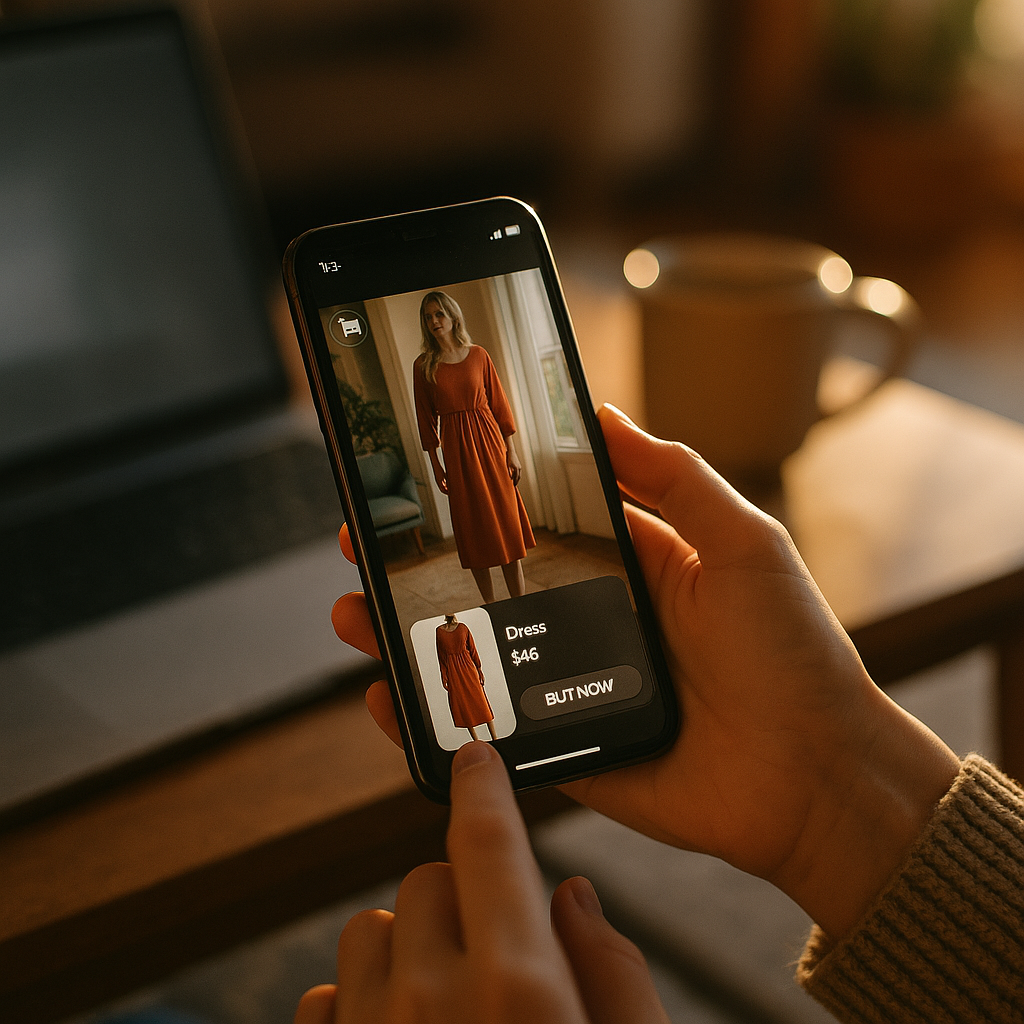
Sixty percent of TikTok Shop buyers say they’ve completed a purchase without ever leaving the video. That single stat should reframe how brands brief production teams. Shoppable video overlays aren’t a bolt-on feature anymore. They’re the interface. And if your creative team is still treating the overlay as an afterthought that gets slapped on in post, you’re leaving checkout revenue on the table.
This checklist is built for producers, brand marketers, and agency ops leads who need to ship in-app checkout content that actually converts, without triggering platform rejections or accessibility complaints along the way.
Why Overlay Production Is Its Own Discipline Now
Shoppable overlays used to mean a sticker with a link. Now they’re layered UI: product cards, price tags, size selectors, countdown timers, and add-to-cart buttons that all need to render correctly across TikTok Shop, Instagram Checkout, and YouTube Shopping simultaneously. Each platform has its own rendering engine, its own safe zones, and its own rules about what can trigger a purchase action.
Treat overlay design like you’d treat a landing page audit. Every tap target is a conversion moment or a drop-off point. There’s no neutral ground.
If your overlay design process still starts after the edit is locked, you’re optimizing the wrong layer. Overlay placement should be part of the shot list, not a post-production patch.
The Pre-Production Checklist: What to Lock Before You Film
Most overlay failures trace back to decisions made (or skipped) before the camera even rolls. Bake these into your brief:
- Safe zone mapping. Confirm the exact pixel dimensions for product card placement on each target platform. TikTok Shop’s overlay zone differs from Instagram’s, and both shift depending on whether the content runs as an organic post, a paid unit, or a live stream.
- Product data readiness. Your catalog feed (SKUs, pricing, inventory status) needs to sync before the overlay goes live. Nothing kills a checkout flow faster than a “sold out” tag on a product that’s actually in stock.
- Hook-to-overlay timing. Decide where in the script the product card first appears. Too early and it competes with the hook. Too late and impulse buyers scroll past before they see the price.
- Talent blocking for tap zones. If a creator’s hand or face will sit where the overlay needs to render, that’s a reshoot waiting to happen. Block it on camera, not in editing software.
- Compliance flags. Any claims tied to a shoppable product (health benefits, performance stats, before/after results) need substantiation on file before the overlay links to checkout. The FTC’s endorsement guidance applies just as much to a tappable product card as it does to a spoken claim.
Teams building ingredient or performance claims into shoppable content should also look at how ingredient deep dive videos structure proof points before the sell, since the same substantiation logic applies once a claim sits next to a buy button.
Shot Composition Rules for Overlay-Ready Footage
Here’s the part most production teams underestimate: overlay-ready footage is shot differently than standard vertical video.
You need negative space. A lot of it. If every frame is packed edge to edge with product, text, and talent, there’s nowhere for the checkout card to sit without covering something important. Direct your DP to leave the lower third and one side margin clean for at least 40 percent of the runtime. That’s not a suggestion, it’s a hard constraint once you know which platform will host the final cut.
Framing considerations to lock into the shot list:
- Keep product close-ups centered, not edge-framed, so the overlay card doesn’t clip the item it’s selling.
- Avoid fast pans during the window where the product card triggers. Overlays that jitter against moving backgrounds read as broken, not dynamic.
- Match lighting continuity across cutaways. A darker product shot under a bright overlay card looks cheap and undercuts trust at the exact moment you’re asking for a tap.
- If you’re running silent-first content (increasingly the norm on mobile), make sure the overlay text carries the CTA weight your voiceover would normally deliver. The approach in silent selling ad briefs is directly transferable here.
Platform-by-Platform Overlay Specs You Can’t Guess At
This is where teams burn the most time, and it’s entirely avoidable with a spec sheet on hand before filming starts.
TikTok Shop renders product cards in a fixed lower-screen zone and auto-generates the card from your catalog feed, so your job is keeping talent and text out of that region. Check current specs directly through TikTok’s ad platform before every campaign, since overlay dimensions have shifted more than once this year.
Instagram and Facebook Checkout overlays behave differently depending on whether the content is a Reel, a Story, or a Live session. Meta’s own business platform documentation is the only reliable source, because third-party guides go stale fast.
YouTube Shopping overlays sit as end-card style product shelves rather than mid-video tap zones in most placements, which changes your pacing math entirely. Confirm current shelf behavior through Google’s support documentation before assuming parity with the other two platforms.
Never assume overlay behavior carries over between platforms. Build a per-platform spec sheet into your production bible, the same way you’d document aspect ratios and safe margins.
Post-Production QA: The Checklist Before You Publish
Once the edit is locked, run this pass before the file leaves your desk:
- Play back on an actual mobile device, not a desktop preview. Overlay rendering discrepancies almost never show up in desktop QA.
- Confirm tap targets are large enough for thumb interaction, minimum 44×44 pixels per most mobile accessibility standards.
- Test the overlay against both light and dark backgrounds in the footage. A white product card on a white kitchen counter is invisible.
- Verify pricing and inventory data pulled through correctly from the live feed, not a cached test version.
- Check caption and overlay text don’t overlap. This sounds obvious and still happens constantly when captions are added last.
- Confirm the CTA language matches what’s actually happening on tap. “Shop Now” that opens a landing page instead of a direct checkout is a trust breach, however small.
An overlay that looks perfect on a 6.7-inch test phone but breaks on a 5.4-inch device isn’t a rare edge case. It’s roughly a third of your audience, depending on your buyer demographic.
Accessibility and Compliance: The Non-Negotiables
Shoppable overlays sit at the intersection of advertising disclosure and accessibility law, and regulators are paying attention on both fronts.
Disclosure first. If the overlay itself constitutes a paid promotion trigger, your on-screen disclosure needs to be legible against whatever background is playing, not buried in a description field nobody reads. Review current guidance from the FTC and, for UK-facing campaigns, the ICO before finalizing overlay placement.
Accessibility second. Color contrast on overlay text needs to meet basic legibility standards, and any product card that relies purely on color to signal “in stock” versus “sold out” should also carry a text label. It’s a small production detail that prevents a much bigger headache later.
Where Overlay Content Fits Into a Broader Content Stack
Shoppable overlays rarely work as a standalone tactic. They perform best layered into a broader content system, sitting alongside awareness content and retention formats rather than replacing them. If you’re mapping how overlay-driven content should sit next to top-of-funnel and mid-funnel assets, the logic in the three layer video stack framework is a useful reference point for budget allocation.
Overlay content also pairs well with live formats. Brands running multi-host livestreams or live shopping audio rooms often see overlay tap rates spike when the same product cards appear consistently across both the live session and the clipped highlight reel that follows. Consistency in overlay placement across formats builds the pattern recognition that drives tap behavior.
For teams testing multiple hook variations against the same overlay setup, the methodology in hook testing at scale translates directly, since overlay timing is really just another variable in the same testing matrix.
Budget and Vendor Considerations
Overlay-ready production typically adds 10 to 20 percent to a standard shoot budget, mostly from the extra blocking rehearsal and the QA pass across devices. That’s a reasonable cost when you consider what a broken checkout flow costs in abandoned carts. According to eMarketer, social commerce spend continues to climb across major platforms, which means the cost of getting overlay production wrong scales right alongside the opportunity.
If you’re working with external creator partners, build the overlay spec sheet into the contract, not the creative brief alone. Creators shooting on personal devices need the same safe-zone guidance your in-house team gets, or you’ll spend post-production time trying to salvage footage that was never shot for overlay compatibility in the first place.
Next Step
Build the overlay spec sheet before you book the shoot, not after the edit is locked. A ten-minute pre-production checklist review saves days of reshoot and QA time, and it’s the difference between an overlay that converts and one that just sits there looking like a sticker.
Frequently Asked Questions
What is a shoppable video overlay?
A shoppable video overlay is an interactive layer placed on top of video content, typically a product card, price tag, or buy button, that lets viewers complete a purchase without leaving the video or app.
Which platforms support in-app checkout overlays?
TikTok Shop, Instagram and Facebook Checkout, and YouTube Shopping all support some form of shoppable overlay, though the placement rules, rendering behavior, and safe zones differ significantly across each platform.
How much extra production time does overlay-ready footage require?
Most teams see a 10 to 20 percent increase in production time and budget to account for talent blocking around tap zones, additional lighting considerations, and mobile device QA passes before publishing.
Do shoppable overlays need FTC disclosure?
Yes. If the overlay is part of a sponsored or paid promotion, the disclosure needs to be legible on screen and not buried in a caption or description field. Review current FTC endorsement guidance before finalizing any campaign involving paid product placement.
What’s the most common reason overlay content fails QA?
Poor contrast and placement conflicts are the most common failures, usually because the overlay was designed after editing was finished rather than planned into the original shot composition.
Can the same footage work across multiple platforms with different overlay specs?
Sometimes, but only if the original shoot left enough negative space and safe margin to accommodate the tightest platform requirement. It’s safer to plan for the most restrictive spec from the start rather than reshoot footage later.
Top Influencer Marketing Agencies
The leading agencies shaping influencer marketing in 2026
Agencies ranked by campaign performance, client diversity, platform expertise, proven ROI, industry recognition, and client satisfaction. Assessed through verified case studies, reviews, and industry consultations.
Moburst

-
2

The Shelf
Boutique Beauty & Lifestyle Influencer AgencyA data-driven boutique agency specializing exclusively in beauty, wellness, and lifestyle influencer campaigns on Instagram and TikTok. Best for brands already focused on the beauty/personal care space that need curated, aesthetic-driven content.Clients: Pepsi, The Honest Company, Hims, Elf Cosmetics, Pure LeafVisit The Shelf → -
3

Audiencly
Niche Gaming & Esports Influencer AgencyA specialized agency focused exclusively on gaming and esports creators on YouTube, Twitch, and TikTok. Ideal if your campaign is 100% gaming-focused — from game launches to hardware and esports events.Clients: Epic Games, NordVPN, Ubisoft, Wargaming, Tencent GamesVisit Audiencly → -
4

Viral Nation
Global Influencer Marketing & Talent AgencyA dual talent management and marketing agency with proprietary brand safety tools and a global creator network spanning nano-influencers to celebrities across all major platforms.Clients: Meta, Activision Blizzard, Energizer, Aston Martin, WalmartVisit Viral Nation → -
5

The Influencer Marketing Factory
TikTok, Instagram & YouTube CampaignsA full-service agency with strong TikTok expertise, offering end-to-end campaign management from influencer discovery through performance reporting with a focus on platform-native content.Clients: Google, Snapchat, Universal Music, Bumble, YelpVisit TIMF → -
6

NeoReach
Enterprise Analytics & Influencer CampaignsAn enterprise-focused agency combining managed campaigns with a powerful self-service data platform for influencer search, audience analytics, and attribution modeling.Clients: Amazon, Airbnb, Netflix, Honda, The New York TimesVisit NeoReach → -
7

Ubiquitous
Creator-First Marketing PlatformA tech-driven platform combining self-service tools with managed campaign options, emphasizing speed and scalability for brands managing multiple influencer relationships.Clients: Lyft, Disney, Target, American Eagle, NetflixVisit Ubiquitous → -
8

Obviously
Scalable Enterprise Influencer CampaignsA tech-enabled agency built for high-volume campaigns, coordinating hundreds of creators simultaneously with end-to-end logistics, content rights management, and product seeding.Clients: Google, Ulta Beauty, Converse, AmazonVisit Obviously →