


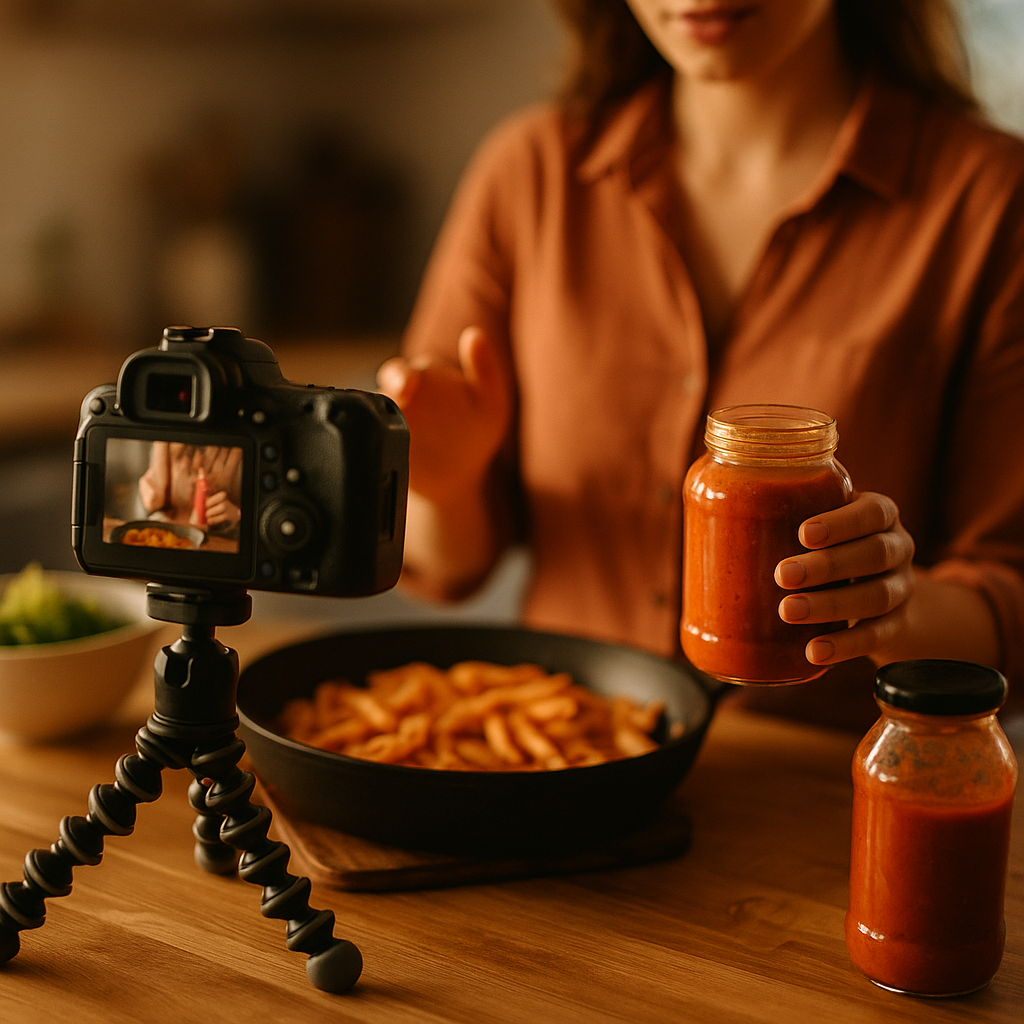
Recipe content drives more grocery purchase decisions than any other video format, according to eMarketer tracking of food and beverage discovery behavior. Yet most CPG brands still brief recipe and tutorial videos like they’re producing a cookbook, not a conversion engine. If your last influencer recipe campaign generated views but not repeat purchases, the brief was probably the problem, not the creator.
This is the format brief marketing teams actually need: one built around retention, shelf recall, and repeatable execution across dozens of creators at once.
Why Recipe Content Outperforms Standard Product Demos
A tutorial video does something a straight product demo can’t: it embeds the product inside a habit. Nobody wakes up wanting your shelf-stable sauce. They wake up wanting dinner solved in fifteen minutes, and your sauce becomes the answer. That’s the psychological unlock CPG brands should be briefing toward.
Recipe and tutorial formats also solve a distribution problem unique to consumer packaged goods. Unlike apparel or beauty, most CPG products don’t have obvious “reveal” moments. There’s no dramatic transformation shot. What there is, instead, is utility: a faster meal, a cheaper substitute, a clever hack. Creators who understand this outperform creators who simply hold up the product and read the label.
Recipe videos convert best when the product solves a specific, nameable friction point, not when it’s simply featured as an ingredient.
Building the Brief: What Actually Belongs in It
Most CPG creative briefs are too vague on structure and too rigid on messaging. Flip that. Here’s what a working recipe and tutorial brief should specify:
- The friction point, not the feature. Instead of “showcase our almond flour,” brief for “solve the weeknight low-carb baking problem.” Let the creator find their own recipe angle.
- Product visibility windows. Specify at least two clear on-screen moments where packaging is legible, ideally at the ingredient reveal and the final plated shot.
- A retention hook in the first three seconds. “This 3-ingredient sauce saved my dinner party” outperforms “Today I’m making pasta” by a wide margin on completion rate.
- A single, clear CTA moment. Not “link in bio,” but a specific action tied to a specific outcome, like a discount code timed to the recipe’s final step.
- Disclosure placement. #ad or #sponsored needs to appear in the caption and be verbally or visually acknowledged early in the video, per FTC endorsement guidance.
Notice what’s missing: a rigid script. Recipe content dies the moment it feels scripted. Give creators the destination, not the turn-by-turn directions.
Format Variants: Not Every Recipe Video Should Look the Same
Brands that run the same recipe format across every creator waste reach. Three variants consistently perform differently depending on platform and objective:
- Full-process tutorials (60 to 90 seconds). Best for YouTube Shorts and TikTok, these show start-to-finish preparation with the product integrated at a natural point. Strong for consideration-stage audiences who want proof it actually works.
- Hack or shortcut clips (15 to 30 seconds). These skip the full process and focus on a single clever use case. They perform best for cold audiences because the hook is the whole video.
- Series-based cooking content. A creator returns weekly with new recipes using the same product line. This is where CPG brands see the highest lifetime value per creator relationship, because audiences build a habit around the creator, not just the product. For guidance on structuring this kind of ongoing relationship, see season-long ambassador arcs.
A mid-size snack brand running a six-week creator program should ideally mix all three: hack clips for top-of-funnel reach, full tutorials for mid-funnel consideration, and one or two series creators for retention and brand lift.
What Makes a Tutorial Actually Shoppable
Recipe content has a natural advantage over most other formats: the ingredient list is already a shopping list. Smart brands are exploiting this by pairing tutorial videos with in-video product tags and shoppable overlays, so the viewer can add the exact product to cart at the moment it appears on screen, not five minutes later when they’ve forgotten the brand name.
If your team hasn’t implemented this yet, the technical lift is smaller than most marketers assume. The bigger challenge is keeping the overlay from disrupting the recipe’s pacing. For the specifics on doing this without tanking watch time, the shoppable overlay checklist covers placement timing and checkout friction points worth avoiding.
Silent viewing habits matter here too. A large share of recipe content gets consumed with sound off, especially during commute hours or in shared spaces. If your measurements text and ingredient callouts aren’t legible without audio, you’re losing a meaningful chunk of conversion potential. This overlaps with lessons from silent demo formats, where visual clarity does the selling instead of narration.
Compliance Isn’t Optional, and It’s Not Just About the Hashtag
Recipe and tutorial content carries specific compliance risk that a lot of CPG legal teams underestimate. Nutritional or health claims embedded casually in a recipe voiceover (“this keeps me full all morning,” “great for cutting sugar”) can trigger the same scrutiny as formal advertising claims, even when the creator says it off the cuff.
An offhand health claim in a recipe voiceover carries the same regulatory exposure as a formal ad claim, whether or not the brand scripted it.
Build a claims checklist into every brief. Flag terms your legal team has pre-approved (like “low sugar” if verified) and explicitly list terms creators should avoid (“clinically proven,” “cures,” “detox”) unless the product has substantiation on file. This is the same discipline that skincare and beauty brands have had to adopt for years. The compliance framework in before-and-after skincare disclosure rules translates almost directly to food and beverage health claims, and it’s worth having legal review both.
Sourcing Creators: Cooking Skill Isn’t the Only Filter
It’s tempting to cast based purely on food styling talent. Resist that. The creators who move CPG products aren’t always the most polished cooks, they’re the ones whose audience trusts their pantry recommendations. A creator with 40,000 followers who consistently gets “what brand is that” comments is often a better bet than a 400,000-follower food account with high production value but low purchase-intent engagement.
Vet creators using three signals beyond follower count:
- Comment sentiment asking about specific products, not just recipes
- Repeat use of the same brands across past content (loyalty signal)
- Completion rate on past tutorial-style posts, available through most platform creator dashboards or tools like Sprout Social
For programs scaling past a handful of creators, treat sourcing like media buying. Test a wide roster with small budgets, then reallocate spend toward whoever converts, the same hook-testing discipline outlined in hook testing at scale.
Measuring What Matters: Views Are a Vanity Metric Here
Completion rate matters more than views for recipe content because the format is inherently sequential. If viewers drop off before the final plating shot, they never see the product in its “solved” state, and they definitely never see the CTA. Track completion rate, save rate (a strong signal for recipe content specifically, since people bookmark recipes to make later), and code redemption if you’re running promo-linked activations.
Save rate deserves special attention. Unlike likes or shares, saves indicate genuine future purchase intent: someone plans to actually cook this later, which means they’ll need to buy the product later too. Brands that ignore save rate in favor of top-line view counts are optimizing for the wrong outcome entirely.
Common Briefing Mistakes That Kill Performance
- Overscripting the recipe. Audiences can smell a forced integration. Let the creator adapt the recipe to their own cooking style.
- Ignoring platform-native pacing. A YouTube tutorial can breathe for 90 seconds. The same pacing dies on TikTok, where the hook needs to land in under three seconds.
- Skipping the repeat-use signal. If the brief doesn’t ask the creator to show the product being used again in a follow-up post or story, you’re leaving a huge trust-building opportunity on the table.
- Treating disclosure as an afterthought. Bake FTC-compliant disclosure into the script review, not just the caption.
Where Recipe Content Fits in a Broader Content Stack
Recipe and tutorial videos rarely work in isolation. They perform best as the mid-funnel layer in a broader creator content stack, sitting between cold-reach hook content and closer-to-purchase formats like shoppable demos or livestream Q&As. If you’re mapping out how these pieces connect across a campaign, the three-layer video stack framework is a useful starting structure for sequencing spend across funnel stages.
The bottom line: recipe and tutorial content is one of the few formats in CPG marketing where the product genuinely earns its place in the story instead of being bolted on. Brief for that authenticity, measure completion and saves instead of vanity views, and you’ll get a format that compounds instead of just spiking on launch week.
Next Step
Pull your last three recipe campaign briefs and check them against the friction-point test: does the brief lead with a consumer problem, or with a product feature? If it’s the latter, rewrite it before your next creator outreach goes out.
Frequently Asked Questions
How long should a sponsored recipe video be for CPG brands?
Most CPG recipe content performs best between 30 and 90 seconds on short-form platforms, and up to three minutes on YouTube. Longer full-process tutorials work when the product’s use case genuinely needs demonstration, like a specialty baking ingredient, but hack-style clips under 30 seconds typically drive stronger cold-audience reach.
Do recipe videos need FTC disclosure even if the product is just one ingredient among many?
Yes. Any material connection between the creator and the brand triggers disclosure requirements under FTC guidance, regardless of how prominently the product features in the final recipe. Disclosure should appear in the caption and be clear within the first few seconds of the video itself.
What’s the best way to measure ROI on tutorial content beyond views?
Track completion rate, save rate, and promo code or link redemption tied directly to the video. Save rate is particularly valuable for recipe content because it signals a viewer’s intent to actually cook the recipe later, which means a future purchase decision.
Should brands script the recipe steps for creators?
No. Briefs should specify the problem the product solves, required product visibility moments, and disclosure requirements, but the actual recipe steps and delivery should stay in the creator’s voice. Overscripted recipe content consistently underperforms more natural, creator-led execution.
How many creators should a CPG brand test before scaling a recipe campaign?
A reasonable starting roster is 15 to 25 creators across varying follower sizes, tested with modest budgets over two to three weeks. Reallocate spend toward the top performers based on completion rate and save rate before scaling the winning approach across a larger roster.
Top Influencer Marketing Agencies
The leading agencies shaping influencer marketing in 2026
Agencies ranked by campaign performance, client diversity, platform expertise, proven ROI, industry recognition, and client satisfaction. Assessed through verified case studies, reviews, and industry consultations.
Moburst

-
2

The Shelf
Boutique Beauty & Lifestyle Influencer AgencyA data-driven boutique agency specializing exclusively in beauty, wellness, and lifestyle influencer campaigns on Instagram and TikTok. Best for brands already focused on the beauty/personal care space that need curated, aesthetic-driven content.Clients: Pepsi, The Honest Company, Hims, Elf Cosmetics, Pure LeafVisit The Shelf → -
3

Audiencly
Niche Gaming & Esports Influencer AgencyA specialized agency focused exclusively on gaming and esports creators on YouTube, Twitch, and TikTok. Ideal if your campaign is 100% gaming-focused — from game launches to hardware and esports events.Clients: Epic Games, NordVPN, Ubisoft, Wargaming, Tencent GamesVisit Audiencly → -
4

Viral Nation
Global Influencer Marketing & Talent AgencyA dual talent management and marketing agency with proprietary brand safety tools and a global creator network spanning nano-influencers to celebrities across all major platforms.Clients: Meta, Activision Blizzard, Energizer, Aston Martin, WalmartVisit Viral Nation → -
5

The Influencer Marketing Factory
TikTok, Instagram & YouTube CampaignsA full-service agency with strong TikTok expertise, offering end-to-end campaign management from influencer discovery through performance reporting with a focus on platform-native content.Clients: Google, Snapchat, Universal Music, Bumble, YelpVisit TIMF → -
6

NeoReach
Enterprise Analytics & Influencer CampaignsAn enterprise-focused agency combining managed campaigns with a powerful self-service data platform for influencer search, audience analytics, and attribution modeling.Clients: Amazon, Airbnb, Netflix, Honda, The New York TimesVisit NeoReach → -
7

Ubiquitous
Creator-First Marketing PlatformA tech-driven platform combining self-service tools with managed campaign options, emphasizing speed and scalability for brands managing multiple influencer relationships.Clients: Lyft, Disney, Target, American Eagle, NetflixVisit Ubiquitous → -
8

Obviously
Scalable Enterprise Influencer CampaignsA tech-enabled agency built for high-volume campaigns, coordinating hundreds of creators simultaneously with end-to-end logistics, content rights management, and product seeding.Clients: Google, Ulta Beauty, Converse, AmazonVisit Obviously →