


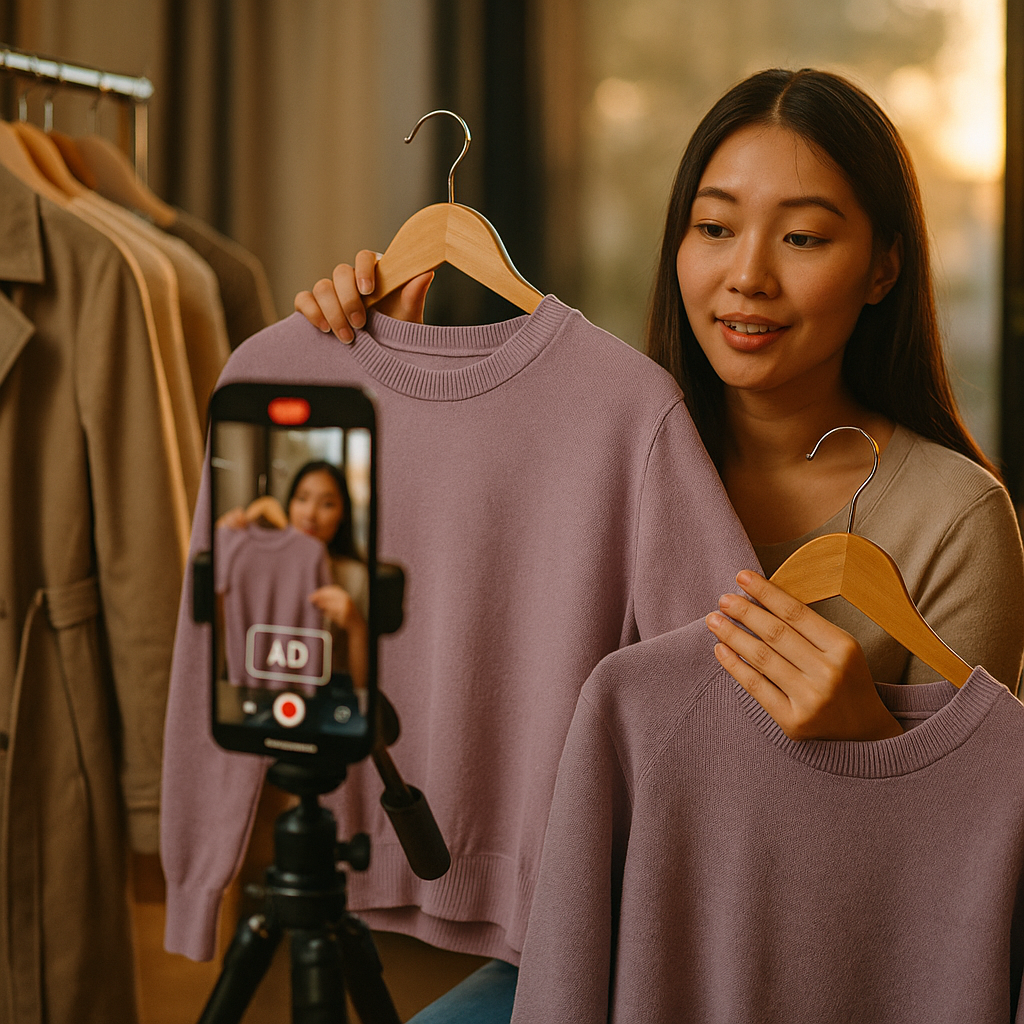
Ninety seconds. That is roughly how long the average viewer stays on a livestream shopping segment before deciding to buy, scroll, or bounce, according to platform data cited by eMarketer. In that window, a disclosure buried in a video description does nothing. Livestream shopping disclosures have to live inside the stream itself, timed to the moment a viewer actually sees the product pitch, or the FTC will treat the omission as if it never happened.
The Old Disclosure Playbook Doesn’t Survive Live Commerce
Static content gave brands the luxury of time. A sponsored Instagram post could carry #ad in the caption, and regulators generally accepted that as sufficient if it was clear and conspicuous. Livestreams don’t work that way. A creator might mention a sponsor at minute two, pivot to organic content for ten minutes, then loop back to a paid pitch at minute fifteen. If the disclosure only appears once, at the start, most of the audience watching the actual sales moment never sees it.
We covered the baseline requirements in our FTC placement playbook for live shopping, and the core issue hasn’t changed: disclosure timing matters as much as disclosure wording. What has changed is the scale. TikTok Shop, Amazon Live, and YouTube Shopping have turned livestream commerce into a channel doing billions in projected volume, per Statista estimates on social commerce growth. Volume like that means the FTC has more surface area to audit, and more incentive to make an example out of a brand that treated disclosure as an afterthought.
A one time disclosure at the top of a ninety minute livestream is functionally the same as no disclosure at all for the 80% of viewers who join mid stream.
What “Real Time” Actually Means for FTC Labels
Real time disclosure doesn’t mean announcing a partnership once and moving on. It means the label persists or recurs in sync with the commercial content. The FTC’s guidance on endorsements has always required disclosures to be unavoidable, but live formats add a layer: unavoidable for whoever happens to be watching at that second, not whoever tuned in at the start.
Practically, that breaks into three components brands need to build into every live commerce activation:
- Persistent on screen labels. A visible “Paid Partnership” or “Sponsored” watermark that stays on screen throughout the segment, not just during the intro.
- Verbal repetition tied to product mentions. Every time the creator pivots into a sales pitch or link drop, a verbal disclosure should accompany it, even if it feels repetitive to the host.
- Chat pinned reminders. A pinned comment or chat banner reinforcing the relationship for viewers who join after the verbal disclosure has already passed.
None of this is exotic. Most of it is a UX and production discipline problem dressed up as a legal one. The brands getting this right are the ones treating disclosure as a creative asset, built into the stream’s graphics package, rather than a compliance checkbox someone remembers at the last minute.
Why “I Said It Once” Isn’t a Defense
Legal teams sometimes push back with a version of “the creator disclosed it, so we’re covered.” That logic doesn’t hold up once you look at how livestream audiences actually behave. Viewers drift in and out, platforms clip highlights for replay, and algorithms surface mid stream moments as standalone short form content on TikTok and Instagram Reels. If a clipped fifteen second segment shows a product pitch with no disclosure anywhere in frame, that clip is now a standalone violation, regardless of what happened at minute zero of the original stream.
This is the same failure pattern we flagged in dark posted ad campaigns, where disclosure existed in one format but disappeared once the content got repurposed. Livestreams are worse because the repurposing happens automatically, often without brand or creator knowledge, the moment a platform’s clipping tool grabs a segment.
Building the Embedded Label: What Brands Should Actually Spec
If you’re briefing a production team or a livestream shopping agency, the disclosure requirements need to be in the creative brief, not the legal appendix. Here’s what that looks like in practice.
- Lock disclosure cadence to a timer, not a moment. Set a rule: verbal or on screen disclosure every five to seven minutes minimum, regardless of content flow.
- Use platform native disclosure tools as a floor, not a ceiling. TikTok Shop and YouTube both offer built in “paid partnership” toggles. Turn them on, but don’t assume they’re sufficient on their own, since our review of YouTube’s auto disclosure labels found brands still carry residual risk when they treat the automated tag as a full substitute for creator level disclosure.
- Brief the creator on trigger phrases. Every time a discount code, affiliate link, or “swipe up” moment happens, that’s a trigger for a fresh verbal disclosure.
- Archive the full stream, not just the highlight reel. If the FTC or a state AG comes asking, you need the raw footage showing disclosure timing, not just the polished recap video.
- Audit clipped content separately. Assign someone to check what gets auto clipped and redistributed, and add disclosure back in manually if the platform strips it out.
None of these steps are expensive. What they cost is attention, and a willingness to slow down a fast moving production process to get the label right. That tradeoff is cheap compared to a formal FTC inquiry.
Platform Differences You Can’t Ignore
TikTok Shop, Amazon Live, and Instagram Live each handle disclosure tooling differently, and treating them as interchangeable is a mistake.
TikTok Shop’s livestream volume has grown fast enough that it’s now drawing scrutiny beyond disclosure alone. Our piece on how TikTok Shop live sales trigger state tax nexus issues is worth a read if you’re scaling live commerce on that platform, because disclosure risk and tax exposure often surface in the same compliance review. Amazon Live ties disclosure more tightly to its influencer storefront program, which has its own labeling conventions baked into the shopping widget. Instagram Live still leans heavily on manual disclosure since Meta’s native tools for live shopping disclosure are less mature than TikTok’s or Amazon’s.
The takeaway: don’t build one disclosure template and copy paste it across platforms. Build a disclosure standard, then adapt the mechanics to whatever tools each platform actually gives you.
Where This Fits Into Broader Compliance Operations
Livestream disclosure shouldn’t sit in isolation from the rest of your creator compliance stack. If you already run a pre launch creator ad review process, add a livestream specific module to it: disclosure cadence, platform toggle confirmation, and a post stream clip audit. Treat it the same way you’d treat contract review or FTC labeling for static posts, just with a tighter clock.
Brands running high volume live commerce programs are also finding value in centralizing disclosure monitoring the way Sprout Social and similar platforms centralize social listening. You want one dashboard flagging when a stream has gone more than ten minutes without a disclosure refresh, not a producer manually watching a stopwatch.
Disclosure compliance in live commerce is a production discipline problem first and a legal problem second. Fix the workflow and the legal exposure shrinks on its own.
What Happens When Brands Skip This
The FTC has been explicit that endorsement guidance applies across formats, live or static, and has signaled increased attention to social commerce as spending shifts toward it. Review the agency’s own endorsement guidance resources if you want the source language your legal team will eventually ask for. State attorneys general have also shown willingness to act on deceptive advertising claims independent of federal action, which means a brand can face exposure on two fronts from a single undisclosed livestream segment.
The reputational cost tends to outlast the legal one anyway. A clipped, undisclosed sales pitch circulating on social media does more brand damage in a week than most settlements do in a year. Consumers are savvier about sponsored content than they were even a few years ago, and platforms like HubSpot have published research showing trust erosion is steep once an audience feels misled about a paid relationship.
Next Step
Audit your next scheduled livestream before it airs: confirm the disclosure cadence is timed to content, not just calendar minutes, and assign one person to review clipped segments within 24 hours of the stream ending. That single habit closes most of the gap between a compliant program and an expensive correction.
FAQs
How often should a livestream repeat its sponsorship disclosure?
A reasonable minimum is every five to seven minutes, or immediately following any product pitch, discount code mention, or link drop, whichever comes first.
Do platform native disclosure tags satisfy FTC requirements on their own?
No. Native tags like TikTok’s paid partnership label are a useful floor, but the FTC still expects clear and conspicuous disclosure that a reasonable viewer wouldn’t miss, which often requires verbal or on screen reinforcement beyond the automated tag.
What happens if a platform auto clips a livestream and strips the disclosure?
The brand and creator remain responsible for the disclosure gap even if the platform’s tooling caused it. Brands should audit auto generated clips regularly and request takedowns or manual disclosure additions where needed.
Does the same disclosure standard apply across TikTok Shop, Amazon Live, and Instagram Live?
The underlying legal standard is the same, but the mechanics differ by platform. Each platform’s native tools and audience behavior require a slightly different execution of the same disclosure principle.
Who is legally responsible if a creator forgets to disclose during a live segment?
Both the brand and the creator can face liability under FTC guidance. Brands are expected to have monitoring and training processes in place, which means “the creator forgot” is not a reliable defense.
Top Influencer Marketing Agencies
The leading agencies shaping influencer marketing in 2026
Agencies ranked by campaign performance, client diversity, platform expertise, proven ROI, industry recognition, and client satisfaction. Assessed through verified case studies, reviews, and industry consultations.
Moburst

-
2

The Shelf
Boutique Beauty & Lifestyle Influencer AgencyA data-driven boutique agency specializing exclusively in beauty, wellness, and lifestyle influencer campaigns on Instagram and TikTok. Best for brands already focused on the beauty/personal care space that need curated, aesthetic-driven content.Clients: Pepsi, The Honest Company, Hims, Elf Cosmetics, Pure LeafVisit The Shelf → -
3

Audiencly
Niche Gaming & Esports Influencer AgencyA specialized agency focused exclusively on gaming and esports creators on YouTube, Twitch, and TikTok. Ideal if your campaign is 100% gaming-focused — from game launches to hardware and esports events.Clients: Epic Games, NordVPN, Ubisoft, Wargaming, Tencent GamesVisit Audiencly → -
4

Viral Nation
Global Influencer Marketing & Talent AgencyA dual talent management and marketing agency with proprietary brand safety tools and a global creator network spanning nano-influencers to celebrities across all major platforms.Clients: Meta, Activision Blizzard, Energizer, Aston Martin, WalmartVisit Viral Nation → -
5

The Influencer Marketing Factory
TikTok, Instagram & YouTube CampaignsA full-service agency with strong TikTok expertise, offering end-to-end campaign management from influencer discovery through performance reporting with a focus on platform-native content.Clients: Google, Snapchat, Universal Music, Bumble, YelpVisit TIMF → -
6

NeoReach
Enterprise Analytics & Influencer CampaignsAn enterprise-focused agency combining managed campaigns with a powerful self-service data platform for influencer search, audience analytics, and attribution modeling.Clients: Amazon, Airbnb, Netflix, Honda, The New York TimesVisit NeoReach → -
7

Ubiquitous
Creator-First Marketing PlatformA tech-driven platform combining self-service tools with managed campaign options, emphasizing speed and scalability for brands managing multiple influencer relationships.Clients: Lyft, Disney, Target, American Eagle, NetflixVisit Ubiquitous → -
8

Obviously
Scalable Enterprise Influencer CampaignsA tech-enabled agency built for high-volume campaigns, coordinating hundreds of creators simultaneously with end-to-end logistics, content rights management, and product seeding.Clients: Google, Ulta Beauty, Converse, AmazonVisit Obviously →