


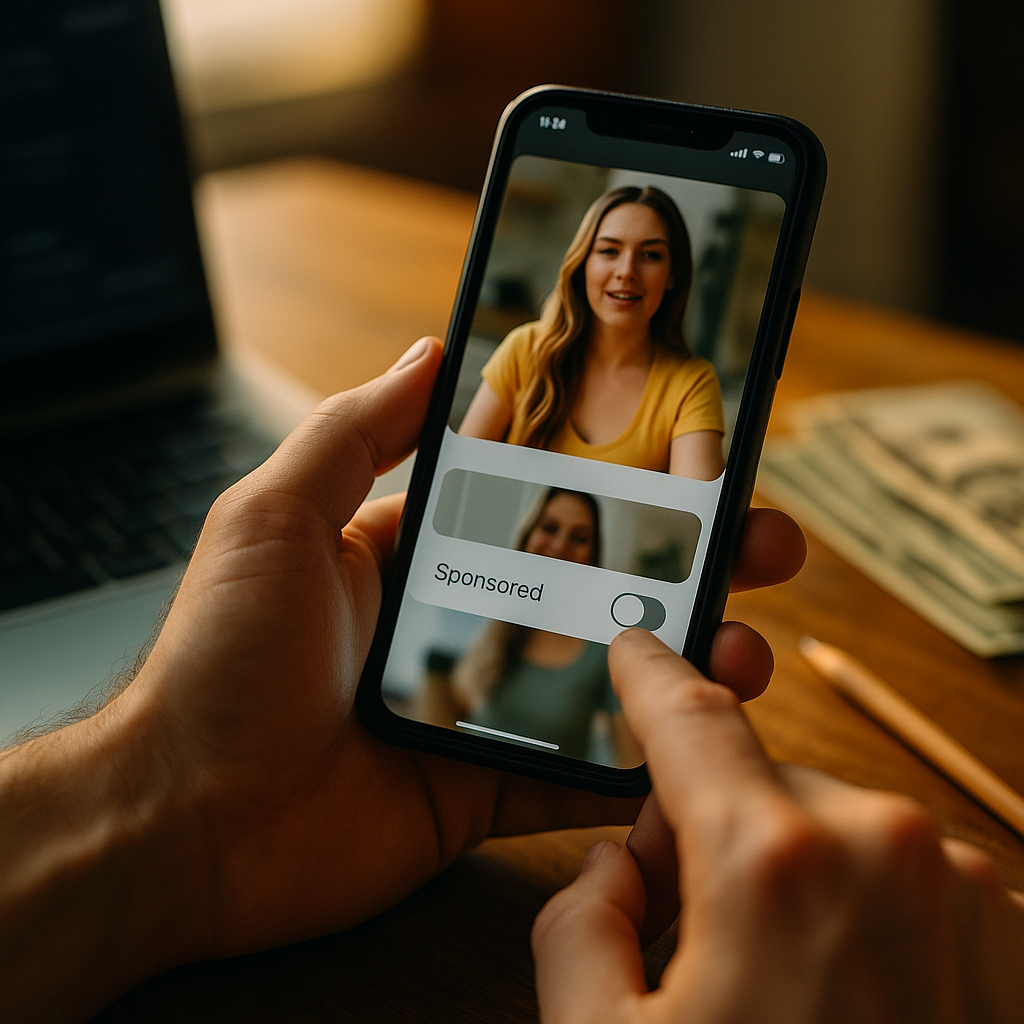
A dark post can rack up two million impressions and never once appear on the creator’s actual feed. That’s the entire point of the format, and it’s also exactly why disclosure rules for dark posted ads have become one of the messiest compliance blind spots in influencer marketing. If the ad never shows up organically, who’s checking that the sponsorship label is even there?
Dark Posts Aren’t a Loophole, But Brands Keep Treating Them Like One
A dark posted ad is content published through a creator’s own profile credentials, using their handle, their profile photo, their follower trust equity, but distributed exclusively through paid media targeting. It never lands on the creator’s public timeline. Their followers may never see it at all. Only the people a media buyer targets ever encounter it.
Meta calls this Partnership Ads, TikTok calls it Spark Ads sourced from a creator’s organic post or a “dark” variant launched straight into ad auction without ever going live on the creator’s page. The mechanics differ by platform, but the compliance question is identical: does the audience seeing this paid placement know it’s sponsored?
The FTC’s Endorsement Guides don’t distinguish between an organic post and a dark post. If a reasonable consumer wouldn’t otherwise know the content is paid, disclosure is required, regardless of where or how the ad was launched.
That’s the crux of it. Marketers who assume dark posts sit in some regulatory gray zone because they “aren’t really posts” are making a costly assumption. The FTC evaluates the consumer experience, not the publishing mechanism.
Why the Consumer Never Sees the Organic Disclosure They’re Counting On
Here’s the operational problem. Plenty of brand teams still rely on the creator’s original caption for disclosure. The logic goes: the creator wrote “#ad” in their organic post, so the whitelisted or dark version inherits that same disclosure. Except it often doesn’t.
Platforms frequently truncate captions in ad units. Carousel and Reels ad formats crop text below the fold. A disclosure buried at the bottom of a long caption, visible on the original post, can get clipped entirely when that same content is repurposed into a paid unit targeting a cold audience. The viewer sees the creator’s face, hears their voice, trusts their tone, and never encounters the word “ad,” “sponsored,” or “paid partnership” anywhere in their actual viewing experience.
This is functionally the same failure mode we’ve flagged with short-form clips that strip context, disclosure that technically exists somewhere in the content chain but never reaches the consumer at the moment of exposure.
The Platform Label Isn’t a Compliance Shortcut
Meta’s “Paid partnership with” tag and TikTok’s built-in disclosure toggle are useful, but they aren’t a substitute for a documented compliance process. Here’s why brand teams get burned:
- The tag only appears if the creator or brand actively enables it during ad setup, and default settings vary by ad manager version.
- Third-party ad networks and programmatic extensions of a campaign sometimes strip platform-native metadata, including disclosure tags.
- A tag that reads “Paid partnership with [Creator]” satisfies platform policy but may not satisfy FTC’s “clear and conspicuous” standard if it’s small, low-contrast, or positioned where users don’t look.
- Multi-market campaigns face inconsistent enforcement of these tags across regions, which creates uneven disclosure even within a single global flight.
Relying on a platform checkbox as your entire compliance strategy is how brands end up with FTC inquiry letters. The tag is a helpful signal, not a legal shield.
Where This Intersects With Whitelisting Contracts
Dark posting almost always requires a whitelisting agreement, the contractual permission that lets a brand use a creator’s handle to run paid media. But whitelisting contracts are frequently written around usage rights and revenue splits, not disclosure obligations. That’s a gap.
If your contract grants media buying rights but never specifies who is responsible for embedding disclosure in the ad creative itself, you’ve created ambiguity exactly where regulators look first. We’ve covered this exposure before in the context of whitelisting expiration audits, and the same principle applies here: undefined disclosure ownership in a whitelisting agreement is a liability sitting in plain sight.
Brands should treat disclosure language as a mandatory contract clause, not an assumed responsibility. Spell out who inserts the label, at what stage of production, and who audits it before launch.
A Working Checklist for Dark Post Disclosure
Marketing ops teams running whitelisted or dark posted campaigns should build disclosure verification into the launch workflow, not treat it as a one-time creative review. A practical sequence looks like this:
- Confirm the disclosure language is baked into the video or image asset itself, not just the caption, so it survives cropping and platform reformatting.
- Verify the platform’s native paid partnership tag is enabled at the ad account level before the buy goes live, not just at the organic post stage.
- Pull a preview of the actual ad unit as it will render across placements (feed, Reels, in-stream) and confirm disclosure is visible without scrolling or tapping.
- Document who approved the disclosure treatment and archive a screenshot for every unique creative variant, since A/B tests often multiply versions fast.
- Re-check disclosure any time creative is refreshed mid-flight. Swapped hooks or new intros can accidentally remove a disclosure that was baked into the original cut.
This mirrors the discipline we’ve recommended in a broader pre launch creator ad review checklist, but dark posts deserve a dedicated pass because they skip the organic publishing step where most brands catch disclosure errors by default.
Cross-Border Campaigns Make This Harder, Not Easier
A dark post targeting a UK audience needs to satisfy the ICO and CAP Code expectations, which are stricter about placement and wording than U.S. norms. A campaign running the same creative into a German feed needs to account for local advertising law that treats influencer disclosure as a labeling requirement with its own enforcement history. If your ad ops team is spinning up one dark post and geo-targeting it across six markets, a single disclosure treatment rarely clears every bar.
This is the same complexity we’ve explored around location gated disclosure policy work: one static asset can’t carry the compliance weight of six different regulatory regimes. Dark posts, because they bypass organic review entirely, are especially prone to this failure since nobody in-market ever sees the ad before it launches.
Where Brands Get Exposed When Things Go Wrong
When a dark post disclosure failure surfaces, it’s rarely the creator who takes the regulatory hit first. Brands hold the advertiser relationship with the platform and typically carry the primary FTC exposure, even when the creative originated with an independent creator. That exposure compounds when whitelisting contracts are silent on disclosure ownership, because there’s no clean contractual basis to push liability back to the creator or their agency.
Ad platforms are also getting more aggressive about auto-flagging sponsored content, which sounds helpful until you realize automated detection creates its own paper trail. If your dark post gets flagged by automated disclosure detection and your team didn’t catch the same issue in review, that timestamp gap becomes evidence of inadequate process, not just an isolated miss.
The safest posture treats every dark post like a first-party ad unit from a compliance standpoint, because that’s effectively what it is. The creator’s handle is just the delivery vehicle.
Frequently Asked Questions
FAQs
Does a dark posted ad need the same disclosure as an organic sponsored post?
Yes. The FTC’s Endorsement Guides apply based on whether a reasonable consumer would recognize the content as paid, not based on whether the post appears organically or only through paid targeting. Dark posts carry the same disclosure obligation as any sponsored placement.
Is the platform’s “Paid partnership” tag enough to satisfy FTC requirements?
Not on its own. The tag helps, but it must also meet the “clear and conspicuous” standard: visible without extra clicks, legible in size and contrast, and present regardless of placement or cropping. Brands should verify disclosure inside the creative itself as a backup.
Who is legally responsible for disclosure on a dark posted ad, the brand or the creator?
Both can face scrutiny, but brands typically hold primary exposure as the party running the paid media buy. Whitelisting contracts should explicitly assign disclosure responsibility to avoid ambiguity if a compliance issue surfaces.
Can disclosure get lost when a dark post is repurposed across multiple ad formats?
Yes, this is one of the most common failure points. Captions get truncated in carousel or Reels formats, and disclosure text placed only in the caption can disappear entirely. Disclosure embedded in the visual asset itself survives format changes more reliably.
Do dark post disclosure requirements differ by country?
Yes. The UK’s CAP Code and various EU national advertising regulators have specific placement and wording expectations that differ from U.S. FTC guidance. Campaigns running the same dark post creative across multiple markets need market-specific disclosure review, not a single global template.
Bottom line: audit your dark post creative like it’s a standalone ad unit, not an extension of an organic post’s disclosure. Bake the label into the asset, assign ownership in the whitelisting contract, and check every reformatted variant before it goes live.
Top Influencer Marketing Agencies
The leading agencies shaping influencer marketing in 2026
Agencies ranked by campaign performance, client diversity, platform expertise, proven ROI, industry recognition, and client satisfaction. Assessed through verified case studies, reviews, and industry consultations.
Moburst

-
2

The Shelf
Boutique Beauty & Lifestyle Influencer AgencyA data-driven boutique agency specializing exclusively in beauty, wellness, and lifestyle influencer campaigns on Instagram and TikTok. Best for brands already focused on the beauty/personal care space that need curated, aesthetic-driven content.Clients: Pepsi, The Honest Company, Hims, Elf Cosmetics, Pure LeafVisit The Shelf → -
3

Audiencly
Niche Gaming & Esports Influencer AgencyA specialized agency focused exclusively on gaming and esports creators on YouTube, Twitch, and TikTok. Ideal if your campaign is 100% gaming-focused — from game launches to hardware and esports events.Clients: Epic Games, NordVPN, Ubisoft, Wargaming, Tencent GamesVisit Audiencly → -
4

Viral Nation
Global Influencer Marketing & Talent AgencyA dual talent management and marketing agency with proprietary brand safety tools and a global creator network spanning nano-influencers to celebrities across all major platforms.Clients: Meta, Activision Blizzard, Energizer, Aston Martin, WalmartVisit Viral Nation → -
5

The Influencer Marketing Factory
TikTok, Instagram & YouTube CampaignsA full-service agency with strong TikTok expertise, offering end-to-end campaign management from influencer discovery through performance reporting with a focus on platform-native content.Clients: Google, Snapchat, Universal Music, Bumble, YelpVisit TIMF → -
6

NeoReach
Enterprise Analytics & Influencer CampaignsAn enterprise-focused agency combining managed campaigns with a powerful self-service data platform for influencer search, audience analytics, and attribution modeling.Clients: Amazon, Airbnb, Netflix, Honda, The New York TimesVisit NeoReach → -
7

Ubiquitous
Creator-First Marketing PlatformA tech-driven platform combining self-service tools with managed campaign options, emphasizing speed and scalability for brands managing multiple influencer relationships.Clients: Lyft, Disney, Target, American Eagle, NetflixVisit Ubiquitous → -
8

Obviously
Scalable Enterprise Influencer CampaignsA tech-enabled agency built for high-volume campaigns, coordinating hundreds of creators simultaneously with end-to-end logistics, content rights management, and product seeding.Clients: Google, Ulta Beauty, Converse, AmazonVisit Obviously →