


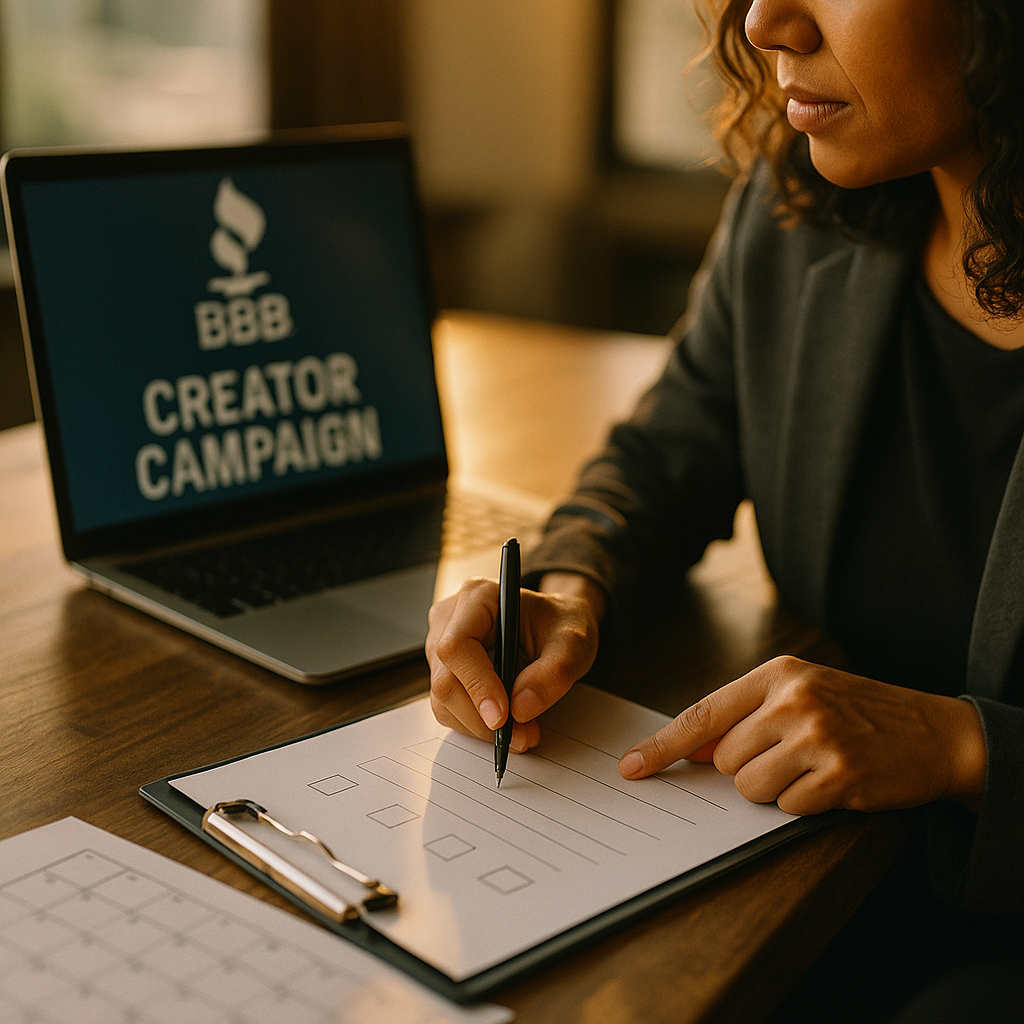
Roughly 67% of consumers say they can’t reliably spot a paid influencer post, according to research cited by the FTC in recent enforcement discussions. That gap between what audiences see and what brands disclose is exactly why BBB National Programs self regulatory review has become a live risk for creator campaigns, not a theoretical one. If your influencer program hasn’t been stress tested against this kind of scrutiny, you’re gambling with brand equity you didn’t budget for.
What BBB National Programs’ Review Actually Covers
BBB National Programs oversees the National Advertising Division (NAD), the industry’s longest running self regulatory body for advertising claims. NAD doesn’t just police TV spots and print ads anymore. It has spent the last several years pulling creator content, affiliate posts, and brand sponsored UGC into its case docket, often triggered by competitor challenges rather than consumer complaints.
Here’s the part brands underestimate: NAD reviews aren’t limited to whether a product claim is true. Reviewers examine whether sponsorship was clearly disclosed, whether the creator’s endorsement reflects actual use of the product, and whether the brand exercised reasonable oversight over what got published. That last point is where most marketing teams get caught flat footed.
NAD treats “we didn’t know what the creator posted” as an aggravating factor, not a defense. Lack of oversight is itself the violation.
Why This Matters More in 2026 Than It Did Before
Creator marketing spend has scaled faster than most compliance functions could keep pace with. Brands running hundreds of micro influencer relationships simultaneously often have no centralized review process, which is precisely the environment NAD challenges are designed to expose. Add in the rise of AI generated content, synthetic avatars, and livestream shopping formats, and the surface area for a referral has multiplied. Our earlier breakdown of virtual influencer disclosure gaps covers a related front where the same oversight logic applies.
How a Campaign Actually Lands in Front of NAD
Most brands assume regulatory scrutiny starts with a government agency. In self regulatory review, it usually starts with a rival. NAD’s competitor challenge process lets one advertiser formally contest another’s claims or disclosure practices, and creator campaigns are increasingly the target because they’re easier to screenshot and harder to defend than a scripted TV ad.
- A competitor flags a sponsored post lacking a clear #ad or #sponsored tag.
- A consumer advocacy group monitors a category (supplements, financial products, beauty claims) and forwards examples.
- NAD’s own monitoring program, which actively scans social platforms, surfaces a pattern across a brand’s creator roster.
Once a case opens, the brand gets a formal inquiry letter and a response deadline, typically 30 days. That’s not a lot of time to reconstruct months of creator briefs, contracts, and content approvals if you haven’t kept them organized from day one.
The Documentation Auditors Actually Want
If you’ve ever prepped for an FTC inquiry, this will feel familiar, but NAD’s standards go a step further on substantiation. Reviewers want to see the full chain: the brief given to the creator, the disclosure language required, the approval or edit log, and proof the final post matched what was approved.
Practically, that means your creator campaign files should include:
- Signed contracts specifying disclosure requirements in the exact platform language (not just “follow FTC guidelines”).
- Screenshots or archived versions of every live post, dated and timestamped.
- Correspondence showing the brand reviewed and approved final creative before or shortly after posting.
- Substantiation for any product claim the creator made on the brand’s behalf, even ad libbed ones.
This is where the pre launch review checklist approach pays for itself. Brands that build a standardized intake and approval step before content goes live have a paper trail ready on request. Brands that rely on informal Slack approvals or verbal sign off usually don’t, and that absence gets read as negligence.
A 30 day response window isn’t enough time to build a compliance file from scratch. It’s only enough time to retrieve one that already exists.
Disclosure Language Is Where Most Campaigns Fail First
NAD’s reviewers apply a consistency standard: the disclosure has to be unavoidable, not technically present. A #ad buried in a string of 30 hashtags doesn’t pass. Neither does a disclosure that only appears in a video description when the claim happens in the first three seconds of the clip.
This is especially acute in fast moving formats. Livestream shopping segments, ephemeral Stories, and ultra short video clips all compress the window a viewer has to register that content is sponsored. We’ve covered how this plays out specifically in livestream shopping disclosure practices and in short form AI clip disclosure gaps, and the same principle applies to a self regulatory review: the label needs to appear at the moment the claim is made, not bolted on afterward.
Dark posted ads add another wrinkle. If a creator’s sponsored content never appears organically and only runs as a targeted ad, disclosure obligations don’t disappear, they intensify, because the audience has even less context about the relationship. Our piece on dark posted ad compliance walks through why brands can’t treat these placements as exempt from creator disclosure rules just because they’re run through ad managers instead of organic feeds.
Building a Review Ready Workflow Before You Need One
The brands that come out of a NAD case with minimal damage are the ones who treated compliance as an operational function, not a legal afterthought. That means a few structural habits worth adopting now, before a competitor challenge lands in your inbox.
- Centralize creator content archiving. Every sponsored post, story, and livestream segment should be captured and stored with a timestamp the moment it goes live. Platform content disappears or gets edited constantly.
- Standardize disclosure language in contracts. Don’t leave phrasing to creator discretion. Specify exact hashtag placement, verbal disclosure timing for video, and on-screen text requirements.
- Run a substantiation check on every claim. If a creator says a product “cleared my skin in a week” or “doubled my engagement,” someone on the brand side needs to know what evidence backs that up.
- Assign clear internal ownership. Ambiguity about who approves creator content is itself a compliance gap. NAD and the FTC both weigh whether a brand had a functioning review process, not just whether one violation occurred.
This overlaps significantly with the operational risk we’ve flagged in managed creator program oversight. The more control a brand exercises over creator output, the more responsibility it takes on for what that output says, which is exactly the standard self regulatory reviewers apply.
What Happens When a Case Actually Opens
If NAD opens an inquiry, the process typically unfolds in stages: initial notice, brand response with substantiation, possible follow up requests, and a final decision. NAD doesn’t have direct enforcement power, but it can refer non compliant cases to the FTC, and it publishes decisions publicly, which means reputational fallout is real even without a fine attached.
Compliance teams should also watch how this intersects with state level exposure. A campaign that draws NAD attention often has adjacent risk in areas like state tax nexus triggers or state privacy law obligations, because the same sloppy documentation that creates a disclosure gap tends to create gaps elsewhere too.
According to guidance from the FTC, the standard for adequate disclosure hasn’t gotten looser as formats have multiplied, it’s gotten stricter in practice, with more emphasis on placement and timing than on the mere presence of a hashtag. Industry benchmarking from Sprout Social and consumer trust data from Statista both point the same direction: audience skepticism about sponsored content is rising, which means self regulatory bodies have more public pressure to act on complaints, not less.
A Quick Gut Check for Your Current Program
Ask three questions about your active creator campaigns right now. Could you produce a timestamped archive of every live post within 48 hours? Does every creator contract specify exact disclosure placement rather than a general FTC reference? Is there a named person who signs off on creative before it publishes? If the answer to any of these is no, you have exposure that predates any specific complaint.
FAQs
What is BBB National Programs’ self regulatory review?
It’s an advertising oversight process run through the National Advertising Division (NAD), which reviews ad claims and disclosure practices, including influencer and creator content, often triggered by competitor challenges rather than government action.
Can NAD actually penalize a brand?
NAD doesn’t impose fines directly, but it publishes decisions publicly and can refer non compliant cases to the FTC, which does have enforcement authority and can pursue penalties.
How long does a brand have to respond to a NAD inquiry?
Response windows are typically around 30 days, which is why having pre organized creator content archives and contracts matters more than scrambling after the fact.
Does this apply to small or micro influencer campaigns too?
Yes. NAD’s monitoring and competitor challenge process doesn’t exempt smaller creator relationships, and brands running high volume micro influencer programs are often more exposed because oversight is harder to standardize at scale.
What’s the single biggest compliance gap NAD finds in creator campaigns?
Inadequate or poorly placed sponsorship disclosure, closely followed by a lack of documented brand oversight showing the company reviewed and approved creator content before or shortly after it went live.
Next step: Audit one active creator campaign this week against a simple three point test: timestamped content archive, contract level disclosure language, and named internal sign off. If any piece is missing, fix it before a competitor does the audit for you.
FAQs
What is BBB National Programs’ self regulatory review?
It’s an advertising oversight process run through the National Advertising Division (NAD), which reviews ad claims and disclosure practices, including influencer and creator content, often triggered by competitor challenges rather than government action.
Can NAD actually penalize a brand?
NAD doesn’t impose fines directly, but it publishes decisions publicly and can refer non compliant cases to the FTC, which does have enforcement authority and can pursue penalties.
How long does a brand have to respond to a NAD inquiry?
Response windows are typically around 30 days, which is why having pre organized creator content archives and contracts matters more than scrambling after the fact.
Does this apply to small or micro influencer campaigns too?
Yes. NAD’s monitoring and competitor challenge process doesn’t exempt smaller creator relationships, and brands running high volume micro influencer programs are often more exposed because oversight is harder to standardize at scale.
What’s the single biggest compliance gap NAD finds in creator campaigns?
Inadequate or poorly placed sponsorship disclosure, closely followed by a lack of documented brand oversight showing the company reviewed and approved creator content before or shortly after it went live.
Top Influencer Marketing Agencies
The leading agencies shaping influencer marketing in 2026
Agencies ranked by campaign performance, client diversity, platform expertise, proven ROI, industry recognition, and client satisfaction. Assessed through verified case studies, reviews, and industry consultations.
Moburst

-
2

The Shelf
Boutique Beauty & Lifestyle Influencer AgencyA data-driven boutique agency specializing exclusively in beauty, wellness, and lifestyle influencer campaigns on Instagram and TikTok. Best for brands already focused on the beauty/personal care space that need curated, aesthetic-driven content.Clients: Pepsi, The Honest Company, Hims, Elf Cosmetics, Pure LeafVisit The Shelf → -
3

Audiencly
Niche Gaming & Esports Influencer AgencyA specialized agency focused exclusively on gaming and esports creators on YouTube, Twitch, and TikTok. Ideal if your campaign is 100% gaming-focused — from game launches to hardware and esports events.Clients: Epic Games, NordVPN, Ubisoft, Wargaming, Tencent GamesVisit Audiencly → -
4

Viral Nation
Global Influencer Marketing & Talent AgencyA dual talent management and marketing agency with proprietary brand safety tools and a global creator network spanning nano-influencers to celebrities across all major platforms.Clients: Meta, Activision Blizzard, Energizer, Aston Martin, WalmartVisit Viral Nation → -
5

The Influencer Marketing Factory
TikTok, Instagram & YouTube CampaignsA full-service agency with strong TikTok expertise, offering end-to-end campaign management from influencer discovery through performance reporting with a focus on platform-native content.Clients: Google, Snapchat, Universal Music, Bumble, YelpVisit TIMF → -
6

NeoReach
Enterprise Analytics & Influencer CampaignsAn enterprise-focused agency combining managed campaigns with a powerful self-service data platform for influencer search, audience analytics, and attribution modeling.Clients: Amazon, Airbnb, Netflix, Honda, The New York TimesVisit NeoReach → -
7

Ubiquitous
Creator-First Marketing PlatformA tech-driven platform combining self-service tools with managed campaign options, emphasizing speed and scalability for brands managing multiple influencer relationships.Clients: Lyft, Disney, Target, American Eagle, NetflixVisit Ubiquitous → -
8

Obviously
Scalable Enterprise Influencer CampaignsA tech-enabled agency built for high-volume campaigns, coordinating hundreds of creators simultaneously with end-to-end logistics, content rights management, and product seeding.Clients: Google, Ulta Beauty, Converse, AmazonVisit Obviously →