


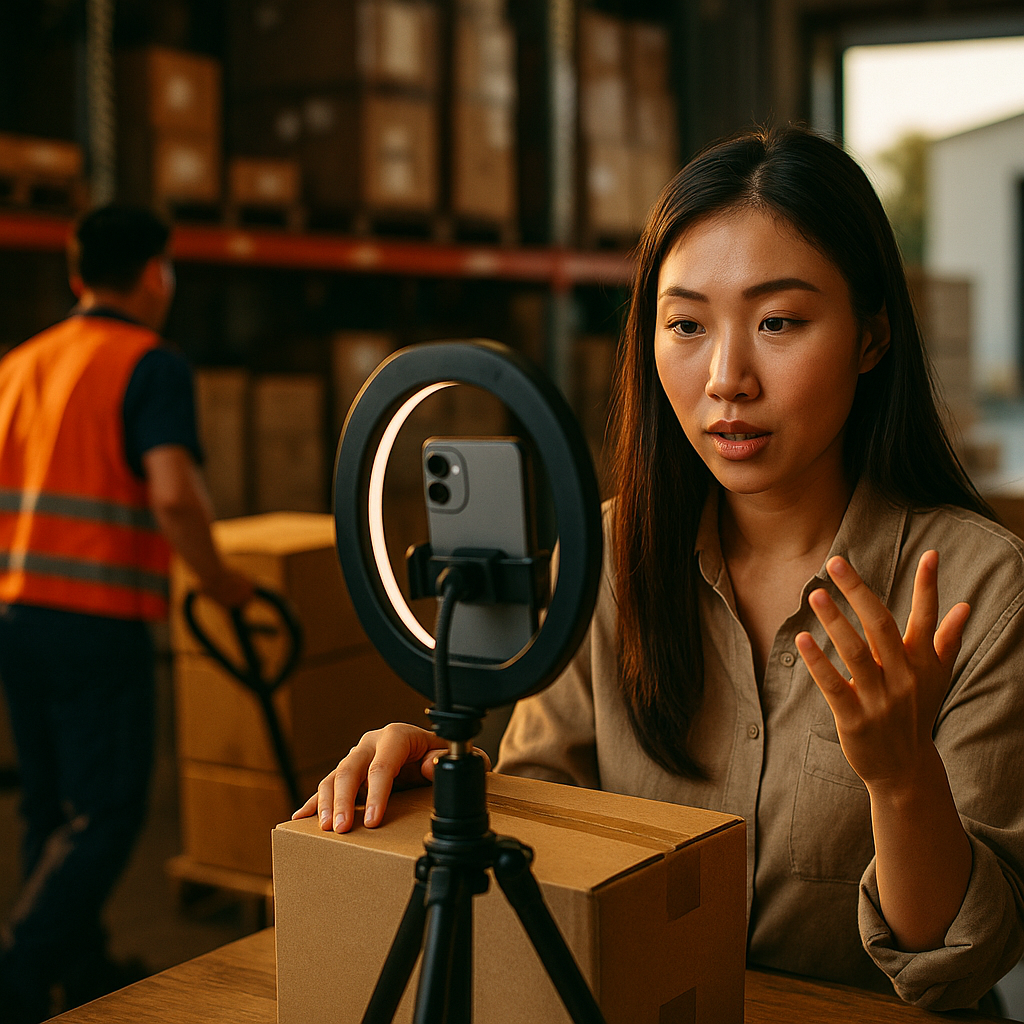
Taobao Live drove over 900 billion yuan in gross merchandise value last year, and Western retailers noticed. Now every DTC brand with a Series B wants its own “always-on livestream studio.” But building livestream commerce infrastructure that mimics Alibaba or Douyin without understanding why it works in China is how you burn six figures on a shopping channel nobody watches. Some pieces of the playbook travel well. Most don’t.
The Copy-Paste Instinct Is Understandable, and Mostly Wrong
Walk into any retail media conference right now and someone is pitching “the Amazon Live of skincare” or “TikTok Shop, but for our category.” The appeal makes sense on paper. China’s livestream commerce market is enormous, hosts like Li Jiaqi have moved more lipstick in an hour than most brands sell in a quarter, and the format has matured into a genuine retail channel rather than a novelty. Western marketers see those numbers and want the machine that produced them.
The problem is that Western brands are importing the studio setup, the multi-camera production, the dedicated livestream teams, without importing the ecosystem that makes those investments pay off. Alibaba’s infrastructure works because Taobao Live sits inside a closed-loop commerce environment: payment, logistics, reviews, and social proof all live in one app, and same-day delivery closes the loop between “I want this” and “it’s on my doorstep.” Rip the livestream format out of that context and drop it into a fragmented Western stack of TikTok, Shopify, and third-party fulfillment, and you’ve bought expensive theater with none of the conversion machinery behind it.
The infrastructure that works in China isn’t the camera setup or the studio, it’s the closed-loop path from discovery to delivery. Western brands keep copying the visible layer and skipping the invisible one.
What’s Actually Transferring (and Working)
Not everything is a mismatch. A few elements of the Asian livestream model genuinely translate, and the brands seeing results are the ones being selective rather than wholesale.
- Scarcity mechanics and countdown urgency. Flash-drop pricing tiers that shift every ten minutes, limited-quantity “restock” moments, and visible cart counters all perform well regardless of market. The psychology of urgency isn’t culturally specific.
- Host-led product demonstration over polished ads. Real-time, unscripted product handling builds more trust than a produced commercial, and trust scores now outperform reach as a purchase intent signal in Western data too.
- Second-screen commerce during live events. Viewers checking a linked storefront while watching, rather than clicking through mid-stream, mirrors behavior TikTok Shop and Amazon Live are already seeing.
- Data capture at the moment of intent. Chinese platforms treat livestream as a first-party data engine, not just a sales channel. Western brands adopting real-time polling, comment mining, and post-stream retargeting are seeing the clearest ROI gains.
Notably, live stream hours have jumped 60 percent among Western brands chasing real-time selling, and the ones getting a return are almost always the ones treating livestream as a CRM and retention tool rather than a standalone revenue channel.
What Doesn’t Transfer: The Logistics Gap Nobody Budgets For
Here’s the part that gets skipped in the trend pieces: Taobao Live’s conversion rates are inseparable from Cainiao’s logistics network. When a host says “buy now” and the product arrives the same afternoon, urgency and fulfillment reinforce each other. In the U.S. or Europe, that same “buy now” moment is followed by a two-to-five day wait, a separate checkout flow, and often a shipping fee that wasn’t visible during the stream. The emotional peak of the livestream dies somewhere between “add to cart” and “confirm payment.”
This is the single biggest reason Western livestream commerce pilots underperform their Chinese benchmarks. It’s not the content. It’s the fifteen minutes of friction after the content ends. Brands that have closed that gap, mostly by pre-integrating one-click checkout and same-week fulfillment promises directly into the stream interface, see conversion lifts that actually resemble the Chinese numbers being quoted in every conference deck.
The Super App Problem
China’s livestream ecosystem also benefits from something Western marketers can’t replicate by spending more: a super app environment where social, payment, and commerce are the same product. Douyin isn’t a video app that added shopping. It’s a commerce engine that happens to serve video. WeChat Pay and Alipay remove the friction of a separate payment provider entirely.
Western platforms are fragmented by design, and regulatory pressure (particularly around data portability and payment processing rules that the FTC continues to scrutinize) means a true super app model is unlikely to emerge here anytime soon. TikTok Shop is the closest attempt, and even it requires users to leave a familiar checkout flow for one still building trust. Brands betting their livestream strategy on “eventually it’ll work like Douyin” are planning around infrastructure that may never materialize in Western markets.
Where the Real ROI Is Hiding
If full-loop Chinese-style livestream commerce isn’t realistically achievable, where should budget actually go? The brands getting this right are treating livestream as a mid-funnel trust and retention tool rather than a bottom-funnel conversion machine.
A few operational moves worth prioritizing:
- Pilot on existing platform infrastructure first. TikTok Shop Live and Amazon Live already have checkout embedded. Test there before building a proprietary studio.
- Match the offer to the format’s actual strength. Livestream shines for restocks, limited drops, and bundle deals, not for evergreen catalog browsing.
- Budget for post-stream retargeting, not just the stream itself. The data captured during a live event, questions asked, products lingered on, is more valuable long-term than the stream’s immediate sales number.
- Vet vendor stability before committing. Livestream commerce tech is a crowded, consolidating space, and vendor financial health due diligence matters more here than in most creator tooling categories, since a shuttered platform can mean losing an entire integrated checkout flow overnight.
- Track revenue per stream against revenue per follower. Reach metrics inflate livestream performance in ways that don’t hold up against the shift toward revenue per follower as the primary creator KPI.
Livestream commerce in Western markets isn’t a smaller version of the Chinese model. It’s a different product entirely, built for trust and data capture rather than closed-loop instant fulfillment. Budget it that way.
Is This Actually Growing, or Is It Hype?
The category isn’t fake. eMarketer and Statista both track meaningful year-over-year growth in U.S. livestream shopping adoption, and social commerce GMV has doubled while a lot of brand budget planning hasn’t caught up. TikTok has been aggressively expanding TikTok Shop advertising tools specifically to capture this behavior shift. That growth is real. What’s inflated is the expectation that Western livestream commerce will ever hit Chinese GMV-per-stream benchmarks, because the infrastructure underneath simply isn’t equivalent, and won’t be for years, if ever.
It also helps to view livestream as one layer in a larger stack rather than an isolated channel. The six-layer creator commerce market map circulating among agencies puts livestream squarely in the mid-funnel engagement layer, not the top-line revenue layer, which lines up with what the fulfillment gap data actually shows.
A Word on Compliance and Disclosure
One thing that transfers cleanly regardless of market: regulatory scrutiny on live selling is rising everywhere. Hosts making real-time claims about product efficacy, pricing, or availability create disclosure obligations that livestream’s improvisational format makes easy to violate accidentally. Brands running live commerce need documented host guidelines and real-time moderation, not just a content calendar. This isn’t optional infrastructure, it’s the part regulators actually check.
The Bottom Line for Budget Owners
Don’t fund a livestream studio because a competitor built one. Fund the checkout and fulfillment integration that makes a livestream moment actually convertible, pilot on platforms that already have that infrastructure built, and measure against retention and revenue per follower rather than raw viewership. Copy the mechanics that are format-agnostic. Skip the ones that depend on an ecosystem you don’t have.
Frequently Asked Questions
What is livestream commerce infrastructure?
It refers to the combined technology stack behind live shopping events: streaming production tools, embedded checkout, real-time inventory syncing, payment processing, and fulfillment integration. In China, this stack is largely unified within a single platform ecosystem, while Western brands typically stitch it together from separate vendors.
Why doesn’t the Chinese livestream commerce model work as well in Western markets?
The biggest gap is logistics and payment fragmentation. Chinese platforms pair livestream urgency with same-day fulfillment and integrated payments, while Western checkout flows introduce delays and friction that break the purchase momentum a livestream creates.
Which parts of Asian livestream strategy should Western brands actually adopt?
Scarcity mechanics, host-led product demonstration, real-time data capture, and treating livestream as a first-party data channel all translate well. Full closed-loop production studios and expectations of Chinese-level conversion rates generally do not.
Should brands build their own livestream platform or use existing tools?
Most brands should pilot on existing infrastructure, such as TikTok Shop Live or Amazon Live, before investing in a proprietary studio. Existing platforms already solve the checkout integration problem that trips up most independent livestream commerce efforts.
How should brands measure livestream commerce ROI?
Track revenue per follower and post-stream retargeting conversion alongside live sales, rather than relying on viewership or reach alone. Livestream often performs better as a trust and retention tool than as a standalone conversion channel in Western markets.
Top Influencer Marketing Agencies
The leading agencies shaping influencer marketing in 2026
Agencies ranked by campaign performance, client diversity, platform expertise, proven ROI, industry recognition, and client satisfaction. Assessed through verified case studies, reviews, and industry consultations.
Moburst

-
2

The Shelf
Boutique Beauty & Lifestyle Influencer AgencyA data-driven boutique agency specializing exclusively in beauty, wellness, and lifestyle influencer campaigns on Instagram and TikTok. Best for brands already focused on the beauty/personal care space that need curated, aesthetic-driven content.Clients: Pepsi, The Honest Company, Hims, Elf Cosmetics, Pure LeafVisit The Shelf → -
3

Audiencly
Niche Gaming & Esports Influencer AgencyA specialized agency focused exclusively on gaming and esports creators on YouTube, Twitch, and TikTok. Ideal if your campaign is 100% gaming-focused — from game launches to hardware and esports events.Clients: Epic Games, NordVPN, Ubisoft, Wargaming, Tencent GamesVisit Audiencly → -
4

Viral Nation
Global Influencer Marketing & Talent AgencyA dual talent management and marketing agency with proprietary brand safety tools and a global creator network spanning nano-influencers to celebrities across all major platforms.Clients: Meta, Activision Blizzard, Energizer, Aston Martin, WalmartVisit Viral Nation → -
5

The Influencer Marketing Factory
TikTok, Instagram & YouTube CampaignsA full-service agency with strong TikTok expertise, offering end-to-end campaign management from influencer discovery through performance reporting with a focus on platform-native content.Clients: Google, Snapchat, Universal Music, Bumble, YelpVisit TIMF → -
6

NeoReach
Enterprise Analytics & Influencer CampaignsAn enterprise-focused agency combining managed campaigns with a powerful self-service data platform for influencer search, audience analytics, and attribution modeling.Clients: Amazon, Airbnb, Netflix, Honda, The New York TimesVisit NeoReach → -
7

Ubiquitous
Creator-First Marketing PlatformA tech-driven platform combining self-service tools with managed campaign options, emphasizing speed and scalability for brands managing multiple influencer relationships.Clients: Lyft, Disney, Target, American Eagle, NetflixVisit Ubiquitous → -
8

Obviously
Scalable Enterprise Influencer CampaignsA tech-enabled agency built for high-volume campaigns, coordinating hundreds of creators simultaneously with end-to-end logistics, content rights management, and product seeding.Clients: Google, Ulta Beauty, Converse, AmazonVisit Obviously →