


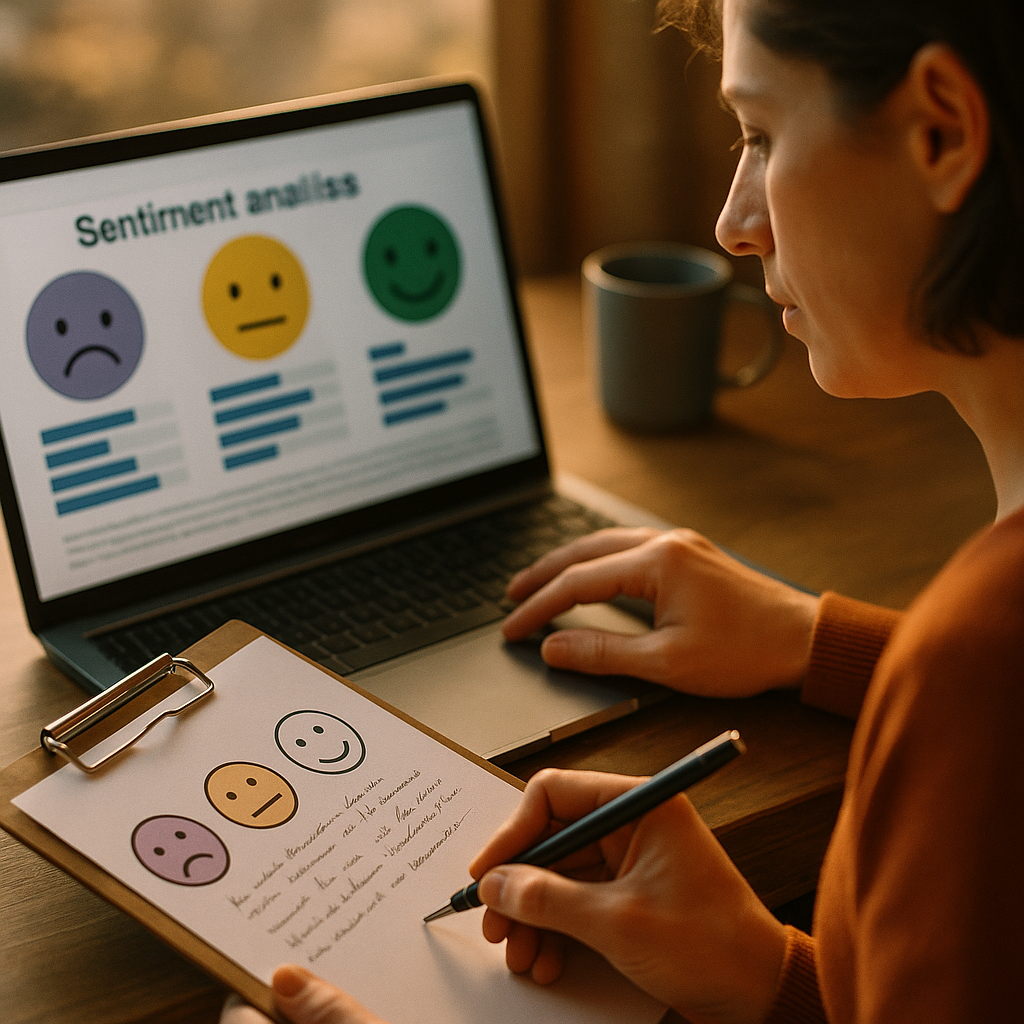
Marketing teams that still review campaign feedback on a monthly cadence are already obsolete. Nearly 90% of marketers now use some form of AI in their workflow, and platforms like Alchemer Iris are pushing that adoption into a new territory: closed-loop feedback systems that adjust campaigns in near real time. The question isn’t whether your brand needs an AI-driven feedback loop. It’s whether you can trust the one you’ve bought.
What Alchemer Iris Actually Does
Alchemer Iris is a feedback intelligence layer built on top of Alchemer’s survey and experience management infrastructure. Instead of waiting for a quarterly NPS report, Iris ingests open-text responses, sentiment signals, and behavioral data continuously, then surfaces patterns that would normally take a research team weeks to spot. For influencer and brand marketers, that means campaign sentiment, audience reaction, and creator performance data can flow into a single system that flags problems before they become PR headaches.
The pitch is compelling. A brand running a multi-creator campaign across TikTok, Instagram, and YouTube generates thousands of comments, DMs, and survey responses daily. No human team reads all of it. Iris claims to read it for you, cluster the sentiment, and recommend fixes automatically.
The real shift isn’t that AI reads feedback faster. It’s that feedback loops are collapsing from weeks to hours, which changes who gets blamed when a campaign underperforms.
Why Feedback Loops Are Suddenly a Board-Level Topic
Five years ago, feedback loops lived in customer service dashboards. Now they’re campaign optimization infrastructure. Why the shift? Three forces converged.
- Creator volume exploded. Brands running programs with dozens or hundreds of creators can’t manually audit sentiment at scale.
- Attribution got harder. With agentic checkout eroding click paths, marketers need alternative signals to judge whether a campaign is working while it’s live, not after the sale.
- AI made real-time analysis cheap. What used to require a research agency now runs as a SaaS subscription.
Iris sits at the intersection of all three. It’s not the only player, but its positioning as an “always-on” feedback engine reflects where the whole category is heading. Similar logic is playing out in ActiveCampaign’s Wavelength testing, which processes hundreds of signals but still struggles with interpretability.
The ROI Case: Faster Fixes, Fewer Wasted Dollars
Here’s the part finance teams care about. A campaign that runs for six weeks with negative sentiment going undetected until week four has already burned most of its budget. If an AI feedback loop flags the problem at week one, you’ve saved real media spend. Alchemer positions Iris around exactly this math: shrink the detection window, shrink the wasted spend.
That logic tracks with broader industry data. eMarketer’s research on marketing AI adoption consistently shows that speed to insight, not insight quality alone, is the metric marketers cite most when justifying AI tool budgets. Faster isn’t always better, but faster combined with accurate is a genuine competitive edge.
Consider a hypothetical brand launch with 40 creators. Traditional sentiment tracking might sample 5% of comments manually. An AI feedback loop processes closer to 100%, catching outlier reactions, a misinterpreted joke, a product claim that reads as misleading, a hashtag hijacked by critics, before they compound. That’s the promise. The operational reality is messier.
Where the Automation Breaks Down
AI-driven feedback loops are only as good as the judgment calls baked into their models. Sentiment analysis still struggles with sarcasm, regional slang, and cultural context. A comment that reads as negative to a sentiment classifier trained on North American English might be a term of affection in another market. That’s not a hypothetical risk. It’s a documented weakness across nearly every NLP-based sentiment tool on the market today.
Our sister coverage on Alchemer Iris’s automated fixes found the same pattern: the system is excellent at flagging volume shifts and surfacing clusters, but nuance still requires a human reviewer to confirm before action is taken. That’s a critical operational detail brands often skip when they buy into the “fully automated” pitch.
Automation catches the pattern. It still takes a human to decide whether the pattern means what the algorithm thinks it means.
There’s also a compounding risk when feedback loops trigger automated campaign changes. If Iris (or any similar tool) is wired directly into ad spend adjustments, creator briefing updates, or content takedowns, a false positive doesn’t just waste time. It can pull a high-performing creator’s content for the wrong reason, or shift budget away from a campaign that was actually working. This mirrors what we’ve seen with Attentive’s AI Grow firing SMS on live browsing signals: speed without a review layer creates new categories of error, not fewer errors.
Compliance and Data Handling Can’t Be an Afterthought
Feedback loops ingest a lot of user-generated data, comments, survey responses, sentiment signals tied to real people. That raises the same governance questions marketers are already wrestling with elsewhere in the AI stack. If your feedback tool is scraping or analyzing consumer comments at scale, you need clarity on data retention, consent, and whether personal identifiers are being processed in ways that trigger regulatory obligations.
The FTC’s guidance on AI and consumer protection has increasingly focused on transparency around automated decision-making, and the UK ICO’s data protection resources offer a useful framework for brands operating across markets. If Iris or a comparable tool is influencing campaign decisions based on consumer sentiment data, your compliance team should be in the room before procurement, not after a data audit flags a gap.
This isn’t unique to Alchemer. It’s the same governance debate playing out around AI payment agents routing creator payouts and content screening tools flagging posts pre-publish. The pattern across the AI marketing stack is consistent: capability moves faster than the compliance framework built to govern it.
What This Means for Your Stack
If you’re evaluating Alchemer Iris or a similar feedback intelligence platform, a few practical questions should shape your decision.
- Does it flag or act? Systems that surface insights for human review carry less operational risk than ones wired directly into budget or content decisions.
- How does it handle ambiguity? Ask vendors directly how their model handles sarcasm, mixed sentiment, and non-English markets. Get specifics, not marketing copy.
- Who owns the escalation path? A false positive that pulls creator content needs a fast human override, not a support ticket queue.
- What data does it retain, and for how long? Get this in writing before signing, not after an audit.
None of this means skip the tool. Brands that ignore AI-driven feedback loops entirely are choosing to fly blind while competitors adjust campaigns in hours instead of weeks. But Sprout Social’s research on social listening and sentiment tools makes a consistent point worth repeating: the tools augment judgment, they don’t replace it. Treat Iris and its peers as a faster radar system, not an autopilot.
The Bottom Line
AI-driven feedback loops like Alchemer Iris are becoming table stakes for campaign optimization, and the ROI case is real when detection windows shrink from weeks to hours. But every brand piloting these tools needs a human review layer, a clear escalation path, and compliance sign-off before automation touches budget or content decisions. Start with a 90-day pilot on one campaign segment, measure false positive rates before scaling, and keep a human in the loop for anything that triggers a content or spend change.
Frequently Asked Questions
What is Alchemer Iris used for in influencer marketing?
Alchemer Iris analyzes feedback data, including survey responses, comments, and sentiment signals, in near real time to help brands spot campaign issues or opportunities faster than traditional quarterly reporting cycles allow.
Is Alchemer Iris fully automated?
No. Iris automates the detection and clustering of feedback patterns, but nuanced judgment calls, especially around sarcasm, cultural context, and ambiguous sentiment, still require human review before action is taken.
How does an AI-driven feedback loop improve campaign ROI?
By shrinking the time between a problem occurring and being detected, brands can reallocate budget or adjust creative before wasting spend on an underperforming campaign, rather than discovering issues after the fact.
What are the risks of automating campaign decisions based on AI feedback?
False positives can trigger unnecessary content takedowns, budget shifts, or creator penalties. Brands should keep a human escalation path for any automated action tied to sentiment analysis.
What compliance issues should marketers consider with feedback intelligence tools?
Data retention policies, consent for processing consumer comments, and transparency around automated decision-making are key areas regulators like the FTC and UK ICO are increasingly scrutinizing.
FAQs
Top Influencer Marketing Agencies
The leading agencies shaping influencer marketing in 2026
Agencies ranked by campaign performance, client diversity, platform expertise, proven ROI, industry recognition, and client satisfaction. Assessed through verified case studies, reviews, and industry consultations.
Moburst

-
2

The Shelf
Boutique Beauty & Lifestyle Influencer AgencyA data-driven boutique agency specializing exclusively in beauty, wellness, and lifestyle influencer campaigns on Instagram and TikTok. Best for brands already focused on the beauty/personal care space that need curated, aesthetic-driven content.Clients: Pepsi, The Honest Company, Hims, Elf Cosmetics, Pure LeafVisit The Shelf → -
3

Audiencly
Niche Gaming & Esports Influencer AgencyA specialized agency focused exclusively on gaming and esports creators on YouTube, Twitch, and TikTok. Ideal if your campaign is 100% gaming-focused — from game launches to hardware and esports events.Clients: Epic Games, NordVPN, Ubisoft, Wargaming, Tencent GamesVisit Audiencly → -
4

Viral Nation
Global Influencer Marketing & Talent AgencyA dual talent management and marketing agency with proprietary brand safety tools and a global creator network spanning nano-influencers to celebrities across all major platforms.Clients: Meta, Activision Blizzard, Energizer, Aston Martin, WalmartVisit Viral Nation → -
5

The Influencer Marketing Factory
TikTok, Instagram & YouTube CampaignsA full-service agency with strong TikTok expertise, offering end-to-end campaign management from influencer discovery through performance reporting with a focus on platform-native content.Clients: Google, Snapchat, Universal Music, Bumble, YelpVisit TIMF → -
6

NeoReach
Enterprise Analytics & Influencer CampaignsAn enterprise-focused agency combining managed campaigns with a powerful self-service data platform for influencer search, audience analytics, and attribution modeling.Clients: Amazon, Airbnb, Netflix, Honda, The New York TimesVisit NeoReach → -
7

Ubiquitous
Creator-First Marketing PlatformA tech-driven platform combining self-service tools with managed campaign options, emphasizing speed and scalability for brands managing multiple influencer relationships.Clients: Lyft, Disney, Target, American Eagle, NetflixVisit Ubiquitous → -
8

Obviously
Scalable Enterprise Influencer CampaignsA tech-enabled agency built for high-volume campaigns, coordinating hundreds of creators simultaneously with end-to-end logistics, content rights management, and product seeding.Clients: Google, Ulta Beauty, Converse, AmazonVisit Obviously →