


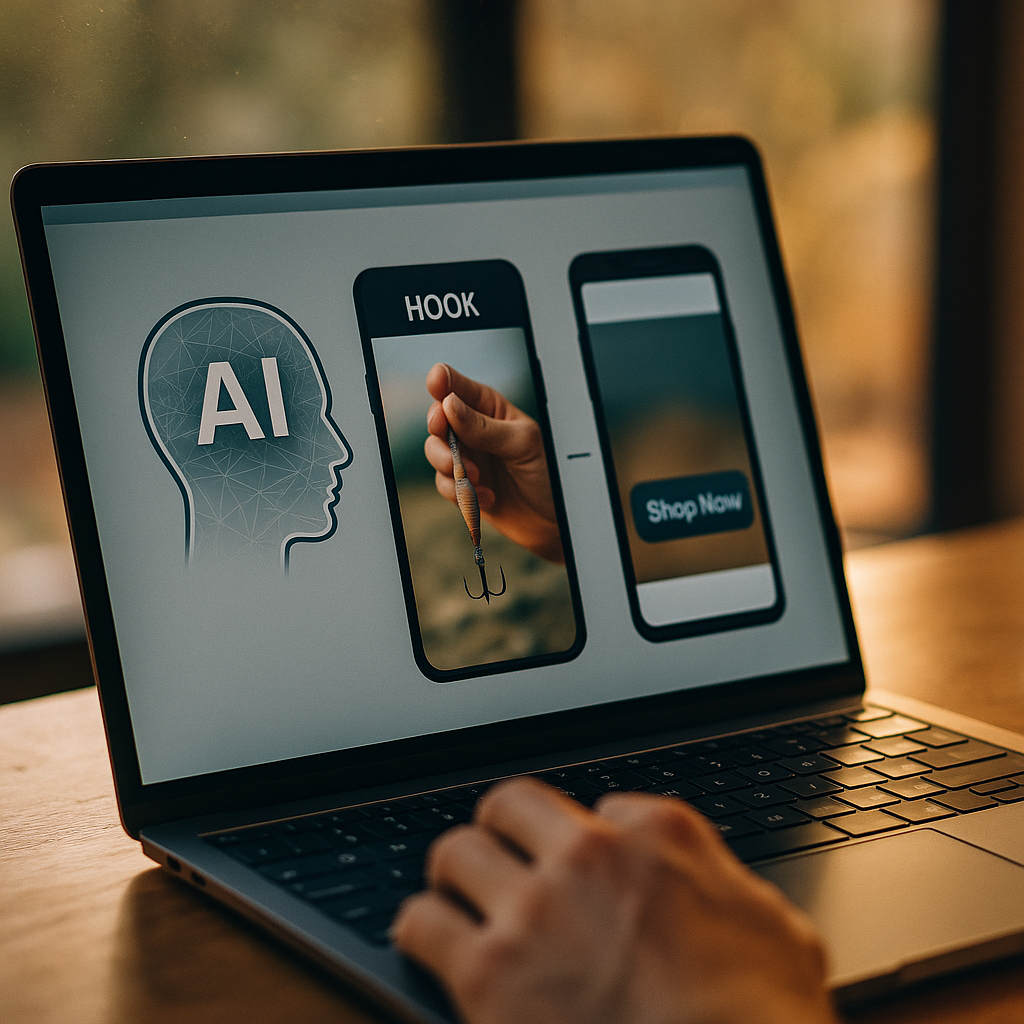
Meta’s own data shows that creative accounts for up to 56% of ad performance variance, more than targeting, placement, or bid strategy combined. So why do most brands running AI dynamic creative optimization on influencer ad variants still start by testing button colors? Dynamic creative optimization (DCO) for influencer content is finally mature enough to test the variables that actually move revenue, but only if you know which levers to pull first.
What Dynamic Creative Optimization Means for Influencer Content
Dynamic creative optimization isn’t new. Programmatic display teams have used it for a decade to swap headlines, images, and CTAs based on audience signals. What’s changed is that AI models can now do this with influencer-generated video, the messiest, most human creative format brands run ads against.
Instead of manually cutting ten versions of a creator’s UGC ad, AI tools ingest a single source video and generate variants by altering hooks, pacing, captions, music, and calls to action. Platforms like Meta’s Advantage+ creative, TikTok’s Smart Creative, and third-party tools built on top of generative video models handle the heavy lifting. The brand’s job shifts from production to hypothesis design: deciding what to test, in what order, and how to read the results without fooling yourself.
The teams winning with AI-driven creative testing aren’t the ones generating the most variants. They’re the ones testing the fewest variables at a time, in the right sequence.
Why Influencer Ads Break the Standard DCO Playbook
Traditional DCO assumes modular creative: a headline here, a product shot there, easily recombined. Influencer content doesn’t work that way. A creator’s authenticity lives in the whole performance, tone, pacing, the way they hold the product. Swap the wrong element and you don’t get a variant, you get something that reads as fake.
This is why brands need a different test hierarchy than what worked for static display ads. You’re not optimizing components. You’re optimizing the framing around a human performance, and that requires knowing which frame elements carry the persuasion weight and which are decoration.
The Test Order That Actually Moves ROI
Here’s the sequence that consistently produces the clearest signal, based on how creative variance actually distributes across influencer ad performance.
1. The Hook (First 3 Seconds)
Test this first, always. The hook determines whether anyone sees the rest of your ad. AI DCO tools excel here because they can generate dozens of opening frames, questions, or pattern interrupts from the same base video and run them simultaneously. If your hold rate past three seconds doesn’t move, nothing downstream matters.
Practical starting point: test a question-based hook against a bold claim against a visual pattern interrupt (product doing something unexpected). Three variants, one variable, clean read.
2. On-Screen Text vs. Voiceover-Led Framing
Second priority. Sound-off viewing still dominates on Instagram and TikTok feeds, so whether your key message lives in captions or in the creator’s spoken delivery changes comprehension dramatically. AI captioning tools make this cheap to test, though accuracy still varies enough that brands should spot-check before scaling, a problem covered in depth in our look at AI video editing accuracy tradeoffs.
3. CTA Placement and Framing
Not color. Not shape. Placement and timing. Does the CTA land mid-video when interest peaks, or only at the end? Does it echo the creator’s own language (“link’s in my bio, seriously”) or does it sound like brand copy dropped into someone else’s video? Test these framings before you touch button aesthetics.
4. Pacing and Length
Fourth. Once hook, framing, and CTA are locked, test whether a 15 second cutdown outperforms the full 45 second version for your specific placement. This is where AI-generated variants genuinely save production time, since cutting length without re-shooting is exactly the kind of task generative tools handle well.
5. Background, Setting, and Visual Context
Last, and often skipped entirely because it feels like the most obvious thing to test. It’s actually the least predictive lever for most influencer ad formats. Save it for once you’ve exhausted the higher-impact variables above.
Running these five in order rather than all at once matters more than most brands realize. Multivariate testing across all five simultaneously sounds efficient, but it usually produces noise instead of insight because influencer ad audiences are smaller and more fragmented than typical programmatic buys.
Where Teams Get This Wrong
The most common mistake isn’t picking the wrong test order. It’s generating too many AI variants and treating every one as a real experiment. If you’re running 40 versions of a creator’s ad against a mid-size budget, you don’t have a test, you have statistical noise dressed up as insight.
- Confusing volume with rigor. More variants require more spend to reach significance, not less.
- Skipping the creator’s approval loop. AI-altered dialogue or reframed hooks can drift from what the creator actually agreed to promote, a contract and disclosure risk worth flagging early, similar to issues raised in AI-driven contract review.
- Ignoring platform disclosure rules. Altered or AI-generated ad variants featuring a real creator still fall under FTC endorsement guidance, and platforms are tightening enforcement.
- Optimizing for hold rate instead of purchase intent. A hook that stops the scroll isn’t automatically one that sells. Tie creative testing back to downstream signals, not just top-of-funnel engagement, an approach detailed in our coverage of purchase intent scoring for creators.
Building the Feedback Loop Without Losing Governance
AI dynamic creative optimization only pays off if the testing loop feeds back into your briefing and vetting process, not just your ad account. That means the insights from winning hooks and CTA framings should inform how you write creator briefs before shooting even starts, not just how you cut footage afterward. Teams that treat DCO as a bolt-on after production, rather than an input into AI-assisted creative briefs, end up re-learning the same lessons every campaign cycle.
There’s also a compliance layer that gets skipped too often. AI-generated ad variants featuring real creators need a review checkpoint before they ship, especially when captions, voiceovers, or claims get algorithmically altered. Brands running high volumes of variants without a screening step are exposed in ways that mirror the risks outlined in pre-publish content screening for organic creator posts. The FTC’s endorsement guidance doesn’t distinguish between a human editor and an algorithm reframing a claim. Someone still has to sign off.
According to eMarketer, creator-driven ad spend continues to outpace traditional social ad growth, which means the cost of getting creative testing wrong scales just as fast as the upside of getting it right. Platforms including Meta and TikTok have both expanded native AI creative tools this year specifically because advertisers were already stitching together third-party workarounds. If you haven’t audited what your platform’s native DCO tools now support natively versus what still requires an external vendor, that’s worth doing before your next budget cycle. HubSpot’s research on creative testing benchmarks is a reasonable starting point for setting realistic sample size expectations too.
The Next Step
Don’t launch a 20-variant AI test next quarter. Launch a three-variant hook test on your best-performing creator this month, read it cleanly, then move down the hierarchy one variable at a time. Sequence beats scale in influencer creative testing, every time.
Frequently Asked Questions
What is AI dynamic creative optimization for influencer ads?
It’s the use of AI tools to automatically generate and test multiple versions of an influencer ad, altering elements like hooks, captions, CTAs, and pacing, then serving the best-performing variant based on real-time engagement and conversion data.
What should brands test first in an influencer ad variant?
The opening hook, specifically the first three seconds. It has the largest impact on hold rate and downstream performance, and testing it before other variables produces the clearest, least noisy results.
How many creative variants should a brand test at once?
Fewer than most AI tools default to. Three to four variants isolating a single variable is usually enough to reach statistical significance without needing an unrealistic ad spend, especially for mid-size influencer campaigns.
Does AI-altered creator content raise disclosure or compliance risks?
Yes. If AI tools rewrite captions, voiceovers, or claims within a creator’s video, that variant still needs to meet FTC endorsement guidance and platform disclosure rules, and ideally needs sign-off from the creator per their original agreement.
Can AI dynamic creative optimization replace manual A/B testing entirely?
No. AI speeds up variant generation and can automate serving logic, but human review is still needed to confirm results make strategic sense, catch compliance issues, and prevent overfitting to short-term engagement metrics that don’t translate to sales.
Frequently Asked Questions
What is AI dynamic creative optimization for influencer ads?
It’s the use of AI tools to automatically generate and test multiple versions of an influencer ad, altering elements like hooks, captions, CTAs, and pacing, then serving the best-performing variant based on real-time engagement and conversion data.
What should brands test first in an influencer ad variant?
The opening hook, specifically the first three seconds. It has the largest impact on hold rate and downstream performance, and testing it before other variables produces the clearest, least noisy results.
How many creative variants should a brand test at once?
Fewer than most AI tools default to. Three to four variants isolating a single variable is usually enough to reach statistical significance without needing an unrealistic ad spend, especially for mid-size influencer campaigns.
Does AI-altered creator content raise disclosure or compliance risks?
Yes. If AI tools rewrite captions, voiceovers, or claims within a creator’s video, that variant still needs to meet FTC endorsement guidance and platform disclosure rules, and ideally needs sign-off from the creator per their original agreement.
Can AI dynamic creative optimization replace manual A/B testing entirely?
No. AI speeds up variant generation and can automate serving logic, but human review is still needed to confirm results make strategic sense, catch compliance issues, and prevent overfitting to short-term engagement metrics that don’t translate to sales.
Top Influencer Marketing Agencies
The leading agencies shaping influencer marketing in 2026
Agencies ranked by campaign performance, client diversity, platform expertise, proven ROI, industry recognition, and client satisfaction. Assessed through verified case studies, reviews, and industry consultations.
Moburst

-
2

The Shelf
Boutique Beauty & Lifestyle Influencer AgencyA data-driven boutique agency specializing exclusively in beauty, wellness, and lifestyle influencer campaigns on Instagram and TikTok. Best for brands already focused on the beauty/personal care space that need curated, aesthetic-driven content.Clients: Pepsi, The Honest Company, Hims, Elf Cosmetics, Pure LeafVisit The Shelf → -
3

Audiencly
Niche Gaming & Esports Influencer AgencyA specialized agency focused exclusively on gaming and esports creators on YouTube, Twitch, and TikTok. Ideal if your campaign is 100% gaming-focused — from game launches to hardware and esports events.Clients: Epic Games, NordVPN, Ubisoft, Wargaming, Tencent GamesVisit Audiencly → -
4

Viral Nation
Global Influencer Marketing & Talent AgencyA dual talent management and marketing agency with proprietary brand safety tools and a global creator network spanning nano-influencers to celebrities across all major platforms.Clients: Meta, Activision Blizzard, Energizer, Aston Martin, WalmartVisit Viral Nation → -
5

The Influencer Marketing Factory
TikTok, Instagram & YouTube CampaignsA full-service agency with strong TikTok expertise, offering end-to-end campaign management from influencer discovery through performance reporting with a focus on platform-native content.Clients: Google, Snapchat, Universal Music, Bumble, YelpVisit TIMF → -
6

NeoReach
Enterprise Analytics & Influencer CampaignsAn enterprise-focused agency combining managed campaigns with a powerful self-service data platform for influencer search, audience analytics, and attribution modeling.Clients: Amazon, Airbnb, Netflix, Honda, The New York TimesVisit NeoReach → -
7

Ubiquitous
Creator-First Marketing PlatformA tech-driven platform combining self-service tools with managed campaign options, emphasizing speed and scalability for brands managing multiple influencer relationships.Clients: Lyft, Disney, Target, American Eagle, NetflixVisit Ubiquitous → -
8

Obviously
Scalable Enterprise Influencer CampaignsA tech-enabled agency built for high-volume campaigns, coordinating hundreds of creators simultaneously with end-to-end logistics, content rights management, and product seeding.Clients: Google, Ulta Beauty, Converse, AmazonVisit Obviously →