


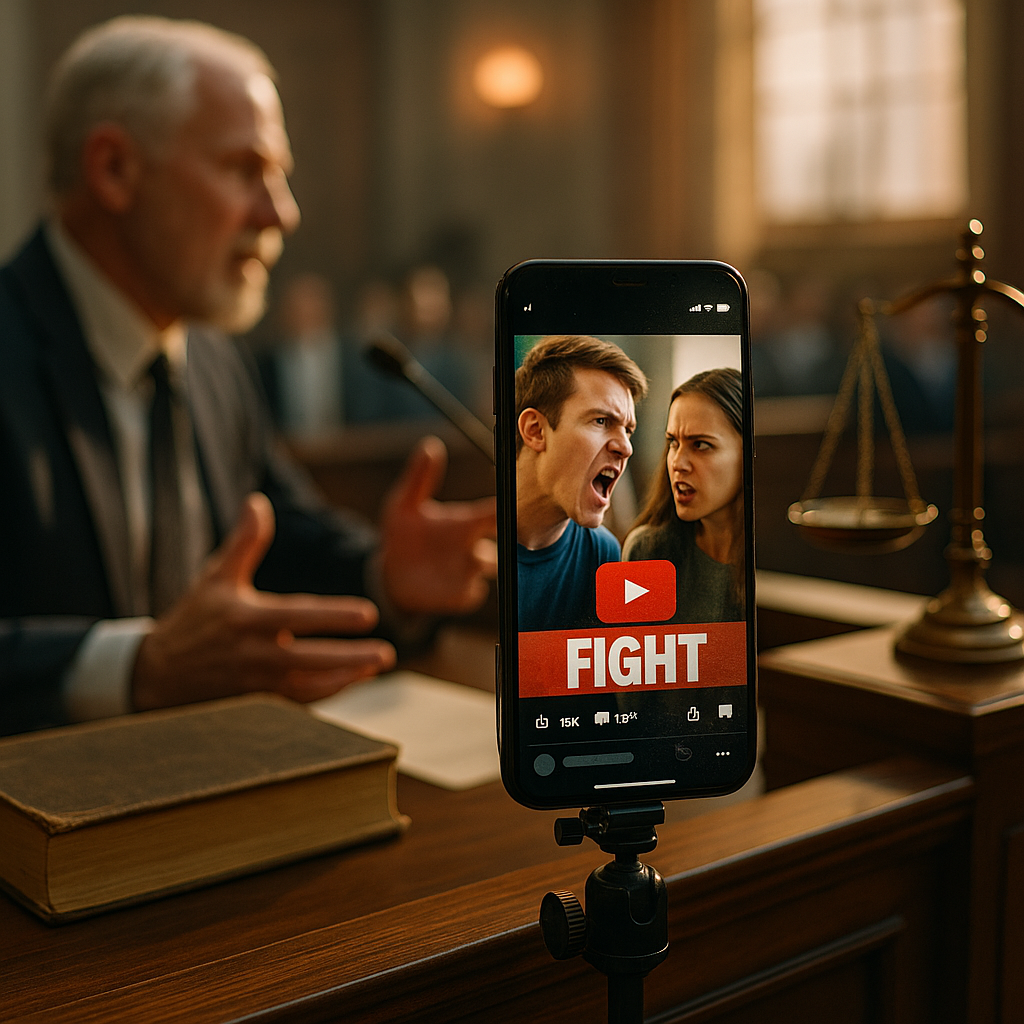
More than 40 state attorneys general have sued Meta over teen mental health harms tied to its recommendation systems, and a parallel wave of litigation is asking federal courts a question with no clean answer: is an algorithmic recommendation for minors a form of speech protected by the First Amendment, or a defective product design that companies can be sued over? The answer will reshape how brands can legally reach young audiences through creator content, and most marketing teams have not read a single filing.
What’s Actually Being Litigated
Strip away the headlines and there are really three overlapping legal fights happening at once. First, the multistate lawsuit against Meta (and similar actions targeting TikTok and Snap) argues that recommendation algorithms are engineered to maximize engagement among minors regardless of psychological cost, essentially treating the algorithm itself as a defective product rather than protected editorial judgment. Second, NetChoice and other industry groups have challenged state laws in places like Utah, Arkansas, and California that require age verification or restrict algorithmic feeds for minors, arguing these laws violate the First Amendment rights of platforms and, by extension, adult users. Third, Congress keeps circling the Kids Online Safety Act (KOSA), which would impose a “duty of care” on platforms regarding content served to minors, including algorithmically curated feeds.
None of these cases has produced a final, settled national standard. That’s the uncomfortable part. Brands are operating in a legal gray zone where platform obligations differ by state, by age bracket, and increasingly by which circuit court hears the appeal.
The legal question of whether an algorithm is “speech” or a “product” isn’t academic. It determines whether platforms can be sued for how they surface branded content to teenagers, and that liability risk trickles straight down to the brands paying for the placement.
Why Brands Should Care More Than They Think
Marketers tend to treat platform litigation as a background noise problem, something for legal and comms to monitor while creative and media teams keep running. That’s a mistake here. If courts side with plaintiffs arguing algorithms are products, platforms will almost certainly respond by throttling or restructuring how content, including sponsored and creator content, gets recommended to under-18 users. That directly affects reach, frequency, and cost efficiency for any brand running youth-adjacent campaigns.
Think about categories that lean heavily on teen and tween audiences: fast fashion, gaming, snack and beverage brands, beauty, mobile apps. These verticals have built entire influencer strategies around algorithmic discovery, banking on TikTok’s For You Page or Instagram Reels to surface content organically to younger users. If regulation or litigation forces platforms to default minors into non-personalized, chronological, or heavily filtered feeds, that discovery engine slows down or disappears entirely for that audience segment.
There’s also a second-order effect worth watching closely: brands are already shifting spend toward audiences that are easier to verify and target with confidence, which is part of why Gen Alpha attention is migrating to environments like Roblox that operate outside the traditional social feed model altogether.
The Compliance Trap Hiding in Age Verification
Here’s where it gets operationally messy. Several state laws now require platforms to verify user age before serving personalized recommendations, which means platforms are collecting more identity data on users, including minors, than they used to. Brands running influencer campaigns that touch these platforms inherit downstream compliance exposure, even if they never touch the age verification process themselves.
Consider a sponsored campaign that includes a giveaway or a data capture mechanism (email signup, app download, contest entry) aimed at an audience that skews young. If a portion of participants turn out to be minors and the brand didn’t have appropriate consent mechanisms, that’s a potential COPPA violation, not just a platform problem. The FTC has been increasingly aggressive about enforcing children’s privacy rules against advertisers, not just platforms, and UK regulators under the Information Commissioner’s Office have taken a similarly hard line on age-appropriate design.
This is exactly the kind of exposure that identity and consent infrastructure is supposed to solve. Brands that have already invested in consent-based data models are in a far better position to prove compliance than brands still leaning on platform defaults and hoping for the best.
Platform Responses Are Already Reshaping Reach
Regardless of how the courts eventually rule, platforms aren’t waiting around. Meta rolled out Instagram Teen Accounts with default private settings, restricted DMs, and limited sensitive content exposure. TikTok has expanded screen time defaults and restricted certain recommendation categories for accounts flagged as belonging to minors. Snap has layered in parental controls tied to its Family Center tool.
Every one of these changes shrinks the algorithmic surface area brands can reach organically among younger users. Sponsored content that used to ride the recommendation engine into a teen’s feed now has to compete against tighter filters, shorter default session limits, and, in some cases, entirely separate content pools.
The practical result: campaigns that historically leaned on broad algorithmic distribution to reach teen audiences are seeing softer organic lift, and buyers are having to compensate with heavier paid amplification just to hit previous reach numbers. That’s a real cost increase that finance teams are going to ask about in the next budget cycle.
What This Means for Creator Campaign Strategy
If your creator program leans on influencers whose audience skews under 18, or even close to that line, it’s time for an honest audit. A few things worth checking immediately:
- Does your creator vetting process confirm audience age distribution, or are you relying on platform-reported demographics that may undercount minors?
- Are your briefs requiring disclosure language and content restrictions consistent with the platform’s current minor-safety policies, which change more frequently than most brands track?
- Do your contracts include indemnification language covering platform policy shifts related to minor safety, not just standard FTC disclosure compliance?
- Are you tracking which creators’ audiences have shifted following platform algorithm changes, since reach can drop overnight without warning?
Fraud and bot vetting matters here too. A meaningful share of “minor audience” concerns actually stem from bot-inflated follower counts that misrepresent real audience composition. Brands that have tightened up audience verification and fraud screening are getting cleaner data on who they’re actually reaching, which matters a lot more when regulators start asking questions.
Reach numbers built on algorithmic discovery to minors are the least stable asset in your media plan right now. Treat them as a variable, not a constant, when forecasting the next two quarters.
Building a Risk Mitigation Playbook Now, Not Later
Waiting for a final Supreme Court ruling before adjusting strategy is not a plan, it’s a bet, and it’s a bad one given how slowly these cases move. A more sensible approach treats the current uncertainty as the new operating environment.
Start by separating your audience targeting into clear age bands and mapping which platforms, creators, and content formats touch each one. This isn’t just a compliance exercise, it’s an attribution exercise too. Brands that have moved toward identity-based attribution models already have much of the infrastructure needed to segment and report on age-appropriate reach without relying solely on platform black-box demographics.
Next, build platform policy monitoring into your media operations cadence, not just your legal team’s quarterly review. Instagram, TikTok, and Snap are changing minor-safety features every few months, and a campaign brief written in one quarter can be out of date by the time it launches. Treat this the same way you’d treat a platform algorithm update for the main feed: something media buyers should be briefed on monthly, not annually.
Finally, reweight KPIs. If your youth-targeted campaigns have historically leaned on engagement and reach metrics that were partly powered by algorithmic recommendation, those numbers are going to get noisier as platforms restrict minor-facing feeds. Brands are already moving toward sales lift as the default success metric for creator programs, and that shift becomes even more important when the reach layer underneath your funnel is legally and technically unstable.
Industry benchmarking groups like eMarketer and platform-specific guidance from Meta Business and TikTok Ads Manager are worth checking regularly as these policies evolve, since platform documentation tends to update faster than press coverage.
Frequently Asked Questions
What is the core legal question in the algorithmic recommendations lawsuits?
Courts are deciding whether algorithmic content recommendations count as protected editorial speech under the First Amendment or as a product feature that can be regulated or subject to liability like any other defective design. The outcome determines how much states and the federal government can restrict how platforms serve content to minors.
Does this affect brands that don’t specifically target teens?
Yes, if any meaningful share of your audience skews younger than expected, or if your creator partners have audiences that include minors even unintentionally. Platform-wide changes to recommendation systems for minors can affect reach and campaign performance even for brands that never intended to target that age group.
What is the Kids Online Safety Act and where does it stand?
KOSA is proposed federal legislation that would require platforms to exercise a “duty of care” toward minor users, including how algorithmic feeds surface content to them. It has been debated in Congress for several sessions without passing, but versions of its provisions are showing up in state-level laws that are currently being challenged in court.
How can brands verify the actual age distribution of a creator’s audience?
Platform-reported demographics are a starting point but are known to undercount minors who misstate their age at signup. Third-party audience verification tools, combined with bot and fraud screening, give a more accurate picture and create a documented compliance trail if regulators ever ask.
Should brands pause youth-adjacent influencer campaigns until the legal picture clears up?
Pausing entirely is rarely necessary, but tightening contracts, disclosure requirements, and audience verification now is far cheaper than reacting to a policy change or enforcement action after the fact. Treat this as risk management, not a reason to exit the audience segment.
The courts won’t settle this soon, so the practical move is defensive: audit which of your campaigns actually depend on algorithmic discovery among minors, tighten your consent and verification stack, and shift your success metrics away from reach numbers that regulators could pull out from under you next quarter.
Top Influencer Marketing Agencies
The leading agencies shaping influencer marketing in 2026
Agencies ranked by campaign performance, client diversity, platform expertise, proven ROI, industry recognition, and client satisfaction. Assessed through verified case studies, reviews, and industry consultations.
Moburst

-
2

The Shelf
Boutique Beauty & Lifestyle Influencer AgencyA data-driven boutique agency specializing exclusively in beauty, wellness, and lifestyle influencer campaigns on Instagram and TikTok. Best for brands already focused on the beauty/personal care space that need curated, aesthetic-driven content.Clients: Pepsi, The Honest Company, Hims, Elf Cosmetics, Pure LeafVisit The Shelf → -
3

Audiencly
Niche Gaming & Esports Influencer AgencyA specialized agency focused exclusively on gaming and esports creators on YouTube, Twitch, and TikTok. Ideal if your campaign is 100% gaming-focused — from game launches to hardware and esports events.Clients: Epic Games, NordVPN, Ubisoft, Wargaming, Tencent GamesVisit Audiencly → -
4

Viral Nation
Global Influencer Marketing & Talent AgencyA dual talent management and marketing agency with proprietary brand safety tools and a global creator network spanning nano-influencers to celebrities across all major platforms.Clients: Meta, Activision Blizzard, Energizer, Aston Martin, WalmartVisit Viral Nation → -
5

The Influencer Marketing Factory
TikTok, Instagram & YouTube CampaignsA full-service agency with strong TikTok expertise, offering end-to-end campaign management from influencer discovery through performance reporting with a focus on platform-native content.Clients: Google, Snapchat, Universal Music, Bumble, YelpVisit TIMF → -
6

NeoReach
Enterprise Analytics & Influencer CampaignsAn enterprise-focused agency combining managed campaigns with a powerful self-service data platform for influencer search, audience analytics, and attribution modeling.Clients: Amazon, Airbnb, Netflix, Honda, The New York TimesVisit NeoReach → -
7

Ubiquitous
Creator-First Marketing PlatformA tech-driven platform combining self-service tools with managed campaign options, emphasizing speed and scalability for brands managing multiple influencer relationships.Clients: Lyft, Disney, Target, American Eagle, NetflixVisit Ubiquitous → -
8

Obviously
Scalable Enterprise Influencer CampaignsA tech-enabled agency built for high-volume campaigns, coordinating hundreds of creators simultaneously with end-to-end logistics, content rights management, and product seeding.Clients: Google, Ulta Beauty, Converse, AmazonVisit Obviously →