


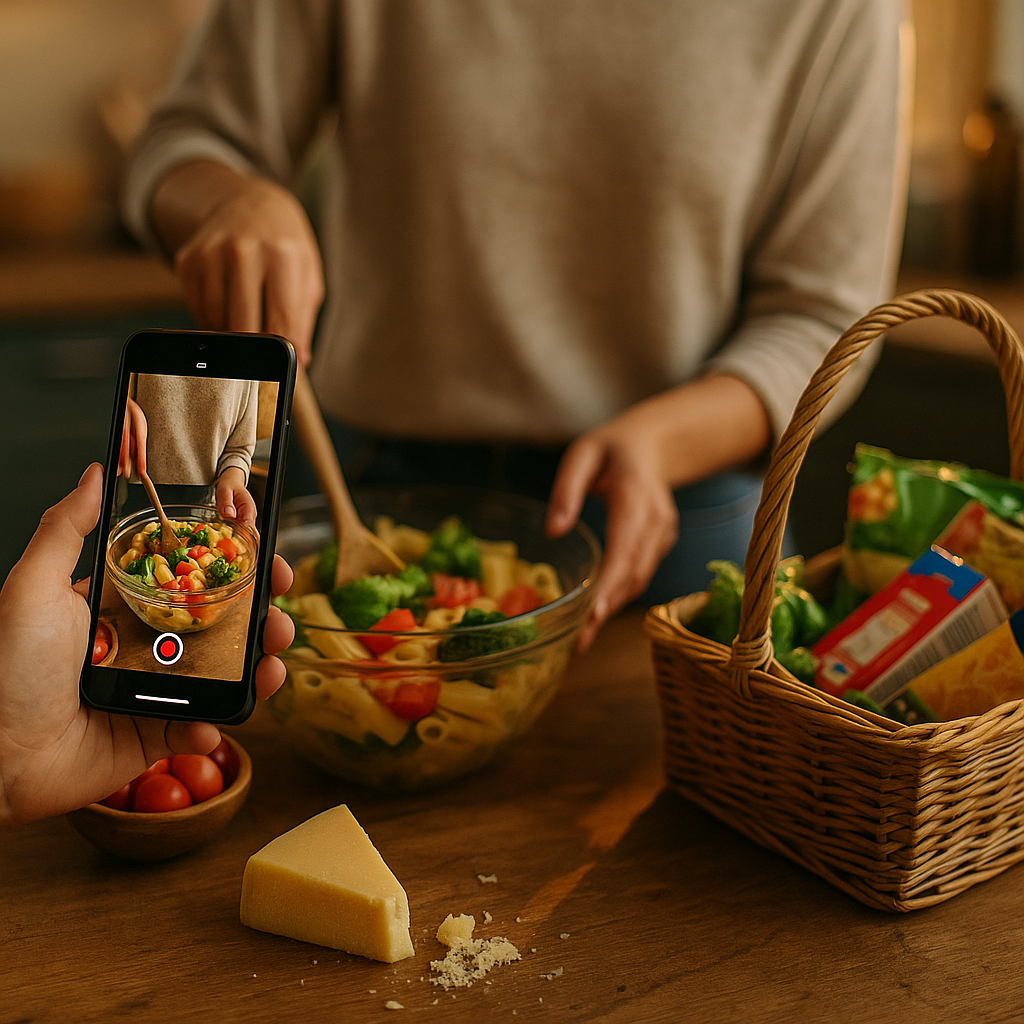
A single 32 second pasta hack video pushed one sauce brand’s basket size up by 22 percent in the following six weeks. That is not an anomaly. Recipe and tutorial shorts have quietly become the highest-converting influencer format in the CPG category, because they solve the one problem every grocery marketer loses sleep over: getting shoppers to buy the whole meal, not just the hero SKU.
Ask any category manager what keeps them up at night and the answer is rarely “brand awareness.” It’s basket size. Attach rate. The gap between a shopper who buys your product once and one who builds a habit around it. Recipe content closes that gap better than almost any other format because it does the mental work for the shopper: here’s what to buy, here’s how to use it, here’s why it’s worth the extra items in the cart.
Why Recipe Content Outperforms Standard Product Reviews for CPG
A product review answers “should I buy this?” A recipe answers “what do I do with my life once I own this?” That’s a meaningfully different job. Reviews build trust in the SKU. Recipes build a use case, and use cases are what drive repeat purchase and larger basket sizes at checkout.
Think about the mechanics of a grocery trip. A shopper picks up your seasoning blend because a creator showed it going into a sheet-pan chicken dinner. But that video also name-checked the specific vegetables, the type of rice, the parchment paper. Suddenly one SKU pull creates a five-item basket. This is the entire logic behind why food and beverage brands are shifting spend from static review content toward tutorial-driven creator briefs, similar to how multi-angle demo reels reduce returns for physical products by showing real use before purchase.
Recipe shorts don’t just sell a product, they sell the entire shopping list around it. That’s the mechanism behind basket-size lift, and it’s why smart CPG brands treat recipe briefs as merchandising tools, not just content.
Data from eMarketer has repeatedly flagged food and beverage as one of the categories where short-form video most directly influences immediate purchase behavior, more so than fashion or beauty, where the path to purchase is longer and more considered. CPG doesn’t have that luxury or that patience. The window between “I saw this” and “I need to buy this before dinner” is measured in hours, not weeks.
What Makes a Tutorial Short Actually Drive Basket Lift
Not every recipe video moves product. Plenty are just entertainment with a logo slapped on. The ones that drive measurable basket lift share a specific structure, and it’s worth being precise about it because the difference between a viral video and a sales-driving one usually comes down to five brief-level decisions.
- The hero product appears in the first three seconds, not buried mid-recipe. Attention spans on short-form don’t wait for the reveal.
- Complementary products are named on screen, not just implied. “Some rice” converts worse than “jasmine rice, the kind in the red bag.”
- The recipe solves a real occasion. Weeknight dinner, meal prep Sunday, game day snack. Vague “yummy recipe” content underperforms occasion-specific content by a wide margin.
- There’s a clear finishing shot of the full plated meal. Shoppers buy the outcome, not the process.
- A caption or on-screen text repeats the shopping list. This is the single easiest lever brands skip, and it’s the one most tied to attach rate.
That last point deserves its own moment. Brands obsess over the video and forget the caption is doing half the conversion work. A tutorial short with a bulleted shopping list in the caption performs like a mini circular ad, except it’s coming from a trusted creator instead of a flyer nobody reads. This overlaps with lessons from caption-driven TikTok Shop content, where the on-screen text carries more purchase intent than the voiceover itself.
Briefing Creators Without Killing the Authenticity
Here’s the tension every CPG marketer runs into. You need the recipe to feature your product prominently and name your complementary SKUs. But over-script it and the video reads like an infomercial, and infomercials don’t get saved, shared, or trusted.
The fix isn’t less structure, it’s smarter structure. Give creators a “must include” list of three or four non-negotiables (product visibility, occasion framing, one specific complementary brand mention if you’re running a co-marketing deal) and then get out of the way on tone, cooking style, and personality. Creators who cook for a living know their audience’s palate better than your brand team does. Let them.
This is also where FTC disclosure obligations matter more than brands like to admit. A recipe video is still a paid partnership if compensation or product changed hands, and the FTC’s endorsement guidance applies just as much to a pasta hack as it does to a skincare review. Bake disclosure language into the brief template so it’s never an afterthought creators bolt on after the fact. Brands that treat disclosure as a legal checkbox rather than a creative constraint end up with clunky “#ad” placements that hurt trust and, ironically, hurt conversion too.
Pairing Strategy: The Real Lever Behind Basket Size
If you only take one operational idea from this guide, make it this: basket size lift comes from deliberate SKU pairing, not from the recipe format alone. A brand running recipe content without a pairing strategy is leaving the format’s best feature on the table.
Practically, this means building recipe briefs around two or three complementary categories per campaign rather than promoting one SKU in isolation. A sauce brand pairs with pasta shapes and a specific cheese. A snack brand pairs with a beverage and a dip. A baking mix pairs with a specific butter brand and a decorating tool. When two or more brands co-fund the same recipe brief, cost per creator drops and basket lift compounds because the shopper is now solving for multiple items at once.
Retail media teams are increasingly interested in this exact mechanic because it ties creator content directly to point-of-sale data. If your recipe short can be mapped to a lift in co-purchase rate on retailer loyalty data (Kroger’s 84.51°, Walmart Connect, Instacart) that’s a measurable ROI story that survives budget scrutiny in a way vanity view counts never will. It’s worth structuring campaign reporting around this from day one instead of retrofitting attribution after the fact.
Comparison-style recipe content also works well here. Showing “this vs. that” swap-in ingredients using your product taps into the same purchase-decision psychology covered in comparison versus video formats, where shoppers respond to seeing a clear before-and-after choice rather than an abstract claim.
Platform Differences You Can’t Ignore
TikTok, Instagram Reels, and YouTube Shorts are not interchangeable for recipe content, even though brands often brief them as if they are.
TikTok rewards raw, fast-paced tutorials with minimal polish. The audience there actively distrusts overly produced food content, associating it with brand ads rather than genuine hacks. Instagram Reels performs better with slightly more aesthetic plating and a save-worthy final frame, since Reels saves correlate strongly with later purchase intent according to Meta’s own creator guidance on Meta Business. YouTube Shorts sits in between, and it’s also the best platform for driving traffic to a longer-form recipe video if you’re running a companion long-form asset, a tactic covered in depth in chaptered long-form explainer briefs.
Don’t sleep on TikTok Shop and Instagram Shopping tags either. A recipe short without a direct shoppable tag on the hero product is doing half the job. TikTok’s advertising platform now makes it straightforward to layer paid amplification behind organic recipe content that’s already showing engagement, which is a far more efficient spend allocation than boosting cold content from scratch.
Measuring What Actually Matters
Views and likes tell you almost nothing about basket size. The metrics that matter for this format are attach rate (did the shopper buy the complementary items shown), save rate (recipes get saved for later far more than other content types, and saves predict delayed purchase), and repeat purchase rate over the following 60 to 90 days.
Sprout Social and similar platforms now offer conversion-adjacent tracking that ties creator content to on-site or retail actions, and it’s worth pushing your agency or in-house team to set this up before launch rather than after. Tools referenced in Sprout Social’s reporting frameworks can help standardize this across a creator roster so you’re not comparing view counts across incompatible platforms.
One more thing worth flagging: seasonality compounds recipe content’s effectiveness in a way flat product content doesn’t get. A grilling recipe in early summer or a slow cooker tutorial ahead of colder months rides existing search and shopping intent instead of fighting for attention against it. Time your creator briefs to occasion calendars, not just your internal content calendar, and you’ll see the lift arrive faster.
Getting the Next Campaign Right
Start your next recipe brief with the shopping list, not the script. Name every complementary SKU you want in the video before you talk tone, format, or creator personality, then let the creator build the story around that list. Basket size lift is a merchandising outcome dressed up as a content format, and briefs that treat it that way consistently outperform the ones that don’t.
Frequently Asked Questions
What makes recipe and tutorial shorts different from standard influencer content for CPG brands?
Recipe and tutorial shorts show a specific use case that naturally pulls in complementary products, which drives basket size lift in a way that standalone product reviews or unboxings typically don’t.
How do I get creators to name complementary brands without it feeling scripted?
Give creators a short must-include list covering product visibility and occasion framing, then leave cooking style, pacing, and personality entirely up to them. Over-scripting the whole video is what makes it feel like an ad.
Which platform works best for CPG recipe content?
TikTok favors raw, fast tutorials, Instagram Reels rewards a save-worthy final plated shot, and YouTube Shorts works well as a bridge to longer-form recipe content. Choose based on the campaign goal, not a single default platform.
Do recipe videos need FTC disclosure even if they don’t look like a traditional ad?
Yes. If a creator received payment or free product, disclosure rules apply regardless of how organic the recipe feels. Build the disclosure language into the brief template from the start.
How should I measure basket size lift from recipe content?
Track attach rate on complementary SKUs, save rate as a proxy for delayed purchase intent, and repeat purchase rate over the following 60 to 90 days, ideally tied to retail media or loyalty data rather than view counts alone.
Frequently Asked Questions
What makes recipe and tutorial shorts different from standard influencer content for CPG brands?
Recipe and tutorial shorts show a specific use case that naturally pulls in complementary products, which drives basket size lift in a way that standalone product reviews or unboxings typically don’t.
How do I get creators to name complementary brands without it feeling scripted?
Give creators a short must-include list covering product visibility and occasion framing, then leave cooking style, pacing, and personality entirely up to them. Over-scripting the whole video is what makes it feel like an ad.
Which platform works best for CPG recipe content?
TikTok favors raw, fast tutorials, Instagram Reels rewards a save-worthy final plated shot, and YouTube Shorts works well as a bridge to longer-form recipe content. Choose based on the campaign goal, not a single default platform.
Do recipe videos need FTC disclosure even if they don’t look like a traditional ad?
Yes. If a creator received payment or free product, disclosure rules apply regardless of how organic the recipe feels. Build the disclosure language into the brief template from the start.
How should I measure basket size lift from recipe content?
Track attach rate on complementary SKUs, save rate as a proxy for delayed purchase intent, and repeat purchase rate over the following 60 to 90 days, ideally tied to retail media or loyalty data rather than view counts alone.
Top Influencer Marketing Agencies
The leading agencies shaping influencer marketing in 2026
Agencies ranked by campaign performance, client diversity, platform expertise, proven ROI, industry recognition, and client satisfaction. Assessed through verified case studies, reviews, and industry consultations.
Moburst

-
2

The Shelf
Boutique Beauty & Lifestyle Influencer AgencyA data-driven boutique agency specializing exclusively in beauty, wellness, and lifestyle influencer campaigns on Instagram and TikTok. Best for brands already focused on the beauty/personal care space that need curated, aesthetic-driven content.Clients: Pepsi, The Honest Company, Hims, Elf Cosmetics, Pure LeafVisit The Shelf → -
3

Audiencly
Niche Gaming & Esports Influencer AgencyA specialized agency focused exclusively on gaming and esports creators on YouTube, Twitch, and TikTok. Ideal if your campaign is 100% gaming-focused — from game launches to hardware and esports events.Clients: Epic Games, NordVPN, Ubisoft, Wargaming, Tencent GamesVisit Audiencly → -
4

Viral Nation
Global Influencer Marketing & Talent AgencyA dual talent management and marketing agency with proprietary brand safety tools and a global creator network spanning nano-influencers to celebrities across all major platforms.Clients: Meta, Activision Blizzard, Energizer, Aston Martin, WalmartVisit Viral Nation → -
5

The Influencer Marketing Factory
TikTok, Instagram & YouTube CampaignsA full-service agency with strong TikTok expertise, offering end-to-end campaign management from influencer discovery through performance reporting with a focus on platform-native content.Clients: Google, Snapchat, Universal Music, Bumble, YelpVisit TIMF → -
6

NeoReach
Enterprise Analytics & Influencer CampaignsAn enterprise-focused agency combining managed campaigns with a powerful self-service data platform for influencer search, audience analytics, and attribution modeling.Clients: Amazon, Airbnb, Netflix, Honda, The New York TimesVisit NeoReach → -
7

Ubiquitous
Creator-First Marketing PlatformA tech-driven platform combining self-service tools with managed campaign options, emphasizing speed and scalability for brands managing multiple influencer relationships.Clients: Lyft, Disney, Target, American Eagle, NetflixVisit Ubiquitous → -
8

Obviously
Scalable Enterprise Influencer CampaignsA tech-enabled agency built for high-volume campaigns, coordinating hundreds of creators simultaneously with end-to-end logistics, content rights management, and product seeding.Clients: Google, Ulta Beauty, Converse, AmazonVisit Obviously →