


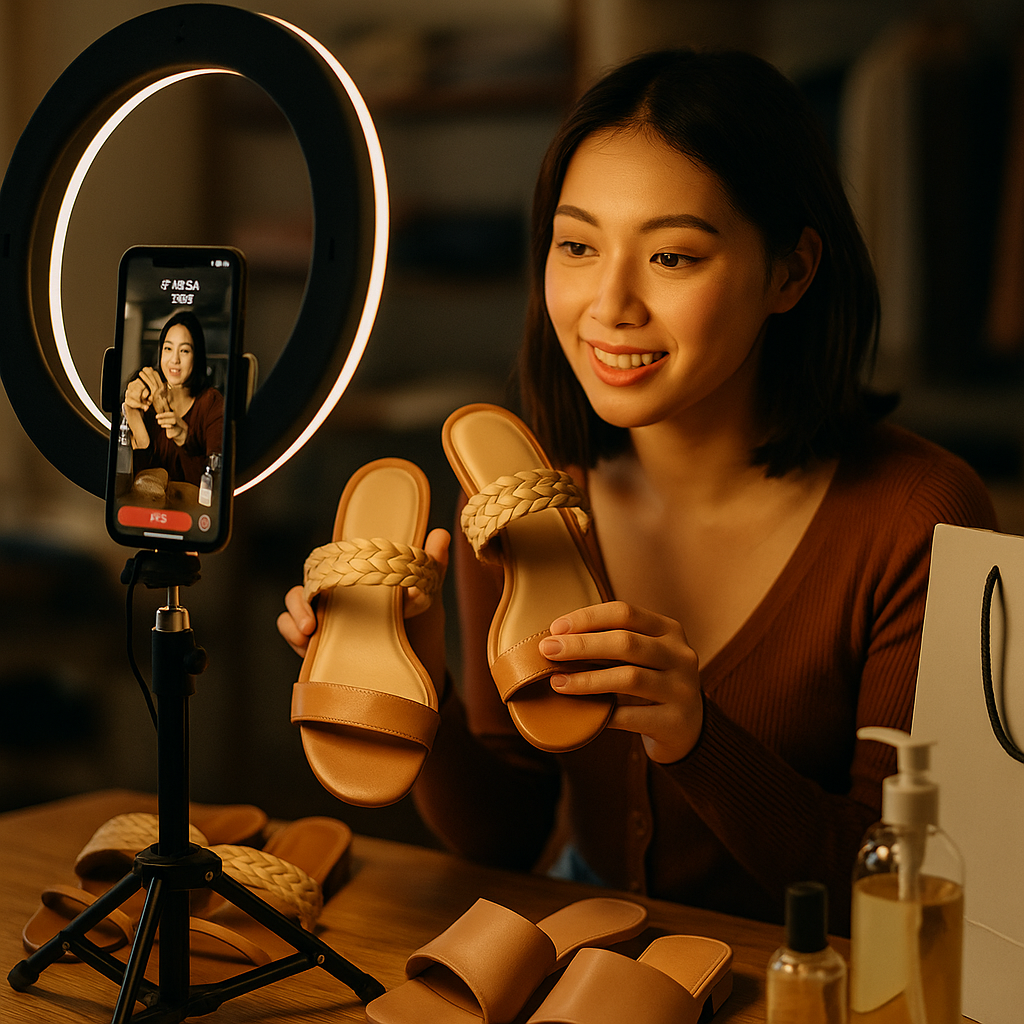
TikTok Shop generated more than $33 billion in gross merchandise value last year, and regulators noticed the same thing marketers did: live shopping disclosure is where the sales happen and where the compliance gaps hide. When a host is talking for sixty straight minutes, flashing prices, and stacking countdown timers, “clear and conspicuous” disclosure becomes a lot harder to pull off than a static caption ever was.
Recent enforcement actions have made one thing brutally clear: brands can’t outsource disclosure risk to the creator and call it a day. If you’re running or approving live shopping segments right now, the last few months of FTC activity and platform penalties should be required reading.
What Actually Went Wrong in These Cases
The pattern across recent TikTok Shop enforcement actions isn’t complicated. Hosts promoted products without verbally or visually disclosing paid partnerships, disclosure text appeared for a few seconds before disappearing off-screen, or the “Sponsored” tag got buried under a product carousel that viewers were actively scrolling through. In several cases, brands had approved the affiliate arrangement but never reviewed the actual live stream footage, which is exactly the kind of oversight gap that turns into a six-figure headache.
Live commerce compounds the problem because there’s no editing pass. A sponsored TikTok video gets scripted, shot, and reviewed before it goes live. A livestream is improvisation with a shopping cart attached. Hosts riff, forget disclosure language, or bury it in a wall of talk about shipping discounts and limited stock. Unlike a feed post, there’s no second chance to fix a missed disclosure before it reaches the audience.
Enforcement bodies are no longer treating live shopping as an edge case. They’re treating it as the primary battleground for disclosure compliance because that’s where consumer purchase intent is highest and platform disclosure tools are weakest.
Why Live Formats Break Standard Disclosure Playbooks
Most brand compliance frameworks were built for static or pre-recorded content: a caption checklist, a hashtag requirement, maybe a voiceover script review. Live shopping doesn’t fit that mold. Consider what a typical one-hour TikTok Shop session actually involves: multiple product swaps, rotating discount codes, guest hosts jumping in and out, and comment-driven tangents that can pull a host completely off-script.
- Disclosure timing: A single “sponsored” mention at the top of a stream doesn’t cover product mentions forty minutes later.
- Visual placement: TikTok’s built-in disclosure labels can be pushed off-screen by pinned comments or product cards.
- Multi-host dynamics: When a brand rep joins a creator’s stream, who’s responsible for restating the disclosure after a platform switch or guest handoff?
- Recording and clipping: Once a live segment gets clipped and reposted as short-form content, the original disclosure context often gets stripped entirely.
That last point matters more than brands realize. A compliant live stream can spawn a dozen non-compliant clips within hours, and nobody on the brand side signed off on any of them. For a deeper look at how disclosure labels vanish during content repurposing, see how disclosure labels get stripped during downstream editing.
The FTC’s Position Hasn’t Softened
The FTC’s Endorsement Guides apply to livestreams exactly as they apply to any other format: disclosures must be clear, conspicuous, and unavoidable. Regulators have signaled that the length and improvised nature of a live shopping segment isn’t a defense. If anything, agencies view long-form live formats as higher risk precisely because viewers are watching passively for extended periods, which makes a single missed disclosure feel less like an anomaly and more like a systemic failure to design the format with compliance in mind. Recent rulings have reinforced this expectation. For a full breakdown of how enforcement standards have shifted, review recent FTC enforcement rulings and what they mean for adequate disclosure going forward.
Where Brands Are Getting Caught Off Guard
Brand teams tend to assume that platform-native tools handle compliance automatically. TikTok Shop does offer disclosure features, but tools only work if someone enforces their use consistently across every live session, every host, and every affiliate partner. A brand that trusts the platform default without an internal audit layer is gambling on creators remembering to toggle a setting mid-broadcast.
Three specific failure points show up again and again in enforcement cases and internal post-mortems:
- No pre-live briefing. Creators go live without a written script or disclosure cue sheet, relying on memory during a fast-paced, high-pressure selling environment.
- No live monitoring. Brand or agency staff don’t watch the stream in real time, so disclosure lapses aren’t caught until after the fact, if at all.
- No post-stream audit. Recorded replays and clipped highlights go unreviewed, letting non-compliant segments circulate indefinitely.
Compare that to the standard now expected for pre-recorded sponsored content. Brands running structured audits on static posts and short-form video have significantly lower incident rates than those relying on creator self-reporting. If your team hasn’t formalized a review process, creator compliance audits are a reasonable starting point for closing that verification gap before it becomes a live shopping problem too.
Building a Live Shopping Disclosure Checklist That Actually Holds Up
You don’t need a fifty-page policy document. You need a repeatable process that works under the time pressure of a live broadcast. Here’s what that looks like in practice:
- Pre-approve disclosure language and cadence. Script the exact wording the host will use, and set a reminder cadence (every 10 to 15 minutes) rather than a single opening disclaimer.
- Assign a live monitor. Someone on the brand or agency side should watch the stream in real time with authority to intervene if disclosure slips.
- Use platform-native tags correctly. TikTok Shop’s disclosure and “Sponsored” tagging tools work best when they’re activated before the stream starts, not toggled mid-broadcast. Understanding how the Shop tag interacts with disclosure and organic reach helps teams avoid the false choice between visibility and compliance.
- Audit clips and replays separately. Treat every downstream clip as its own compliance event, not an extension of the original stream’s approval.
- Log everything. Screen recordings, timestamps, and host acknowledgments create a defensible paper trail if a regulator or platform ever asks questions. This is the same logic behind consent logging audit trails used for standard sponsored content.
None of this is glamorous work. But it’s a lot cheaper than an enforcement action, a platform strike, or the reputational fallout of a viral “brand caught hiding sponsorship” clip circulating on other platforms.
Contract Language Still Matters More Than Most Teams Think
A surprising number of live shopping disputes trace back to vague contract terms rather than creator negligence. If your creator agreement doesn’t explicitly address live formats, disclosure cadence, and clip repurposing rights, you’re leaving room for interpretation that regulators won’t extend to you. This ties directly into broader creator contract frameworks that need updating as live commerce becomes a bigger share of influencer budgets.
Specifically, contracts should spell out who owns disclosure responsibility during co-hosted streams, how quickly a host must correct a missed disclosure once flagged, and whether the brand has the right to pause or end a stream if compliance breaks down. Vague language here isn’t just a legal risk, it’s an operational one, because nobody knows who’s supposed to act when something goes sideways mid-broadcast.
The ROI Case for Getting This Right
Skeptical this is worth the operational overhead? Consider the math. eMarketer data shows social commerce continuing its steep growth trajectory, with live shopping formats capturing an increasing share of that spend. Brands that build disclosure compliance into their live shopping workflow now aren’t slowing down growth, they’re protecting the channel’s long-term viability. A single high-profile enforcement action can trigger platform-wide scrutiny that slows approval times for every brand running TikTok Shop campaigns, compliant or not.
There’s also a trust dimension that’s easy to overlook. Consumers who feel misled by hidden sponsorships during a live purchase decision are far less forgiving than those who scroll past an ambiguous caption. Sprout Social’s consumer trust research consistently shows disclosure transparency correlates with purchase confidence, not against it. Clear disclosure isn’t a tax on conversion. It’s part of what makes live shopping viable as a repeatable channel rather than a one-time novelty.
Frequently Asked Questions
What counts as adequate disclosure during a TikTok Shop livestream?
Disclosure needs to be clear, conspicuous, and repeated throughout the stream, not just stated once at the start. The FTC expects viewers to understand the sponsored nature of a promotion regardless of when they tune in, which means disclosure language should recur at regular intervals, ideally paired with TikTok Shop’s native disclosure tagging tools.
Who is liable if a creator forgets to disclose during a live shopping segment?
Both the creator and the brand can face liability. The FTC has consistently held brands responsible for ensuring their marketing partners disclose properly, which means a missed disclosure isn’t purely a creator’s mistake, it’s a gap in the brand’s oversight process.
Do clipped highlights from a livestream need separate disclosure?
Yes. Once a segment is clipped and reposted, the disclosure context from the original stream often doesn’t carry over automatically. Each clip should be treated as its own piece of content requiring its own disclosure review before it’s republished or promoted.
Can platform-native disclosure tags replace verbal disclosure on a livestream?
Platform tags help, but they shouldn’t be the only safeguard. Visual tags can get buried under comments or product cards, so pairing them with verbal disclosure at regular intervals gives brands a stronger compliance position if questions arise later.
How often should brands audit live shopping content for disclosure compliance?
Every live session should have real-time monitoring plus a post-stream review of the recorded replay and any derivative clips. Waiting for a complaint or enforcement notice to conduct a first audit is far riskier than building routine checks into standard campaign workflow.
Live shopping isn’t going away, and neither is regulatory attention on it. Build the monitoring, scripting, and audit trail now, before an enforcement action forces the issue on someone else’s timeline.
Frequently Asked Questions
What counts as adequate disclosure during a TikTok Shop livestream?
Disclosure needs to be clear, conspicuous, and repeated throughout the stream, not just stated once at the start. The FTC expects viewers to understand the sponsored nature of a promotion regardless of when they tune in, which means disclosure language should recur at regular intervals, ideally paired with TikTok Shop’s native disclosure tagging tools.
Who is liable if a creator forgets to disclose during a live shopping segment?
Both the creator and the brand can face liability. The FTC has consistently held brands responsible for ensuring their marketing partners disclose properly, which means a missed disclosure isn’t purely a creator’s mistake, it’s a gap in the brand’s oversight process.
Do clipped highlights from a livestream need separate disclosure?
Yes. Once a segment is clipped and reposted, the disclosure context from the original stream often doesn’t carry over automatically. Each clip should be treated as its own piece of content requiring its own disclosure review before it’s republished or promoted.
Can platform-native disclosure tags replace verbal disclosure on a livestream?
Platform tags help, but they shouldn’t be the only safeguard. Visual tags can get buried under comments or product cards, so pairing them with verbal disclosure at regular intervals gives brands a stronger compliance position if questions arise later.
How often should brands audit live shopping content for disclosure compliance?
Every live session should have real-time monitoring plus a post-stream review of the recorded replay and any derivative clips. Waiting for a complaint or enforcement notice to conduct a first audit is far riskier than building routine checks into standard campaign workflow.
Top Influencer Marketing Agencies
The leading agencies shaping influencer marketing in 2026
Agencies ranked by campaign performance, client diversity, platform expertise, proven ROI, industry recognition, and client satisfaction. Assessed through verified case studies, reviews, and industry consultations.
Moburst

-
2

The Shelf
Boutique Beauty & Lifestyle Influencer AgencyA data-driven boutique agency specializing exclusively in beauty, wellness, and lifestyle influencer campaigns on Instagram and TikTok. Best for brands already focused on the beauty/personal care space that need curated, aesthetic-driven content.Clients: Pepsi, The Honest Company, Hims, Elf Cosmetics, Pure LeafVisit The Shelf → -
3

Audiencly
Niche Gaming & Esports Influencer AgencyA specialized agency focused exclusively on gaming and esports creators on YouTube, Twitch, and TikTok. Ideal if your campaign is 100% gaming-focused — from game launches to hardware and esports events.Clients: Epic Games, NordVPN, Ubisoft, Wargaming, Tencent GamesVisit Audiencly → -
4

Viral Nation
Global Influencer Marketing & Talent AgencyA dual talent management and marketing agency with proprietary brand safety tools and a global creator network spanning nano-influencers to celebrities across all major platforms.Clients: Meta, Activision Blizzard, Energizer, Aston Martin, WalmartVisit Viral Nation → -
5

The Influencer Marketing Factory
TikTok, Instagram & YouTube CampaignsA full-service agency with strong TikTok expertise, offering end-to-end campaign management from influencer discovery through performance reporting with a focus on platform-native content.Clients: Google, Snapchat, Universal Music, Bumble, YelpVisit TIMF → -
6

NeoReach
Enterprise Analytics & Influencer CampaignsAn enterprise-focused agency combining managed campaigns with a powerful self-service data platform for influencer search, audience analytics, and attribution modeling.Clients: Amazon, Airbnb, Netflix, Honda, The New York TimesVisit NeoReach → -
7

Ubiquitous
Creator-First Marketing PlatformA tech-driven platform combining self-service tools with managed campaign options, emphasizing speed and scalability for brands managing multiple influencer relationships.Clients: Lyft, Disney, Target, American Eagle, NetflixVisit Ubiquitous → -
8

Obviously
Scalable Enterprise Influencer CampaignsA tech-enabled agency built for high-volume campaigns, coordinating hundreds of creators simultaneously with end-to-end logistics, content rights management, and product seeding.Clients: Google, Ulta Beauty, Converse, AmazonVisit Obviously →