


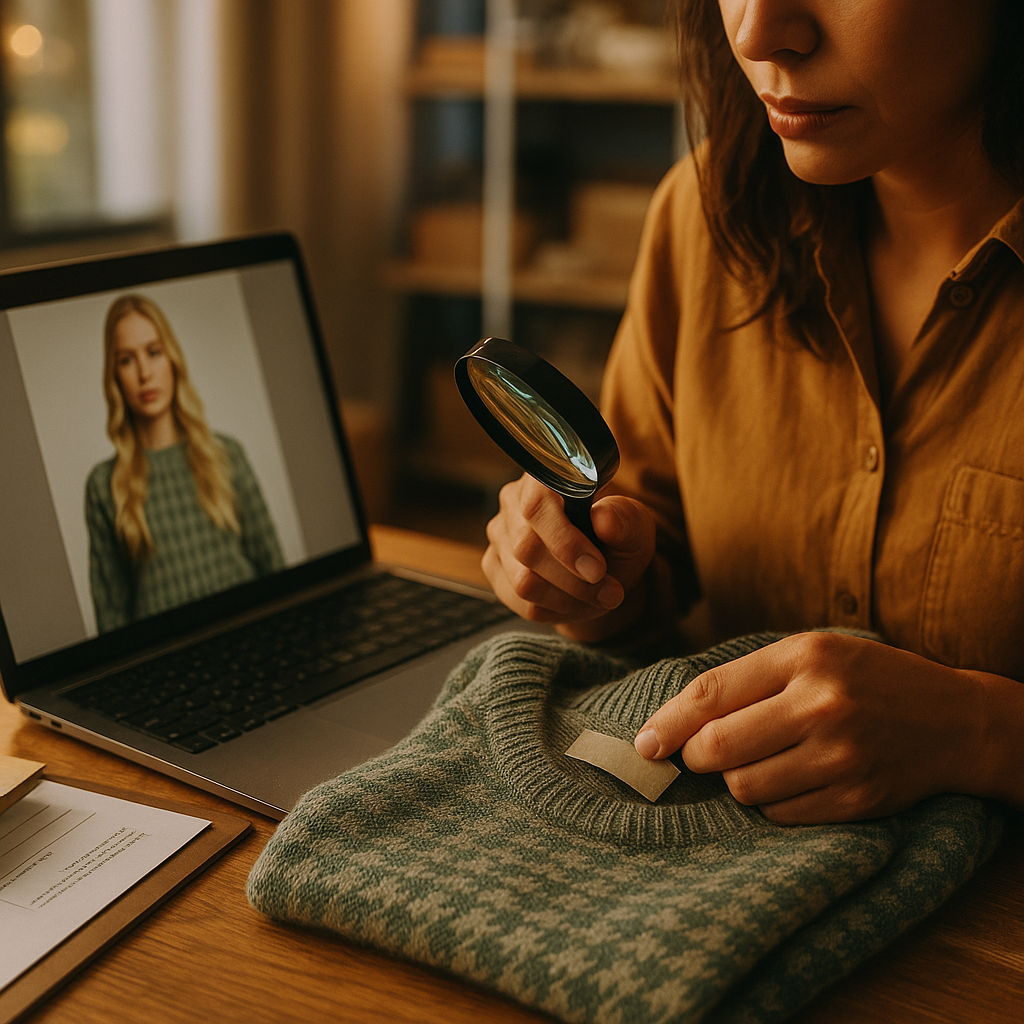
Sixty one percent of consumers say they can spot AI-generated fashion imagery, and most say it makes them trust the brand less, according to recent consumer sentiment research. That’s not a rounding error. That’s a trust collapse happening in real time, and it’s called AI fashion slop: the flood of synthetic, low-effort, algorithmically generated fashion content clogging feeds and quietly poisoning the credibility that creator marketing spent a decade building.
What Counts as AI Fashion Slop?
Not all AI-assisted content is slop. A brand using Adobe Firefly to mock up a color variant isn’t the problem. The problem is content that’s mass-produced, poorly disclosed, and designed to mimic authentic creator posts without any human wearing, testing, or endorsing the product.
Think synthetic “models” with impossibly uniform skin, AI-generated try-on videos that never touched real fabric, or entire influencer personas built from diffusion models and never disclosed as such. Mango, Levi’s, and H&M have all faced backlash after using AI-generated models in campaigns, and the criticism wasn’t really about the technology. It was about the silence around it.
Audiences don’t reject AI in fashion marketing because it’s AI. They reject it because brands used it to fake a human relationship that never existed.
The Trust Math Brands Are Ignoring
Influencer marketing has always sold on one currency: perceived authenticity. Followers trust a creator’s opinion because they believe a real person actually used the product. Strip that out and you’re left with an ad, dressed up as a recommendation.
Sprout Social’s ongoing trust research has consistently shown that consumers rank authenticity above production quality when evaluating branded content. AI fashion slop inverts that hierarchy. It optimizes for polish and volume while quietly sacrificing the one variable that actually drives conversion.
Here’s the uncomfortable part for CMOs: the damage isn’t contained to the synthetic post. Once an audience catches one AI-slop moment from a brand, they start scrutinizing every subsequent piece of content, including real creator partnerships. Trust doesn’t degrade linearly. It collapses in clusters.
- Engagement rates on flagged AI-generated fashion content drop noticeably compared to human-shot equivalents.
- Comment sections increasingly include “is this AI?” callouts, which brands rarely respond to, compounding suspicion.
- Return and complaint rates rise when synthetic imagery misrepresents fit, drape, or color accuracy.
That last point matters more than marketers admit. Fashion is a fit-and-feel category. When an AI-rendered garment doesn’t match what arrives in the box, you’re not just losing a sale, you’re generating a public complaint that reads as a brand lying to its audience.
Where It’s Actually Showing Up in Campaigns
This isn’t a hypothetical future risk. It’s already embedded in current production pipelines, often without brand safety teams fully clocking it.
- Synthetic try-on content. Tools built on models like Google Veo or OpenAI’s video generators can produce a “model” wearing a garment that was never physically manufactured yet, used to test demand before production.
- AI-augmented UGC. Agencies quietly upscale or “enhance” real creator footage with generative fill, altering skin texture, background, or even garment color, without creator or audience knowledge.
- Ghost influencers. Fully synthetic personas with AI-generated faces post styled content, accumulate followings, and get paid brand deals, all without a real person behind the account.
- Bulk catalog imagery mislabeled as editorial. Some fast-fashion players use AI-generated lifestyle shots and present them as though they were shot with real talent, blurring the line between product photography and endorsement.
Each of these carries a different risk profile, but they share a root cause: production teams chasing speed and cost savings without a governance layer asking whether disclosure obligations apply. That’s the same blind spot showing up in UGC rights management conversations, where brands are only now building the operational infrastructure to track sourcing and consent at scale.
The Compliance Angle Nobody’s Pricing In
Regulators are not sitting this one out. The FTC’s endorsement guidelines already require clear disclosure when content is not what it appears to be, and synthetic influencer content sits squarely in that gray zone. Brands that treat AI fashion slop as a purely creative decision are underestimating the legal exposure.
This connects directly to the liability questions already surfacing around algorithmic content and brand accountability. If a brand can be held responsible for what an algorithm surfaces, it’s a short leap to holding brands responsible for what a generative model produces under their name. Add in the platform-level scrutiny already reshaping youth-facing content under the Meta teen settlement, and you get a regulatory environment with very little patience for undisclosed synthetic marketing.
Review the FTC’s endorsement and disclosure guidance before your next AI-assisted campaign goes live. It’s a five-minute read that can save a very expensive correction later.
Fixing It Without Killing the Efficiency Gains
Nobody’s arguing brands should abandon AI tools in fashion marketing. The economics are too good, and the production speed genuinely helps smaller teams compete. The fix isn’t rejection, it’s disclosure discipline and sourcing verification.
The brands winning on trust right now aren’t the ones avoiding AI. They’re the ones labeling it clearly and pairing every synthetic asset with verifiable human proof somewhere in the funnel.
Practical moves that work:
- Label synthetic content at the point of publish, not buried in a caption hashtag nobody reads.
- Require creator content verification as part of contracts, confirming the product was physically worn or used, not just digitally rendered.
- Reserve AI generation for pre-production and testing, keeping final campaign assets rooted in real creator footage.
- Audit agency deliverables for undisclosed generative enhancement, the same way brands now audit follower authenticity and bot activity, a discipline already standard practice per bot follower vetting programs.
Smaller, niche creators are actually well positioned here. Their audiences are tighter, their content harder to fake convincingly, and their engagement rates already outperform broader reach plays, a trend documented in niche creator CPM data. Leaning into verified, human-first partnerships isn’t just a trust play, it’s increasingly the better ROI play too.
Third-party data backs the shift in buyer behavior. Recent industry surveys tracked by eMarketer show consumers increasingly discounting brand claims that can’t be traced to a verifiable human source, and HubSpot’s trust research shows a similar pattern across content marketing broadly, not just fashion. This isn’t a niche anxiety. It’s a measurable shift in how audiences evaluate brand-produced content across categories.
What This Means for Budget and Attribution
If synthetic content erodes trust, it should also erode the attribution value assigned to it. Yet most measurement stacks still treat AI-generated fashion content the same as verified creator posts when calculating engagement-to-conversion ratios. That’s a modeling error waiting to distort budget decisions.
Brands already shifting toward sales lift as the default KPI have a natural advantage here. Sales data doesn’t lie about whether synthetic content actually converts, even if vanity metrics look fine on the surface. Pair that with identity-based attribution rather than surface engagement, similar to the shift described in coverage of identity graph attribution, and the true cost of AI slop becomes visible in the numbers, not just the comment section.
FAQs
Frequently Asked Questions
What is AI fashion slop?
AI fashion slop refers to mass-produced, low-effort synthetic fashion imagery and content, often undisclosed, that mimics authentic creator or model content without any real person wearing or testing the product.
Is using AI-generated models in fashion campaigns illegal?
It’s not illegal outright, but it can trigger FTC endorsement disclosure requirements if the content implies a real person’s experience or endorsement when none exists. Brands should review current FTC guidance before launching AI-generated campaigns.
Does AI-generated content actually hurt engagement and sales?
Data consistently shows lower engagement on flagged AI-generated fashion content compared to human-shot equivalents, and mismatches between synthetic imagery and real product delivery can increase returns and complaints.
How can brands use AI in fashion marketing without triggering backlash?
Label synthetic content clearly, reserve AI generation for internal testing rather than final campaign assets, require creator contracts to verify real product use, and audit agency deliverables for undisclosed generative enhancement.
Are smaller creators less affected by the AI slop trust problem?
Yes. Niche and small creators tend to have tighter, more engaged audiences who can more easily spot inauthentic content, which currently gives verified human creator partnerships a measurable trust and conversion advantage.
The takeaway for brand teams is simple: audit every AI-touched fashion asset in your current pipeline this quarter, label what’s synthetic, and reroute budget toward verified human creator content where trust and conversion actually intersect.
Top Influencer Marketing Agencies
The leading agencies shaping influencer marketing in 2026
Agencies ranked by campaign performance, client diversity, platform expertise, proven ROI, industry recognition, and client satisfaction. Assessed through verified case studies, reviews, and industry consultations.
Moburst

-
2

The Shelf
Boutique Beauty & Lifestyle Influencer AgencyA data-driven boutique agency specializing exclusively in beauty, wellness, and lifestyle influencer campaigns on Instagram and TikTok. Best for brands already focused on the beauty/personal care space that need curated, aesthetic-driven content.Clients: Pepsi, The Honest Company, Hims, Elf Cosmetics, Pure LeafVisit The Shelf → -
3

Audiencly
Niche Gaming & Esports Influencer AgencyA specialized agency focused exclusively on gaming and esports creators on YouTube, Twitch, and TikTok. Ideal if your campaign is 100% gaming-focused — from game launches to hardware and esports events.Clients: Epic Games, NordVPN, Ubisoft, Wargaming, Tencent GamesVisit Audiencly → -
4

Viral Nation
Global Influencer Marketing & Talent AgencyA dual talent management and marketing agency with proprietary brand safety tools and a global creator network spanning nano-influencers to celebrities across all major platforms.Clients: Meta, Activision Blizzard, Energizer, Aston Martin, WalmartVisit Viral Nation → -
5

The Influencer Marketing Factory
TikTok, Instagram & YouTube CampaignsA full-service agency with strong TikTok expertise, offering end-to-end campaign management from influencer discovery through performance reporting with a focus on platform-native content.Clients: Google, Snapchat, Universal Music, Bumble, YelpVisit TIMF → -
6

NeoReach
Enterprise Analytics & Influencer CampaignsAn enterprise-focused agency combining managed campaigns with a powerful self-service data platform for influencer search, audience analytics, and attribution modeling.Clients: Amazon, Airbnb, Netflix, Honda, The New York TimesVisit NeoReach → -
7

Ubiquitous
Creator-First Marketing PlatformA tech-driven platform combining self-service tools with managed campaign options, emphasizing speed and scalability for brands managing multiple influencer relationships.Clients: Lyft, Disney, Target, American Eagle, NetflixVisit Ubiquitous → -
8

Obviously
Scalable Enterprise Influencer CampaignsA tech-enabled agency built for high-volume campaigns, coordinating hundreds of creators simultaneously with end-to-end logistics, content rights management, and product seeding.Clients: Google, Ulta Beauty, Converse, AmazonVisit Obviously →