


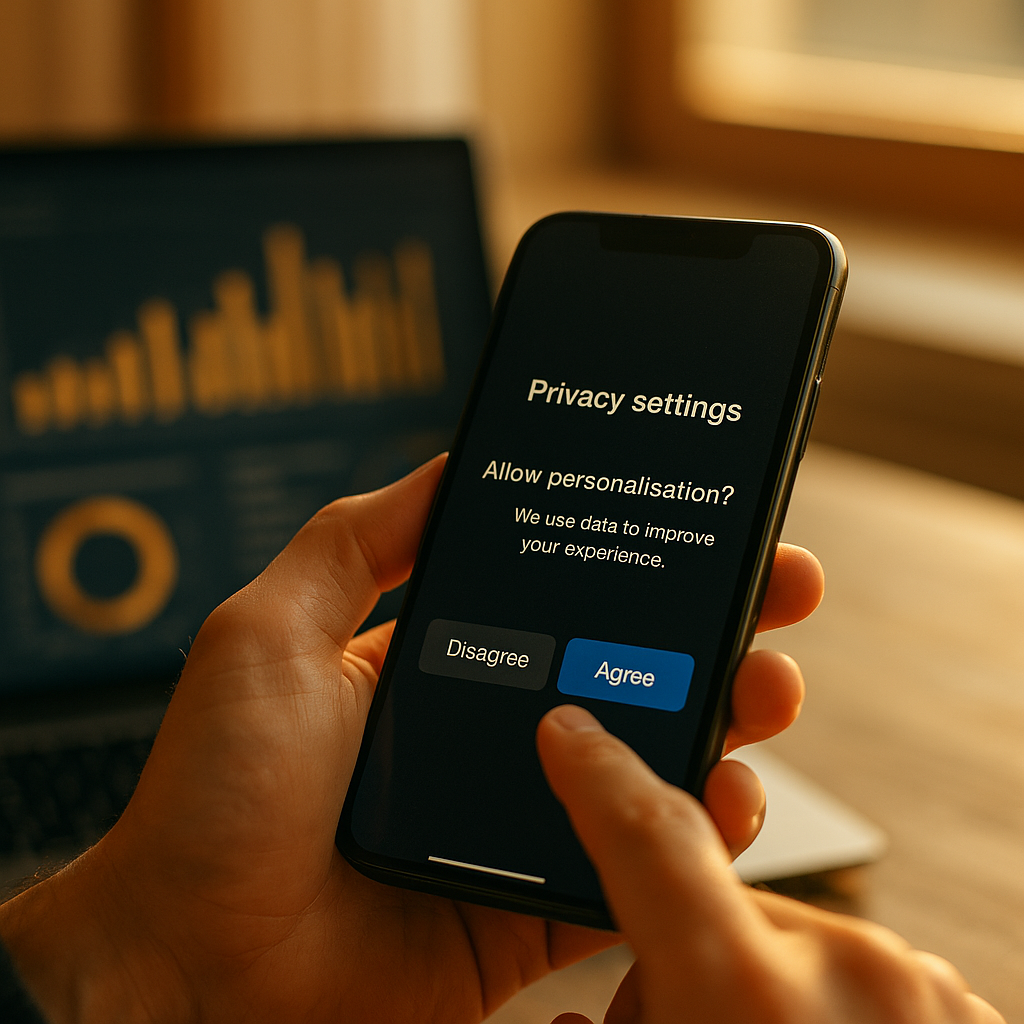
Zero. That’s how many third-party cookies Chrome will support by the time most current campaign contracts expire. Yet brands keep briefing creators as if pixel-based retargeting still works. Privacy first personalization isn’t a compliance checkbox anymore. It’s the only viable model left for brands that want to use creator data without inheriting a lawsuit.
The Cookie Is Dead, but Creator Data Still Talks
Marketers spent a decade building attribution models on third-party cookies and device IDs. That infrastructure is gone, or going. What’s replaced it is messier: first-party data collected directly through creator storefronts, branded landing pages, affiliate links, and gated content. The upside? This data is richer and more consensual. The downside? Most brands still treat it like the old cookie pool, hoovering it up without clear permission trails.
Regulators aren’t waiting for marketers to catch up. The FTC has already signaled it views influencer data collection as a disclosure issue, not just an advertising one. In the UK, the ICO has flagged creator-run email lists and DM funnels as sites needing explicit consent language, not just a vague “sign up for updates” button buried in a bio link.
MarTech Growth Changed Who Owns the Relationship
Here’s the shift nobody planned for: MarTech vendors built for creator programs now sit between the brand and the audience. Platforms tracking affiliate conversions, managing UGC rights, or running always-on ambassador relationships are quietly becoming the data controller of record. That’s a legal distinction with real teeth. If your ambassador platform mishandles consent, your brand still owns the reputational fallout.
This is why ambassador programs replacing gifting deals need data governance built in from day one, not bolted on after a breach. The same logic applies to UGC spend moving into CAC budgets: if you’re funding content rights infrastructure anyway, fold consent management into that spend instead of treating it as a separate legal cost center.
Every creator platform touching consumer data is now, functionally, a data processor. Brands that don’t audit vendor contracts for this are one subpoena away from finding out the hard way.
What “Privacy First” Actually Means for Creator Campaigns
Privacy first personalization sounds abstract until you break it into operational pieces. It means:
- Consent captured at the point of data collection, not retrofitted through a cookie banner.
- Creator-owned audience data treated as licensed, not owned, by the brand.
- Personalization built on zero-party data (what a follower tells you directly) rather than inferred behavioral signals.
- Clear data retention limits baked into creator platform contracts, not left to vendor defaults.
None of this is theoretical. HubSpot and other CRM vendors have already rebuilt onboarding flows around zero-party data capture because their enterprise clients demanded it. Creator MarTech is following the same path, just a year or two behind.
Identity Graphs Are the New Battleground
As cookies fade, identity graphs stitched from first-party signals are becoming the backbone of attribution. That’s good news for measurement accuracy, but it raises the stakes on consent. A graph built from creator affiliate clicks, email opens, and loyalty program sign-ups is powerful precisely because it’s granular. Granular data is also the kind regulators care about most. Brands that want the upside of identity graphs replacing cookies as the attribution backbone need to pair that infrastructure with airtight consent documentation, or the graph becomes a liability instead of an asset.
Cookie-free attribution isn’t optional anymore either. As covered in our look at cookie-free attribution rebuilding around consent, the brands moving fastest are the ones who treated the deprecation timeline as a two-year infrastructure project instead of a scramble.
Why This Matters More for Creator Partnerships Than General Ads
Display advertising can lean on contextual targeting to survive cookie loss. Creator marketing can’t, not fully. The entire value proposition of influencer content is personalization: this creator, speaking to this specific audience, in a voice that feels native. Strip out the data layer and you’re left with reach numbers and vibes, which is exactly the trap the industry is trying to escape as follower count loses grip in favor of conversion proof.
So brands need a middle path: personalization that respects consent boundaries but still delivers the specificity that makes creator content convert. That means leaning harder on data the creator’s audience volunteers willingly, quiz responses, product preference surveys, loyalty tier selections, rather than scraped engagement metrics or purchased lookalike audiences.
The Compliance Cost of Getting This Wrong
Brands underestimate how expensive a privacy misstep gets once a creator relationship is involved. It’s not just fines. It’s contract renegotiation, creator churn, and platform bans if a partner is caught reselling audience data without disclosure. The same trust erosion pattern we’ve seen with AI generated content forcing sourcing verification applies here: once an audience suspects manipulation, whether it’s synthetic content or invisible data harvesting, they don’t come back easily.
Meta’s recent teen data settlement is a preview of what’s coming for creator platforms broadly. Brands running youth-adjacent campaigns should already be studying how the Meta teen settlement forces Gen Z campaign rebuilds, because age verification and data minimization rules aren’t staying confined to one platform.
Building a Privacy First MarTech Stack: What Actually Works
Skip the theory. Here’s what mid-to-senior marketing teams are doing right now to make privacy first personalization operational rather than aspirational:
- Audit every creator platform vendor contract for data processing terms, retention windows, and subprocessor disclosures. Most brands haven’t read these since signing.
- Move zero-party data collection into the creator brief. Ask creators to run polls, quizzes, or preference surveys as content, not just track link clicks after the fact.
- Separate personalization from surveillance. A recommendation based on what a follower told you (via a quiz, a DM, a sign-up form) is fundamentally different from one inferred by tracking their browsing across five apps.
- Set data retention limits contractually, not just in a privacy policy nobody reads. Sixty or ninety days is common practice for campaign-specific data now.
- Train creator partners on disclosure language for data collection, not just paid partnership disclosure. The FTC has made clear both are enforcement priorities.
Zero-party data, information a customer volunteers directly, converts better than inferred data and carries far less regulatory risk. That combination is why it’s becoming the default currency of creator personalization.
None of this requires abandoning personalization. It requires being honest about where the data comes from and building systems that make consent visible rather than assumed. Brands running programs with in-house creator teams, similar to the model detailed in Google, Coty, and TP-Link building creator teams in house, have an advantage here. They control the data pipeline end to end instead of relying on a patchwork of external vendors with inconsistent consent practices.
What About AI Personalization Tools?
Agentic AI is accelerating creator personalization, and it’s also accelerating the privacy risk. Tools that auto-generate personalized outreach or product recommendations based on creator audience data need the same governance as any other MarTech layer, arguably more, since AI systems tend to retain and reuse training data in ways that are hard to audit. Marketers adopting these tools faster than they adopt the guardrails, a pattern already visible in how B2B buyers trust agentic AI faster than marketers adopt it, should slow down long enough to map exactly what data feeds each model.
Industry benchmarking from eMarketer and consumer trust surveys from Sprout Social both point the same direction: audiences reward brands that are transparent about data use with higher engagement and retention, not lower. Privacy first isn’t a growth tax. It’s turning into a growth lever.
Frequently Asked Questions
What is privacy first personalization in influencer marketing?
It’s an approach where brands personalize creator campaigns using data that audiences knowingly and willingly provide, such as survey responses or sign-up preferences, instead of relying on cookies, scraped engagement data, or third-party tracking.
Why is cookie deprecation affecting creator marketing specifically?
Creator marketing depends heavily on personalization and attribution to prove ROI. Without cookies, brands lose the tracking infrastructure they used to connect creator content to purchases, forcing a shift toward first-party and zero-party data collected directly through creator channels.
Who is legally responsible if a creator platform mishandles audience data?
Brands typically remain liable for reputational and regulatory fallout even when a third-party MarTech vendor or platform is the technical data processor. This is why contract audits and vendor due diligence matter as much as internal data policy.
What is zero-party data and why does it matter here?
Zero-party data is information a customer or follower shares directly and intentionally, like a quiz answer or product preference. It carries lower regulatory risk than inferred data and tends to produce more accurate personalization.
How can brands audit their current creator data practices?
Start by reviewing every creator platform and vendor contract for data processing terms, retention periods, and subprocessor disclosures, then map exactly which data points feed personalization or AI tools in your current campaigns.
Start with one audit: pull every creator MarTech contract your team has signed and check the data retention clause. If you can’t answer how long that vendor keeps your audience’s data, you don’t have a privacy first program, you have exposure.
Frequently Asked Questions
What is privacy first personalization in influencer marketing?
It’s an approach where brands personalize creator campaigns using data that audiences knowingly and willingly provide, such as survey responses or sign-up preferences, instead of relying on cookies, scraped engagement data, or third-party tracking.
Why is cookie deprecation affecting creator marketing specifically?
Creator marketing depends heavily on personalization and attribution to prove ROI. Without cookies, brands lose the tracking infrastructure they used to connect creator content to purchases, forcing a shift toward first-party and zero-party data collected directly through creator channels.
Who is legally responsible if a creator platform mishandles audience data?
Brands typically remain liable for reputational and regulatory fallout even when a third-party MarTech vendor or platform is the technical data processor. This is why contract audits and vendor due diligence matter as much as internal data policy.
What is zero-party data and why does it matter here?
Zero-party data is information a customer or follower shares directly and intentionally, like a quiz answer or product preference. It carries lower regulatory risk than inferred data and tends to produce more accurate personalization.
How can brands audit their current creator data practices?
Start by reviewing every creator platform and vendor contract for data processing terms, retention periods, and subprocessor disclosures, then map exactly which data points feed personalization or AI tools in your current campaigns.
Top Influencer Marketing Agencies
The leading agencies shaping influencer marketing in 2026
Agencies ranked by campaign performance, client diversity, platform expertise, proven ROI, industry recognition, and client satisfaction. Assessed through verified case studies, reviews, and industry consultations.
Moburst

-
2

The Shelf
Boutique Beauty & Lifestyle Influencer AgencyA data-driven boutique agency specializing exclusively in beauty, wellness, and lifestyle influencer campaigns on Instagram and TikTok. Best for brands already focused on the beauty/personal care space that need curated, aesthetic-driven content.Clients: Pepsi, The Honest Company, Hims, Elf Cosmetics, Pure LeafVisit The Shelf → -
3

Audiencly
Niche Gaming & Esports Influencer AgencyA specialized agency focused exclusively on gaming and esports creators on YouTube, Twitch, and TikTok. Ideal if your campaign is 100% gaming-focused — from game launches to hardware and esports events.Clients: Epic Games, NordVPN, Ubisoft, Wargaming, Tencent GamesVisit Audiencly → -
4

Viral Nation
Global Influencer Marketing & Talent AgencyA dual talent management and marketing agency with proprietary brand safety tools and a global creator network spanning nano-influencers to celebrities across all major platforms.Clients: Meta, Activision Blizzard, Energizer, Aston Martin, WalmartVisit Viral Nation → -
5

The Influencer Marketing Factory
TikTok, Instagram & YouTube CampaignsA full-service agency with strong TikTok expertise, offering end-to-end campaign management from influencer discovery through performance reporting with a focus on platform-native content.Clients: Google, Snapchat, Universal Music, Bumble, YelpVisit TIMF → -
6

NeoReach
Enterprise Analytics & Influencer CampaignsAn enterprise-focused agency combining managed campaigns with a powerful self-service data platform for influencer search, audience analytics, and attribution modeling.Clients: Amazon, Airbnb, Netflix, Honda, The New York TimesVisit NeoReach → -
7

Ubiquitous
Creator-First Marketing PlatformA tech-driven platform combining self-service tools with managed campaign options, emphasizing speed and scalability for brands managing multiple influencer relationships.Clients: Lyft, Disney, Target, American Eagle, NetflixVisit Ubiquitous → -
8

Obviously
Scalable Enterprise Influencer CampaignsA tech-enabled agency built for high-volume campaigns, coordinating hundreds of creators simultaneously with end-to-end logistics, content rights management, and product seeding.Clients: Google, Ulta Beauty, Converse, AmazonVisit Obviously →