


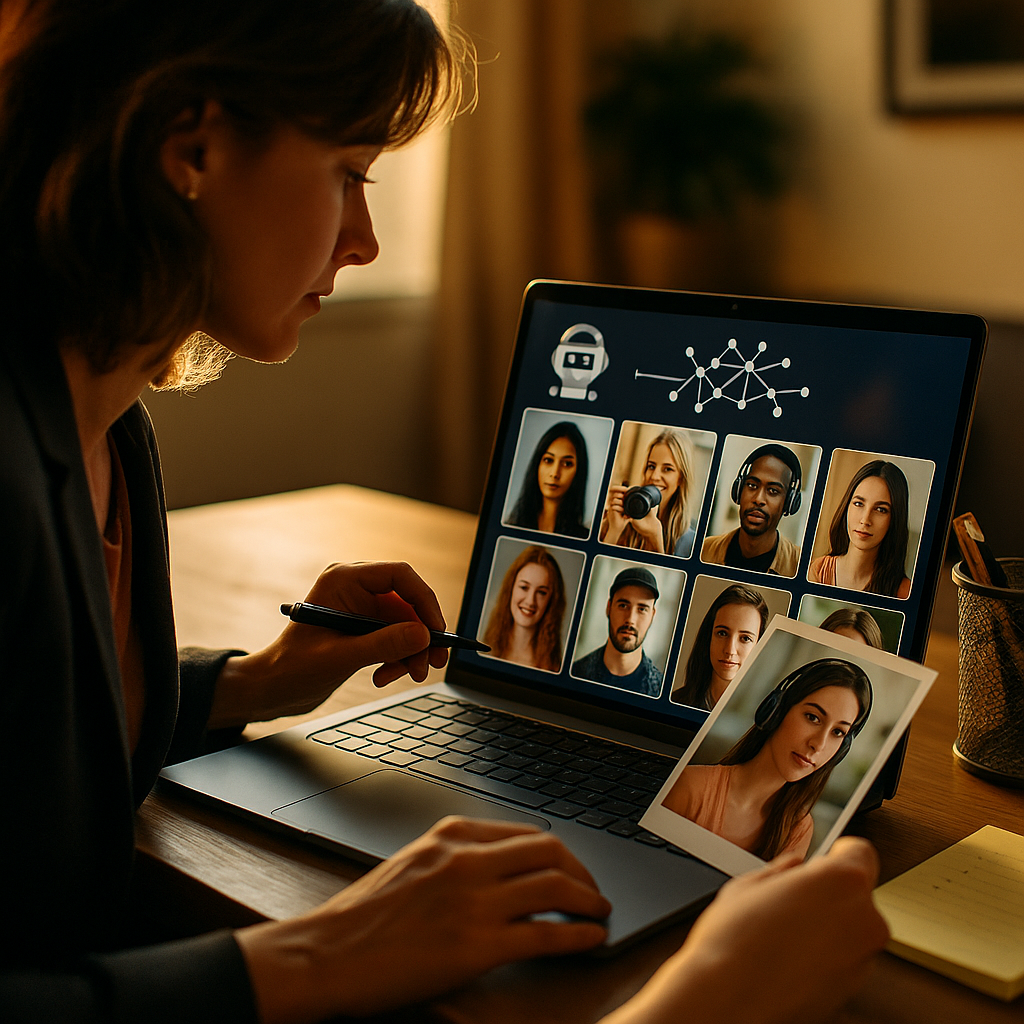
78% of marketers say finding the right creator still takes longer than negotiating the deal itself. That statistic alone explains why agentic AI creator matchmaking is suddenly the most-searched term in influencer marketing ops circles. Autonomous agents that scout, score, and shortlist creators without a human touching a spreadsheet aren’t a future concept anymore. They’re running live campaigns for brands that got tired of paying analysts to scroll TikTok all day.
What “Agentic” Actually Means Here
Let’s clear something up before we go further. Agentic AI isn’t a chatbot that spits out a list of creators when you type a prompt. That’s search with a friendlier interface. An agentic system takes a goal (say, “find 15 micro-creators in the sustainable fashion niche with audience engagement above 4% and no brand safety flags in the last twelve months”) and then executes a multi-step workflow on its own: pulling data, cross-referencing it, ranking candidates, and even drafting initial outreach, all without a human clicking “next” at every stage.
The distinction matters because a lot of vendors are relabeling old recommendation engines as “agentic” to ride the hype wave. Our earlier coverage of AI-matched creator discovery flagged exactly this problem: plenty of “matching” tools are just search filters with a marketing makeover. True agentic systems close loops. They monitor campaign performance after the match, feed results back into the model, and adjust future recommendations without a strategist rewriting the brief.
Why Manual Discovery Broke Down
Manual creator discovery was never built for scale. A brand running one campaign a quarter could get away with a marketing coordinator manually vetting 50 Instagram profiles. But brands running always-on programs across TikTok, YouTube Shorts, and Substack? That model collapses under its own weight.
Consider the math. A mid-size DTC brand managing 200 active creator relationships needs someone tracking follower authenticity, engagement decay, sponsored-content disclosure compliance, and audience overlap across dozens of platforms simultaneously. Do that manually and you’re either understaffed or burning budget on headcount that doesn’t scale with campaign volume. Agencies felt this pain first, which is part of why platforms like Structured.ai’s multi-brand orchestration gained traction fast among agencies juggling dozens of client rosters at once.
The real shift isn’t that AI finds creators faster. It’s that agentic systems keep working after the match is made, monitoring performance and flagging risk without waiting for a quarterly review.
How the Agents Actually Work
Strip away the marketing language and most agentic matchmaking platforms run on a similar architecture:
- Data ingestion layer: pulls audience demographics, engagement history, and content themes from platform APIs and third-party data brokers.
- Fit-scoring model: ranks creators against brand-defined criteria, often weighted by past campaign performance data rather than static rules.
- Autonomous outreach: drafts and sends initial contact, negotiates basic terms within pre-approved parameters, and escalates anything outside the guardrails to a human.
- Feedback loop: tracks post-campaign metrics and retrains scoring weights, so the next batch of recommendations reflects what actually converted, not just what looked good on paper.
That last piece is what separates agentic systems from earlier generations of AI fit scores. As we covered in AI fit scores and governance gaps, speed without oversight creates its own risk. A model that learns from bad data just gets confidently wrong, faster.
The ROI Case Brands Actually Care About
Marketing leadership doesn’t fund tools because they’re clever. They fund tools that move a number. So what’s the actual business case for agentic creator matchmaking?
Time-to-launch compression is the headline metric. Brands report cutting creator vetting cycles from weeks to days when the shortlist arrives pre-scored and pre-vetted. According to eMarketer research on creator economy spending, influencer budgets keep climbing even as marketing teams stay flat or shrink, which means the only way to deploy more budget without more headcount is automation somewhere in the pipeline. Discovery is the obvious first target because it’s the most repetitive, data-heavy task in the whole workflow.
There’s also a quieter ROI story around waste reduction. Every mismatched creator partnership costs money twice: once in the wasted spend, and again in the opportunity cost of a slot that could’ve gone to someone who actually converted. Agentic systems that learn from purchase-intent signals, not just engagement vanity metrics, are starting to close that gap. We’ve written about how purchase-intent scoring is reshaping how brands rank creators, and it pairs naturally with agentic discovery: find the right creator, then verify the model is optimizing for sales signal rather than follower count.
Where This Gets Risky
Nobody wants to hear this part, but it needs saying. Autonomous discovery systems inherit every bias baked into their training data. If a model learns “high performer” from a dataset skewed toward creators in major metro markets with existing brand deals, it will keep recommending the same pool of already-successful creators and quietly ignore emerging talent that might actually fit better. That’s not a hypothetical. It’s the exact pattern that shows up when brands audit their AI-generated shortlists against manual research.
Compliance is the other landmine. An agent that autonomously negotiates terms and sends contracts needs guardrails that most marketing teams haven’t built yet. What happens when the system agrees to usage rights language that legal never approved? Our coverage of AI contract redlining makes clear that even the best flagging tools still need a human sign-off before anything is binding. The same principle applies here: autonomy in discovery is fine, autonomy in signed obligations is a liability waiting to happen.
An agent that can find and vet a creator in minutes still shouldn’t be the one signing off on usage rights, exclusivity clauses, or FTC disclosure language without human review.
Regulatory scrutiny is only going to increase here. The Federal Trade Commission has already made clear that disclosure obligations apply regardless of how a partnership was sourced or negotiated. If your agentic system is quietly signing off on creators without a compliance check for prior disclosure violations, that’s your brand’s exposure, not the vendor’s.
Platform Fragmentation Is Slowing Adoption
Here’s a problem nobody’s solved yet: agentic discovery tools don’t talk to each other. A brand running matchmaking through one platform, contract management through another, and payment through a third ends up with three separate AI systems making decisions in isolation. That’s the exact fragmentation issue we flagged in agentic marketing stacks promising fusion but delivering fragments.
The dream is a unified stack where discovery feeds directly into contracting, contracting feeds into campaign execution, and execution data flows back into the discovery model. In practice, most brands are stitching together point solutions with manual handoffs in between, which defeats a lot of the efficiency gain. Before signing with any single-dashboard vendor promising to solve this end to end, it’s worth reviewing the kind of due diligence outlined in our creator platform vetting checklist. A lot of “all-in-one” claims don’t survive contact with a real procurement process.
What Good Implementation Looks Like
Brands getting real value from agentic matchmaking share a few habits. First, they define fit criteria with enough specificity that the model has something concrete to optimize against, not vague briefs like “authentic voice” that mean nothing to an algorithm. Second, they keep a human checkpoint at every stage where money or legal exposure is involved, even if that checkpoint is just a five-minute review before outreach goes out. Third, they audit the model’s shortlists quarterly against manual research to catch drift before it becomes a pattern.
None of that is glamorous. But it’s the difference between agentic AI as a genuine efficiency gain and agentic AI as a liability with a good demo. Platforms like Salesforce have leaned into this with tighter integration between agent actions and underlying data systems, a pattern we detailed in Agentforce and Data Cloud’s pipeline verification approach. The lesson translates directly: agentic systems earn trust when their decisions are traceable, not just fast.
Next Step
Don’t adopt agentic matchmaking because it’s the trend. Audit your current discovery bottleneck first, then pilot an agentic tool against a narrow, well-defined creator segment where you can actually measure whether the automation beat your manual process on both speed and fit quality.
FAQs
What is agentic AI creator matchmaking?
It’s a system where autonomous AI agents handle the full creator discovery workflow, including scouting, scoring, shortlisting, and sometimes initial outreach, based on brand-defined goals rather than static filters, then learn from campaign results to improve future recommendations.
How is this different from existing influencer marketing platforms?
Traditional platforms use search and filtering tools that require a human to define every parameter and review every result. Agentic systems execute multi-step workflows independently and adjust their own scoring models based on performance feedback, closing the loop without manual retraining.
Can agentic AI negotiate and sign creator contracts on its own?
Most reputable systems draft initial terms and flag risks but require human sign-off before anything becomes binding. Fully autonomous contract execution without legal review creates significant compliance exposure, particularly around usage rights and disclosure obligations.
Does agentic matchmaking reduce bias in creator selection?
Not automatically. These systems inherit whatever bias exists in their training data, which often skews toward already-successful creators in major markets. Brands need to audit shortlists periodically against manual research to catch this drift.
What’s the biggest risk of adopting agentic creator discovery too fast?
Compliance gaps are the biggest risk. Autonomous systems that negotiate or approve terms without adequate human checkpoints can expose brands to FTC disclosure violations or contract liabilities the legal team never reviewed.
Top Influencer Marketing Agencies
The leading agencies shaping influencer marketing in 2026
Agencies ranked by campaign performance, client diversity, platform expertise, proven ROI, industry recognition, and client satisfaction. Assessed through verified case studies, reviews, and industry consultations.
Moburst

-
2

The Shelf
Boutique Beauty & Lifestyle Influencer AgencyA data-driven boutique agency specializing exclusively in beauty, wellness, and lifestyle influencer campaigns on Instagram and TikTok. Best for brands already focused on the beauty/personal care space that need curated, aesthetic-driven content.Clients: Pepsi, The Honest Company, Hims, Elf Cosmetics, Pure LeafVisit The Shelf → -
3

Audiencly
Niche Gaming & Esports Influencer AgencyA specialized agency focused exclusively on gaming and esports creators on YouTube, Twitch, and TikTok. Ideal if your campaign is 100% gaming-focused — from game launches to hardware and esports events.Clients: Epic Games, NordVPN, Ubisoft, Wargaming, Tencent GamesVisit Audiencly → -
4

Viral Nation
Global Influencer Marketing & Talent AgencyA dual talent management and marketing agency with proprietary brand safety tools and a global creator network spanning nano-influencers to celebrities across all major platforms.Clients: Meta, Activision Blizzard, Energizer, Aston Martin, WalmartVisit Viral Nation → -
5

The Influencer Marketing Factory
TikTok, Instagram & YouTube CampaignsA full-service agency with strong TikTok expertise, offering end-to-end campaign management from influencer discovery through performance reporting with a focus on platform-native content.Clients: Google, Snapchat, Universal Music, Bumble, YelpVisit TIMF → -
6

NeoReach
Enterprise Analytics & Influencer CampaignsAn enterprise-focused agency combining managed campaigns with a powerful self-service data platform for influencer search, audience analytics, and attribution modeling.Clients: Amazon, Airbnb, Netflix, Honda, The New York TimesVisit NeoReach → -
7

Ubiquitous
Creator-First Marketing PlatformA tech-driven platform combining self-service tools with managed campaign options, emphasizing speed and scalability for brands managing multiple influencer relationships.Clients: Lyft, Disney, Target, American Eagle, NetflixVisit Ubiquitous → -
8

Obviously
Scalable Enterprise Influencer CampaignsA tech-enabled agency built for high-volume campaigns, coordinating hundreds of creators simultaneously with end-to-end logistics, content rights management, and product seeding.Clients: Google, Ulta Beauty, Converse, AmazonVisit Obviously →