


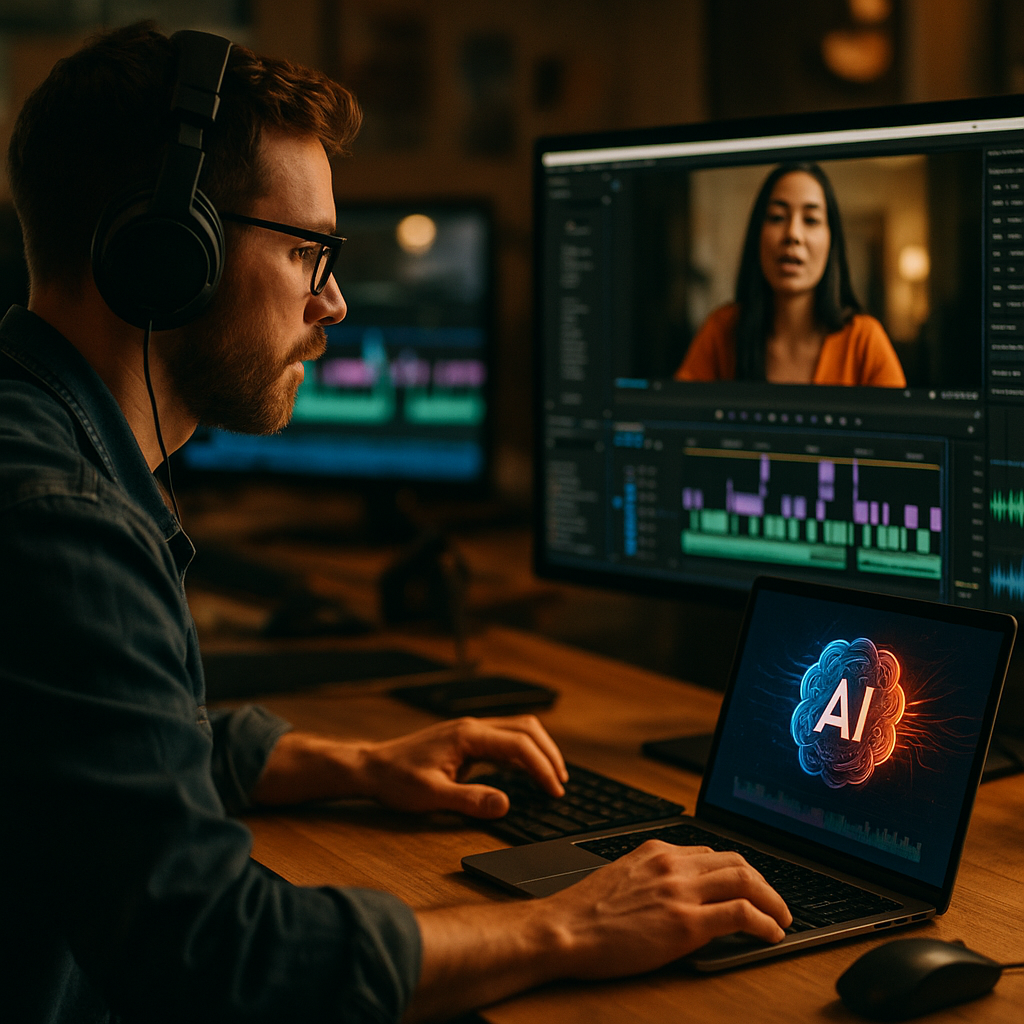
Editors used to guess where viewers would drop off. Now the software already knows. Platforms feeding retention curves back into editing tools mid-render is not a future scenario, it is how a growing share of Reels get finished today. AI assisted short form editing has moved from a novelty add-on in CapCut to the backbone of how serious creator programs ship volume without burning out their edit teams. If your production process still ends with a human eyeballing a timeline and hoping for the best, you are already behind.
The Bottleneck Nobody Budgets For
Ask any brand running a multi-creator Reels program where their time actually goes, and it is rarely ideation. It is editing. A single 30-second Reel with captions, pacing adjustments, and platform-specific crops can eat two to three hours of an editor’s day when done manually. Multiply that across a content calendar publishing daily across three or four creators, and you have a full-time editorial team just keeping pace with a format that rewards speed over polish.
That math breaks down fast. According to eMarketer, short form video now consumes the largest share of daily social time among adults under 35, which means brands need more output, not less, to stay visible. Manual editing pipelines simply were not built for that cadence.
How Real Time Optimization Actually Works
Real time optimization sounds like marketing jargon until you see it running. Here is the mechanics: editing tools like Opus Clip, VEED.io, and Descript’s Underlord now ingest engagement signals, drop-off timestamps, rewatch spikes, average view duration, and feed them directly into the cutting decision. Instead of a human deciding “this joke goes at second eight,” the software tests where attention already peaks on similar content and adjusts pacing accordingly.
Some platforms take it further with live A/B variant generation. Upload one raw clip, and the tool spits out three or four cut versions with different hook lengths, caption timing, and pacing, each scored against a predictive retention model before it ever reaches a human reviewer. The editor’s job shifts from cutting to curating.
Editors are no longer the first decision maker on pacing. The algorithm is. Humans now approve or override, they rarely originate the cut.
This matters operationally because it collapses a review cycle that used to take days into something closer to an afternoon. Teams running loop optimized editing techniques have already been manually chasing this exact signal, seamless cuts that boost rewatch rate. AI assisted tools just automate the guesswork that used to require frame-by-frame testing.
What Actually Changes in Your Production Pipeline
Three shifts are worth planning around if you run or oversee a creator content operation:
- Editors become reviewers, not producers. Junior editing roles are consolidating into “optimization review” positions where the job is approving AI output, not building timelines from scratch.
- Briefs need retention targets baked in. A brief that just says “keep it under 30 seconds” is no longer enough. Effective briefs now specify target watch-through percentage, similar to how short form video scripts built for revenue tracking already require conversion benchmarks up front.
- Turnaround expectations compress. What took 48 hours from raw footage to publish-ready asset now realistically takes six to eight, assuming your creator delivers clean raw files.
None of this eliminates the need for creative judgment. It relocates it. Someone still has to decide if the AI’s “optimized” cut actually fits brand voice, or if it just optimized for a cheap dopamine hit that tanks trust. That tension is real, and teams that ignore it end up with technically high-retention content that does nothing for brand equity.
Is AI Editing Actually Better Than a Skilled Human Editor?
Depends what you are optimizing for. If the goal is pure watch-through rate, AI-assisted tools consistently outperform manual edits in controlled tests, largely because they are trained on thousands of retention curves a single editor could never study. Sprout Social has flagged this shift as one reason engagement benchmarks keep climbing even as organic reach flattens elsewhere.
But if the goal is narrative coherence, humor timing, or subtle brand tone, human editors still win more often than not. AI models are pattern-matchers. They are excellent at recognizing “cut here, attention historically drops” and mediocre at recognizing “this joke needs a beat of silence to land.” The smartest teams run a hybrid model: AI handles the first pass and pacing suggestions, a human editor makes the final tonal call.
This mirrors what worked with AI optimized placement strategy, where the algorithm handles distribution logic and humans handle creative fit. Same division of labor, different stage of the funnel.
The Compliance Angle Nobody Wants to Deal With
Here is where marketing leaders get nervous, and rightly so. Real time editing tools that auto-generate captions, add text overlays, or insert sponsor disclosures need human oversight, not just for quality but for legal exposure. The FTC’s endorsement guidance still requires clear and conspicuous disclosure, and an AI tool optimizing purely for retention has zero incentive to keep a #ad tag visible for the required duration. If anything, it might shrink it because disclosures correlate with slightly lower watch-through in some datasets.
Brands running paid partnerships need a review checkpoint that specifically checks disclosure compliance after AI editing, not before. The same logic applies to sponsored overlay placement on Shorts, where script and overlay timing decisions carry legal weight beyond just creative performance.
An AI model optimizing for watch time has no concept of legal risk. That checkpoint has to be built into your workflow manually, every single time.
Where the ROI Actually Shows Up
Skip the vague “efficiency gains” pitch. Here is where the numbers land for teams that have implemented this well:
- Editing labor costs drop 30 to 45 percent when AI handles first-pass cuts across high-volume creator programs.
- Time-to-publish shrinks enough that brands can react to trending audio or formats within hours instead of days, a capability that matters enormously for podcast clip repurposing at scale.
- Retention-optimized cuts feed directly into paid amplification, lowering CPMs on boosted Reels because the platform’s own algorithm rewards content it predicts will hold attention.
That last point connects directly to paid media strategy. Teams already using shoppable Reel specs to cut CPMs are finding that AI-optimized organic cuts, once boosted, perform even better because the retention signal is already baked in before the ad dollars hit.
Worth noting: HubSpot’s research on video marketing consistently shows that watch-through rate correlates more tightly with conversion than raw view count. That is precisely the metric these tools are built to maximize, which is why the ROI case is stronger than most efficiency plays marketing teams pitch to finance.
What to Actually Do About It This Quarter
Do not wait for a “mature” version of this technology. It is mature enough now. Audit your current editing workflow, identify where AI-assisted tools like Opus Clip, Descript, or Adobe Premiere’s Generative Extend features could take the first pass, and reassign your human editors to review and tonal refinement instead of raw cutting. Build a disclosure compliance checkpoint into that review step before you scale volume, not after a legal team flags a problem.
Frequently Asked Questions
What is AI assisted short form editing?
It is the use of machine learning tools that analyze engagement data, retention curves, and pacing patterns to automatically cut, caption, and optimize short form video like Reels and Shorts, often generating multiple variants for testing before a human reviews the output.
Does real time optimization replace human video editors?
Not entirely. It replaces the first-pass cutting decisions but still requires human review for brand tone, humor timing, narrative coherence, and legal compliance like sponsorship disclosures.
Which tools support real time retention optimization for Reels?
Opus Clip, Descript’s Underlord, and VEED.io are among the platforms currently offering retention-based auto-editing features, alongside generative tools built into Adobe Premiere for pacing suggestions.
Does AI-optimized editing affect FTC disclosure compliance?
It can, since models optimizing purely for watch time may shrink or reposition disclosure overlays. Brands need a dedicated compliance review step after AI editing to confirm disclosures remain clear and conspicuous per FTC guidance.
How much does AI assisted editing actually save on production costs?
Teams running high-volume creator programs report editing labor cost reductions between 30 and 45 percent after shifting first-pass cuts to AI tools, with editors reassigned to review and refinement roles.
Top Influencer Marketing Agencies
The leading agencies shaping influencer marketing in 2026
Agencies ranked by campaign performance, client diversity, platform expertise, proven ROI, industry recognition, and client satisfaction. Assessed through verified case studies, reviews, and industry consultations.
Moburst

-
2

The Shelf
Boutique Beauty & Lifestyle Influencer AgencyA data-driven boutique agency specializing exclusively in beauty, wellness, and lifestyle influencer campaigns on Instagram and TikTok. Best for brands already focused on the beauty/personal care space that need curated, aesthetic-driven content.Clients: Pepsi, The Honest Company, Hims, Elf Cosmetics, Pure LeafVisit The Shelf → -
3

Audiencly
Niche Gaming & Esports Influencer AgencyA specialized agency focused exclusively on gaming and esports creators on YouTube, Twitch, and TikTok. Ideal if your campaign is 100% gaming-focused — from game launches to hardware and esports events.Clients: Epic Games, NordVPN, Ubisoft, Wargaming, Tencent GamesVisit Audiencly → -
4

Viral Nation
Global Influencer Marketing & Talent AgencyA dual talent management and marketing agency with proprietary brand safety tools and a global creator network spanning nano-influencers to celebrities across all major platforms.Clients: Meta, Activision Blizzard, Energizer, Aston Martin, WalmartVisit Viral Nation → -
5

The Influencer Marketing Factory
TikTok, Instagram & YouTube CampaignsA full-service agency with strong TikTok expertise, offering end-to-end campaign management from influencer discovery through performance reporting with a focus on platform-native content.Clients: Google, Snapchat, Universal Music, Bumble, YelpVisit TIMF → -
6

NeoReach
Enterprise Analytics & Influencer CampaignsAn enterprise-focused agency combining managed campaigns with a powerful self-service data platform for influencer search, audience analytics, and attribution modeling.Clients: Amazon, Airbnb, Netflix, Honda, The New York TimesVisit NeoReach → -
7

Ubiquitous
Creator-First Marketing PlatformA tech-driven platform combining self-service tools with managed campaign options, emphasizing speed and scalability for brands managing multiple influencer relationships.Clients: Lyft, Disney, Target, American Eagle, NetflixVisit Ubiquitous → -
8

Obviously
Scalable Enterprise Influencer CampaignsA tech-enabled agency built for high-volume campaigns, coordinating hundreds of creators simultaneously with end-to-end logistics, content rights management, and product seeding.Clients: Google, Ulta Beauty, Converse, AmazonVisit Obviously →