


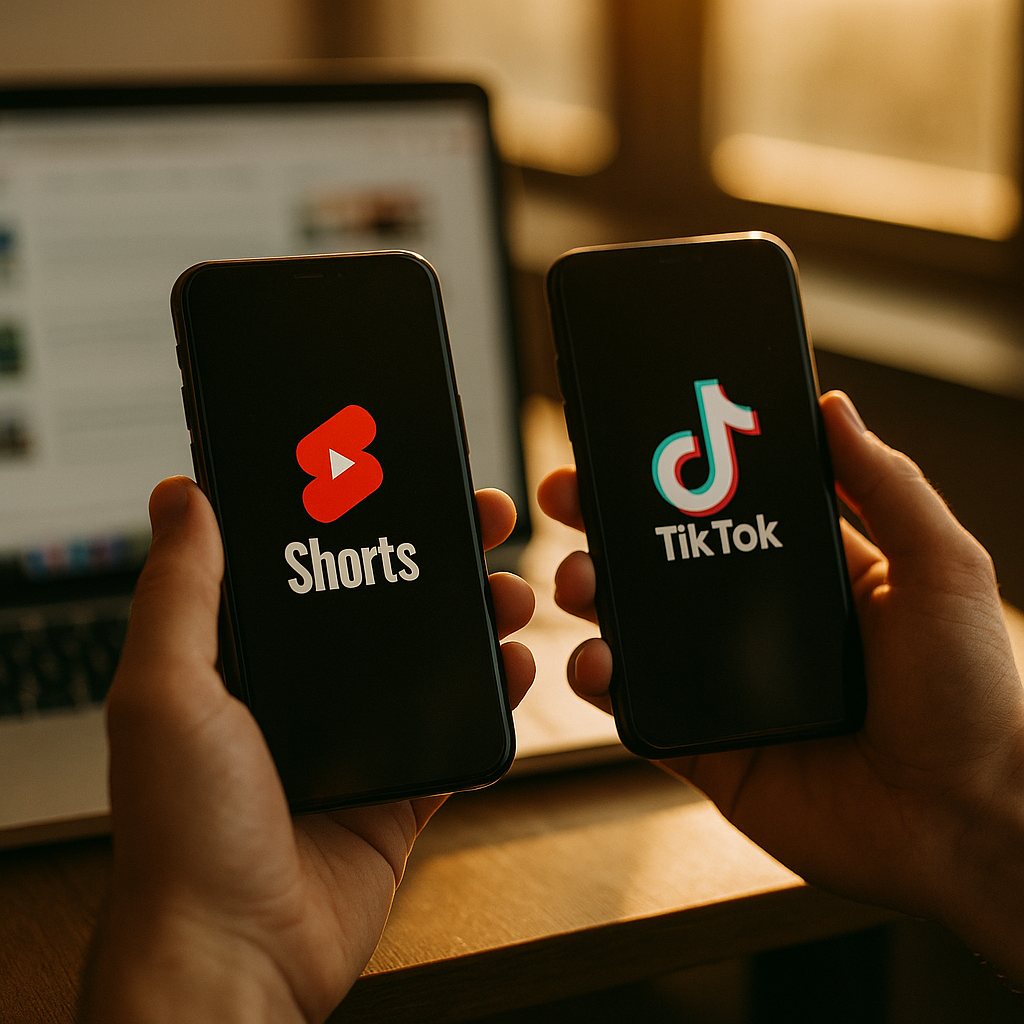
Tech buyers now discover 43% of new software and hardware products through short-form video before they ever see a paid search ad, according to recent data cited by eMarketer. So when a product launch budget lands on your desk, the real question isn’t “should we do short-form video.” It’s YouTube Shorts vs TikTok: which one actually becomes your primary acquisition channel, and which one plays a supporting role.
Get this wrong and you’ll burn a quarter’s launch budget chasing views that never convert to trials, demos, or app installs. Get it right and you’ve built a repeatable acquisition engine for every future release.
Why This Decision Matters More for Tech Launches Than Consumer Goods
Tech products have longer consideration cycles than a lip gloss or a snack bar. Someone watching a SaaS demo Short or a TikTok unboxing of a new AI wearable isn’t buying on impulse. They’re bookmarking, researching, comparing specs, and eventually converting on a desktop browser three days later.
That lag matters because it changes what “primary channel” even means. You’re not just optimizing for view count or engagement rate. You’re optimizing for the platform that gets your product in front of the right technical or economic buyer, holds their attention long enough to communicate a value proposition, and hands off cleanly to a conversion event you can actually measure.
The platform with more views isn’t automatically the platform with more pipeline. For tech launches, attribution clarity often matters more than raw reach.
YouTube Shorts: The Case for Search-Adjacent Discovery
YouTube Shorts has a structural advantage most marketers underweight: it lives inside the world’s second-largest search engine. A viewer who watches your 45-second Shorts demo can tap straight into a longer explainer video, your channel, or a linked landing page without leaving the ecosystem. That’s a shorter path from curiosity to conversion than almost any other short-form format.
This matters enormously for B2B software, developer tools, and technical hardware where the buyer wants proof before they’ll click “start free trial.” YouTube’s algorithm also rewards content that ranks well in regular search, meaning a good Shorts launch video can keep generating impressions for months, not days. Compare that to TikTok’s more ephemeral discovery window, and Shorts starts looking like the better long-tail asset.
YouTube also gives you first-party audience data through Google’s support documentation on channel analytics, letting you segment by watch time, click-through, and even overlap with existing subscriber lists. If your product already has a YouTube channel with review or tutorial content, Shorts becomes a top-of-funnel feeder into an owned-media ecosystem you already control. That’s a very different risk profile than building an audience from zero on a platform you don’t own.
If you’re already running a creator retainer program on YouTube, Shorts slots in naturally as the acquisition layer feeding your long-form nurture content.
TikTok: The Case for Velocity and Category Creation
TikTok’s advantage is speed. No platform moves a product from “nobody’s heard of it” to “everyone’s talking about it” faster. If your tech launch depends on manufactured urgency, limited drops, or riding a trend format, TikTok’s discovery engine is unmatched. The TikTok Ads platform also lets you pair organic creator buzz with Spark Ads almost immediately, compressing the time between “creator posts it” and “brand amplifies it” to hours, not weeks.
TikTok also wins for category-creation launches, meaning products so new that nobody is searching for them yet. Shorts relies partly on search intent and suggested content tied to existing viewing habits. TikTok’s For You feed doesn’t care what you’ve searched before. It cares what’s engaging right now. For genuinely novel tech (a new AI hardware category, a first-of-its-kind app mechanic) that lack of search dependency is exactly what gets you in front of people who didn’t know they needed your product.
The tradeoff: TikTok’s average content lifespan is shorter, and its audience skews younger and more consumer-facing than YouTube’s, which matters if your buyer is an IT director rather than a Gen Z early adopter. If your launch involves editing-heavy trend formats, it’s worth referencing a TikTok editing format briefing template before you brief creators, since format fit drives completion rate more than almost any other variable.
Match the Channel to Your Buyer, Not Your Content Team’s Comfort Zone
Here’s where most marketing teams get it backwards. They pick the platform their content team already knows how to produce for, then reverse-engineer a justification. Wrong order.
- B2B SaaS, dev tools, enterprise hardware: YouTube Shorts tends to win because the buyer researches before converting, and Shorts feeds naturally into demo and documentation content already living on YouTube.
- Consumer apps, gadgets, D2C tech (smart home, wearables, gaming peripherals): TikTok tends to win because the buying decision is faster and more impulse-driven, and TikTok’s community-driven trend cycles create the social proof consumer buyers rely on.
- Hybrid products (prosumer cameras, creator-economy tools, crossover hardware): Test both with a split budget before committing, because the audience overlap is genuinely unclear until you have first-party data.
This is also where a lot of teams underestimate compliance exposure. Whichever platform you choose, disclosure requirements from the FTC apply equally. A creator posting a sponsored TikTok unboxing or a paid YouTube Shorts review both need clear, unambiguous disclosure. Don’t let platform excitement make you sloppy on the compliance side.
Budget Allocation: What Actually Happens to CAC
Customer acquisition cost tells the real story, and it rarely matches the story your engagement dashboard tells. Tech brands running parallel launches often see TikTok deliver cheaper cost-per-view and cheaper cost-per-click, but YouTube Shorts frequently delivers a lower blended CAC once you factor in the conversion lift from search-adjacent discovery and retargeting pools built from Shorts viewers.
Why? Because a YouTube Shorts viewer who clicks through is already primed by an algorithm that partly rewards intent signals. A TikTok viewer who clicks through is often reacting to entertainment value first, product interest second. Neither is wrong. They’re just different funnels, and your measurement stack needs to reflect that difference instead of pretending both platforms report the same kind of engagement.
Don’t compare cost-per-view across platforms and call it a decision. Compare cost-per-qualified-lead after 30 days, and the “winning” platform often flips.
Practically, that means building a 70/30 or 60/40 split for launch month rather than going all-in on one platform from day one. Run your hero launch asset natively on both, but shift creator budget and paid amplification toward whichever platform is producing cheaper qualified leads by week two. This requires clean UTM tagging and platform-specific landing pages, something teams often skip when they’re rushing a launch date. If you’re also running paid boosts on Shorts or Reels-style content, the framework in this paid boosting playbook translates well across formats, since the underlying logic (boost what’s already proving organic pull) applies regardless of platform.
Attribution Reality Check
Neither platform gives you clean, granular attribution out of the box. TikTok’s in-app analytics undercount off-platform conversion by design, since the platform wants to keep users inside its own ecosystem. YouTube’s attribution is stronger for anything tied to a Google account or search history, but it still struggles with cross-device journeys, which are common for tech products researched on mobile and purchased on desktop.
The fix isn’t picking a platform with “better” attribution, because neither is great. It’s building a measurement layer that doesn’t depend on platform-reported numbers alone. Use a dedicated landing page per platform, track assisted conversions through your CRM, and run a lightweight brand lift survey during the launch window. It’s extra setup work before launch day, but it’s the only way to know which channel earned the credit six weeks later when the sales pipeline data actually settles.
A Quick Decision Framework
If you need to make the call this week, run through these three questions:
- Is your buyer researching or reacting? Research-heavy buyers lean YouTube Shorts. Reaction-driven buyers lean TikTok.
- Do you already have owned YouTube assets? If yes, Shorts compounds existing equity. If you’re starting from zero on both, TikTok’s discovery curve is faster to bootstrap.
- What’s your post-launch content cadence? If you can sustain weekly content indefinitely, YouTube Shorts rewards that consistency over time. If this is a one-time launch burst, TikTok’s velocity suits a short, intense campaign window better.
None of these answers are permanent. Plenty of tech brands run TikTok for launch velocity, then shift budget to YouTube Shorts for sustained post-launch nurture once the initial spike settles. The mistake is treating this as a one-time, forever decision rather than a channel mix you revisit every quarter based on actual CAC data, not vibes.
Takeaway
Pick YouTube Shorts as your primary channel when your buyer researches before converting and you already have owned YouTube assets to feed. Pick TikTok when speed and category-creation buzz matter more than search-adjacent discovery. Either way, build platform-specific landing pages and track cost-per-qualified-lead by week two, not cost-per-view on day one.
Frequently Asked Questions
Should a tech startup pick one platform or run both simultaneously for a launch?
Running both is fine for the first two to four weeks if budget allows, but you should plan to shift spend toward whichever platform shows lower cost-per-qualified-lead by the end of week two. Splitting budget indefinitely without reallocating based on data usually just dilutes results on both platforms.
Does YouTube Shorts really outperform TikTok for B2B tech products?
It often does for products with longer consideration cycles, mainly because Shorts benefits from search-adjacent discovery and feeds into longer-form demo content that B2B buyers actually want before converting. It’s not a universal rule, but it holds true often enough to be the default starting hypothesis for enterprise or dev-tool launches.
How much budget should go toward creator partnerships versus paid amplification on either platform?
Most tech launches see the best return from a roughly 60/40 split favoring creator-led organic content over pure paid amplification, since organic creator content builds the credibility that paid spend alone can’t buy. Once you identify top-performing organic assets, pushing paid budget behind those specific pieces tends to outperform blanket paid campaigns.
What’s the biggest measurement mistake brands make comparing these two platforms?
Comparing raw view counts or cost-per-view directly across platforms without adjusting for intent differences. A TikTok view and a YouTube Shorts view represent very different levels of buyer intent, so judging channel performance on view volume alone almost always leads to the wrong budget decision.
Do disclosure requirements differ between YouTube Shorts and TikTok creator content?
The underlying legal requirement from the FTC is the same on both platforms: sponsored content needs clear and conspicuous disclosure. The mechanics differ slightly since each platform has its own built-in disclosure tools, but neither platform’s tool alone guarantees compliance, so brands still need their own review process.
Frequently Asked Questions
Should a tech startup pick one platform or run both simultaneously for a launch?
Running both is fine for the first two to four weeks if budget allows, but you should plan to shift spend toward whichever platform shows lower cost-per-qualified-lead by the end of week two. Splitting budget indefinitely without reallocating based on data usually just dilutes results on both platforms.
Does YouTube Shorts really outperform TikTok for B2B tech products?
It often does for products with longer consideration cycles, mainly because Shorts benefits from search-adjacent discovery and feeds into longer-form demo content that B2B buyers actually want before converting. It’s not a universal rule, but it holds true often enough to be the default starting hypothesis for enterprise or dev-tool launches.
How much budget should go toward creator partnerships versus paid amplification on either platform?
Most tech launches see the best return from a roughly 60/40 split favoring creator-led organic content over pure paid amplification, since organic creator content builds the credibility that paid spend alone can’t buy. Once you identify top-performing organic assets, pushing paid budget behind those specific pieces tends to outperform blanket paid campaigns.
What’s the biggest measurement mistake brands make comparing these two platforms?
Comparing raw view counts or cost-per-view directly across platforms without adjusting for intent differences. A TikTok view and a YouTube Shorts view represent very different levels of buyer intent, so judging channel performance on view volume alone almost always leads to the wrong budget decision.
Do disclosure requirements differ between YouTube Shorts and TikTok creator content?
The underlying legal requirement from the FTC is the same on both platforms: sponsored content needs clear and conspicuous disclosure. The mechanics differ slightly since each platform has its own built-in disclosure tools, but neither platform’s tool alone guarantees compliance, so brands still need their own review process.
Top Influencer Marketing Agencies
The leading agencies shaping influencer marketing in 2026
Agencies ranked by campaign performance, client diversity, platform expertise, proven ROI, industry recognition, and client satisfaction. Assessed through verified case studies, reviews, and industry consultations.
Moburst

-
2

The Shelf
Boutique Beauty & Lifestyle Influencer AgencyA data-driven boutique agency specializing exclusively in beauty, wellness, and lifestyle influencer campaigns on Instagram and TikTok. Best for brands already focused on the beauty/personal care space that need curated, aesthetic-driven content.Clients: Pepsi, The Honest Company, Hims, Elf Cosmetics, Pure LeafVisit The Shelf → -
3

Audiencly
Niche Gaming & Esports Influencer AgencyA specialized agency focused exclusively on gaming and esports creators on YouTube, Twitch, and TikTok. Ideal if your campaign is 100% gaming-focused — from game launches to hardware and esports events.Clients: Epic Games, NordVPN, Ubisoft, Wargaming, Tencent GamesVisit Audiencly → -
4

Viral Nation
Global Influencer Marketing & Talent AgencyA dual talent management and marketing agency with proprietary brand safety tools and a global creator network spanning nano-influencers to celebrities across all major platforms.Clients: Meta, Activision Blizzard, Energizer, Aston Martin, WalmartVisit Viral Nation → -
5

The Influencer Marketing Factory
TikTok, Instagram & YouTube CampaignsA full-service agency with strong TikTok expertise, offering end-to-end campaign management from influencer discovery through performance reporting with a focus on platform-native content.Clients: Google, Snapchat, Universal Music, Bumble, YelpVisit TIMF → -
6

NeoReach
Enterprise Analytics & Influencer CampaignsAn enterprise-focused agency combining managed campaigns with a powerful self-service data platform for influencer search, audience analytics, and attribution modeling.Clients: Amazon, Airbnb, Netflix, Honda, The New York TimesVisit NeoReach → -
7

Ubiquitous
Creator-First Marketing PlatformA tech-driven platform combining self-service tools with managed campaign options, emphasizing speed and scalability for brands managing multiple influencer relationships.Clients: Lyft, Disney, Target, American Eagle, NetflixVisit Ubiquitous → -
8

Obviously
Scalable Enterprise Influencer CampaignsA tech-enabled agency built for high-volume campaigns, coordinating hundreds of creators simultaneously with end-to-end logistics, content rights management, and product seeding.Clients: Google, Ulta Beauty, Converse, AmazonVisit Obviously →