


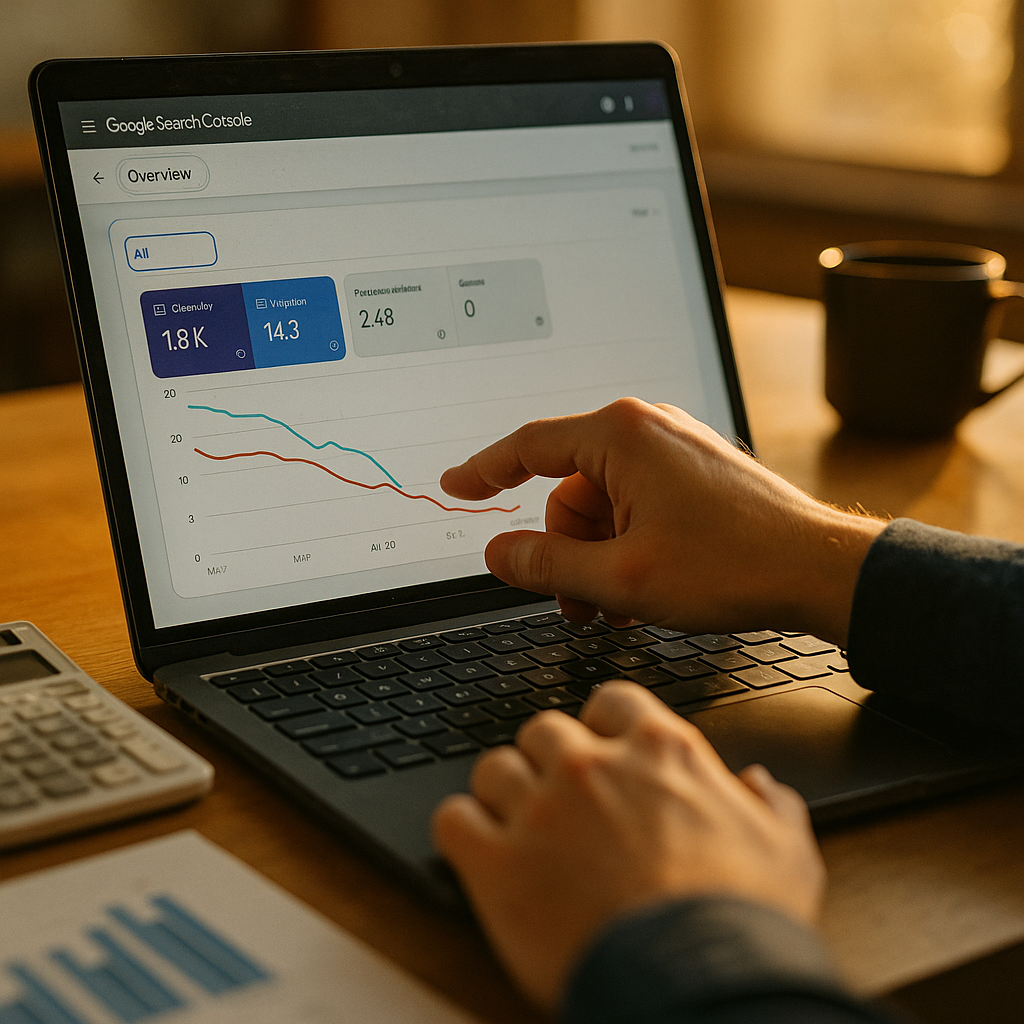
Fifty-eight percent. That’s the click decline brands are seeing on queries where Google’s AI Overviews appear, according to multiple 2026 clickstream studies tracking search behavior since the feature’s rollout. If your reporting deck still leads with organic sessions, you’re measuring a channel that’s quietly disappearing. The AI Overview click decline isn’t a glitch. It’s the new baseline, and it demands a different scorecard entirely.
The Click Is Dying. Now What?
Search used to work like this: rank well, earn the click, prove the value with a session. That loop is breaking. AI Overviews answer the question directly on the results page, often pulling from your content without sending anyone to your site. The user gets their answer. You get a citation, maybe, and zero traffic.
This isn’t limited to informational queries either. Product comparisons, “best of” lists, and even branded searches are getting summarized. Marketers who built entire funnels around organic click-through are watching the top of that funnel evaporate, not because content quality dropped, but because the delivery mechanism changed underneath them.
A 58 percent click decline doesn’t mean your content stopped working. It means the metric you used to measure “working” stopped being the right one.
Why Organic Traffic Was Always a Proxy, Not a Goal
Here’s the uncomfortable truth: organic traffic was never the actual objective. It was a proxy for awareness, consideration, and eventually revenue. Brands got comfortable with it because it was easy to measure and easy to report upward. Sessions went up, everyone nodded, budgets got renewed.
But a session was always a means to an end. If AI Overviews now deliver the answer without the click, the proxy breaks, but the underlying goal (getting your brand in front of the right buyer at the right moment) doesn’t disappear. It just moves to a layer of the funnel that traditional analytics can’t see. This is the same shift covered in zero click search coverage: visibility without a visit still counts, if you can prove it counts.
What’s Actually Happening to the Traffic
- Some of it converts to a citation inside the AI Overview, where your brand name appears but no link gets clicked.
- Some of it disappears entirely because the AI answer satisfies the query without any attribution at all.
- Some of it shifts to branded search later, as users remember a name they saw in a summary and search for it directly.
- A smaller slice still clicks through, usually for complex or transactional queries the AI can’t fully resolve.
That third bucket is the one most reporting tools miss completely. Someone sees your brand in an AI Overview, doesn’t click, but searches your brand name three days later. Standard attribution models will never connect those dots.
Rebuilding the KPI Stack: Four New Pillars
If traffic is an unreliable signal, what replaces it? Marketing teams that are ahead of this shift are building a four-pillar measurement stack instead of a single traffic number.
1. Citation Frequency and Placement
Track how often your brand or content gets cited inside AI Overviews for target queries, and where in the summary that citation lands. Tools built for generative engine optimization now track this the way rank trackers once tracked position one. Platforms compared in GEO tracking tool comparisons and the breakdown of AI visibility platforms both treat citation share as the new ranking, not click volume.
2. Branded Search Lift
If AI Overviews are educating buyers without sending clicks, you should see a corresponding rise in branded search volume over time. This is a lagging but reliable indicator that awareness is converting into recall. Google Search Console still surfaces branded query data even when the click doesn’t happen on the informational term, so pull that report monthly, not quarterly.
3. Assisted Revenue via Multi-Touch Modeling
Single-touch, last-click attribution was already flawed before AI Overviews. Now it’s actively misleading. Brands need multi-touch or algorithmic attribution models that can credit an AI citation exposure as a touchpoint, even without a click, the same way real-time attribution frameworks now credit daily revenue signals instead of waiting for a quarterly rollup.
4. Creator and Third-Party Amplification
When your own domain gets summarized instead of clicked, third-party creator content that discusses your product often still earns the click, especially on platforms AI Overviews source less aggressively, like TikTok, YouTube, and niche forums. This is where influencer programs stop being a “nice to have” awareness play and start being a direct traffic and revenue substitute for lost organic clicks. Intent signals in creator deals now matter more than raw reach precisely because of this shift.
The Attribution Problem Nobody Wants to Admit
Let’s be honest about the gap here. Most marketing teams do not have the infrastructure to measure citation frequency, let alone tie it to revenue. Google doesn’t hand you a report showing “your content appeared in 4,200 AI Overviews last month.” You have to infer it, scrape for it, or pay a third-party tool to estimate it.
That’s a real cost, and it’s one finance teams often don’t understand yet. Explaining to a CFO why you’re spending on a new tracking category when “organic traffic is down” is a hard conversation. But it’s the same conversation the industry already had around GEO for creator content: the visibility exists, the measurement just hasn’t caught up.
The brands winning this transition aren’t the ones with the best content. They’re the ones who built a measurement system that can see value the old dashboard can’t.
Governance Doesn’t Disappear Just Because Traffic Did
There’s a compliance angle here too, and it gets overlooked in the rush to chase new KPIs. AI Overviews frequently summarize creator content, product reviews, and sponsored posts without clear disclosure of the original source or the FTC-required sponsorship language that governed the original post. If your brand’s paid partnerships are getting pulled into AI summaries, you need to know whether disclosure context survives that summarization, because FTC endorsement guidelines don’t have an exception for “the AI stripped it out.”
This is exactly the kind of blind spot that’s pushing governance responsibility up the org chart, a trend already documented in how AI transformation leads now own governance risk that used to sit quietly with legal or compliance teams. Traffic KPIs and compliance KPIs are colliding, and most teams aren’t tracking both in the same dashboard.
Practical Steps for the Next Reporting Cycle
You don’t need to solve this perfectly before your next board update. You need to start showing directional progress on the metrics that matter now.
- Add a citation tracking line item to your existing SEO reporting, even if it’s a manual spot-check across ten priority queries.
- Pull branded search volume trends alongside organic click data so leadership sees both sides of the story.
- Reallocate a portion of content budget toward creator and third-party channels that still generate clickable, attributable traffic.
- Audit whether AI summaries of your sponsored content are dropping required disclosure language.
- Set a quarterly benchmark for “share of voice in AI answers” the way you once set benchmarks for keyword rankings.
None of this replaces solid content strategy. It supplements it with a measurement layer built for how people actually consume answers now, not how they did five years ago. Industry benchmarking from eMarketer and Statista both point to continued growth in zero-click search behavior, so this isn’t a temporary dip waiting to correct itself.
A Quick Gut Check for Your Team
Ask yourself: if organic sessions dropped 58 percent tomorrow but revenue held steady, would your current dashboard even show you why? For most teams, the honest answer is no. That’s the gap worth closing before the next quarterly review, not after.
FAQs
What is the AI Overview click decline and why is it happening?
It refers to the drop in organic clicks on search queries where Google’s AI Overviews provide a direct summarized answer, satisfying user intent without requiring a visit to the source website.
Is a 58 percent click decline typical across all industries?
Decline rates vary by query type and industry. Informational and comparison queries tend to see steeper drops than transactional or highly technical searches that AI Overviews can’t fully resolve.
How do you measure success if organic traffic keeps falling?
Track citation frequency inside AI answers, monitor branded search volume as a lagging awareness signal, use multi-touch attribution that credits non-click exposures, and lean more heavily on creator and third-party channels for measurable clicks.
Does losing organic clicks mean SEO is dead?
No. It means SEO’s output changed from “clicks” to “citations and brand presence” inside AI-generated answers, a discipline often called generative engine optimization or GEO.
What compliance risk comes with AI Overviews summarizing sponsored content?
AI summaries can strip out FTC-required disclosure language when pulling from sponsored posts or reviews, creating a compliance gap that brands need to monitor separately from traffic metrics.
Top Influencer Marketing Agencies
The leading agencies shaping influencer marketing in 2026
Agencies ranked by campaign performance, client diversity, platform expertise, proven ROI, industry recognition, and client satisfaction. Assessed through verified case studies, reviews, and industry consultations.
Moburst

-
2

The Shelf
Boutique Beauty & Lifestyle Influencer AgencyA data-driven boutique agency specializing exclusively in beauty, wellness, and lifestyle influencer campaigns on Instagram and TikTok. Best for brands already focused on the beauty/personal care space that need curated, aesthetic-driven content.Clients: Pepsi, The Honest Company, Hims, Elf Cosmetics, Pure LeafVisit The Shelf → -
3

Audiencly
Niche Gaming & Esports Influencer AgencyA specialized agency focused exclusively on gaming and esports creators on YouTube, Twitch, and TikTok. Ideal if your campaign is 100% gaming-focused — from game launches to hardware and esports events.Clients: Epic Games, NordVPN, Ubisoft, Wargaming, Tencent GamesVisit Audiencly → -
4

Viral Nation
Global Influencer Marketing & Talent AgencyA dual talent management and marketing agency with proprietary brand safety tools and a global creator network spanning nano-influencers to celebrities across all major platforms.Clients: Meta, Activision Blizzard, Energizer, Aston Martin, WalmartVisit Viral Nation → -
5

The Influencer Marketing Factory
TikTok, Instagram & YouTube CampaignsA full-service agency with strong TikTok expertise, offering end-to-end campaign management from influencer discovery through performance reporting with a focus on platform-native content.Clients: Google, Snapchat, Universal Music, Bumble, YelpVisit TIMF → -
6

NeoReach
Enterprise Analytics & Influencer CampaignsAn enterprise-focused agency combining managed campaigns with a powerful self-service data platform for influencer search, audience analytics, and attribution modeling.Clients: Amazon, Airbnb, Netflix, Honda, The New York TimesVisit NeoReach → -
7

Ubiquitous
Creator-First Marketing PlatformA tech-driven platform combining self-service tools with managed campaign options, emphasizing speed and scalability for brands managing multiple influencer relationships.Clients: Lyft, Disney, Target, American Eagle, NetflixVisit Ubiquitous → -
8

Obviously
Scalable Enterprise Influencer CampaignsA tech-enabled agency built for high-volume campaigns, coordinating hundreds of creators simultaneously with end-to-end logistics, content rights management, and product seeding.Clients: Google, Ulta Beauty, Converse, AmazonVisit Obviously →