


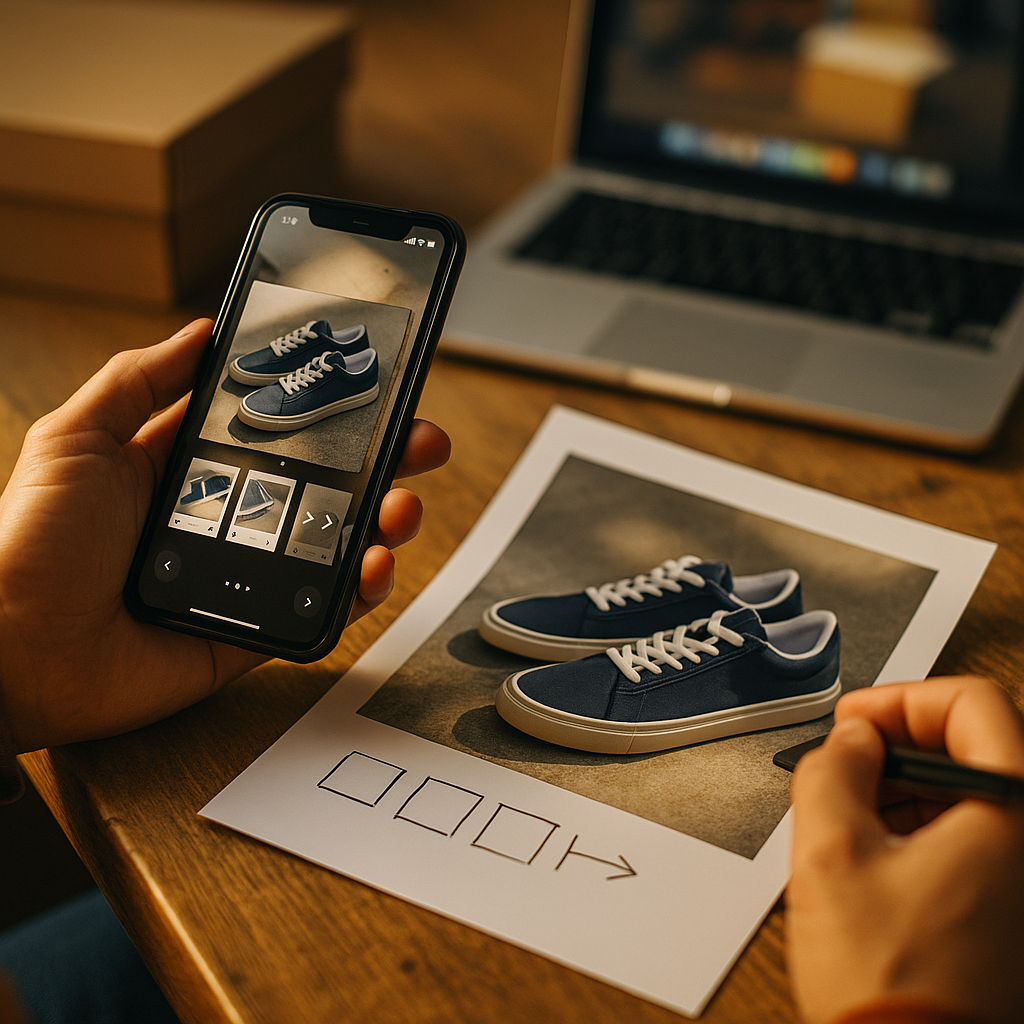
A widely cited benchmark now shows Instagram carousels outperforming single-image and video posts by roughly 28 percent on engagement rate. That is not a rounding error, it is a format signal brands can’t afford to ignore. Yet most launch teams still treat Instagram carousel sequencing as an afterthought, dumping product shots into a swipe deck with no strategy behind the order. That gap is exactly where the opportunity sits.
The 28 Percent Number, and Why It Matters for Launches
Social platforms shift their algorithmic favorites constantly, but carousels have had unusual staying power. Analysts at Sprout Social and eMarketer have both flagged multi-image posts as a consistent engagement outperformer relative to single static posts, and the reason is structural: carousels reward dwell time. Every swipe is a micro-interaction the algorithm logs as intent, and intent signals feed distribution.
For product launches specifically, this matters more than almost any other content type on the calendar. A launch post has one job: convert curiosity into action within a compressed window, usually the first 48 to 72 hours after go-live. A carousel that earns three or four swipes per view is functionally getting three or four “impressions” worth of consideration time out of a single placement. That compounds fast when you’re running paid amplification behind it too.
A carousel isn’t a slideshow of your product from different angles. It’s a sequence with a beginning, a tension point, and a resolution, structured the way a good sales page is structured.
Sequencing, Not Just Slides
Here’s the mistake almost every brand makes: they treat the carousel as a gallery. Hero shot, lifestyle shot, packaging shot, price card, done. That structure might photograph nicely, but it gives the algorithm and the viewer no reason to keep swiping past slide two.
Sequencing means designing intentional narrative pull between frames. Slide one should create a question. Slide two should complicate or deepen it. Slide three resolves it. The remaining slides handle proof, social validation, and the call to action. This is closer to direct-response copywriting than product photography, and treating it that way is the single biggest lever most brand teams are leaving unpulled.
What a Launch-Ready Carousel Sequence Actually Looks Like
There’s no universal template, but a structure that has worked consistently across category launches (beauty, consumer tech, food and beverage) tends to follow a five-to-eight slide arc:
- Slide 1, the hook: A bold claim, an unexpected stat, or a problem statement. Not the product itself yet.
- Slide 2, the tension: Why existing solutions fall short. This is where you earn the second swipe.
- Slide 3 or 4, the reveal: The product enters, ideally shown solving the exact friction named in slide two.
- Slide 5, proof: Specs, ingredient callouts, before-and-after, or a creator testimonial screenshot.
- Slide 6, social signal: UGC, waitlist numbers, or a founder note. This is trust-building, not selling.
- Final slide, the ask: Clear CTA. Link in bio, shop tag, or countdown to drop time.
Notice how little of that sequence is actually product photography. That’s deliberate. Launch carousels that lead with tension outperform launch carousels that lead with the SKU, almost every time we’ve reviewed performance data across client accounts.
Should You Sequence Around the Product or the Problem?
This is the question that trips up most brand teams, and the answer is almost always: the problem. Product-first sequencing works for loyal audiences who already trust the brand and just want the specs. But for a launch, you’re often talking to a colder or lapsed audience, and cold audiences don’t swipe for specs. They swipe for relevance.
This is the same logic that governs format selection across other Meta surfaces. If you’ve tested trial Reels for safe testing, you already know that leading with a hook rather than a hard product shot changes completion rates dramatically. Carousels behave the same way, just with swipes instead of watch time as the engagement proxy.
Where Creator Content Fits Into the Sequence
Brand-owned carousels get you distribution. Creator-fronted carousels, or hybrid sequences that blend brand assets with creator commentary slides, tend to get you trust. The strongest launch sequences we’ve seen recently mix both: two or three brand-produced slides for polish and clarity, then a creator reaction or demo slide inserted mid-sequence to break the “ad” feeling.
If you’re running paid behind these assets, this is also where usage rights become non-negotiable. A carousel performing well organically is exactly the kind of asset you’ll want to boost or run through Partnership Ads, and that requires the rights conversation happening before launch day, not after. Teams that skip this step end up scrambling, which is why locking usage rights before spend should be a standing line item in your launch checklist, not an emergency fix.
If a carousel is working organically, treat that as a signal to amplify it fast. Launch windows are short, and algorithmic momentum decays quickly once the initial engagement spike passes.
Common Sequencing Mistakes That Kill Launch Momentum
A few patterns show up repeatedly in underperforming launch carousels:
- Front-loading the price. Cost information belongs late in the sequence, after value has been established, not on slide one or two.
- Too many slides, no payoff. Ten slides with no narrative arc just increases the odds someone drops off before the CTA.
- Ignoring the caption as sequencing support. The caption should tease what’s coming, not repeat what’s already visible.
- No mobile-first text sizing. Text that reads fine on desktop preview often disappears on a phone screen inside the carousel crop.
- Treating every slide as equally important. Not every slide needs to carry weight. Some exist purely to keep the thumb moving toward the CTA.
This last point echoes findings covered in an outdoor brand’s carousel and Reels playbook, where pacing mattered more than production value. The same logic applies to launch content across nearly every vertical.
Measuring What Matters Beyond Saves
Saves and shares get the spotlight in most format discussions, but for launch carousels specifically, swipe-through rate to the final slide is the metric that actually predicts conversion behavior downstream. Meta’s own Meta Business Suite analytics surface this data at the post level, and it’s worth pulling manually rather than relying only on the aggregate engagement score, which can mask a carousel that gets lots of first-slide likes but almost no completions.
Pair that swipe-completion data with link clicks or shop-tag taps on the final slide, and you get a much clearer read on whether your sequencing is actually driving intent, not just impressions. Teams running paid boosting behind organic winners should already be familiar with this kind of layered measurement, similar to the approach outlined in a playbook for creator Reel ROI, where completion-adjacent metrics outperformed vanity metrics for predicting spend efficiency.
One more thing worth flagging: compliance labeling on shoppable slides has gotten stricter, and mislabeled partnership content on a launch carousel can quietly tank both distribution and trust. If your sequence includes creator-fronted commerce slides, review the guidance in Instagram’s paid partnership labeling fix before the assets go live, not after a compliance flag arrives.
A Quick Note on Testing Cadence
Don’t sequence once and assume it’ll hold across every launch. Category, price point, and audience temperature all shift what belongs in slide one versus slide four. Run at least two sequencing variants in the days before a major launch using Stories polls or a small paid split test, and let early swipe data inform the final version that goes wide. Tools like HubSpot’s campaign reporting can help track how carousel performance correlates with downstream site traffic if you’re already using it for attribution.
The Bottom Line for Launch Planning
Treat carousel sequencing the way you’d treat a landing page: structure, not just content, determines conversion. Build your next product launch carousel backward from the CTA, map the emotional arc slide by slide, and test swipe-completion rate before you scale paid spend behind it.
Frequently Asked Questions
What is Instagram carousel sequencing?
Instagram carousel sequencing is the deliberate ordering of slides within a multi-image post to build narrative tension and guide viewers toward a specific action, rather than presenting content as an unordered gallery.
Why do carousels outperform other Instagram formats for product launches?
Carousels reward sustained attention through swipes, which the algorithm interprets as strong engagement intent. For product launches, this extended interaction window gives brands more opportunity to build interest before asking for a conversion action.
How many slides should a product launch carousel have?
Most effective launch carousels run between five and eight slides. Fewer slides can feel rushed and skip proof points, while significantly more slides risk drop-off before reaching the call to action.
Should the product appear on the first slide?
Generally no. Leading with a problem statement, bold claim, or unexpected stat tends to earn more swipes than opening directly with the product, especially when targeting cold or lapsed audiences during a launch window.
What metric best predicts whether a carousel sequence is working?
Swipe-through rate to the final slide is a stronger predictor of downstream conversion than aggregate engagement or save counts, since it shows whether viewers are actually reaching the call to action.
Do creator-fronted slides belong in a brand launch carousel?
Yes, hybrid sequences that mix brand-produced slides with a creator reaction or demo slide tend to build more trust than fully brand-owned sequences, particularly for audiences unfamiliar with the product.
Top Influencer Marketing Agencies
The leading agencies shaping influencer marketing in 2026
Agencies ranked by campaign performance, client diversity, platform expertise, proven ROI, industry recognition, and client satisfaction. Assessed through verified case studies, reviews, and industry consultations.
Moburst

-
2

The Shelf
Boutique Beauty & Lifestyle Influencer AgencyA data-driven boutique agency specializing exclusively in beauty, wellness, and lifestyle influencer campaigns on Instagram and TikTok. Best for brands already focused on the beauty/personal care space that need curated, aesthetic-driven content.Clients: Pepsi, The Honest Company, Hims, Elf Cosmetics, Pure LeafVisit The Shelf → -
3

Audiencly
Niche Gaming & Esports Influencer AgencyA specialized agency focused exclusively on gaming and esports creators on YouTube, Twitch, and TikTok. Ideal if your campaign is 100% gaming-focused — from game launches to hardware and esports events.Clients: Epic Games, NordVPN, Ubisoft, Wargaming, Tencent GamesVisit Audiencly → -
4

Viral Nation
Global Influencer Marketing & Talent AgencyA dual talent management and marketing agency with proprietary brand safety tools and a global creator network spanning nano-influencers to celebrities across all major platforms.Clients: Meta, Activision Blizzard, Energizer, Aston Martin, WalmartVisit Viral Nation → -
5

The Influencer Marketing Factory
TikTok, Instagram & YouTube CampaignsA full-service agency with strong TikTok expertise, offering end-to-end campaign management from influencer discovery through performance reporting with a focus on platform-native content.Clients: Google, Snapchat, Universal Music, Bumble, YelpVisit TIMF → -
6

NeoReach
Enterprise Analytics & Influencer CampaignsAn enterprise-focused agency combining managed campaigns with a powerful self-service data platform for influencer search, audience analytics, and attribution modeling.Clients: Amazon, Airbnb, Netflix, Honda, The New York TimesVisit NeoReach → -
7

Ubiquitous
Creator-First Marketing PlatformA tech-driven platform combining self-service tools with managed campaign options, emphasizing speed and scalability for brands managing multiple influencer relationships.Clients: Lyft, Disney, Target, American Eagle, NetflixVisit Ubiquitous → -
8

Obviously
Scalable Enterprise Influencer CampaignsA tech-enabled agency built for high-volume campaigns, coordinating hundreds of creators simultaneously with end-to-end logistics, content rights management, and product seeding.Clients: Google, Ulta Beauty, Converse, AmazonVisit Obviously →