


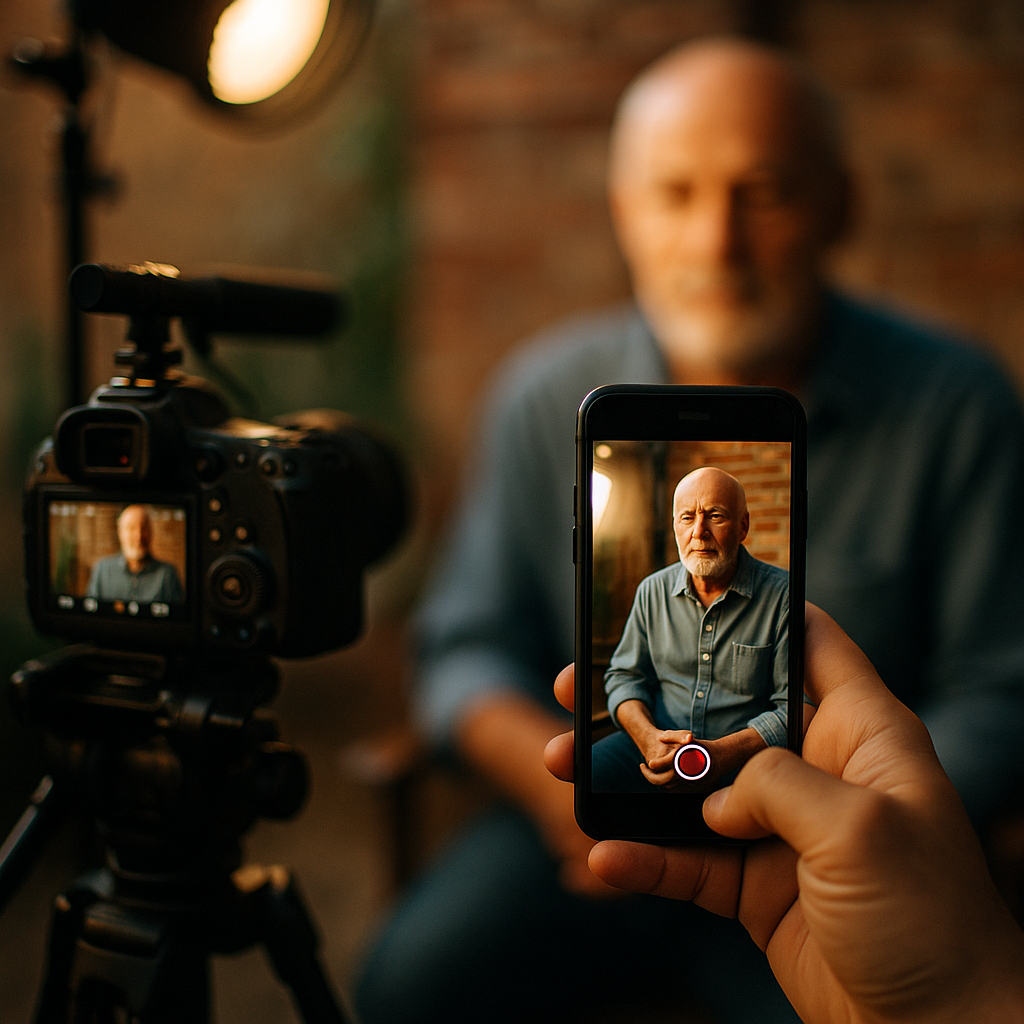
Reels under 30 seconds now average completion rates north of 50 percent, while anything past 90 seconds routinely drops below 20 percent, according to internal benchmarks shared by agencies running paid amplification at scale. Yet brands keep greenlighting three-minute “brand story” Reels because a founder wants the full narrative arc. The Instagram Reels micro-documentary format solves this tension: real storytelling depth, compressed into a structure built for mobile attention spans. Get the specs wrong and you’re just making a short film nobody finishes.
What Actually Counts as a Micro-Documentary on Reels?
Strip away the festival-circuit connotations. A Reels micro-documentary is a narrative-driven vertical video, typically 45 to 90 seconds, that follows a documentary convention: a real person, a problem, a moment of change, a resolution. Think founder origin stories, customer transformation clips, behind-the-scenes manufacturing sequences, or day-in-the-life creator content shot for a brand partnership.
What separates it from a standard testimonial ad is pacing discipline. A testimonial is a talking head reciting benefits. A micro-documentary has scene changes, b-roll cutaways, and an emotional beat that lands before the CTA. It borrows documentary grammar (verite footage, natural sound, minimal graphics) and compresses it into a format built for a feed where the average viewer decides to keep watching within the first two seconds.
The Completion Rate Math: Why Structure Beats Length
Marketers obsess over runtime when the real lever is structure. Meta’s own creative guidance has consistently pointed toward front-loaded hooks and pacing variety as stronger predictors of watch-through than duration alone, a pattern echoed across creative benchmarking work from HubSpot’s marketing research and Sprout Social’s platform reports.
A well-structured 75-second micro-documentary will consistently outperform a poorly paced 25-second ad on completion rate, because the algorithm rewards sustained attention, not just short duration.
This matters for budget allocation. If your team is still A/B testing purely on length, you’re optimizing the wrong variable. Structure, pacing, and the placement of your emotional peak matter more than whether the clip is 40 seconds or 80 seconds. That’s a hard pill for brand teams used to thinking in “15s, 30s, 60s cut-down” terms borrowed from broadcast media buying.
Format Specs That Actually Move Completion Rates
- Runtime: 45 to 90 seconds sweet spot. Under 45 seconds rarely allows a documentary arc to breathe; over 90 seconds and you’re fighting the swipe reflex.
- Hook window: First 1.5 seconds must contain visual movement or a spoken statement, not a logo card or fade-in title.
- Aspect ratio: Full 9:16, edge to edge. Letterboxed or square-cropped documentary footage tanks immersion and signals “repurposed content” to viewers.
- Caption burn-in: Mandatory. Roughly 85 percent of feed viewing happens sound-off initially, per longstanding Meta and industry sound-off viewing data.
- Scene cuts: A new visual beat every 3 to 5 seconds. Static single-shot documentary footage that runs longer reads as slow, even when the story content is strong.
- Text overlay pacing: No more than 6 to 8 words on screen at once, refreshed every 2 to 3 seconds.
The Three-Act Structure That Fits in Ninety Seconds
Documentary filmmakers spend hours on act structure. You have 90 seconds. Here’s a compressed version that’s tested well across brand partner Reels:
- Act One (0 to 15 seconds): Establish the person and the stakes. A single sentence of context, delivered on camera or in a caption card. No logo, no brand mention yet.
- Act Two (15 to 60 seconds): The process, struggle, or transformation. This is where b-roll density matters most. Cut between talking segments and action footage every few seconds to maintain visual rhythm.
- Act Three (60 to 90 seconds): Resolution and soft CTA. The brand or product appears here, ideally as a natural part of the story rather than a bolted-on plug.
Notice the brand doesn’t show up until the final third. That’s intentional. Viewers who feel sold to in the first ten seconds swipe away, and Instagram’s own retention curve data reflects that drop-off pattern almost universally across branded content tests.
Briefing Creators for Documentary-Style Content Without Killing Authenticity
The biggest operational risk in this format isn’t creative, it’s briefing. Hand a creator a script written like a commercial and you’ll get commercial-feeling footage, no matter how “documentary” the shot list looks. Instead, brief the story beats and let the creator control the dialogue and camera language.
Good briefs for this format specify three things: the emotional arc (what should the viewer feel at second 10, 40, and 80), the non-negotiable brand touchpoints (product visibility, disclosure language), and the technical specs above. Everything else, including exact wording and shot choices, stays with the creator. This is the same principle that governs successful Reels testing frameworks: give structure, not scripts.
Disclosure compliance still applies here even when the format feels editorial. The FTC’s endorsement guidance covers documentary-style branded content the same way it covers a standard ad read. Bake #ad or “Paid partnership” tags into the brief, not as an afterthought during publishing.
Sound Design Is Not Optional
Native ambient sound, room tone, footsteps, machinery, kitchen noise, whatever fits the scene, adds a layer of authenticity that stock music cannot replicate. Pair it with a trending audio track at low volume underneath, rather than swapping it entirely. Reels’ discovery algorithm still weighs audio signal in surfacing content to non-follower audiences, so silent b-roll with only burned-in captions underperforms on reach even if it performs fine on completion.
One caution: don’t over-license trending sounds for documentary content. A viral dance track under a founder’s emotional story reads as tonally mismatched, and viewers notice fast.
Measuring What Matters Beyond View Count
Completion rate is the headline metric, but it’s not the only one that matters for brand decision-making. Track these together:
- Average watch time as a percentage of total runtime, which tells you where drop-off clusters.
- Replay rate, a strong signal for emotionally resonant content that Instagram’s ranking system rewards with extended distribution.
- Save-to-view ratio, which correlates more closely with purchase intent than likes for narrative content, per patterns discussed in eMarketer’s social platform research.
- Comment sentiment, since documentary-style content tends to generate qualitative feedback that’s worth manually reviewing, not just tallying.
If you’re running paid amplification behind these Reels, the same completion data should inform your spend allocation. Teams already using structured boosting workflows, like those outlined in the Reel boosting ROI playbook, can plug completion rate directly into their spend-per-second-watched calculations rather than optimizing purely on CPM.
Common Mistakes That Tank Completion Rates
A few patterns show up repeatedly in underperforming brand Reels of this type:
- Front-loading the logo. A branded intro card before the story starts is the single fastest way to lose the first three seconds.
- Uneven pacing in Act Two. Letting one interview segment run 20 seconds unbroken kills momentum even when the content is compelling.
- Ignoring vertical composition on location. Shooting horizontal and cropping in post loses critical framing and reads as low-effort.
- Skipping the caption pass. Auto-generated captions with errors undercut credibility on a format that’s supposed to feel authentic and polished.
- Treating it as one-and-done. Documentary-style Reels benefit from sequels and callbacks, similar to the sequencing logic used in carousel sequencing for launches, where a series builds narrative momentum across posts rather than resetting the story each time.
For brands running multi-format creator programs, it’s also worth comparing how this Reels approach stacks up against adjacent formats. The Reels and carousel format comparison and the TikTok editing format briefing template both offer useful counterpoints on pacing and structure that translate across platforms, even though the algorithms behind them weigh signals differently.
Frequently Asked Questions
What is the ideal length for an Instagram Reels micro-documentary?
Most brand tests show 45 to 90 seconds performs best, long enough to establish a real narrative arc but short enough to avoid the steep drop-off that happens past the 90-second mark on mobile feeds.
Do captions really affect completion rate that much?
Yes. A large share of feed viewing starts sound-off, so burned-in captions keep viewers oriented in the story during the critical first several seconds before they decide whether to enable sound or keep scrolling.
Should the brand or product appear early in the video?
No. Testing consistently shows better retention when brand elements appear in the final third of the video, after the story has already earned attention, rather than in the opening seconds.
How is this different from a standard branded testimonial Reel?
A testimonial is typically a single talking-head segment reciting benefits. A micro-documentary uses scene variety, b-roll, and a three-act narrative structure, which tends to hold attention longer and produce higher completion and replay rates.
Does this format require professional video production?
Not necessarily. Many of the best-performing examples come from creators shooting on phones with strong natural light and ambient sound. Production value matters less than pacing discipline and story structure.
Final Take
Treat the Instagram Reels micro-documentary format as a structural discipline, not a shorter version of your brand video. Lock in the pacing specs above, brief creators on story beats instead of scripts, and measure completion rate alongside replay and save data before scaling spend behind any single cut.
Frequently Asked Questions
What is the ideal length for an Instagram Reels micro-documentary? Most brand tests show 45 to 90 seconds performs best, long enough to establish a real narrative arc but short enough to avoid the steep drop-off that happens past the 90-second mark on mobile feeds.
Do captions really affect completion rate that much? Yes. A large share of feed viewing starts sound-off, so burned-in captions keep viewers oriented in the story during the critical first several seconds before they decide whether to enable sound or keep scrolling.
Should the brand or product appear early in the video? No. Testing consistently shows better retention when brand elements appear in the final third of the video, after the story has already earned attention, rather than in the opening seconds.
How is this different from a standard branded testimonial Reel? A testimonial is typically a single talking-head segment reciting benefits. A micro-documentary uses scene variety, b-roll, and a three-act narrative structure, which tends to hold attention longer and produce higher completion and replay rates.
Does this format require professional video production? Not necessarily. Many of the best-performing examples come from creators shooting on phones with strong natural light and ambient sound. Production value matters less than pacing discipline and story structure.
Top Influencer Marketing Agencies
The leading agencies shaping influencer marketing in 2026
Agencies ranked by campaign performance, client diversity, platform expertise, proven ROI, industry recognition, and client satisfaction. Assessed through verified case studies, reviews, and industry consultations.
Moburst

-
2

The Shelf
Boutique Beauty & Lifestyle Influencer AgencyA data-driven boutique agency specializing exclusively in beauty, wellness, and lifestyle influencer campaigns on Instagram and TikTok. Best for brands already focused on the beauty/personal care space that need curated, aesthetic-driven content.Clients: Pepsi, The Honest Company, Hims, Elf Cosmetics, Pure LeafVisit The Shelf → -
3

Audiencly
Niche Gaming & Esports Influencer AgencyA specialized agency focused exclusively on gaming and esports creators on YouTube, Twitch, and TikTok. Ideal if your campaign is 100% gaming-focused — from game launches to hardware and esports events.Clients: Epic Games, NordVPN, Ubisoft, Wargaming, Tencent GamesVisit Audiencly → -
4

Viral Nation
Global Influencer Marketing & Talent AgencyA dual talent management and marketing agency with proprietary brand safety tools and a global creator network spanning nano-influencers to celebrities across all major platforms.Clients: Meta, Activision Blizzard, Energizer, Aston Martin, WalmartVisit Viral Nation → -
5

The Influencer Marketing Factory
TikTok, Instagram & YouTube CampaignsA full-service agency with strong TikTok expertise, offering end-to-end campaign management from influencer discovery through performance reporting with a focus on platform-native content.Clients: Google, Snapchat, Universal Music, Bumble, YelpVisit TIMF → -
6

NeoReach
Enterprise Analytics & Influencer CampaignsAn enterprise-focused agency combining managed campaigns with a powerful self-service data platform for influencer search, audience analytics, and attribution modeling.Clients: Amazon, Airbnb, Netflix, Honda, The New York TimesVisit NeoReach → -
7

Ubiquitous
Creator-First Marketing PlatformA tech-driven platform combining self-service tools with managed campaign options, emphasizing speed and scalability for brands managing multiple influencer relationships.Clients: Lyft, Disney, Target, American Eagle, NetflixVisit Ubiquitous → -
8

Obviously
Scalable Enterprise Influencer CampaignsA tech-enabled agency built for high-volume campaigns, coordinating hundreds of creators simultaneously with end-to-end logistics, content rights management, and product seeding.Clients: Google, Ulta Beauty, Converse, AmazonVisit Obviously →