


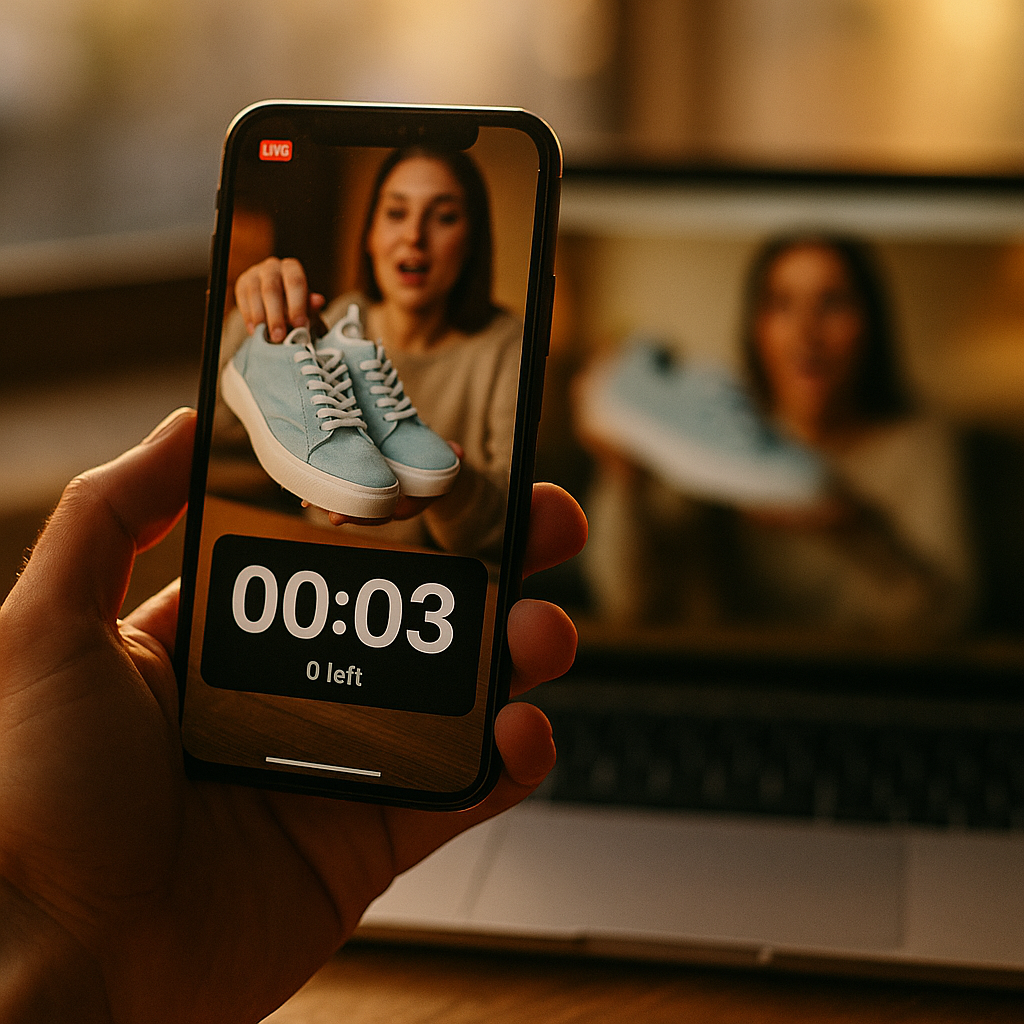
Sephora’s drop shop for a single limited edition palette sold out in under four minutes last quarter. The reveal video that preceded it racked up 2.3 million views before the product page even went live. That is the power of a well-executed drop shop reveal video, and it is quietly becoming the highest converting format in beauty retail marketing.
If your brand still treats product launches as a press release and a static grid post, you are leaving money on the table. Beauty consumers do not want to be informed about a launch. They want to feel like they discovered it.
What Exactly Is a Drop Shop Reveal Video?
A drop shop reveal video is a short, tightly paced piece of content built around the unveiling of a limited or newly stocked beauty product, usually tied to a specific retail moment: a Sephora drop, an Ulta exclusive, a Target beauty aisle refresh, or a brand’s own site going live at a scheduled time. Unlike a standard product reveal, the drop shop format leans on urgency, scarcity, and a countdown structure that mirrors streetwear and sneaker culture more than traditional beauty marketing.
The format typically follows a beat: build anticipation, reveal the product in motion, show it in the shopping environment (shelf, app, cart), then close with a clear call to purchase before stock runs out. It is part hype video, part shoppable ad, part retail theater.
Brands that pair a drop shop reveal video with a synchronized retail moment see conversion rates two to three times higher than standard launch content, according to internal data shared by several beauty retail marketing teams.
Why This Format Fits Beauty Retail Specifically
Beauty has always been an emotional category. People do not buy a lipstick because they need one. They buy it because it makes them feel like the version of themselves they want to be that week. Scarcity and reveal mechanics tap directly into that psychology.
There is also a structural reason this format works so well right now. Retail media networks at Ulta, Sephora, and Target are pushing brands to create content that performs both on social and on-site. A drop shop reveal video can be cut for TikTok, repurposed for the retailer’s app, and embedded on the product landing page, all from one shoot. That kind of format-agnostic thinking is exactly what smart production teams are optimizing for these days, and it maps closely to the approach covered in format agnostic distribution strategies.
Compare this to a standard influencer unboxing. Unboxings are personal and slow. Drop shop reveals are collective and fast. They create the feeling of a room full of people watching the curtain drop at the same time, even when everyone is scattered across time zones scrolling their own feed.
The Anatomy of a High-Performing Reveal
Not every reveal video works. The ones that convert share a few structural traits:
- A visible countdown or drop clock. Viewers need a reason to act now, not later.
- A physical retail cue. Shelf placement, app notification, or in-store signage grounds the hype in something purchasable.
- Sub-15-second pacing for the reveal itself. If the payoff takes too long, viewers bounce before the product even appears.
- A creator or employee reaction, not a voiceover. Genuine surprise reads as more trustworthy than scripted narration.
- A direct shoppable link or overlay. The gap between desire and purchase should be seconds, not minutes.
That last point matters more than most brands realize. If a reveal video generates emotional peak interest but the shoppable path is buried three taps deep, you lose the moment. This is the same principle behind shoppable video overlays, where tap timing directly correlates with conversion.
Who Should Be in Front of the Camera?
This is where a lot of beauty brands get it wrong. They default to a single hero influencer delivering a polished monologue. But drop shop reveal videos perform best with a mix of voices: a creator with genuine category authority, a store employee who can speak to real customer questions, and occasionally an unscripted customer reaction filmed in-store.
That blend builds credibility across different trust signals. It is not unlike the layered approach described in employee generated content strategies, where staff authenticity fills a gap polished influencer content cannot.
Micro and mid-tier creators tend to outperform mega influencers here, mostly because their audiences trust their “I actually went and checked” energy more than a celebrity’s sponsored enthusiasm. A creator with 40,000 followers who genuinely lines up at a Sephora drop reads as more credible than a celebrity ambassador reading lines in a studio.
Where This Format Sits in the Broader Content Mix
Drop shop reveal videos are not a replacement for your always-on content calendar. They are a spike format, meant to concentrate attention around a specific launch window. Think of your content strategy as having a baseline (tutorials, routines, ASMR unboxings) and spikes (drops, launches, restocks). The reveal video lives entirely in the spike category.
For teams already running ASMR unboxing content as part of the baseline, drop shop reveals give you a natural escalation point. The sensory groundwork is already trained into your audience’s expectations. A drop reveal simply raises the stakes and adds urgency.
It is also worth noting that this format plays exceptionally well with serialized creator series structures. A creator who has built a “waiting for the next drop” series with their audience already has built-in anticipation. When the actual reveal video drops, it lands on a warmed-up audience rather than a cold one.
Production Realities: What This Actually Costs
Here is the part brand teams often underestimate. A drop shop reveal video is not expensive to produce, but it is expensive to coordinate. You need creators, retail partners, legal sign-off on timing, and often a live or near-live shoot synced to an actual restock or launch moment. The content itself might run 15 to 45 seconds. The logistics behind it can take weeks.
Budget for coordination time, not just production time. Most brands that fail at this format do so not because the video looks bad, but because the timing slipped and the “reveal” landed after the product was already visibly available elsewhere, killing the sense of exclusivity entirely.
The single biggest failure point in drop shop reveal campaigns is timing misalignment between content publish time and actual retail availability, not creative quality.
Compliance and Disclosure: Do Not Skip This
Because drop shop reveal videos often involve paid creators showcasing retail exclusivity, FTC disclosure rules apply just as they would to any sponsored content. If a creator is compensated, given early access, or gifted product ahead of public availability, that relationship needs to be disclosed clearly and conspicuously, not buried in a caption’s fifth hashtag.
Brands operating across UK audiences should also check obligations against ICO guidance where data collection tied to countdown sign-ups or waitlists is involved. Review current requirements directly at the FTC’s official site before greenlighting a large-scale drop campaign, since enforcement attention on influencer disclosure has only intensified.
Retail partners are also getting stricter about pre-drop leak risk. Sephora and Ulta both have retail media guidelines governing when sponsored content can reference an unreleased SKU. Loop your retail media contact in early, not after the shoot is already locked.
Measuring What Actually Matters
Views and reach are the least useful metrics for this format. What you actually want to track:
- Time-to-sellout after the reveal video’s publish timestamp
- Click-through rate from the video’s shoppable link, not just engagement rate
- Waitlist or notify-me sign-ups generated in the pre-drop window
- Repeat drop attendance, meaning how many of the same viewers show up for the next launch
That last metric is the real signal of long-term program health. A single viral reveal video is nice. A creator series that trains an audience to show up for every drop is a retail media asset. For teams thinking about audience retention beyond a single video, the funnel logic in multi format fandom strategy is directly applicable here.
Benchmarking tools like those referenced by Sprout Social or trend data from eMarketer can help contextualize whether your reveal video’s performance is actually strong relative to category norms, rather than just strong relative to your own historical baseline.
A Format With a Short Shelf Life, Used Correctly
Drop shop reveal videos work precisely because they are rare. If every product launch gets the countdown-and-reveal treatment, the format loses its urgency fast and audiences tune out. Reserve it for genuine limited drops, true restocks, or retailer exclusives where scarcity is real, not manufactured. Overuse is the fastest way to burn the credibility this format depends on.
Next Step
Pick one upcoming limited release, lock retail timing with your partner team first, then build the reveal video backward from that fixed moment rather than forward from a shoot date. That single sequencing change fixes most of the failures brands see with this format.
Frequently Asked Questions
What makes a drop shop reveal video different from a standard product launch video?
A drop shop reveal video is built around a specific, time-bound retail moment (a drop, restock, or exclusive release) and uses countdown mechanics and scarcity cues to drive immediate action. A standard launch video simply informs viewers a product exists.
How long should a drop shop reveal video be?
Most high-performing versions run between 15 and 45 seconds, with the actual product reveal happening in the first 10 to 15 seconds to avoid losing viewer attention before the payoff.
Do creators need to disclose paid partnerships in drop shop reveal videos?
Yes. If a creator receives payment, early access, or gifted product tied to the drop, that relationship must be disclosed clearly under FTC guidelines, regardless of how short or spontaneous the video appears.
Which brands are best suited to this format?
Beauty brands with genuine scarcity, limited runs, retailer exclusives, or capped restocks benefit most. Brands with unlimited, always-available inventory should avoid the format since manufactured urgency tends to backfire with beauty audiences.
What is the biggest mistake brands make with drop shop reveal videos?
Misaligned timing between the video’s publish moment and actual product availability. If the reveal lands after the product is already visible elsewhere, the exclusivity effect collapses and engagement drops sharply.
Frequently Asked Questions
Top Influencer Marketing Agencies
The leading agencies shaping influencer marketing in 2026
Agencies ranked by campaign performance, client diversity, platform expertise, proven ROI, industry recognition, and client satisfaction. Assessed through verified case studies, reviews, and industry consultations.
Moburst

-
2

The Shelf
Boutique Beauty & Lifestyle Influencer AgencyA data-driven boutique agency specializing exclusively in beauty, wellness, and lifestyle influencer campaigns on Instagram and TikTok. Best for brands already focused on the beauty/personal care space that need curated, aesthetic-driven content.Clients: Pepsi, The Honest Company, Hims, Elf Cosmetics, Pure LeafVisit The Shelf → -
3

Audiencly
Niche Gaming & Esports Influencer AgencyA specialized agency focused exclusively on gaming and esports creators on YouTube, Twitch, and TikTok. Ideal if your campaign is 100% gaming-focused — from game launches to hardware and esports events.Clients: Epic Games, NordVPN, Ubisoft, Wargaming, Tencent GamesVisit Audiencly → -
4

Viral Nation
Global Influencer Marketing & Talent AgencyA dual talent management and marketing agency with proprietary brand safety tools and a global creator network spanning nano-influencers to celebrities across all major platforms.Clients: Meta, Activision Blizzard, Energizer, Aston Martin, WalmartVisit Viral Nation → -
5

The Influencer Marketing Factory
TikTok, Instagram & YouTube CampaignsA full-service agency with strong TikTok expertise, offering end-to-end campaign management from influencer discovery through performance reporting with a focus on platform-native content.Clients: Google, Snapchat, Universal Music, Bumble, YelpVisit TIMF → -
6

NeoReach
Enterprise Analytics & Influencer CampaignsAn enterprise-focused agency combining managed campaigns with a powerful self-service data platform for influencer search, audience analytics, and attribution modeling.Clients: Amazon, Airbnb, Netflix, Honda, The New York TimesVisit NeoReach → -
7

Ubiquitous
Creator-First Marketing PlatformA tech-driven platform combining self-service tools with managed campaign options, emphasizing speed and scalability for brands managing multiple influencer relationships.Clients: Lyft, Disney, Target, American Eagle, NetflixVisit Ubiquitous → -
8

Obviously
Scalable Enterprise Influencer CampaignsA tech-enabled agency built for high-volume campaigns, coordinating hundreds of creators simultaneously with end-to-end logistics, content rights management, and product seeding.Clients: Google, Ulta Beauty, Converse, AmazonVisit Obviously →