


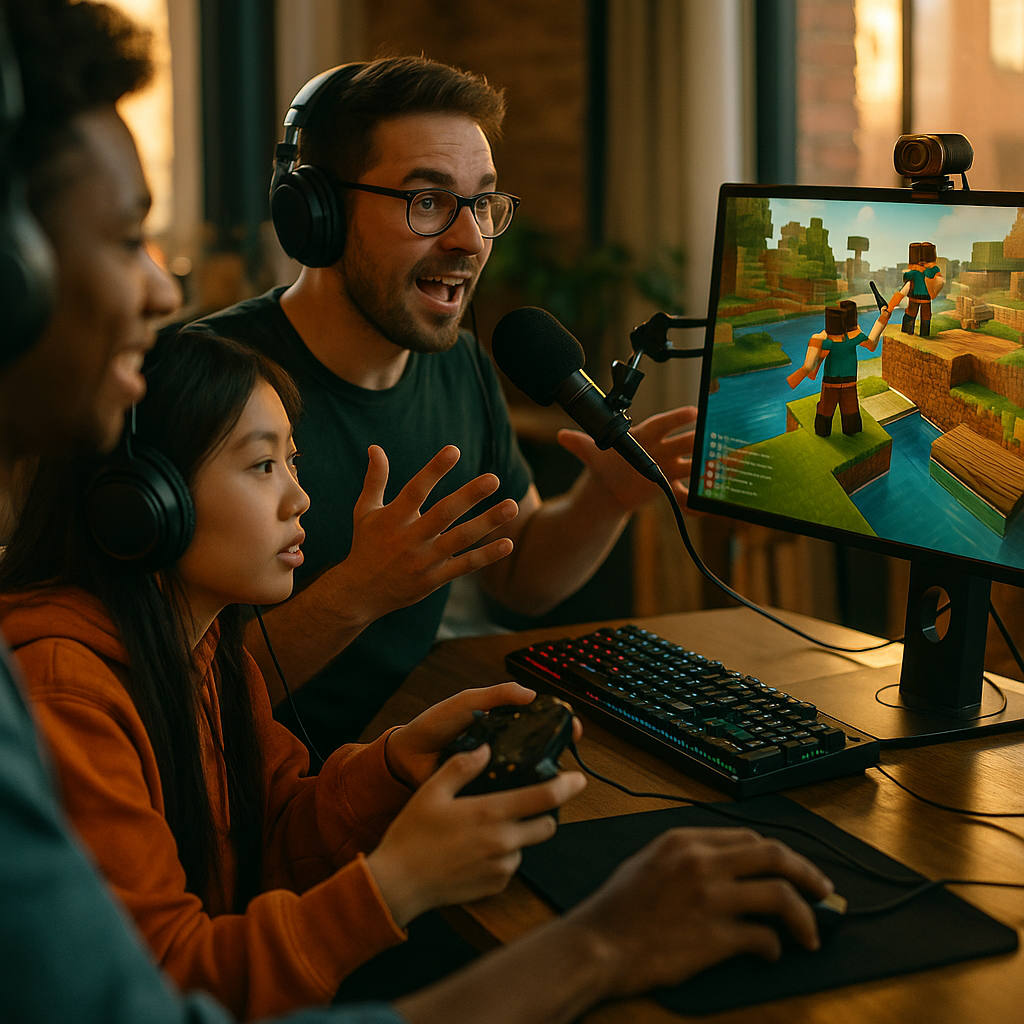
Live video now drives more watch time on ad-supported UGC platforms than any other format, yet most brands still treat it as an afterthought. TikTok LIVE, YouTube Live, and Instagram Live have quietly become the highest-engagement real estate on their respective apps, and the platforms know it. Community livestream formats are the reason. Get the format right and you get sustained attention, ad impressions, and community signals that boost your entire feed. Get it wrong and you get an empty room with a countdown timer.
Why Ad-Supported Platforms Are Pushing Live So Hard
Live video solves a problem that pre-recorded UGC never could: dwell time. A 30-second Reel gets watched once, maybe twice. A one-hour livestream keeps a viewer’s eyeballs (and the platform’s ad inventory) active for far longer. That’s why TikTok, YouTube, and Meta have all restructured their creator monetization programs around live watch minutes rather than just views.
For brands, this shift matters because ad load, gifting economies, and community features are now baked directly into the livestream interface. Viewers can send tips, react in real time, and shop without leaving the stream. According to eMarketer’s research on social commerce trends, live shopping formats consistently outperform static product posts on conversion rate, largely because the format compresses discovery and purchase into a single session.
Livestreams aren’t a content format anymore. They’re a distribution mechanism the platforms subsidize with algorithmic reach because they extend session time and ad inventory.
The Core Community Livestream Formats Worth Briefing
Not every livestream idea deserves a budget line. After reviewing briefs across beauty, CPG, and tech clients, five formats consistently earn their production cost. Each one solves a different job: reach, retention, conversion, or trust.
Co-Watch and Reaction Streams
Creators watch a launch, a game drop, or a competitor’s stream alongside their audience, reacting live. This format borrows heavily from the mechanics covered in our reaction content briefs guide, except the reaction happens in real time with chat driving the commentary. Brands get authentic, unscripted product reactions without paying for a full production shoot.
Creator Roundtables
Three to five creators join a single stream to debate a topic, compare products, or answer audience questions together. The format works because it multiplies each creator’s individual audience into a shared room, and cross-pollination almost always produces a spike in follows for the smaller creators involved. Roundtables are cheap to produce and easy to repeat monthly, which builds the kind of episodic habit outlined in our piece on serialized creator series.
Ask Me Live (AML) Sessions
A structured Q&A where the creator answers audience questions submitted through comments or a pinned prompt. This is the single easiest format to brief because it requires almost no script, just a topic, a moderator, and a few seeded questions to prevent dead air in the first five minutes. Brands running product launches use AML sessions to surface objections in real time, which is far cheaper than commissioning a focus group.
Behind the Feed
Creators pull back the curtain on how a piece of content was made, why a product was chosen, or what a typical day looks like. It performs well precisely because it feels unpolished, aligning with the broader shift toward the raw, low-production aesthetic we’ve tracked in unscripted diary style content. Audiences trust it more than a scripted ad read, and platforms reward the longer average watch time.
Live Shopping Drops
A timed reveal where a product goes live for purchase mid-stream, often with limited stock to create urgency. This is the most commercially direct format, and it deserves its own beat sheet, which we’ve already mapped out in detail in shoppable livestream scripts. If you’re only going to invest in one live format this quarter, this is usually the one with the clearest ROI attribution.
Briefing Live Differently Than Recorded Content
Here’s the mistake most marketing teams make: they write a livestream brief the same way they’d write a Reel brief, with a tight script and timed beats. Live doesn’t work that way. Chat drives pacing, and a creator who’s boxed into a rigid script can’t respond to what the room actually wants.
Instead, brief for structure, not dialogue. Give the creator:
- A clear opening hook to use in the first 60 seconds, before the algorithm decides whether to push the stream to more viewers
- Three to five discussion pillars or product moments to hit, in any order
- A moderator plan for handling comments, especially negative or off-topic ones
- A closing CTA that repeats at least twice, since live audiences drift in and out
This structure mirrors the approach we recommend in vertical video style guides, just adapted for a format where the creator can’t edit out a bad take.
Comment Engineering Is Half the Format
Live success lives or dies in the comment section. Platforms weight comment velocity heavily when deciding whether to surface a stream to non-followers, so brands need to think about comment prompts the same way they think about hooks. Our earlier guide on comment bait captions applies directly here: seed two or three questions in the pinned comment or opening line that are easy to answer with a single word or emoji, and momentum tends to snowball on its own.
Moderation matters just as much. A single unmoderated stream with off-brand comments can undo months of trust-building. Brief a dedicated moderator, not the creator, to manage this in real time. According to Sprout Social’s community management research, brands that actively moderate live comments see measurably higher sentiment scores than those that let chat run unfiltered.
Compliance Doesn’t Pause When the Camera’s Live
Disclosure obligations apply just as strictly to live content as to recorded posts, and arguably it’s harder to prove compliance after the fact since there’s no static caption to screenshot. The FTC’s endorsement guidance expects clear and conspicuous disclosure throughout a paid livestream, not just in the opening seconds. Brief creators to verbally restate the partnership every 10 to 15 minutes, and require an on-screen disclosure graphic that persists for the stream’s duration rather than flashing once at the start.
Platform-specific rules add another layer. TikTok’s advertising policies and Meta’s business tools both have specific requirements for branded content tags on live formats, and failing to apply them correctly can get a stream demonetized mid-broadcast. Build a pre-live checklist into your workflow so this isn’t left to the creator’s memory.
Measuring What Actually Matters
Views are the vanity metric here. The numbers that predict whether a livestream format is worth repeating are average watch duration, peak concurrent viewers, comment rate per minute, and (for shopping streams) add-to-cart conversion during the live window versus the 48 hours after. Most brands under-invest in post-stream measurement because the VOD replay rarely gets analyzed the same way the live session does, but replay watch time is often where a big chunk of total reach ends up.
If you’re running multiple formats, track them separately rather than averaging performance across your whole livestream program. A roundtable and a shopping drop have completely different success benchmarks, and blending the data hides which format is actually earning its budget. This kind of format-specific tracking is the same discipline behind the funnel logic in our multi-format fandom strategy piece, where different content types feed different stages of the buyer journey.
Next Step
Pick one format from this playbook, brief it for structure rather than script, and run it for four consecutive weeks before judging results. Livestream performance compounds with consistency, and a single strong stream tells you far less than a monthly cadence does.
FAQs
What makes a livestream format “ad-supported” versus organic?
Ad-supported platforms insert pre-roll, mid-roll, or overlay ads into live sessions and share a portion of that revenue with creators based on watch time and engagement, which is why they algorithmically favor formats that keep viewers watching longer.
How long should a community livestream run for best reach?
Most platforms reward sessions between 30 and 60 minutes, long enough to build comment momentum and qualify for extended reach, but short enough to avoid steep audience drop-off after the first 20 minutes.
Do brands need a script for live formats?
No. Scripts kill the spontaneity that makes live content perform well. Brief structural beats and discussion pillars instead, and let the creator respond naturally to comments.
How do you disclose paid partnerships during a livestream?
Use a persistent on-screen disclosure graphic for the full duration of the stream and have the creator verbally restate the partnership every 10 to 15 minutes, since viewers join and leave throughout the broadcast.
Which livestream format has the clearest ROI for brands?
Live shopping drops typically show the most direct attribution, since platforms can track add-to-cart and purchase activity within the stream itself, making conversion lift easier to measure than awareness-focused formats like roundtables.
Top Influencer Marketing Agencies
The leading agencies shaping influencer marketing in 2026
Agencies ranked by campaign performance, client diversity, platform expertise, proven ROI, industry recognition, and client satisfaction. Assessed through verified case studies, reviews, and industry consultations.
Moburst

-
2

The Shelf
Boutique Beauty & Lifestyle Influencer AgencyA data-driven boutique agency specializing exclusively in beauty, wellness, and lifestyle influencer campaigns on Instagram and TikTok. Best for brands already focused on the beauty/personal care space that need curated, aesthetic-driven content.Clients: Pepsi, The Honest Company, Hims, Elf Cosmetics, Pure LeafVisit The Shelf → -
3

Audiencly
Niche Gaming & Esports Influencer AgencyA specialized agency focused exclusively on gaming and esports creators on YouTube, Twitch, and TikTok. Ideal if your campaign is 100% gaming-focused — from game launches to hardware and esports events.Clients: Epic Games, NordVPN, Ubisoft, Wargaming, Tencent GamesVisit Audiencly → -
4

Viral Nation
Global Influencer Marketing & Talent AgencyA dual talent management and marketing agency with proprietary brand safety tools and a global creator network spanning nano-influencers to celebrities across all major platforms.Clients: Meta, Activision Blizzard, Energizer, Aston Martin, WalmartVisit Viral Nation → -
5

The Influencer Marketing Factory
TikTok, Instagram & YouTube CampaignsA full-service agency with strong TikTok expertise, offering end-to-end campaign management from influencer discovery through performance reporting with a focus on platform-native content.Clients: Google, Snapchat, Universal Music, Bumble, YelpVisit TIMF → -
6

NeoReach
Enterprise Analytics & Influencer CampaignsAn enterprise-focused agency combining managed campaigns with a powerful self-service data platform for influencer search, audience analytics, and attribution modeling.Clients: Amazon, Airbnb, Netflix, Honda, The New York TimesVisit NeoReach → -
7

Ubiquitous
Creator-First Marketing PlatformA tech-driven platform combining self-service tools with managed campaign options, emphasizing speed and scalability for brands managing multiple influencer relationships.Clients: Lyft, Disney, Target, American Eagle, NetflixVisit Ubiquitous → -
8

Obviously
Scalable Enterprise Influencer CampaignsA tech-enabled agency built for high-volume campaigns, coordinating hundreds of creators simultaneously with end-to-end logistics, content rights management, and product seeding.Clients: Google, Ulta Beauty, Converse, AmazonVisit Obviously →