


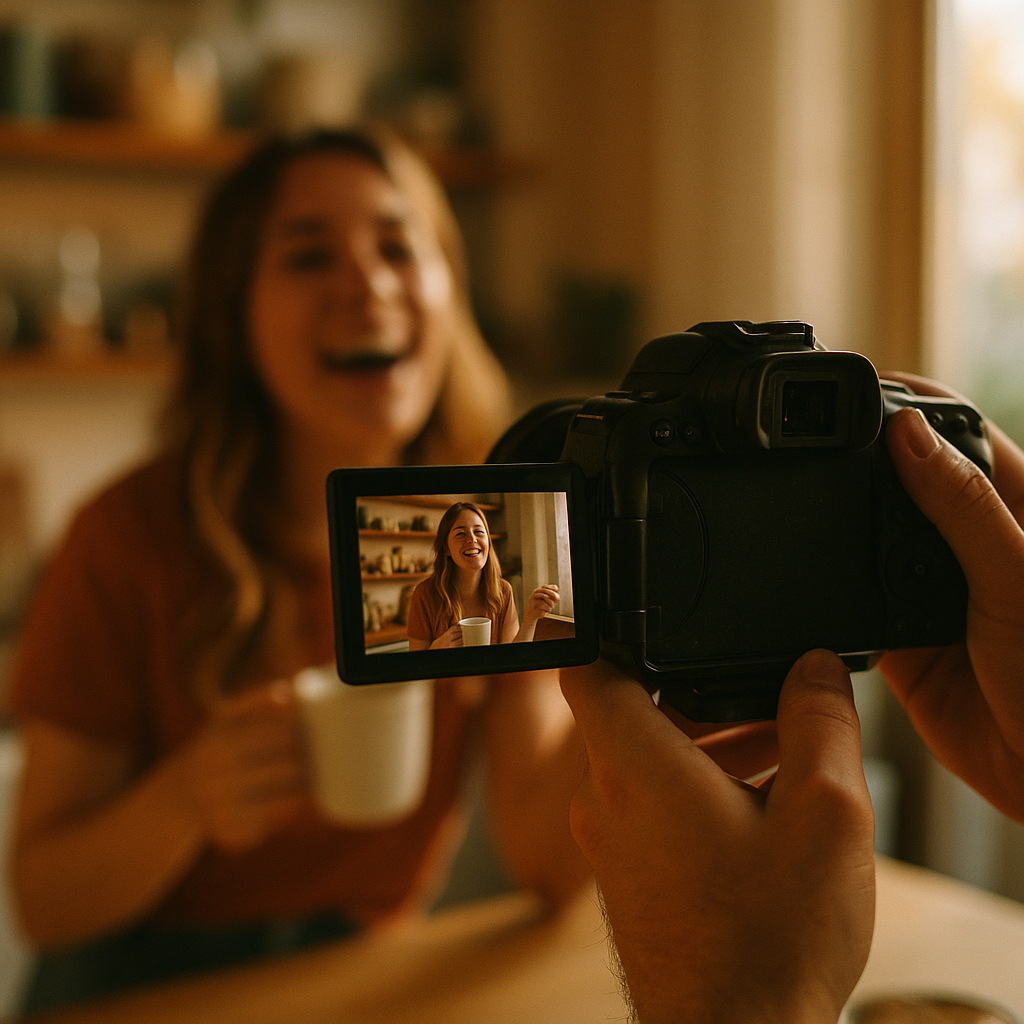
A 22 second clip of a founder fumbling through a product recall email outperformed a $40,000 studio ad by 340% in watch time last quarter. That’s not an outlier. Across creator platforms, the B-Roll Diary Format, unscripted, unedited behind the scenes footage, is consistently beating polished brand ads on completion rate, saves, and comment volume. Marketers who spent a decade chasing cinematic perfection are now briefing for the opposite: shaky footage, bad lighting, and real mistakes left in.
What Is the B-Roll Diary Format, Exactly?
It’s not “behind the scenes” in the corporate sense of a slick recap reel with a voiceover. The B-Roll Diary Format is closer to a video diary: a creator or founder pointing a phone camera at whatever is happening, with minimal or no post-production. Think of a warehouse walk-through with visible clutter, a founder venting about a supplier delay, or a creator’s actual first reaction to a product before any script gets involved.
The defining trait is friction. Polished ads remove friction. The diary format keeps it, because friction signals authenticity, and authenticity is the currency audiences trust in a feed saturated with AI generated gloss.
Audiences aren’t rejecting production value. They’re rejecting the feeling of being sold to. Unedited footage removes that feeling, even when the underlying message is still commercial.
Why Polished Ads Are Losing the Attention War
Here’s the uncomfortable truth for brand teams who’ve invested heavily in agency-produced creative: consumers have gotten very good at pattern matching “ad” within the first two seconds of a video. That recognition triggers an immediate scroll. According to Sprout Social’s ongoing research into social content performance, audience trust in brand messaging tends to correlate more strongly with perceived authenticity than with production quality.
Polished ads also carry an implicit cost signal. Viewers subconsciously calculate: this took money, effort, and multiple approval rounds, so what aren’t they telling me? Raw footage carries the opposite signal. It looks like it happened by accident, which reads as unfiltered truth, even if a creative team planned exactly when to hit record.
This isn’t a rejection of production entirely. It’s a recalibration of when polish helps and when it hurts. For product demos and conversion focused creative, some structure still wins, which is part of why raw cut testimonial formats have quietly become a staple in performance marketing decks.
The Data Behind the Shift
Platform algorithms reward watch time and completion, and diary-style clips tend to win both because they don’t announce their punchline early. A viewer stays curious about where the footage is going, the same instinct that keeps people watching security cam compilations or reality TV. eMarketer’s creator economy coverage has repeatedly flagged that lower-production, higher-authenticity content formats now outperform traditional branded video on engagement metrics across TikTok, Instagram Reels, and YouTube Shorts.
There’s also a cost angle brand leaders can’t ignore. A single afternoon of diary-style shooting can generate a week of content, compared to a full production day that yields one polished 30 second spot. That’s a direct efficiency win, and it’s the same logic driving interest in one shoot content strategies that stretch a single capture session across multiple formats.
Where the Format Actually Works (and Where It Doesn’t)
Not every brand or category benefits equally. B-Roll Diary content performs best where trust is the bottleneck to conversion, not awareness. That includes:
- Founder-led brands where the person behind the product is part of the value proposition.
- Operationally complex categories like manufacturing, logistics, or healthcare, where showing the “how” builds credibility faster than telling.
- Crisis or recall communications, where over-produced messaging reads as evasive.
- Early-stage product launches where audiences want proof of process, not a finished pitch.
Where it doesn’t work as well: highly regulated financial products, luxury categories where craftsmanship signaling matters, or anything requiring precise legal language, since off-the-cuff footage increases compliance risk. If your legal team needs to approve every sentence, unscripted diary content is a liability, not an asset.
The Compliance Trap Nobody Talks About
Here’s where brand and legal teams need to slow down. “Unedited” doesn’t mean “unreviewed.” A raw clip still needs a disclosure pass, especially if a paid creator is involved. The FTC’s endorsement guidance applies regardless of production polish. An unscripted clip showing a creator genuinely using a product still requires a clear #ad or #sponsored disclosure if compensation changed hands.
The bigger risk is what gets accidentally captured. Diary-style footage picks up background conversations, competitor products in shot, proprietary information on whiteboards, or off-brand language that would never survive a scripted shoot. Smart teams build a lightweight review checklist rather than a full approval workflow, because heavy process kills the spontaneity that makes the format work in the first place. This tension is exactly what’s explored in creative approval bottleneck research: too much oversight and you lose the authenticity premium you were chasing.
The moment a diary clip goes through three rounds of stakeholder edits, it stops being a diary clip. It becomes a polished ad wearing a rough filter, and audiences can tell the difference.
How to Brief for Raw Footage Without Losing Control
Briefing for imperfection sounds like an oxymoron, but it’s a discipline, not chaos. The goal is to set guardrails, not scripts.
- Define the “cannot show” list, not the “must show” list. Give creators a short list of legal, safety, or brand-sensitive exclusions, then let them shoot freely within that boundary.
- Pick moments, not messages. Instead of scripting a talking point, brief the situation: “film the first 10 minutes of unboxing” or “capture the team’s actual reaction to the delayed shipment.” The message emerges from the moment.
- Set a light disclosure template. One line, delivered naturally on camera or added as an overlay, keeps you compliant without breaking the raw feel. This pairs well with the approach outlined in behind the scenes content briefs already circulating among brand teams.
- Batch review, don’t line-edit. Review footage for compliance issues in one pass, flag only hard problems, and resist the urge to “improve” dialogue or pacing.
This approach also connects to broader thinking on loose structure briefing, where reduced creative control has been shown to correlate with better organic reach, since creators aren’t fighting an unnatural script.
What About Mistakes and Bloopers?
Leaving mistakes in isn’t just tolerance, it’s strategy. A stumbled sentence or a dropped product on camera generates comments, and comments generate reach. Brands running experiments with intentionally unpolished cuts have found that mistake-inclusive content often drives higher watch time than the “clean” version of the same shoot, a pattern documented in depth in coverage of blooper reel marketing. The lesson: don’t reshoot the stumble. Post it.
The same logic explains why pacing tests increasingly favor rougher cuts over tightly edited sequences for top-of-funnel content, a trend covered extensively in analysis of editing style testing across major platforms.
Measuring Success Without Mistaking Views for Trust
Views and completion rate tell you the format is grabbing attention. They don’t tell you whether that attention converts to trust or purchase intent. Track saves, shares, and comment sentiment alongside standard funnel metrics like click-through and conversion rate. If diary content is driving views but comment sentiment skews confused (“wait, is this an ad?”), your disclosure or brand context is too subtle. Adjust the caption, not the footage.
Also benchmark against your polished creative on a like-for-like basis, same product, same audience segment, different format. HubSpot’s content marketing benchmarks are a useful external reference point for setting realistic engagement targets by industry before you draw conclusions from a single test.
The Real Risk Isn’t the Format, It’s Overcorrection
Some brand teams, spooked by these results, are swinging too far, ditching all polished creative in favor of “raw everything.” That’s a mistake. The B-Roll Diary Format works precisely because it contrasts with the rest of your feed. If every piece of content looks accidental, audiences stop reading it as authentic and start reading it as a style choice, which flattens the trust signal you were trying to build. Use it as a deliberate counterweight to your polished assets, not a wholesale replacement.
Next Step
Pick one upcoming campaign and run a controlled test: brief a creator with a “cannot show” list instead of a script, capture one unscripted session, and measure it against your polished version on completion rate and comment sentiment. Let the data, not your production instincts, decide which one earns the bigger budget next quarter.
Frequently Asked Questions
What makes the B-Roll Diary Format different from standard behind the scenes content?
Standard behind the scenes content is often still edited into a narrative recap. The B-Roll Diary Format keeps footage close to raw, including mistakes, dead air, and unscripted moments, which is what drives the authenticity signal audiences respond to.
Does unedited footage still need FTC disclosure?
Yes. Disclosure requirements apply based on compensation and endorsement relationships, not production quality. A raw, unscripted clip from a paid creator still requires clear disclosure under FTC guidance.
How do brands maintain quality control without over-editing raw footage?
Set clear “cannot show” boundaries before filming rather than scripting content, then review footage for compliance issues only, resisting the urge to polish dialogue, pacing, or lighting after the fact.
Which industries benefit most from the B-Roll Diary Format?
Founder-led brands, operationally complex categories like manufacturing or logistics, early-stage product launches, and crisis communications tend to benefit most, since trust is the primary conversion barrier in these contexts.
Should brands stop investing in polished ad production entirely?
No. Polished creative still performs well for conversion-focused and premium positioning content. The B-Roll Diary Format works best as a contrast within a broader content mix, not as a full replacement.
Top Influencer Marketing Agencies
The leading agencies shaping influencer marketing in 2026
Agencies ranked by campaign performance, client diversity, platform expertise, proven ROI, industry recognition, and client satisfaction. Assessed through verified case studies, reviews, and industry consultations.
Moburst

-
2

The Shelf
Boutique Beauty & Lifestyle Influencer AgencyA data-driven boutique agency specializing exclusively in beauty, wellness, and lifestyle influencer campaigns on Instagram and TikTok. Best for brands already focused on the beauty/personal care space that need curated, aesthetic-driven content.Clients: Pepsi, The Honest Company, Hims, Elf Cosmetics, Pure LeafVisit The Shelf → -
3

Audiencly
Niche Gaming & Esports Influencer AgencyA specialized agency focused exclusively on gaming and esports creators on YouTube, Twitch, and TikTok. Ideal if your campaign is 100% gaming-focused — from game launches to hardware and esports events.Clients: Epic Games, NordVPN, Ubisoft, Wargaming, Tencent GamesVisit Audiencly → -
4

Viral Nation
Global Influencer Marketing & Talent AgencyA dual talent management and marketing agency with proprietary brand safety tools and a global creator network spanning nano-influencers to celebrities across all major platforms.Clients: Meta, Activision Blizzard, Energizer, Aston Martin, WalmartVisit Viral Nation → -
5

The Influencer Marketing Factory
TikTok, Instagram & YouTube CampaignsA full-service agency with strong TikTok expertise, offering end-to-end campaign management from influencer discovery through performance reporting with a focus on platform-native content.Clients: Google, Snapchat, Universal Music, Bumble, YelpVisit TIMF → -
6

NeoReach
Enterprise Analytics & Influencer CampaignsAn enterprise-focused agency combining managed campaigns with a powerful self-service data platform for influencer search, audience analytics, and attribution modeling.Clients: Amazon, Airbnb, Netflix, Honda, The New York TimesVisit NeoReach → -
7

Ubiquitous
Creator-First Marketing PlatformA tech-driven platform combining self-service tools with managed campaign options, emphasizing speed and scalability for brands managing multiple influencer relationships.Clients: Lyft, Disney, Target, American Eagle, NetflixVisit Ubiquitous → -
8

Obviously
Scalable Enterprise Influencer CampaignsA tech-enabled agency built for high-volume campaigns, coordinating hundreds of creators simultaneously with end-to-end logistics, content rights management, and product seeding.Clients: Google, Ulta Beauty, Converse, AmazonVisit Obviously →