


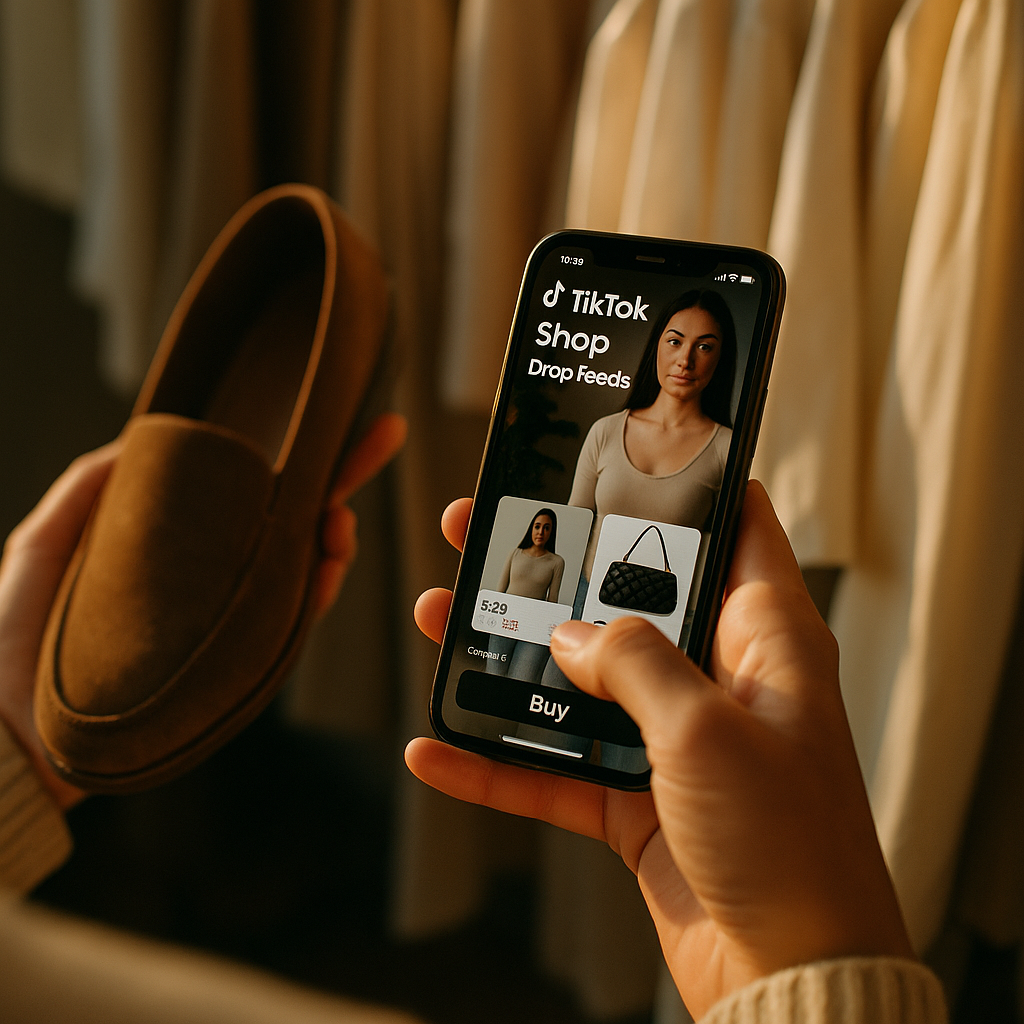
Only 12% of TikTok Shop “drop” videos surfaced in algorithmically ranked feeds carry a visible, machine readable disclosure tag, according to internal audits several compliance vendors have run this year. That gap sits inside a feature designed to move product fast, and it’s quietly building the next wave of FTC enforcement cases. If your brand runs TikTok Shop drops through affiliate creators or live shopping events, the FTC disclosure gap on TikTok isn’t a hypothetical risk. It’s already live in your feed.
What Is a Drop Shop Feed, and Why Does It Break Disclosure Norms?
TikTok Shop’s drop feed is a curated, time boxed surface that spotlights flash sales, limited inventory launches, and creator affiliated product drops. Unlike a standard For You feed video, drop content gets algorithmically re-ranked based on urgency signals: countdown timers, stock depletion, and purchase velocity. TikTok’s own advertising platform treats these drops as a hybrid of commerce and content, which means the standard ad labeling rules that apply to boosted posts don’t always trigger.
Here’s the operational problem. When a creator’s organic drop video gets pulled into the algorithmic feed and amplified far beyond their normal reach, the disclosure that was buried in a caption or spoken quickly at the fifteen second mark doesn’t travel with it. The FTC’s endorsement guidance requires disclosures to be clear and conspicuous wherever the audience encounters the content, not just in the original post. Amplification without disclosure persistence is exactly the gap regulators are circling.
A disclosure buried in a caption on the original post doesn’t count once the algorithm reshuffles that video into a drop feed watched by ten times the original audience. Clear and conspicuous has to survive amplification, not just publication.
Why Brands Carry the Liability, Not Just Creators
Plenty of brand teams still assume the creator’s disclosure obligation shields the brand. It doesn’t. The FTC has been explicit for years that advertisers share responsibility for ensuring endorsements are properly disclosed, and TikTok Shop’s affiliate structure makes that inheritance even sharper. When a brand approves a creator for its affiliate program and that creator’s content gets swept into an algorithmic drop feed, the brand benefited from the amplified reach and the missing disclosure at the same time.
This mirrors the liability structure we’ve already covered around TikTok Shop commission programs, where affiliate payouts create an implied endorsement relationship regardless of whether the brand drafted the caption. Drop feeds just add an algorithmic multiplier on top of that existing exposure. A single undisclosed video that would have reached 4,000 followers can end up in front of 400,000 viewers once the drop feed picks it up, and the brand’s affiliate commission structure is the thing that makes the endorsement material in the first place.
The Algorithm Doesn’t Know What “Clear and Conspicuous” Means
TikTok’s ranking system optimizes for watch time, conversion velocity, and cart adds. It has no mechanism for checking whether a #ad tag rendered legibly against a busy thumbnail, or whether a spoken disclaimer got clipped by TikTok’s auto-generated highlight reel feature used in some drop promotions. Brands that assume platform level content moderation is doing compliance work for them are making a costly assumption. It isn’t, and it was never designed to.
Where the Gaps Actually Show Up
Compliance teams reviewing drop feed content report the same handful of failure points repeatedly. Knowing these patterns is the fastest way to triage your own creator roster before an FTC complaint forces the audit.
- Disclosure buried below the fold in captions that never get expanded because drop feed viewers scroll past caption text entirely.
- Spoken disclosures clipped by auto-editing tools TikTok Shop offers creators for turning long videos into short drop teasers.
- Live shopping streams with no persistent on-screen tag even though the FTC treats livestream commerce endorsements the same as any other paid promotion.
- Reposted or duetted drop content that strips the original disclosure entirely when a second creator amplifies the drop.
- Affiliate links masking sponsorship where the commission relationship itself isn’t disclosed, only the product recommendation.
Notice how many of these are amplification failures, not creation failures. The original video may have been perfectly compliant. It’s the second life, the algorithmic reshuffle, the duet chain, where disclosure disappears.
How Big Is This, Really?
TikTok Shop’s gross merchandise volume has scaled fast, and eMarketer analysis has repeatedly flagged social commerce as one of the fastest growing slices of overall retail media spend. Fast growth plus a feature (drop feeds) that didn’t exist when most brand compliance frameworks were written equals a structural blind spot. Most influencer contracts and disclosure policies were drafted with static feed posts in mind, not algorithmically re-ranked, time boxed commerce surfaces that can multiply reach overnight without any new content being created.
Data from Statista on social commerce adoption shows younger consumers increasingly discovering products through algorithmic feeds rather than search, which means the audience most exposed to undisclosed drop content is also the demographic least likely to question whether a “recommendation” is actually a paid placement.
If your disclosure policy was written before your brand joined TikTok Shop’s affiliate program, it probably doesn’t account for what happens when a compliant post gets amplified into a non-compliant reach event.
Building a Drop Feed Audit Into Your Compliance Calendar
You don’t need a new department to close this gap. You need a recurring audit cadence that specifically checks amplified content, not just newly published content. A few practical steps:
- Pull weekly drop feed reports from TikTok Shop’s seller dashboard to identify which affiliate videos got algorithmically boosted.
- Re-check disclosure visibility post-amplification, not just at publish time. A video compliant on day one can lose its disclosure context after a duet or repost.
- Require persistent on-screen tags in creator contracts, not just verbal or caption disclosures, specifically for any content eligible for drop feed placement.
- Retain screenshots and timestamps of both the original and amplified versions of high-performing drop content. This is standard practice already covered in our guide to content retention for FTC audits.
- Flag nano and micro creators separately, since they’re statistically less likely to have professional disclosure habits and more likely to get swept into a drop feed unexpectedly once a product spikes. Our breakdown of nano creator disclosure audits covers scaling this without hiring a full legal team.
Detection tooling matters here too. Manual review doesn’t scale once you’re running hundreds of affiliate creators through a drop program. Third party monitoring services built for platforms like TikTok now flag unpaid or undisclosed mentions automatically, a workflow we detailed in TikTok disclosure detection tools. Layer that kind of monitoring specifically onto drop feed eligible content, and you catch the amplification failures before a regulator or a competitor does.
What About AI Generated Product Descriptions in Drops?
Drop shop listings increasingly pair creator video with AI generated product copy and even AI generated review summaries pulled from customer comments. That’s a separate but related disclosure risk. If the AI summarization implies a review or endorsement that wasn’t actually made in that form, you’re stacking a second compliance issue on top of the amplification gap. We’ve covered the mechanics of that risk in AI generated review disclosure requirements, and it’s worth reading alongside your drop feed audit since the two failure modes often show up in the same listing.
Sprout Social’s research on social commerce trust signals consistently finds that disclosed sponsorships perform nearly as well as undisclosed ones when the disclosure is handled cleanly. That’s the argument to bring to internal stakeholders who worry that fixing this gap will hurt conversion. It won’t, if you build the disclosure into the creative instead of bolting it on as an afterthought.
The Fix Isn’t More Policy, It’s Persistent Tagging
Most brands already have a disclosure policy. The problem isn’t the policy document, it’s that the policy assumes a static distribution environment. Update your creator brief templates to require disclosures that are baked into the video itself (burned-in text, spoken early, repeated on screen) rather than relying on caption text or platform-native tags that can get stripped during algorithmic reshuffling, duets, or auto-edited highlight clips. That single change closes most of the gap without requiring new legal review cycles for every drop.
Frequently Asked Questions
FAQs
Does the FTC treat TikTok Shop drop feeds differently from regular TikTok posts?
No. The FTC’s endorsement guidelines apply regardless of the surface or feature distributing the content. What changes with drop feeds is the amplification pattern, which can expose an undisclosed post to a much larger audience than the creator’s original following, increasing the practical risk and potential penalty exposure for the brand.
Who is legally responsible when an algorithmically amplified drop video lacks disclosure?
Both the creator and the brand can face FTC scrutiny, but brands are typically the primary target because they control the affiliate relationship, approve creator participation, and benefit financially from the amplified reach.
Can a disclosure that was compliant at posting become non-compliant later?
Yes. If a video gets clipped, duetted, or reposted without carrying the original disclosure forward, or if TikTok’s auto-editing tools trim out a spoken disclaimer, the resulting content can lose its “clear and conspicuous” status even though the original post was compliant.
What’s the most reliable disclosure format for drop feed content?
Persistent, burned-in on-screen text that stays visible throughout the video performs best, since it survives clipping, duetting, and algorithmic re-ranking better than caption text or a single spoken mention.
How often should brands audit their TikTok Shop affiliate creators for disclosure compliance?
A weekly review of drop feed performance reports paired with a monthly deeper audit of top-performing affiliate content is a reasonable baseline for most mid-size to large TikTok Shop programs.
Run one audit this week: pull your last thirty days of TikTok Shop affiliate drop performance, cross reference the top ten amplified videos against your disclosure checklist, and fix your creator brief template before the next drop goes live.
Top Influencer Marketing Agencies
The leading agencies shaping influencer marketing in 2026
Agencies ranked by campaign performance, client diversity, platform expertise, proven ROI, industry recognition, and client satisfaction. Assessed through verified case studies, reviews, and industry consultations.
Moburst

-
2

The Shelf
Boutique Beauty & Lifestyle Influencer AgencyA data-driven boutique agency specializing exclusively in beauty, wellness, and lifestyle influencer campaigns on Instagram and TikTok. Best for brands already focused on the beauty/personal care space that need curated, aesthetic-driven content.Clients: Pepsi, The Honest Company, Hims, Elf Cosmetics, Pure LeafVisit The Shelf → -
3

Audiencly
Niche Gaming & Esports Influencer AgencyA specialized agency focused exclusively on gaming and esports creators on YouTube, Twitch, and TikTok. Ideal if your campaign is 100% gaming-focused — from game launches to hardware and esports events.Clients: Epic Games, NordVPN, Ubisoft, Wargaming, Tencent GamesVisit Audiencly → -
4

Viral Nation
Global Influencer Marketing & Talent AgencyA dual talent management and marketing agency with proprietary brand safety tools and a global creator network spanning nano-influencers to celebrities across all major platforms.Clients: Meta, Activision Blizzard, Energizer, Aston Martin, WalmartVisit Viral Nation → -
5

The Influencer Marketing Factory
TikTok, Instagram & YouTube CampaignsA full-service agency with strong TikTok expertise, offering end-to-end campaign management from influencer discovery through performance reporting with a focus on platform-native content.Clients: Google, Snapchat, Universal Music, Bumble, YelpVisit TIMF → -
6

NeoReach
Enterprise Analytics & Influencer CampaignsAn enterprise-focused agency combining managed campaigns with a powerful self-service data platform for influencer search, audience analytics, and attribution modeling.Clients: Amazon, Airbnb, Netflix, Honda, The New York TimesVisit NeoReach → -
7

Ubiquitous
Creator-First Marketing PlatformA tech-driven platform combining self-service tools with managed campaign options, emphasizing speed and scalability for brands managing multiple influencer relationships.Clients: Lyft, Disney, Target, American Eagle, NetflixVisit Ubiquitous → -
8

Obviously
Scalable Enterprise Influencer CampaignsA tech-enabled agency built for high-volume campaigns, coordinating hundreds of creators simultaneously with end-to-end logistics, content rights management, and product seeding.Clients: Google, Ulta Beauty, Converse, AmazonVisit Obviously →