


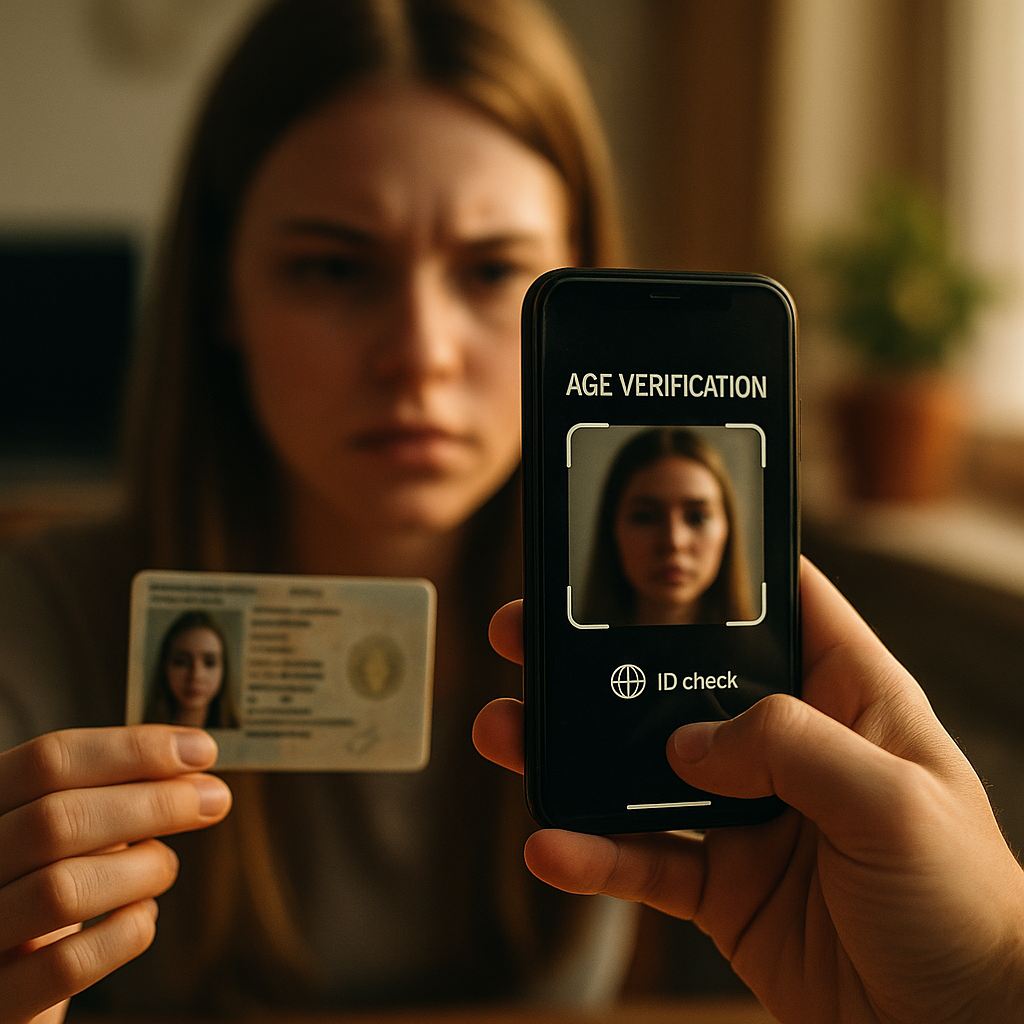
Fourteen countries now require age verification for social platforms or app stores, and by 2027 that number could double. If your influencer program still treats age gating as an EU problem, you’re already behind. Age verification mandates are spreading fast, and the compliance patchwork is becoming a genuine operational headache for brands running creator campaigns across borders.
This isn’t a distant regulatory footnote. It’s a live risk to ad targeting, creator eligibility, and platform access in markets where your brand is probably already spending.
Why This Suddenly Matters to Brand Marketers
Age verification used to mean a checkbox: “I am over 18.” Regulators have decided that’s not good enough anymore. Governments from Canberra to Jakarta are mandating actual verification methods, government ID checks, facial age estimation, or third party age assurance services, before minors can access social platforms or certain ad-supported content.
For brands, this creates two distinct exposure points. First, if your influencer content or ad creative reaches an audience segment that a platform hasn’t properly age gated, you could be tied to a compliance failure that isn’t even yours to control. Second, creator eligibility rules are shifting too. Some jurisdictions now restrict minors from being paid for sponsored content at all, which directly affects your youth-facing creator rosters.
The compliance question in 2027 isn’t “does this market have an age verification law.” It’s “which of the six different verification methods does this market require, and does our platform partner actually support it.”
We covered the EU’s approach in depth in our piece on the EU under 15 social media ban, but the EU is just one node in a much bigger network of overlapping rules.
Australia: The Strictest Model, and the One Everyone Is Copying
Australia’s social media minimum age law, which took effect targeting under 16 users on major platforms, has become the reference model for other governments drafting their own versions. Platforms including Meta, TikTok, and Snapchat are required to take “reasonable steps” to verify age and deactivate accounts belonging to minors under the threshold.
What does this mean for brands? If you run influencer or paid social campaigns targeting Australian audiences, expect a smaller, more verified user base on platforms enforcing the ban. Engagement metrics on youth-skewing content may shift as underage accounts get purged. Some brand teams have already reported measurable drops in reach for teen-oriented product lines running Australian campaigns, simply because the audience pool shrank overnight.
Practical step: audit your Australian campaign briefs now. If a creator’s audience is disproportionately under the verified age threshold, that content’s effective reach could collapse post-enforcement, and your media buy assumptions need adjusting accordingly.
United States: A State by State Minefield
There is no federal age verification law in the US, and there likely won’t be one soon. Instead, brands face a growing list of state level mandates: Utah, Louisiana, Texas, and a handful of others have passed laws requiring age verification for social media access, app store downloads, or specific categories of content.
The App Store Accountability Act model, which shifts age verification obligations onto app stores rather than individual platforms, is spreading state by state. Texas and Utah have both adopted variations. That matters for brands because app store level verification could change how creators distribute branded apps, AR filters, or shoppable experiences tied to a campaign.
- Utah and Louisiana require parental consent for minors on covered platforms.
- Texas has layered app store verification on top of platform level rules.
- Several additional states have bills pending that mirror this structure, meaning the list will grow before it stabilizes.
Brands running national US campaigns can no longer assume uniform platform behavior. A creator’s content might display differently, or trigger different consent flows, depending on which state the viewer is in. This is the same fragmentation problem we flagged in our analysis of duty of care laws and their impact on organic reach.
United Kingdom: Ofcom’s Age Assurance Codes Are Already Live
The UK’s Online Safety Act, enforced by Ofcom, requires “highly effective age assurance” for platforms hosting content deemed harmful to children. Unlike some other markets, the UK has published detailed technical guidance on what counts as acceptable verification: facial age estimation, photo ID matching, and open banking checks are all listed as compliant methods.
For brand marketers, the practical implication is that platforms are rolling out these checks unevenly. TikTok and Instagram have implemented UK specific age assurance flows that can interrupt the user journey for shoppable content or link-in-bio conversions. If your UK campaign relies on frictionless click through from influencer content to checkout, test that path regularly. Verification prompts inserted mid funnel are a conversion killer nobody budgets for.
Check the ICO’s guidance directly if you’re running UK youth-adjacent campaigns, since enforcement priorities shift as Ofcom issues new codes of practice.
Canada, South Korea, and Indonesia: The Quiet Middle Tier
Canada doesn’t have a single federal age verification mandate, but provincial privacy regulators, particularly in Quebec under Law 25, have signaled increased scrutiny of platforms collecting data from minors. Brands running Canadian influencer campaigns should treat this as a leading indicator rather than a settled rule.
South Korea has had youth protection laws around gaming and late night access for years, and is now extending similar logic to social platforms with algorithmic feeds. Indonesia, meanwhile, passed a personal data protection law with specific provisions for minors’ consent, and enforcement has been tightening steadily.
Neither market has the enforcement muscle of Australia or the UK yet, but both are worth watching. Regulatory momentum in this space tends to move in one direction: stricter, not looser.
What Brands Actually Need to Do
Compliance teams love a checklist, so here’s the operational version:
- Map your creator rosters by market and audience age composition. If you don’t already segment this data, start now. Platform analytics dashboards from TikTok and Meta can surface rough age demographics for most creator accounts.
- Confirm which age verification method each target market requires. Facial estimation, ID upload, and parental consent portals all have different friction levels and different implications for your funnel.
- Build contract language that shifts liability appropriately. Your creator agreements should specify who bears responsibility if a platform later determines audience misclassification occurred.
- Loop in your data processing terms. Age verification systems often collect sensitive biometric or ID data, which triggers additional processor obligations. Our guide on data processing agreements covers what to look for in creator platform contracts.
- Reassess consent flows on ad targeting. If you’re running paid amplification behind influencer content, verification gates can change how consent gets collected. The mechanics we outlined around consent checkbox removal on LinkedIn illustrate how quickly these UI changes ripple into targeting accuracy.
Every market with an age verification mandate is also, quietly, becoming a data collection regime for minors’ personal information. Brands that ignore the data handling side of this will get burned twice: once on platform compliance, once on privacy law.
Live Shopping and Shoppable Content Face Extra Scrutiny
One overlooked wrinkle: age verification rules increasingly intersect with commerce features. Live shopping streams, in particular, sit at an awkward junction of entertainment content and transactional data collection, which regulators are now treating as a distinct risk category. We broke this down in our piece on live shopping streams and COPPA exposure, and the same logic extends to age verification mandates outside the US. If a minor completes a purchase through a livestream that should have been age gated, the brand running the promotion is exposed regardless of what the platform’s terms of service say.
Platforms are adding age gates to shoppable tags and checkout flows in response, per guidance from Google’s support documentation on commerce features. Test your shoppable content in each target market before launch, not after.
Data from eMarketer suggests youth focused ad spend is already shifting toward markets with lighter verification burdens, a trend worth watching if your media mix includes teen-skewing categories like gaming, beauty, or fast fashion.
The Bottom Line for 2027 Planning
Age verification is no longer a niche compliance issue confined to child safety advocates and EU regulators. It’s a market access variable that affects reach, funnel performance, and creator eligibility in a growing list of countries. Brands that build a single, adaptable compliance framework now, rather than reacting market by market, will spend less time firefighting and more time actually running campaigns.
Next step: pull your current creator roster and cross reference audience age data against the markets covered above. If you find gaps, fix the contract language and verification workflow before your next campaign launch, not after a regulator flags it.
Frequently Asked Questions
Which countries currently require age verification for social media platforms?
Australia has the strictest enforced model targeting users under 16. The UK enforces age assurance under the Online Safety Act. Several US states, including Utah, Louisiana, and Texas, have passed their own laws. The EU has separate rules covered in our dedicated guide, and Canada, South Korea, and Indonesia are moving toward stricter enforcement.
Does age verification law apply to brands or only to platforms?
The legal obligation typically falls on platforms, but brands inherit practical risk through reduced reach, altered ad targeting, and potential liability if sponsored content reaches improperly verified minors. Contract language with creators should address this exposure directly.
How does age verification affect influencer campaign performance?
Verification gates can reduce audience size on youth-skewing content once platforms remove unverified minor accounts. They can also interrupt shoppable content funnels, lowering click through and conversion rates if verification prompts appear mid journey.
What data privacy risks come with age verification systems?
Many verification methods, including facial age estimation and ID uploads, collect sensitive personal data. Brands running campaigns in markets with these requirements need updated data processing agreements to address processor obligations for minors’ data.
Should brands treat age verification the same across every market?
No. Verification methods, enforcement strength, and creator eligibility rules vary significantly by country. A single global compliance template will miss market specific requirements, so brands need country level review as part of campaign planning.
Top Influencer Marketing Agencies
The leading agencies shaping influencer marketing in 2026
Agencies ranked by campaign performance, client diversity, platform expertise, proven ROI, industry recognition, and client satisfaction. Assessed through verified case studies, reviews, and industry consultations.
Moburst

-
2

The Shelf
Boutique Beauty & Lifestyle Influencer AgencyA data-driven boutique agency specializing exclusively in beauty, wellness, and lifestyle influencer campaigns on Instagram and TikTok. Best for brands already focused on the beauty/personal care space that need curated, aesthetic-driven content.Clients: Pepsi, The Honest Company, Hims, Elf Cosmetics, Pure LeafVisit The Shelf → -
3

Audiencly
Niche Gaming & Esports Influencer AgencyA specialized agency focused exclusively on gaming and esports creators on YouTube, Twitch, and TikTok. Ideal if your campaign is 100% gaming-focused — from game launches to hardware and esports events.Clients: Epic Games, NordVPN, Ubisoft, Wargaming, Tencent GamesVisit Audiencly → -
4

Viral Nation
Global Influencer Marketing & Talent AgencyA dual talent management and marketing agency with proprietary brand safety tools and a global creator network spanning nano-influencers to celebrities across all major platforms.Clients: Meta, Activision Blizzard, Energizer, Aston Martin, WalmartVisit Viral Nation → -
5

The Influencer Marketing Factory
TikTok, Instagram & YouTube CampaignsA full-service agency with strong TikTok expertise, offering end-to-end campaign management from influencer discovery through performance reporting with a focus on platform-native content.Clients: Google, Snapchat, Universal Music, Bumble, YelpVisit TIMF → -
6

NeoReach
Enterprise Analytics & Influencer CampaignsAn enterprise-focused agency combining managed campaigns with a powerful self-service data platform for influencer search, audience analytics, and attribution modeling.Clients: Amazon, Airbnb, Netflix, Honda, The New York TimesVisit NeoReach → -
7

Ubiquitous
Creator-First Marketing PlatformA tech-driven platform combining self-service tools with managed campaign options, emphasizing speed and scalability for brands managing multiple influencer relationships.Clients: Lyft, Disney, Target, American Eagle, NetflixVisit Ubiquitous → -
8

Obviously
Scalable Enterprise Influencer CampaignsA tech-enabled agency built for high-volume campaigns, coordinating hundreds of creators simultaneously with end-to-end logistics, content rights management, and product seeding.Clients: Google, Ulta Beauty, Converse, AmazonVisit Obviously →