


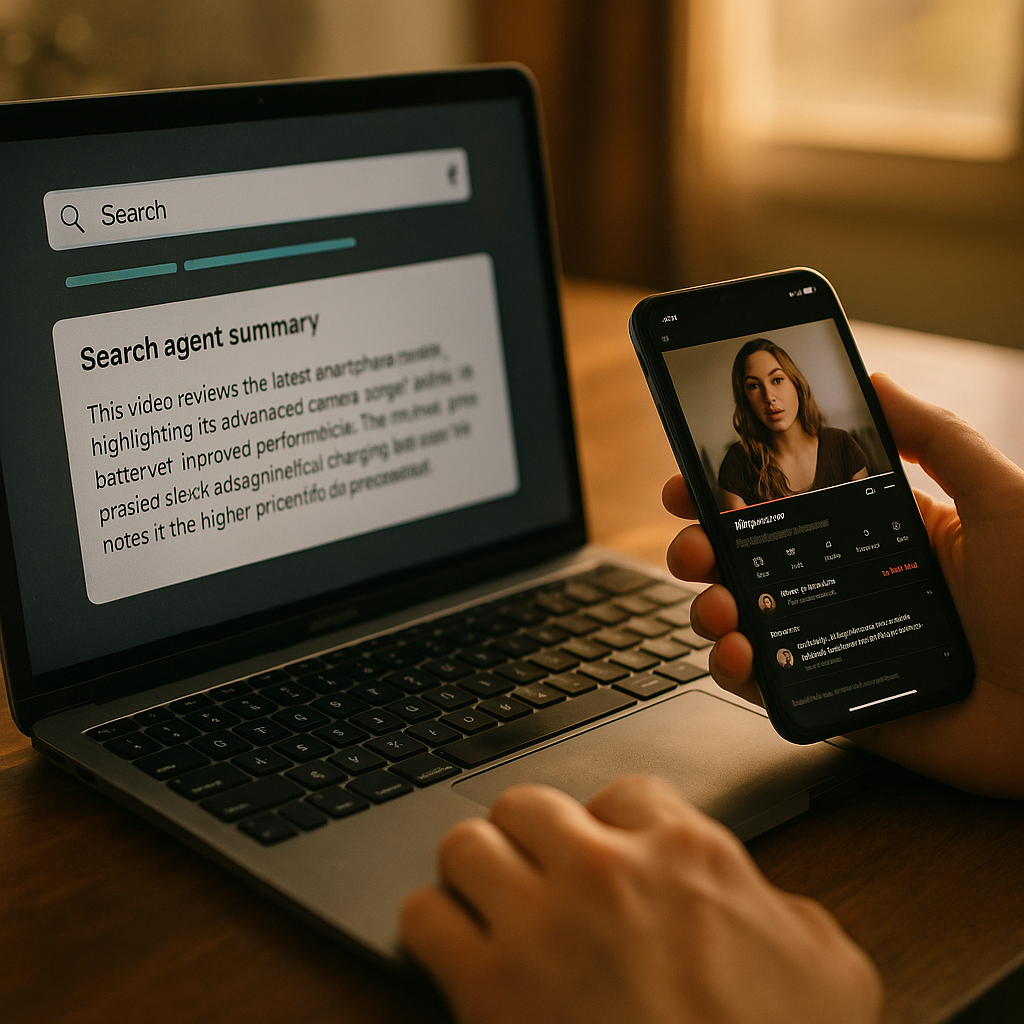
Perplexity, ChatGPT, and Google’s AI Overviews now answer “best skincare routine” questions by citing creator content, sometimes stripping the disclosure hashtag right off the top. If your creator contracts were written before AI search agents started summarizing, remixing, and re-serving sponsored posts, you’re likely sitting on a compliance gap that no one in legal has flagged yet. Auditing creator contracts for FTC compliance is no longer a once-a-year checkbox. It’s an operational necessity.
The FTC has made clear for years that disclosure obligations follow the content, not the platform. But nobody anticipated that an AI agent would pull a paragraph from a sponsored blog post, strip the formatting, and serve it as a “neutral” answer inside a chat interface. That’s the mess brands are cleaning up now.
Why AI Search Agents Broke the Old Disclosure Playbook
Traditional FTC compliance assumed a human reader would see the disclosure in context: a hashtag in an Instagram caption, a “sponsored” banner on a blog post, a verbal disclosure in the first 30 seconds of a YouTube video. AI search agents don’t preserve that context. They extract, summarize, and cite. When an agent like Perplexity answers a product question by referencing a creator’s review, it often pulls the substantive claim (“this serum reduced my redness in two weeks”) while dropping the disclosure that made the claim legally usable in the first place.
This creates a strange new liability. The brand didn’t publish the summary. The AI platform did. But the underlying claim originated from a paid partnership, and the FTC has never cared much about who technically hit “publish.” Regulators look at who benefited from the deceptive impression and who had the ability to prevent it.
A disclosure buried in a caption that AI search tools routinely omit is functionally the same as no disclosure at all, at least from a regulatory risk standpoint.
We’ve already seen this dynamic play out with AI answer engine citations and substantiation gaps. The same mechanics apply to disclosure. If an AI system can quote your creator’s content without the disclosure attached, your contract needs to account for that possibility before it happens, not after a complaint lands.
What a Real Contract Audit Actually Checks
Most brand legal teams have a standard influencer agreement template. Few have updated it to reflect how content now travels. A proper audit isn’t a skim for the word “FTC.” It’s a line-by-line review against a checklist built for how content actually gets consumed today.
- Disclosure placement requirements. Does the contract specify that disclosures must be embedded in the content itself (verbally in video, in the first line of text, in image overlays), not just in captions or metadata that AI crawlers might strip?
- Platform-agnostic language. Older contracts name specific platforms (Instagram, TikTok, YouTube). If the agreement doesn’t anticipate syndication or AI summarization, the creator has no contractual obligation to disclose in a format that survives being scraped and re-served.
- Retention and audit rights. Can the brand demand records showing exactly what was published, when, and in what format? This ties directly into content retention practices that support an FTC audit trail.
- Indemnification scope. Who eats the cost if an AI platform surfaces the content without disclosure and a regulator or class action follows? Most contracts are silent on this, which usually means the brand absorbs the risk by default.
- Substantiation obligations. Does the creator warrant that any product claims are truthful and substantiated, independent of how the content is later repackaged?
- Right to require redisclosure. Can the brand require the creator to update or reformat content if a new distribution channel (like an AI search agent) starts surfacing it without adequate disclosure?
If your current agreements are missing three or more of these, you don’t have a compliance gap. You have a compliance void.
The FTC Doesn’t Care That the AI Did It
Here’s the uncomfortable truth: regulatory guidance from the Federal Trade Commission has consistently held brands responsible for disclosure failures, even when the creator made the mistake. There’s no reason to expect the FTC will treat AI-mediated distribution any differently. The agency has shown it will hold the party with the most control, and the most money, accountable. That’s usually the brand, not the individual creator and definitely not the AI platform.
Think about how this plays out in practice. A creator posts a genuinely well-disclosed TikTok video. Six months later, an AI shopping agent summarizes the video’s content to answer a user’s product query, omitting the disclosure entirely because it wasn’t part of the “substantive” content the model extracted. The user now believes they’re getting an unbiased recommendation. If that user later complains, the brand named in the original partnership is the obvious target for scrutiny, not the AI vendor.
This is structurally similar to the liability questions already surfacing around AI shopping agents and FTC liability and the broader question of who pays when AI shopping agents make claims. The pattern repeats: AI tools intermediate the customer relationship, but the legal obligations trace back to the original commercial relationship, which is the brand-creator contract.
Building an Audit Workflow That Doesn’t Require a Law Degree
Marketing teams shouldn’t need outside counsel every time a new creator signs on. A repeatable audit workflow keeps compliance operational rather than reactive.
Start with a quarterly contract sweep. Pull every active creator agreement and run it against the checklist above. Flag anything signed before your team started thinking seriously about AI search visibility, which for most brands means anything predating the last 18 months.
Next, build a disclosure format standard that travels well. Instead of relying on caption hashtags alone, require disclosures embedded directly in visual and audio content: a verbal “this is a paid partnership” in the first five seconds, a persistent on-screen label, or bolded disclosure text in the first sentence of written content. These formats are far more likely to survive AI summarization because they’re part of the core content, not metadata wrapped around it.
Then, formalize a monitoring cadence. Tools already exist for detecting undisclosed sponsored content across platforms, and the same monitoring logic applies to AI search surfaces. If your brand or creator content is showing up in Perplexity or ChatGPT answers without disclosure intact, you want to know before a regulator or journalist does. This connects directly to the detection work outlined in disclosure detection for unpaid mentions, adapted for AI surfaces instead of native platform feeds.
Contract review and content monitoring have to work together. A perfectly worded disclosure clause is meaningless if nobody checks whether the disclosure actually survives distribution.
Contract Clauses Worth Adding Right Now
Legal teams tend to move slowly, but a few targeted amendments can close most of the exposure without a full contract rewrite.
- AI syndication acknowledgment. Language stating the creator understands content may be indexed, summarized, or cited by AI search tools, and agrees disclosure must remain functionally intact regardless of distribution method.
- Format-specific disclosure mandates. Replace vague “must comply with FTC guidelines” language with explicit format requirements (verbal disclosure timing, on-screen text duration, first-line placement in written posts).
- Audit cooperation clause. Requires the creator to provide access to analytics or platform data if the brand needs to demonstrate disclosure compliance during a regulatory inquiry.
- Update and takedown rights. Gives the brand authority to require content edits if a new distribution surface (an AI agent, a syndication partner) starts surfacing the content without adequate disclosure.
- Indemnification carve-outs. Clarify who bears cost if AI-mediated distribution triggers a claim, rather than leaving it ambiguous.
None of this requires reinventing influencer agreements from scratch. It requires updating the assumptions baked into templates that were written for a simpler distribution environment. Related governance questions around copyright and content rights are already playing out in disputes over AI search scraping and UGC copyright risk, and disclosure compliance deserves the same level of contractual precision.
What About Creators Who Refuse These Terms?
Some creators, particularly established ones with leverage, will push back on expanded audit rights or format mandates. That’s a negotiation, not a dealbreaker. Brands can offer flexibility on placement specifics while holding firm on the non-negotiables: disclosure must be embedded in the core content, and the brand retains the right to verify compliance. Creators who understand the regulatory landscape (and the good ones do) generally accept this as reasonable, because it protects them too. An FTC action doesn’t just hit the brand’s reputation. It follows the creator’s name as well.
For nano and micro creators managing dozens of brand relationships without dedicated legal support, standardized clauses actually reduce friction. Nobody wants to negotiate custom disclosure language for every single deal. A clear, format-specific standard that brands apply consistently across their creator rosters, similar to the standardization patterns discussed in contract standardization for high-volume creator programs, makes compliance easier for everyone involved.
Industry data from firms tracking creator economy growth, including eMarketer and Statista, consistently shows influencer marketing spend climbing year over year, which means the volume of contracts needing this kind of review is only growing. Waiting for a single high-profile enforcement action to force the update is a losing strategy. Get ahead of it.
Frequently Asked Questions
FAQs
Does the FTC hold brands responsible if an AI search tool strips disclosure from creator content?
Yes, in practice the FTC has consistently held brands accountable for disclosure failures regardless of the mechanism that caused the failure. If an AI search agent removes a disclosure when summarizing content, the brand that commissioned the original sponsored post remains a likely target for scrutiny.
How often should brands audit creator contracts for FTC compliance?
A quarterly review is a reasonable baseline for active creator programs, with an additional review triggered any time a major AI platform changes how it indexes or summarizes web and social content.
What disclosure format is least likely to be stripped by AI summarization?
Disclosures embedded directly in the core content, such as a verbal statement in the first few seconds of video or bolded text in the opening line of a written post, tend to survive AI summarization better than disclosures placed only in captions, hashtags, or metadata.
Should creator contracts specifically mention AI search agents?
Yes. Contracts should include language acknowledging that content may be indexed, summarized, or cited by AI search tools, and require that disclosure remain functionally intact regardless of how the content is later distributed or repackaged.
Who is liable if an AI platform, not the brand or creator, publishes an undisclosed summary?
Liability frameworks are still developing, but current regulatory posture suggests brands and creators retain primary responsibility for ensuring disclosures are discoverable, since they controlled the original commercial relationship and content creation.
Next step: Pull your five highest-spend creator contracts this week and run them against the audit checklist above. If none of them mention AI search distribution or format-specific disclosure requirements, that’s your priority fix before the next contract renewal cycle.
Top Influencer Marketing Agencies
The leading agencies shaping influencer marketing in 2026
Agencies ranked by campaign performance, client diversity, platform expertise, proven ROI, industry recognition, and client satisfaction. Assessed through verified case studies, reviews, and industry consultations.
Moburst

-
2

The Shelf
Boutique Beauty & Lifestyle Influencer AgencyA data-driven boutique agency specializing exclusively in beauty, wellness, and lifestyle influencer campaigns on Instagram and TikTok. Best for brands already focused on the beauty/personal care space that need curated, aesthetic-driven content.Clients: Pepsi, The Honest Company, Hims, Elf Cosmetics, Pure LeafVisit The Shelf → -
3

Audiencly
Niche Gaming & Esports Influencer AgencyA specialized agency focused exclusively on gaming and esports creators on YouTube, Twitch, and TikTok. Ideal if your campaign is 100% gaming-focused — from game launches to hardware and esports events.Clients: Epic Games, NordVPN, Ubisoft, Wargaming, Tencent GamesVisit Audiencly → -
4

Viral Nation
Global Influencer Marketing & Talent AgencyA dual talent management and marketing agency with proprietary brand safety tools and a global creator network spanning nano-influencers to celebrities across all major platforms.Clients: Meta, Activision Blizzard, Energizer, Aston Martin, WalmartVisit Viral Nation → -
5

The Influencer Marketing Factory
TikTok, Instagram & YouTube CampaignsA full-service agency with strong TikTok expertise, offering end-to-end campaign management from influencer discovery through performance reporting with a focus on platform-native content.Clients: Google, Snapchat, Universal Music, Bumble, YelpVisit TIMF → -
6

NeoReach
Enterprise Analytics & Influencer CampaignsAn enterprise-focused agency combining managed campaigns with a powerful self-service data platform for influencer search, audience analytics, and attribution modeling.Clients: Amazon, Airbnb, Netflix, Honda, The New York TimesVisit NeoReach → -
7

Ubiquitous
Creator-First Marketing PlatformA tech-driven platform combining self-service tools with managed campaign options, emphasizing speed and scalability for brands managing multiple influencer relationships.Clients: Lyft, Disney, Target, American Eagle, NetflixVisit Ubiquitous → -
8

Obviously
Scalable Enterprise Influencer CampaignsA tech-enabled agency built for high-volume campaigns, coordinating hundreds of creators simultaneously with end-to-end logistics, content rights management, and product seeding.Clients: Google, Ulta Beauty, Converse, AmazonVisit Obviously →