


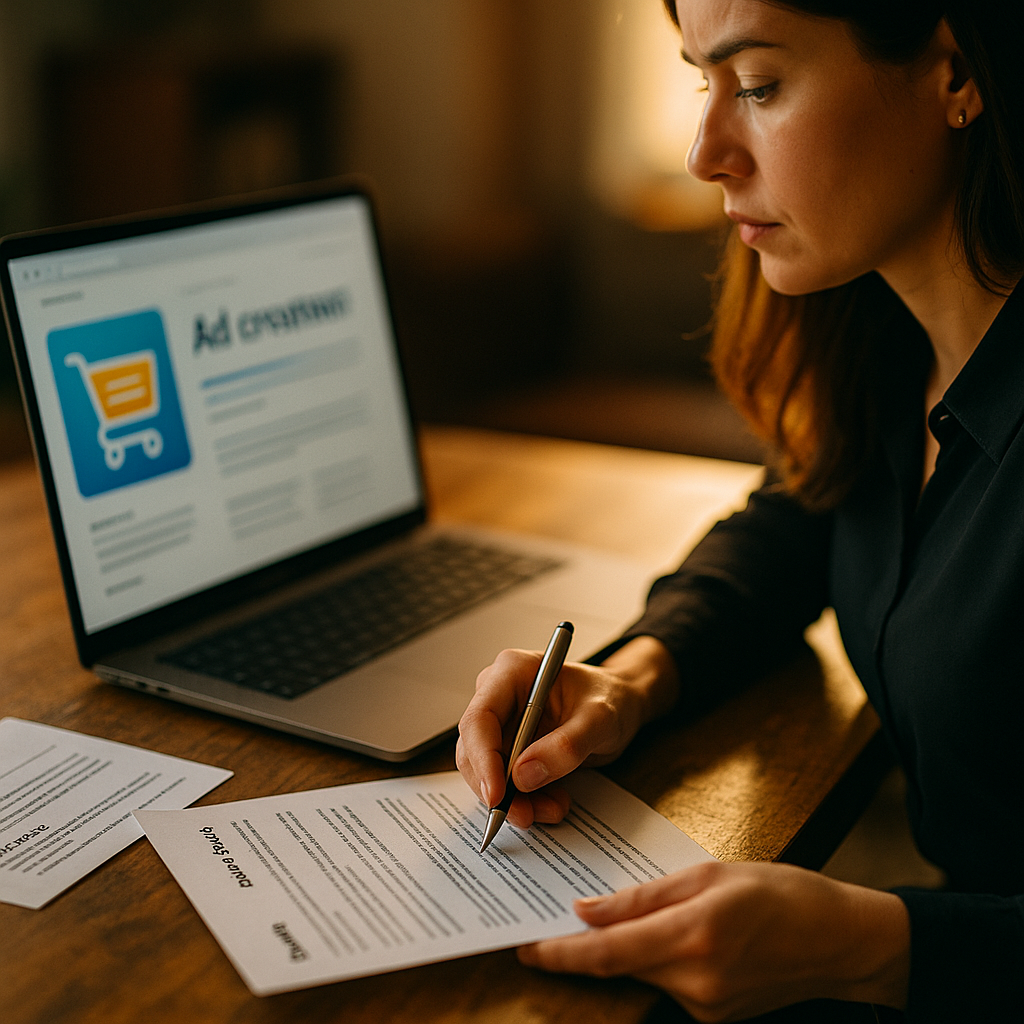
Generative ad copy now drafts more headlines in a single afternoon than most agencies produced in a quarter five years ago. So why do 61% of marketers still say they don’t fully trust AI-written copy without a human pass, according to recent HubSpot survey data? The answer isn’t about the technology failing. It’s about brands not knowing where to draw the line between speed and scrutiny.
That line matters more than ever. Get it wrong in one direction and you drown your team in redundant approvals. Get it wrong in the other and you’re one hallucinated claim away from an FTC inquiry.
The Speed Trap: Why Generative Copy Alone Isn’t Enough
Every CMO wants the productivity math to work. Tools like Jasper, Copy.ai, and HubSpot’s Breeze can generate hundreds of ad variants in minutes, letting teams test headlines, CTAs, and audience angles at a scale that manual copywriting never allowed. The efficiency case is real. Teams report cutting first-draft time by 70% or more.
But volume creates a new problem: review debt. When a human copywriter used to write ten headlines a week, a single editor could realistically vet all ten. Now a generative model spits out two hundred variants before lunch. Nobody is reading all of them closely, and that’s exactly where risk creeps in.
Generative ad copy doesn’t eliminate review work. It just moves the bottleneck from creation to verification, and most brands haven’t rebuilt their workflows to match.
This is the same pattern showing up across the martech stack. Our earlier coverage on AI hallucination risk found that models will confidently invent product specs, pricing, or compliance claims when the prompt lacks guardrails. Ad copy is no exception. A generative tool doesn’t know your product isn’t FDA-cleared. It just knows the sentence sounds persuasive.
Where Machines Genuinely Earn Their Keep
Let’s be fair to the technology. There are places where generative copy outperforms a tired human on a Friday afternoon.
- Volume testing: Generating dozens of headline variants for A/B and multivariate testing across paid social and search.
- Localization drafts: First-pass translation and tone adaptation for regional markets, later refined by native speakers.
- Format resizing: Adapting a single approved message across TikTok, Meta, LinkedIn, and display specs without manual rewrites each time.
- Tone experimentation: Quickly showing stakeholders what “playful” versus “authoritative” versions of the same offer look like.
None of these tasks require the model to make a judgment call about legal exposure, factual accuracy, or brand reputation. They’re mechanical, repeatable, and low stakes if a variant underperforms. That’s the sweet spot.
Where Human Review Is Non-Negotiable
Now the harder part. Some categories of ad copy simply cannot ship without a human sign-off, no matter how good the model’s output looks.
Claims involving health, finance, or legal outcomes top the list. If your ad copy says a supplement “cures inflammation” or a fintech product “guarantees returns,” you’re not just risking a bad customer experience. You’re inviting regulatory action. The FTC’s endorsement and advertising guidelines make clear that brands, not the tool that wrote the copy, bear liability for deceptive claims.
Then there’s cultural and political sensitivity. A model trained on broad internet data has no reliable sense of which phrasing will land as tone-deaf in a specific market or moment. Human reviewers with cultural context catch these issues before they become a PR crisis, not after.
Brand voice consistency is the quieter risk. Generative tools drift. A model that nailed your tone in January can subtly shift by summer if prompts, training data, or model versions change upstream. Left unchecked, this drift shows up as inconsistent messaging across campaigns, which erodes the brand equity you spent years building.
Building the Review Line: A Practical Framework
So how should brands actually draw this line? Not with a blanket policy that says “AI drafts everything, humans review everything,” because that just recreates the bottleneck you were trying to solve. Instead, tier the review process by risk level.
- Low-risk, high-volume copy (headline variants, CTA tests): Spot-check 10-15% for quality, full automation otherwise.
- Medium-risk copy (product descriptions, promotional offers): Mandatory review by a brand marketer before publishing, but no legal sign-off required.
- High-risk copy (health, finance, regulated industries, influencer disclosures): Legal and compliance review on every single piece, no exceptions.
This tiered approach mirrors what we’ve seen work in adjacent areas of AI-assisted marketing. The confidence scoring dashboards now used in creator matching apply the same logic: let automation handle the obvious calls, and route ambiguous or high-stakes decisions to a human. Ad copy review should work the same way.
Some brands are formalizing this with an internal audit function specifically for AI-generated content. That’s not overkill. As we covered in our piece on how an internal AI audit function catches martech risk before it reaches contracts, a dedicated review layer pays for itself the first time it catches a compliance issue that would have triggered a costly recall or takedown.
Disclosure Rules Don’t Disappear Because a Machine Wrote the Copy
Here’s a mistake we’re seeing more often: brands assume that because generative copy is “just marketing language,” standard disclosure and endorsement rules don’t apply. They absolutely do. If AI-drafted copy makes a comparative claim, a testimonial-style statement, or anything resembling an endorsement, it needs the same substantiation and disclosure treatment as copy a human wrote from scratch.
This gets more complicated when generative copy feeds into influencer and creator campaigns, where AI voice cloning and synthetic content are already testing disclosure norms. Our reporting on AI voice cloning and disclosure lag found that regulatory frameworks haven’t caught up with production capabilities, which means brands are left to self-police. That’s a risky position to be in when the FTC has shown willingness to act on undisclosed sponsorships regardless of whether AI was involved in production.
Multi-Agent Workflows Raise the Stakes
The next wave of complexity comes from multi-agent systems, where one AI drafts copy, another optimizes it for platform-specific engagement, and a third schedules and publishes it, all with minimal human touchpoints in between. This is efficient. It’s also opaque.
Our coverage of how multi-agent coordination runs campaigns found that when something goes wrong (a compliance flag, a tone mismatch, a factual error) brands still own the dispute, even if three different AI systems touched the copy before it went live. Vendors won’t take that liability for you. Contracts should specify exactly who is accountable at each stage, and reviewers should have visibility into every agent’s contribution, not just the final output.
Similarly, the comparative analysis of Breeze, Agentforce, and Jasper on outreach risk is worth reading before you standardize on a single platform. Each tool handles review checkpoints differently, and that difference should factor into procurement decisions, not just cost per seat.
What This Means for Your Approval Process
Marketing leaders often ask us the same question after reading our coverage on AI in ad production: does adding human review kill the speed advantage that made generative copy attractive in the first place?
Not if you tier it correctly. The whole point of the risk-based framework above is that low-stakes copy still moves at machine speed. You’re not slowing down every headline variant, you’re inserting friction only where the downside of getting it wrong is expensive: legal exposure, reputational damage, or regulatory penalty.
The brands winning with generative ad copy aren’t the ones automating fastest. They’re the ones who know precisely which 10% of output needs a human set of eyes, and who staff that review function properly.
Data from Sprout Social consistently shows that consumer trust in brands correlates with perceived authenticity and consistency, both of which suffer when generative copy ships unchecked. Meanwhile, eMarketer forecasts continued growth in AI-assisted ad spend, meaning the volume problem only intensifies from here. Building the review infrastructure now, before volume triples again, is the operationally sound move.
Next Step
Audit your current ad copy pipeline this quarter: map every piece of copy by risk tier, then check whether your review process actually matches that tier or whether everything gets the same rubber stamp (or none at all). That single exercise will tell you exactly where your real exposure sits.
Frequently Asked Questions
Does generative ad copy need to be disclosed as AI-generated to consumers?
There’s no blanket legal requirement in most markets simply because copy was AI-assisted, but the underlying claims still must meet the same substantiation and disclosure standards as human-written copy, particularly for endorsements, comparative claims, and regulated industries.
How much of an ad campaign’s copy should go through human review?
Most brands find a tiered model works best: light spot-checks for low-risk variants like headline tests, mandatory marketer review for promotional copy, and full legal and compliance review for anything touching health, finance, or regulated claims.
Can AI tools be held liable for false or misleading ad claims?
No. Regulatory bodies like the FTC hold the advertiser, not the software vendor, responsible for deceptive or unsubstantiated claims, regardless of whether a human or an AI model wrote the copy.
What’s the biggest risk of skipping human review on generative ad copy?
Beyond regulatory exposure, the quieter risk is brand voice drift: generative models can subtly shift tone and messaging over time, and without human oversight that drift accumulates into inconsistent brand presentation across campaigns.
Do multi-agent AI workflows change who is accountable for ad copy errors?
No. Even when multiple AI agents draft, optimize, and publish copy with minimal human involvement, the brand remains accountable for compliance and accuracy, so contracts and review checkpoints need to reflect that regardless of how automated the workflow becomes.
Top Influencer Marketing Agencies
The leading agencies shaping influencer marketing in 2026
Agencies ranked by campaign performance, client diversity, platform expertise, proven ROI, industry recognition, and client satisfaction. Assessed through verified case studies, reviews, and industry consultations.
Moburst

-
2

The Shelf
Boutique Beauty & Lifestyle Influencer AgencyA data-driven boutique agency specializing exclusively in beauty, wellness, and lifestyle influencer campaigns on Instagram and TikTok. Best for brands already focused on the beauty/personal care space that need curated, aesthetic-driven content.Clients: Pepsi, The Honest Company, Hims, Elf Cosmetics, Pure LeafVisit The Shelf → -
3

Audiencly
Niche Gaming & Esports Influencer AgencyA specialized agency focused exclusively on gaming and esports creators on YouTube, Twitch, and TikTok. Ideal if your campaign is 100% gaming-focused — from game launches to hardware and esports events.Clients: Epic Games, NordVPN, Ubisoft, Wargaming, Tencent GamesVisit Audiencly → -
4

Viral Nation
Global Influencer Marketing & Talent AgencyA dual talent management and marketing agency with proprietary brand safety tools and a global creator network spanning nano-influencers to celebrities across all major platforms.Clients: Meta, Activision Blizzard, Energizer, Aston Martin, WalmartVisit Viral Nation → -
5

The Influencer Marketing Factory
TikTok, Instagram & YouTube CampaignsA full-service agency with strong TikTok expertise, offering end-to-end campaign management from influencer discovery through performance reporting with a focus on platform-native content.Clients: Google, Snapchat, Universal Music, Bumble, YelpVisit TIMF → -
6

NeoReach
Enterprise Analytics & Influencer CampaignsAn enterprise-focused agency combining managed campaigns with a powerful self-service data platform for influencer search, audience analytics, and attribution modeling.Clients: Amazon, Airbnb, Netflix, Honda, The New York TimesVisit NeoReach → -
7

Ubiquitous
Creator-First Marketing PlatformA tech-driven platform combining self-service tools with managed campaign options, emphasizing speed and scalability for brands managing multiple influencer relationships.Clients: Lyft, Disney, Target, American Eagle, NetflixVisit Ubiquitous → -
8

Obviously
Scalable Enterprise Influencer CampaignsA tech-enabled agency built for high-volume campaigns, coordinating hundreds of creators simultaneously with end-to-end logistics, content rights management, and product seeding.Clients: Google, Ulta Beauty, Converse, AmazonVisit Obviously →