


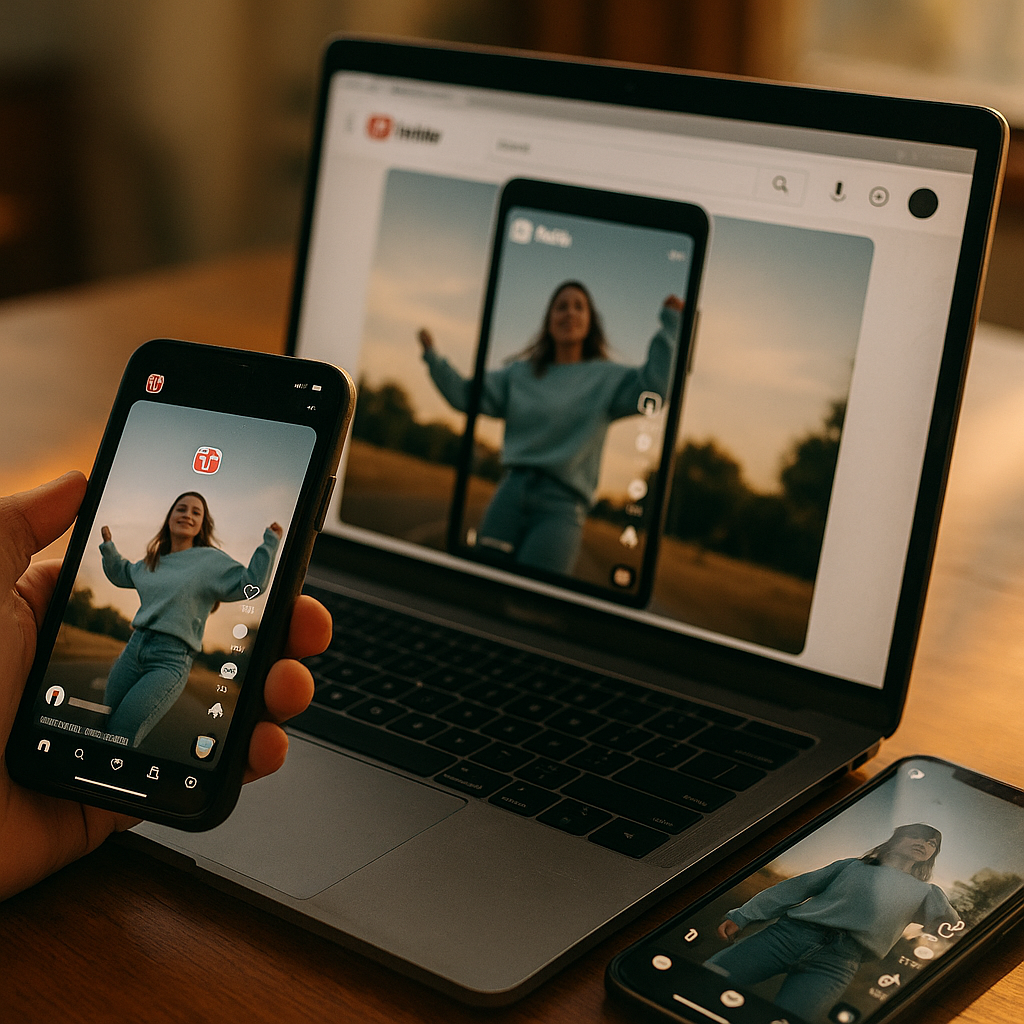
Meta engineers confirmed it quietly, then loudly: Reels distribution now factors in whether your content resonates when it’s ripped, reposted, and reshared off Instagram entirely. If your Reel dies the moment it leaves the app, the algorithm notices. Instagram Reels cross platform relevance has become one of the most consequential, least understood ranking signals brands are optimizing for right now.
Most brand teams still plan Reels like it’s a closed ecosystem. That mindset is costing reach.
What Cross Platform Relevance Actually Means
Instagram’s recommendation system doesn’t just track likes, saves, and watch time anymore. It’s watching what happens to your content after it leaves the app: does it get pulled into TikTok compilations, embedded in YouTube reaction videos, screenshotted into Pinterest boards, or quoted in a Threads reply chain? Content that performs well across contexts signals cultural durability. Instagram treats that durability as a proxy for quality, and quality gets rewarded with reach.
This isn’t Meta admitting defeat to TikTok. It’s Meta acknowledging that audiences live in overlapping ecosystems, and a video’s staying power outside the app is now diagnostic of its value inside it. Think of it as an SEO backlink model applied to short video: external signals validate internal ranking.
A Reel that gets reposted, remixed, or referenced on three other platforms sends Instagram a stronger quality signal than one that only racks up likes inside the app.
The New Signals Brands Must Hit
Forget the old checklist of trending audio and a strong hook. Those still matter, but they’re table stakes. The signals that actually move the needle now sit at the intersection of format design and distribution behavior.
- Re-shareability without context loss. Does the Reel make sense with no caption, no sound, no prior knowledge of your brand? If a viewer on TikTok or X can understand it cold, it’s built for cross platform survival.
- Screenshot and quote potential. Text overlays, bold captions, and quotable moments get lifted into other formats: carousels, tweets, Pinterest pins. That lift is trackable, and Instagram’s systems increasingly weigh it.
- Native-feeling watermark tolerance. Reels that look native on TikTok or Shorts, not obviously repurposed, get reshared more. Overly Instagram-branded content dies on export.
- Completion rate parity across platforms. If your Reel performs on Instagram but tanks the second it’s cross-posted, that’s a format problem, not a platform problem. Instagram’s ranking model appears to penalize content that only works in one ecosystem.
- Creator-led remix chains. Content that spawns duets, stitches, or response videos across platforms signals cultural traction that no single-platform metric can replicate.
Brands optimizing purely for Instagram-native metrics, saves, shares within the app, comment velocity, are optimizing for half the picture. The other half lives in whether the content has legs elsewhere. For a deeper look at how save and share behavior still anchors Explore placement, see our Explore ranking breakdown.
Why This Shift Happened Now
Three forces converged. First, TikTok’s format dominance forced Meta to accept that short video culture is platform-agnostic; a trend born on TikTok shows up on Reels within days, and vice versa. Second, Meta’s own data (per statements referenced in industry coverage tracked by eMarketer) showed that content with high external engagement correlated with longer session retention when it did appear in-app. Third, creators had already adapted. Top-performing creators were building “platform-agnostic” content long before the algorithm caught up, and Instagram’s ranking model simply started rewarding what was already working.
There’s also a defensive angle. Meta doesn’t want Instagram to become a graveyard for content that only thrives once it’s stolen and reposted elsewhere. Rewarding cross platform relevance keeps high-performing content circulating natively, rather than leaking value to competitors.
What This Means for Brand Content Calendars
Stop briefing Reels in isolation. If your creative team is building assets exclusively for Instagram specs and Instagram trends, you’re building content that the algorithm now considers weaker by design. The brief needs to ask: would this work if it showed up on TikTok tomorrow with zero edits? Would a viewer on Threads understand it without the original caption?
This changes creator briefs too. Instead of “make a Reel that fits our brand aesthetic,” the instruction should be “make a video built for a creator’s cross platform audience, adapted lightly for Instagram distribution.” That’s a meaningfully different creative constraint, and it requires briefing creators earlier in the process, not after the format is locked. Our creator brief overhaul guide covers how to restructure briefs around save and share behavior, which pairs directly with this shift.
Operational Playbook: Building for Cross Platform Ranking
Here’s where brand teams typically get stuck: they understand the signal but don’t know how to build for it operationally. A few practical moves that hold up in production.
- Design the hook for silence and no context. Test every Reel with sound off, first frame paused, and no caption visible. If it doesn’t communicate value in that state, it won’t survive being screenshotted or reposted elsewhere.
- Track re-share paths, not just re-share counts. Use social listening tools (platforms like Sprout Social now surface cross platform mention tracking) to see where your Reels actually end up. That data should feed back into your creative brief, not sit in a quarterly report nobody reads.
- Build modular assets. Shoot Reels with the intent to reformat: vertical crop safe zones, no baked-in Instagram UI elements, text overlays that work without Instagram’s font styling. This makes cross-posting frictionless for the creator and for anyone who reposts organically.
- Coordinate with paid distribution. A Reel that’s already proving cross platform traction organically is a stronger candidate for Advantage+ style boosted spend. Don’t waste budget amplifying content that hasn’t shown it can travel.
- Audit disclosure consistency across platforms. If a Reel gets reposted on TikTok or YouTube by a creator, the disclosure obligations don’t disappear. Brands need consistent labeling regardless of where content lands, a compliance gap covered in detail in our disclosure compliance playbook.
None of this requires abandoning Instagram-specific optimization. It requires layering a second lens on top: does this content have a life outside the app? If the answer is no, the reach ceiling inside the app is now lower than it used to be.
The Risk Side Brands Underestimate
Cross platform relevance cuts both ways. Content that travels well can also travel into contexts you don’t control: parody accounts, competitor pages, or regions with different regulatory expectations around endorsement disclosure. Brand safety teams need to think about downstream reposting the same way they think about influencer vetting.
There’s also an attribution headache. If a Reel’s real performance signal comes from cross platform activity, but your reporting stack only measures in-app metrics, you’re flying partially blind. This is where cross platform payout and attribution tooling matters. Agencies managing multi-platform creator programs are already dealing with this reconciliation problem, as outlined in our cross platform payout reconciliation guide.
How Do You Know If It’s Working?
Watch for three indicators over a 60 to 90 day window: reach velocity in the first 24 hours (cross platform relevance appears to accelerate early distribution more than late-stage virality), completion rate stability across reposted versions when you can track them, and a rising ratio of non-follower reach to follower reach. That last metric, visible in Instagram’s native insights, is often the clearest tell that the algorithm is treating your content as broadly relevant rather than niche-relevant.
Brands running influencer programs at scale should also watch creator-level patterns. Creators whose content regularly gets remixed or reposted across platforms are, functionally, already optimizing for this signal. Prioritizing partnerships with them isn’t just a content quality play, it’s a ranking strategy. For guidance on identifying and negotiating with those creators before rates catch up to demand, see our creator rate negotiation guide.
One more thing worth naming plainly: this shift rewards genuinely good, portable creative over platform-gaming tactics. Trending audio and hashtag stuffing won’t compensate for a video that only makes sense inside Instagram’s UI. That’s arguably a healthier incentive structure, even if it means more production discipline upfront.
Frequently Asked Questions
FAQs
What is Instagram Reels cross platform relevance?
It’s a ranking signal Instagram uses to assess whether a Reel performs well beyond the app, including reposts, remixes, and screenshots on platforms like TikTok, YouTube, and Pinterest. Content that travels well is treated as higher quality and gets more in-app distribution.
How can brands measure cross platform performance for Reels?
Use social listening tools to track reposts and mentions across platforms, monitor non-follower reach ratios in Instagram Insights, and compare completion rates on original versus reposted versions of the same content where trackable.
Does cross platform relevance replace traditional Instagram ranking signals like saves and shares?
No. Saves, shares, and watch time still matter heavily for Explore and feed placement. Cross platform relevance is an additional layer that rewards content proven to resonate outside Instagram’s own ecosystem.
Do disclosure rules apply if a creator reposts a branded Reel on another platform?
Yes. Endorsement disclosure obligations follow the content regardless of platform. Brands need consistent labeling guidance for creators across every platform where sponsored content might be reposted or reshared.
What kind of content performs best under this new signal?
Content that communicates its value without sound, caption, or brand context: strong visual hooks, quotable text overlays, and formats that don’t rely on Instagram-specific UI or styling to make sense.
The brands winning Reels reach right now aren’t chasing trends harder, they’re briefing for portability first and Instagram polish second. Start by stress-testing your next three Reels with sound off and no caption: if they don’t hold up, rebuild the brief before you rebuild the edit.
Top Influencer Marketing Agencies
The leading agencies shaping influencer marketing in 2026
Agencies ranked by campaign performance, client diversity, platform expertise, proven ROI, industry recognition, and client satisfaction. Assessed through verified case studies, reviews, and industry consultations.
Moburst

-
2

The Shelf
Boutique Beauty & Lifestyle Influencer AgencyA data-driven boutique agency specializing exclusively in beauty, wellness, and lifestyle influencer campaigns on Instagram and TikTok. Best for brands already focused on the beauty/personal care space that need curated, aesthetic-driven content.Clients: Pepsi, The Honest Company, Hims, Elf Cosmetics, Pure LeafVisit The Shelf → -
3

Audiencly
Niche Gaming & Esports Influencer AgencyA specialized agency focused exclusively on gaming and esports creators on YouTube, Twitch, and TikTok. Ideal if your campaign is 100% gaming-focused — from game launches to hardware and esports events.Clients: Epic Games, NordVPN, Ubisoft, Wargaming, Tencent GamesVisit Audiencly → -
4

Viral Nation
Global Influencer Marketing & Talent AgencyA dual talent management and marketing agency with proprietary brand safety tools and a global creator network spanning nano-influencers to celebrities across all major platforms.Clients: Meta, Activision Blizzard, Energizer, Aston Martin, WalmartVisit Viral Nation → -
5

The Influencer Marketing Factory
TikTok, Instagram & YouTube CampaignsA full-service agency with strong TikTok expertise, offering end-to-end campaign management from influencer discovery through performance reporting with a focus on platform-native content.Clients: Google, Snapchat, Universal Music, Bumble, YelpVisit TIMF → -
6

NeoReach
Enterprise Analytics & Influencer CampaignsAn enterprise-focused agency combining managed campaigns with a powerful self-service data platform for influencer search, audience analytics, and attribution modeling.Clients: Amazon, Airbnb, Netflix, Honda, The New York TimesVisit NeoReach → -
7

Ubiquitous
Creator-First Marketing PlatformA tech-driven platform combining self-service tools with managed campaign options, emphasizing speed and scalability for brands managing multiple influencer relationships.Clients: Lyft, Disney, Target, American Eagle, NetflixVisit Ubiquitous → -
8

Obviously
Scalable Enterprise Influencer CampaignsA tech-enabled agency built for high-volume campaigns, coordinating hundreds of creators simultaneously with end-to-end logistics, content rights management, and product seeding.Clients: Google, Ulta Beauty, Converse, AmazonVisit Obviously →