


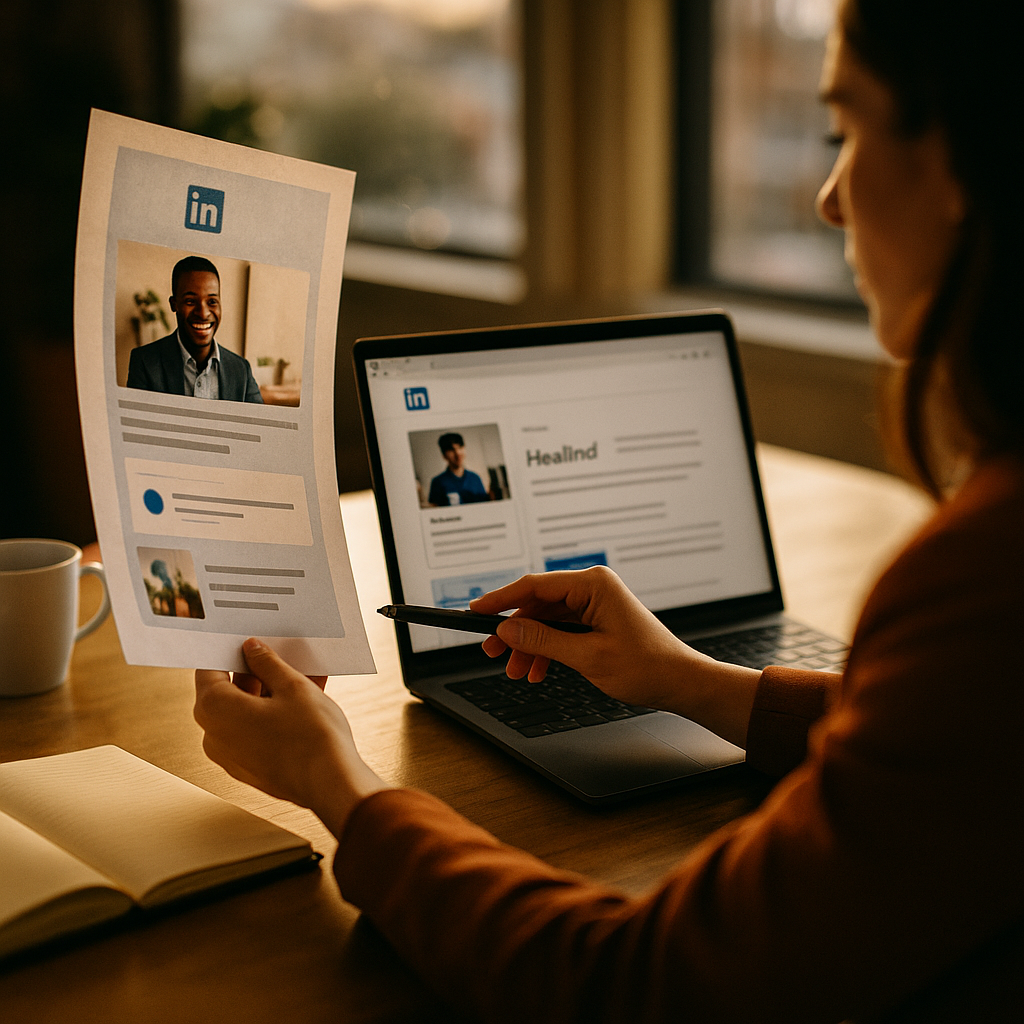
LinkedIn now drives more B2B purchase research than any other platform, yet most brands still treat it like a digital resume board. That’s changing fast. LinkedIn’s sponsored product storytelling format is pulling social commerce tactics, native product spotlights, carousel demos, embedded testimonials, straight into the professional feed. The question isn’t whether this works. It’s whether your team can adapt fast enough before competitors own the format.
What Is Sponsored Product Storytelling, Really?
Strip away the jargon and it’s simple: LinkedIn is letting advertisers build narrative sequences around a product, not just drop a static ad and hope for a click. Think multi-slide carousels that walk a buyer from pain point to feature to proof point, document ads that double as mini case studies, and spotlight units that surface customer quotes alongside pricing or demo CTAs.
It borrows heavily from what TikTok and Instagram perfected for consumer shopping. The difference is context. A skincare unboxing works because the feed is entertainment-first. A LinkedIn feed is trust-first. Buyers scroll expecting insight, not a pitch dressed up as a story.
The brands winning on this format aren’t the ones with the flashiest creative. They’re the ones who understand that on LinkedIn, credibility is the conversion currency, not urgency.
Why B2B Feeds Are Finally Ready for Commerce Content
For years, LinkedIn resisted anything that smelled like consumer-style selling. That’s shifted as procurement behavior changed. According to eMarketer, B2B buyers now complete a majority of their evaluation process before ever talking to a sales rep, and a growing share of that research happens on social platforms rather than vendor websites.
LinkedIn’s own advertising data (via LinkedIn Business) shows engagement rates on carousel and document formats consistently outperforming single-image ads, especially among mid-market and enterprise decision makers who spend more time per session than the average consumer scroller. That’s the opening product marketers have been waiting for.
It also mirrors a pattern we’ve tracked closely with LinkedIn’s shopping widgets, where carousel commerce units started testing lightweight checkout flows for B2B software and services. Sponsored product storytelling is the narrative layer sitting on top of that commerce infrastructure.
Carousel, Document, and Spotlight: The Mechanics That Matter
Three formats dominate the current rollout, and each demands a different production approach.
- Carousel storytelling ads: Five to seven slides, each advancing a single argument. The best-performing sequences open with a customer problem, not a logo.
- Document ads with embedded proof: PDF-style native uploads that function like a condensed case study. These see longer dwell time than video on LinkedIn, per internal platform benchmarks shared by LinkedIn’s marketing solutions team.
- Product spotlight units: A newer unit pairing a product image or short clip with a rotating testimonial strip. It’s the closest LinkedIn has come to a shoppable product card.
None of these replace thought leadership content. They sit alongside it, targeted at buyers already further down the funnel. Mixing formats by funnel stage matters more here than on consumer platforms, where a single viral hook can carry the whole campaign.
Does Storytelling Kill Credibility on LinkedIn?
This is the real risk, and smart marketers should sit with it before launching anything. LinkedIn’s audience is allergic to overt salesmanship in a way TikTok’s isn’t. A product story that feels like an Instagram ad wearing a blazer will get scrolled past, or worse, called out in the comments.
The fix isn’t subtlety for its own sake. It’s sourcing the story from something real: a customer outcome, a data point, an engineer explaining a technical tradeoff. LinkedIn’s audience rewards specificity. “We cut onboarding time by 40 percent” beats “revolutionary new platform” every time.
Disclosure discipline matters too. Sponsored content that blurs the line between editorial and paid invites scrutiny, and not just from the platform. The FTC has been explicit that clear disclosure applies regardless of industry or platform format. Teams already navigating this on the consumer side, as covered in our disclosure compliance breakdown, will recognize the same principles apply here, just with a stricter audience filter.
Building a Compliant, ROI-First Playbook
Here’s where the operational work happens. Sponsored product storytelling only pays off if it’s built with the same rigor brands apply to demand gen, not treated as a creative side project.
- Anchor every sequence to a single buyer objection. Don’t try to cover pricing, integration, and support in one carousel. Split them into separate sequences targeted by firmographic segment.
- Source proof points from sales, not marketing. Reps hear the real objections daily. Their language converts better than polished brand copy.
- Test document ads against video early. LinkedIn’s feed still rewards read-heavy content differently than Instagram or TikTok, where video dominance is near total, a contrast we’ve mapped out in our look at TikTok Shop video ads and creator-driven CAC.
- Watch link suppression carefully. LinkedIn’s algorithm has historically throttled posts with outbound links, a pattern we detail in our link suppression guide. Native document and carousel formats sidestep this by keeping the story on-platform until the final CTA.
- Budget for iteration, not one-shot campaigns. The format is new enough that benchmarks are still forming. Treat the first quarter as calibration, not scale.
Agencies running influencer-adjacent B2B programs should also look at how creator commerce operations teams handle cross-platform attribution. The reconciliation challenges aren’t identical, but the underlying logic, tying spend to pipeline rather than vanity engagement, translates directly. Our breakdown of creator commerce attribution is a useful reference point for structuring that tracking layer.
Measuring What Actually Matters
Engagement rate is a vanity metric on LinkedIn unless you tie it to something downstream. The platforms and agencies that get this right are measuring three things: cost per qualified lead by format, dwell time on document ads as a proxy for message resonance, and pipeline velocity for accounts exposed to storytelling sequences versus static ads.
HubSpot‘s benchmarking data on B2B content consumption patterns backs this up: buyers who engage with narrative-format content before a demo request tend to move through the sales cycle faster than those who convert off a single static touchpoint. That’s the ROI case CFOs actually care about, not impressions.
If your reporting still leads with click-through rate, you’re measuring the wrong century’s metric for a format built to earn trust over multiple touches.
Sprout Social’s platform benchmarking, referenced widely across Sprout Social‘s own research, has flagged similar patterns on other feeds where narrative sequencing outperforms single-frame ads for consideration-stage buyers. LinkedIn is simply the latest, and arguably highest-stakes, arena to adopt the approach given the size of deals typically influenced.
Statista’s advertising spend tracking (see Statista) shows B2B social ad budgets climbing steadily, and LinkedIn continues capturing a disproportionate share of that growth relative to its total user base. That’s not an accident. It’s buyers voting with their scroll time.
One more thing worth flagging: sequencing matters more than volume. Running five different product stories to the same account in a week reads as noise, not narrative. Space sequences by at least ten to fourteen days per segment, and rotate proof points so the same testimonial doesn’t fatigue a high-intent account before it’s sales-ready.
Where This Leaves Brand Teams Right Now
LinkedIn’s sponsored product storytelling isn’t a gimmick borrowed from consumer social. It’s a structural shift in how B2B buyers expect to be sold to, informed first, pitched second. Brands that build format-specific playbooks now, rather than repurposing consumer creative wholesale, will own the credibility gap before it closes.
Next step: audit your last three LinkedIn campaigns for message-to-format fit. If your strongest proof points are buried in static ads instead of carousel or document sequences, that’s your first fix, and it costs nothing but production time.
FAQs
What makes LinkedIn’s sponsored product storytelling different from Instagram or TikTok product ads?
LinkedIn’s audience expects proof and context before a pitch, so formats lean on document ads, testimonial carousels, and data-driven sequencing rather than fast, entertainment-first hooks common on consumer platforms.
Which format performs best for B2B lead generation on LinkedIn right now?
Document ads and multi-slide carousels currently outperform single-image or video units for consideration-stage buyers, largely due to longer dwell time and higher perceived credibility.
Do sponsored product storytelling ads need FTC-style disclosure on LinkedIn?
Yes. Any paid or sponsored content must be clearly labeled regardless of platform or audience type, following FTC guidance on disclosure clarity.
How long should a brand test before scaling a LinkedIn storytelling campaign?
Most teams need a full quarter of iteration to establish reliable benchmarks, since format-specific performance data is still maturing across industries.
Can small B2B brands compete with enterprise budgets using this format?
Yes, because the format rewards specificity and proof over production value. A well-sourced customer quote often outperforms a high-budget video from a brand with generic messaging.
Top Influencer Marketing Agencies
The leading agencies shaping influencer marketing in 2026
Agencies ranked by campaign performance, client diversity, platform expertise, proven ROI, industry recognition, and client satisfaction. Assessed through verified case studies, reviews, and industry consultations.
Moburst

-
2

The Shelf
Boutique Beauty & Lifestyle Influencer AgencyA data-driven boutique agency specializing exclusively in beauty, wellness, and lifestyle influencer campaigns on Instagram and TikTok. Best for brands already focused on the beauty/personal care space that need curated, aesthetic-driven content.Clients: Pepsi, The Honest Company, Hims, Elf Cosmetics, Pure LeafVisit The Shelf → -
3

Audiencly
Niche Gaming & Esports Influencer AgencyA specialized agency focused exclusively on gaming and esports creators on YouTube, Twitch, and TikTok. Ideal if your campaign is 100% gaming-focused — from game launches to hardware and esports events.Clients: Epic Games, NordVPN, Ubisoft, Wargaming, Tencent GamesVisit Audiencly → -
4

Viral Nation
Global Influencer Marketing & Talent AgencyA dual talent management and marketing agency with proprietary brand safety tools and a global creator network spanning nano-influencers to celebrities across all major platforms.Clients: Meta, Activision Blizzard, Energizer, Aston Martin, WalmartVisit Viral Nation → -
5

The Influencer Marketing Factory
TikTok, Instagram & YouTube CampaignsA full-service agency with strong TikTok expertise, offering end-to-end campaign management from influencer discovery through performance reporting with a focus on platform-native content.Clients: Google, Snapchat, Universal Music, Bumble, YelpVisit TIMF → -
6

NeoReach
Enterprise Analytics & Influencer CampaignsAn enterprise-focused agency combining managed campaigns with a powerful self-service data platform for influencer search, audience analytics, and attribution modeling.Clients: Amazon, Airbnb, Netflix, Honda, The New York TimesVisit NeoReach → -
7

Ubiquitous
Creator-First Marketing PlatformA tech-driven platform combining self-service tools with managed campaign options, emphasizing speed and scalability for brands managing multiple influencer relationships.Clients: Lyft, Disney, Target, American Eagle, NetflixVisit Ubiquitous → -
8

Obviously
Scalable Enterprise Influencer CampaignsA tech-enabled agency built for high-volume campaigns, coordinating hundreds of creators simultaneously with end-to-end logistics, content rights management, and product seeding.Clients: Google, Ulta Beauty, Converse, AmazonVisit Obviously →