


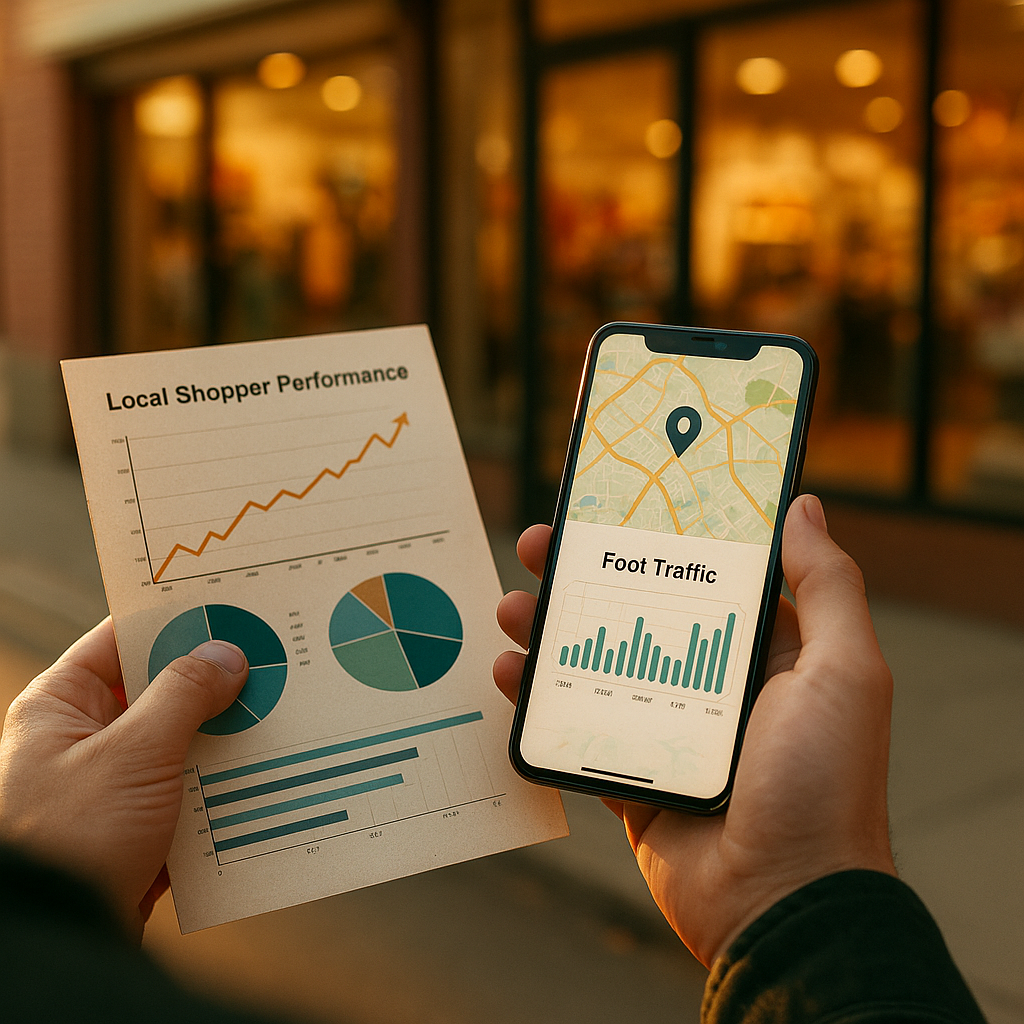
Retailers running Performance Max without local inventory feeds are essentially bidding blind. Google’s Local Shopper setting now lets brands pair real-time store stock with creator-style video assets, and early adopters are seeing double-digit lifts in “near me” conversions. If your local campaigns still rely on generic product shots and static store locators, you’re competing against brands who figured this out months ago.
The Local Shopper Performance Max setting is Google’s attempt to close the gap between online discovery and offline purchase. It merges local inventory ads, Google Business Profile data, and creator-generated video into a single automated bidding structure. For retail marketers, that’s a meaningful shift in how local campaigns get built, staffed, and measured.
What Local Shopper Actually Changes
Performance Max has always been a black box. You feed it assets, audience signals, and conversion goals, and the algorithm decides where to serve them, Search, Display, YouTube, Discover, Maps. Local Shopper narrows that scope deliberately. It prioritizes campaigns toward users showing high local purchase intent, then pulls from a merged inventory feed to show what’s actually on the shelf at the nearest store.
The practical upshot: a shopper searching “wireless earbuds near me” can see a short-form video review, current stock count at their local outlet, and a directions link, all within one ad unit. That’s a fundamentally different experience than a static shopping ad from two years ago.
Retailers testing Local Shopper report that creator-style video assets outperform studio product shots by wide margins on click-through rate, largely because they read as native content rather than an ad unit competing for attention in a Maps or Discover feed.
Why Creator Content Is Now a Requirement, Not a Nice-to-Have
Google’s asset guidance for Local Shopper campaigns explicitly favors vertical video under 30 seconds shot in a handheld, unpolished style. That’s creator content, full stop. The machine learning models powering Performance Max have been trained on engagement data that consistently favors this format over traditional commercial production.
This isn’t a subtle nudge. Brands submitting only static images or agency-produced video see meaningfully reduced impression share in local placements. Google won’t say so outright in its documentation, but the pattern is consistent across account managers we’ve spoken with in retail media circles.
So what does this mean operationally? Your influencer program and your paid search team can no longer operate in separate silos. The video a nano-creator shoots for an Instagram Reel or TikTok Shop post might now double as a paid search asset feeding your local Performance Max campaign. That’s a structural change in how creative gets briefed, licensed, and reused.
The Licensing Problem Nobody’s Talking About
Here’s where legal teams start sweating. Most creator contracts license content for specific platforms and durations, typically Instagram or TikTok for 30, 60, or 90 days. Feeding that same asset into Google’s ad network requires broader usage rights, often perpetual and cross-platform.
Retailers scaling Local Shopper campaigns need to renegotiate creator agreements from the outset. Build in Google Ads usage rights, whitelisting permissions, and paid amplification clauses before content gets shot, not after a campaign is already live and someone in legal flags the gap. This mirrors the same governance issues brands have faced with disclosure compliance across paid partnerships, where retroactive fixes are far more expensive than upfront clarity.
Building the Feed: Inventory, Video, and Store Data Working Together
Local Shopper campaigns require three synced data sources: your product feed, your Google Business Profile locations, and your creative asset library. If any one of these lags, the campaign underperforms or, worse, shows inaccurate stock to a shopper who then drives to an empty shelf.
- Product feed accuracy: Inventory needs to sync at least hourly for high-velocity categories like grocery, electronics, and beauty. Daily syncs work for slower-moving categories like furniture or appliances.
- Business Profile hygiene: Store hours, service areas, and category tags need regular audits. Google penalizes local ad delivery for profiles with stale or conflicting data.
- Creative rotation: Static asset sets fatigue fast in local placements. Plan for a steady cadence of new creator content, at minimum monthly refreshes for high-spend categories.
Retailers already running vendor-managed creator programs, similar to the governance model outlined in the Sephora and Ulta TikTok Shop vendor governance playbook, have a structural advantage here. They already have systems for briefing, approving, and rotating creator content at scale. Retailers without that infrastructure are now scrambling to build it just to keep pace on local paid search.
Measurement Gets Messier Before It Gets Better
Attribution has always been the soft underbelly of local retail marketing. Now add creator content into the mix, and the measurement problem compounds. Did that store visit happen because of the Performance Max local ad, the organic TikTok post that inspired it, or the in-store signage referencing the same creator campaign?
Google’s store visit conversion tracking, powered by aggregated and anonymized location data, gives directional signal but not precise attribution. Marketers need to treat Local Shopper performance data as one input among several, not a standalone truth source.
According to eMarketer, retail media spend continues to outpace overall digital ad growth, and local search formats are capturing a growing share of that budget precisely because they claim to bridge online and offline behavior. Claims are one thing. Clean measurement is another. Build your own parallel tracking, geofenced surveys, promo code redemption, unique landing pages, rather than relying solely on Google’s self-reported store visit metrics.
Treat Google’s store visit data as a directional signal, not a source of truth. Layer in your own tracking mechanisms before you scale spend based on platform-reported numbers alone.
Budget Allocation: How Much Should Go to Local Shopper?
There’s no universal formula, but a reasonable starting point for retailers with physical locations is 15 to 25 percent of total Performance Max spend allocated to local-specific campaigns, with adjustments based on category and store density. Grocery, home improvement, and beauty retailers with dense store footprints tend to see stronger returns from local-heavy allocation than categories with sparse physical presence.
Test in phases. Start with your top 20 percent of stores by foot traffic, validate the creative and feed setup, then expand. Rolling out to your entire store network on day one, before you’ve confirmed inventory feed accuracy and creative performance, is how budgets get burned fast with little to show for it.
Consider how this pairs with existing influencer spend already earmarked for local activations. If you’re running creator-to-paid conversion campaigns on TikTok Shop, the same creative assets, with proper licensing, can extend into Local Shopper without duplicating production costs.
Where This Fits Against Other Local Strategies
Local Shopper doesn’t replace organic local SEO, Google Business Profile optimization, or in-store activation. It sits alongside them as a paid amplification layer that happens to reward creator-native creative more than traditional ad formats. Brands treating it as a silver bullet will be disappointed. Brands treating it as one lever in a broader local marketing stack will see compounding returns.
Retail marketers should also watch how this format interacts with save and share behavior on other platforms. The mechanics resemble what we’ve documented in Instagram’s save and share signal shifts, where content that performs well organically increasingly gets rewarded across paid placements too. Google seems to be borrowing from that same playbook: reward native-feeling content, penalize obvious ad creative.
Compliance and Brand Safety Considerations
Because Local Shopper pulls creator content directly into paid search and Discover placements, disclosure requirements from the FTC still apply. A creator video that carried a disclosure on TikTok needs that same disclosure intact when reused as a Google ad asset. Stripping captions or overlays during repurposing is a compliance risk, not a creative shortcut.
Retailers should build a review checklist before any creator asset moves from organic social into paid local search rotation. Confirm disclosure language is visible, confirm usage rights cover the new placement, and confirm the creator’s original agreement doesn’t restrict paid amplification. This is the same discipline required in TikTok’s automatic flagging environment, just applied one platform earlier in the workflow.
Google’s own advertising policies, available through Google Ads support, outline asset requirements for local campaigns, but they don’t cover creator licensing nuances. That gap is on brands and agencies to close internally.
The Bottom Line for Retail Marketers
Local Shopper Performance Max rewards retailers who’ve already invested in creator content infrastructure and penalizes those still relying on studio-shot static assets. The winning move isn’t necessarily bigger budgets. It’s better creative supply chains, cleaner inventory feeds, and licensing agreements written for cross-platform reuse from day one.
Start by auditing your current creator contracts for Google Ads usage rights, then run a limited pilot across your highest-traffic store cluster before committing broader budget. That sequence will tell you more about real-world performance than any case study.
FAQs
What is Google’s Local Shopper Performance Max setting?
It’s a Performance Max campaign configuration that combines local inventory feeds, Google Business Profile data, and video creative to serve highly localized shopping ads across Search, Maps, Discover, and YouTube, prioritizing users with strong local purchase intent.
Does Local Shopper require creator-style video content?
It doesn’t require it explicitly, but Google’s asset guidance and algorithmic delivery consistently favor short, handheld, creator-style video over polished studio production, meaning brands using only static or highly produced assets typically see reduced impression share.
How do creator content licensing agreements need to change for this?
Brands need to secure broader usage rights upfront, covering Google Ads placement, whitelisting, and paid amplification, rather than the platform-specific, time-limited licenses common in standard influencer contracts.
How much budget should retailers allocate to Local Shopper campaigns?
A reasonable starting range is 15 to 25 percent of total Performance Max spend, adjusted by category and store density, with phased rollout starting at high-traffic store clusters before scaling network-wide.
Can Google’s store visit data be trusted as the primary attribution metric?
Treat it as directional rather than definitive. Layer in independent tracking methods, such as unique promo codes or geofenced surveys, to validate what Google reports before scaling spend based on those numbers alone.
Do FTC disclosure rules still apply when creator content is reused in Google Ads?
Yes. Any disclosure present in the original creator content must remain visible when the asset is repurposed for paid local search placements, and brands should verify this before any content moves into rotation.
Top Influencer Marketing Agencies
The leading agencies shaping influencer marketing in 2026
Agencies ranked by campaign performance, client diversity, platform expertise, proven ROI, industry recognition, and client satisfaction. Assessed through verified case studies, reviews, and industry consultations.
Moburst

-
2

The Shelf
Boutique Beauty & Lifestyle Influencer AgencyA data-driven boutique agency specializing exclusively in beauty, wellness, and lifestyle influencer campaigns on Instagram and TikTok. Best for brands already focused on the beauty/personal care space that need curated, aesthetic-driven content.Clients: Pepsi, The Honest Company, Hims, Elf Cosmetics, Pure LeafVisit The Shelf → -
3

Audiencly
Niche Gaming & Esports Influencer AgencyA specialized agency focused exclusively on gaming and esports creators on YouTube, Twitch, and TikTok. Ideal if your campaign is 100% gaming-focused — from game launches to hardware and esports events.Clients: Epic Games, NordVPN, Ubisoft, Wargaming, Tencent GamesVisit Audiencly → -
4

Viral Nation
Global Influencer Marketing & Talent AgencyA dual talent management and marketing agency with proprietary brand safety tools and a global creator network spanning nano-influencers to celebrities across all major platforms.Clients: Meta, Activision Blizzard, Energizer, Aston Martin, WalmartVisit Viral Nation → -
5

The Influencer Marketing Factory
TikTok, Instagram & YouTube CampaignsA full-service agency with strong TikTok expertise, offering end-to-end campaign management from influencer discovery through performance reporting with a focus on platform-native content.Clients: Google, Snapchat, Universal Music, Bumble, YelpVisit TIMF → -
6

NeoReach
Enterprise Analytics & Influencer CampaignsAn enterprise-focused agency combining managed campaigns with a powerful self-service data platform for influencer search, audience analytics, and attribution modeling.Clients: Amazon, Airbnb, Netflix, Honda, The New York TimesVisit NeoReach → -
7

Ubiquitous
Creator-First Marketing PlatformA tech-driven platform combining self-service tools with managed campaign options, emphasizing speed and scalability for brands managing multiple influencer relationships.Clients: Lyft, Disney, Target, American Eagle, NetflixVisit Ubiquitous → -
8

Obviously
Scalable Enterprise Influencer CampaignsA tech-enabled agency built for high-volume campaigns, coordinating hundreds of creators simultaneously with end-to-end logistics, content rights management, and product seeding.Clients: Google, Ulta Beauty, Converse, AmazonVisit Obviously →