


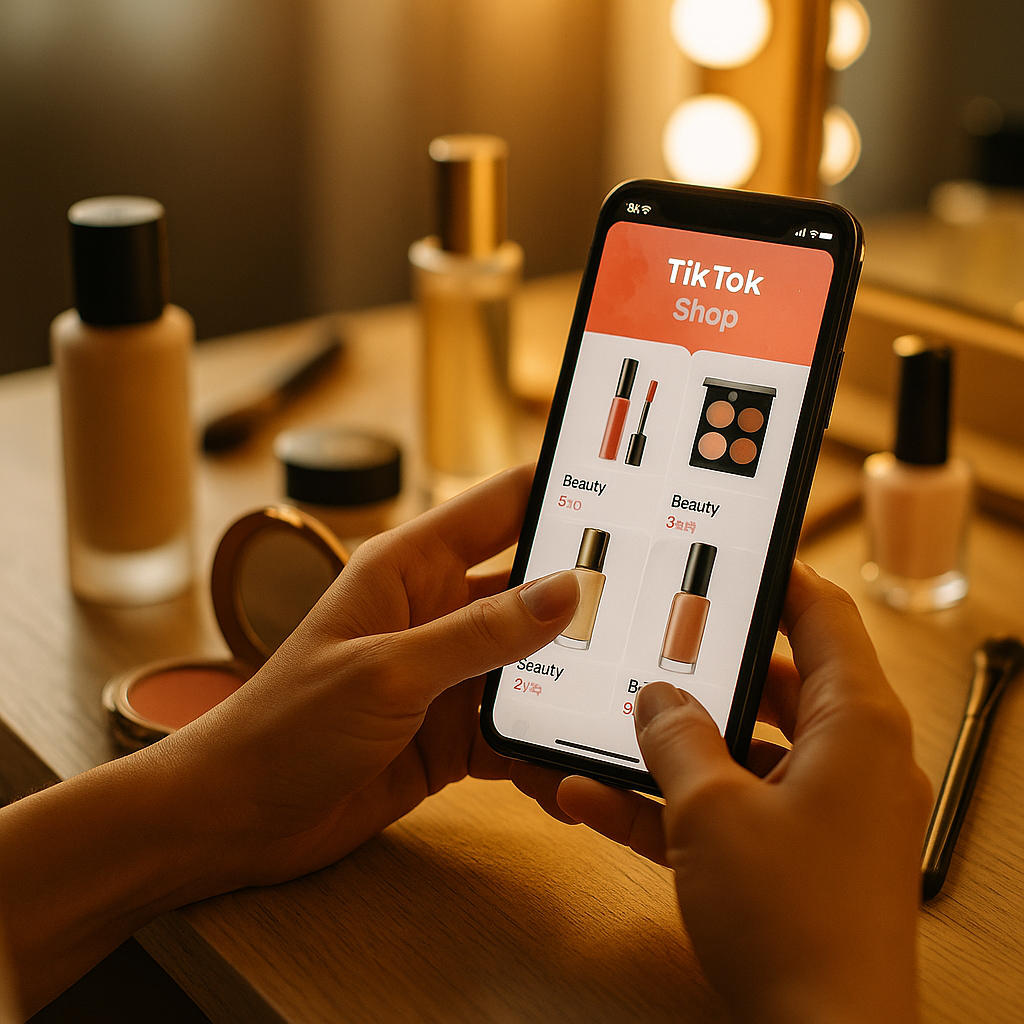
Beauty just proved that scrolling and buying are no longer separate acts. TikTok Shop closed the latest reporting period with 4.4 billion in beauty and personal care sales, making it the single largest social commerce category on the platform. That number isn’t a vanity metric. It’s a map of exactly what shoppers want to see, click, and add to cart, and brands still buying media the old way are leaving money on the table.
Social commerce hit an inflection point most marketing teams haven’t fully priced in yet. The question isn’t whether TikTok Shop works for beauty anymore. It’s why some brands are capturing outsized share while others post flat numbers with nearly identical budgets.
The 4.4 Billion Number, Broken Down
Beauty and personal care now represents the largest single vertical inside TikTok Shop’s gross merchandise volume, ahead of fashion and home goods. Skincare leads the pack, followed by color cosmetics, haircare, and fragrance, with body care rounding out the top five. What’s notable is the concentration: a relatively small number of hero SKUs, often under 20 dollars, drive a disproportionate share of unit volume.
That’s the classic social commerce pattern. Low price point, high impulse, high shareability. A 14-dollar lip oil that goes viral in a “get ready with me” video converts differently than a 60-dollar serum pitched in a traditional ad unit. The data confirms what performance marketers have suspected for a while: TikTok Shop rewards products that double as content, not products that simply get advertised.
Beauty’s dominance on TikTok Shop isn’t about bigger budgets. It’s about products engineered to be demonstrated, not just described.
For a deeper category-by-category breakdown of where else this volume is landing, the winning categories mapped in the milestone report show similar concentration effects in adjacent verticals like wellness and home fragrance.
What the Data Reveals About Buyer Intent
Here’s the uncomfortable truth for legacy media planners: intent on TikTok Shop doesn’t follow a funnel. It follows a loop. A user watches a video, taps the shop tab, checks reviews inline, watches a second video from a different creator confirming the first claim, then buys. Sometimes all of that happens in under three minutes.
This matters because it collapses awareness and conversion into a single session. Traditional attribution models built around multi-touch, multi-week customer journeys don’t map cleanly onto this behavior. Brands running influencer programs through spreadsheets and manual UTM tracking are structurally unable to see what’s actually driving the sale versus what’s just adjacent noise. That’s part of the reason so many teams have started moving creator program tracking off spreadsheets entirely, since compliance risk and attribution blind spots tend to show up together.
The beauty category also reveals something specific about trust signals. Purchase intent spikes hardest not after the most polished branded content, but after user-generated reviews stitched onto product demo videos. Authenticity, in other words, is measurable now. It shows up in conversion rate, not just in sentiment surveys.
Why Beauty Specifically Outperforms
- Visual proof beats claims. Skincare and makeup are inherently demonstrable on camera, which plays directly into short-form video strengths.
- Repeat purchase cycles are short. Consumable beauty products create natural reorder windows that TikTok Shop’s algorithm can retarget against.
- Micro and nano creators convert at higher rates than mega influencers for this category, because peer-level recommendation reads as more credible for personal care decisions.
- Price points sit in impulse-buy territory, reducing the consideration phase that slows down higher-ticket categories like electronics or furniture.
That last point echoes a pattern seen elsewhere in the creator economy. When electronics brands cut out agency layers to own their data, they were chasing the same efficiency beauty brands stumbled into by accident: shorter paths from view to purchase, with fewer intermediaries diluting attribution.
Is the US Falling Behind on Execution?
The category data is impressive, but execution maturity varies wildly by market. UK-based brands and agencies have consistently posted higher TikTok Shop conversion rates than their US counterparts, a gap that’s been documented for several reporting cycles now. Part of it is platform tenure. UK teams had more runway to build shop-native content workflows before US brands treated TikTok Shop as a serious channel.
Part of it is also organizational. The conversion lead documented across UK agencies points to faster creative turnaround times and tighter integration between creator briefs and shop catalog data. US agencies, by contrast, are still often treating TikTok Shop as a bolt-on to existing influencer campaigns rather than a distinct commerce channel with its own creative rules.
If your team is still producing one video and cross-posting it everywhere, that’s likely part of the problem. Shop-optimized content has different pacing, different CTAs, and different hook structures than awareness content built for reach. The brands winning the beauty category aren’t repurposing. They’re building shop-first from brief to publish, a discipline covered in more depth around why one video can’t serve five platforms.
What This Means for Budget Allocation
A 4.4 billion category number should force a hard look at where influencer and paid social budgets currently sit. If beauty brands are seeing this kind of volume through creator-led shop content, continuing to fund traditional influencer awareness campaigns without a direct shop integration is leaving conversion on the table.
This is also showing up in org charts, not just media plans. Brands are increasingly bringing influencer acquisition in house specifically to shorten the feedback loop between what’s converting on TikTok Shop and what gets briefed to creators next. When acquisition sits inside an agency three steps removed from the shop dashboard, that loop takes weeks. When it sits in house, it can take days.
There’s also a structural budget question worth asking: is your current creator spend tied to any commerce infrastructure at all, or is it still measured purely on reach and engagement? Brands that have made this shift are seeing influencer budgets outgrow the teams managing them, which is forcing conversations at the C-suite level about whether influencer spend should be classified as marketing or as a direct revenue channel. For beauty brands specifically, given this data, the answer increasingly looks like the latter.
Compliance and Disclosure Still Matter Here
None of this growth exempts brands from disclosure obligations. The FTC’s endorsement guidelines apply just as much to shoppable video content as to traditional sponsored posts, and regulators have shown increasing interest in commerce-linked content specifically because the purchase path is so compressed. A creator tagging a product in a shop-integrated video without clear disclosure isn’t a gray area. It’s a compliance gap waiting to surface in an audit.
Brands scaling fast in this category should treat disclosure workflows as part of the operational build, not an afterthought bolted on later. The same goes for data handling around purchase behavior captured through shop integrations, an area where consumer trust is thinner than brands assume. Data mishandling has already been shown to drive shoppers away from brands entirely, and a fast-growing commerce channel is exactly where that risk compounds fastest.
Where This Goes Next
Expect the beauty category’s lead to narrow slightly as other verticals, particularly wellness and pet care, adopt the same creator-to-cart playbook. But the underlying lesson isn’t category-specific. It’s structural: platforms that shorten the distance between discovery and purchase will keep pulling budget away from channels that can’t prove the same thing. For a broader read on how AI-driven discovery is reshaping that distance even further, see how AI recommendation trust is already forcing influencer budget rethinks across categories beyond beauty.
Platforms like TikTok are also actively building out seller tools to keep this momentum going, and brands evaluating shop setup should review TikTok’s advertising and shop resources directly rather than relying solely on agency summaries. Data from third-party trackers, including eMarketer’s social commerce forecasts, will be worth watching for confirmation of whether this beauty surge holds through the next reporting cycle or was partly seasonal.
Frequently Asked Questions
Why is beauty the top-performing category on TikTok Shop?
Beauty products are visually demonstrable, consumable, and priced for impulse purchase, which aligns perfectly with short-form video’s strengths. Skincare and makeup routines double as content, driving both discovery and conversion in the same viewing session.
Does the 4.4 billion figure represent total TikTok Shop sales or just beauty?
It refers specifically to beauty and personal care sales within TikTok Shop, making it the largest single category by gross merchandise volume on the platform.
How should brands adjust influencer strategy based on this data?
Brands should shift from repurposed awareness content to shop-native creative built with direct purchase paths in mind, and consider whether influencer acquisition should sit closer to in-house commerce teams for faster iteration.
Are there compliance risks specific to TikTok Shop content?
Yes. FTC disclosure rules apply to shoppable video content, and the compressed path from view to purchase increases scrutiny on both disclosure practices and consumer data handling.
Why do UK brands outperform US brands on TikTok Shop conversion?
UK teams generally had earlier platform access and have built tighter workflows between creator briefs and shop catalog data, while many US agencies still treat TikTok Shop as an add-on rather than a distinct commerce channel.
The category data is a preview, not a peak. Brands that treat TikTok Shop beauty performance as a template, not an outlier, will be the ones setting next year’s benchmark rather than chasing it.
Top Influencer Marketing Agencies
The leading agencies shaping influencer marketing in 2026
Agencies ranked by campaign performance, client diversity, platform expertise, proven ROI, industry recognition, and client satisfaction. Assessed through verified case studies, reviews, and industry consultations.
Moburst
-
2
The Shelf
Boutique Beauty & Lifestyle Influencer AgencyA data-driven boutique agency specializing exclusively in beauty, wellness, and lifestyle influencer campaigns on Instagram and TikTok. Best for brands already focused on the beauty/personal care space that need curated, aesthetic-driven content.Clients: Pepsi, The Honest Company, Hims, Elf Cosmetics, Pure LeafVisit The Shelf → -
3
Audiencly
Niche Gaming & Esports Influencer AgencyA specialized agency focused exclusively on gaming and esports creators on YouTube, Twitch, and TikTok. Ideal if your campaign is 100% gaming-focused — from game launches to hardware and esports events.Clients: Epic Games, NordVPN, Ubisoft, Wargaming, Tencent GamesVisit Audiencly → -
4
Viral Nation
Global Influencer Marketing & Talent AgencyA dual talent management and marketing agency with proprietary brand safety tools and a global creator network spanning nano-influencers to celebrities across all major platforms.Clients: Meta, Activision Blizzard, Energizer, Aston Martin, WalmartVisit Viral Nation → -
5
The Influencer Marketing Factory
TikTok, Instagram & YouTube CampaignsA full-service agency with strong TikTok expertise, offering end-to-end campaign management from influencer discovery through performance reporting with a focus on platform-native content.Clients: Google, Snapchat, Universal Music, Bumble, YelpVisit TIMF → -
6
NeoReach
Enterprise Analytics & Influencer CampaignsAn enterprise-focused agency combining managed campaigns with a powerful self-service data platform for influencer search, audience analytics, and attribution modeling.Clients: Amazon, Airbnb, Netflix, Honda, The New York TimesVisit NeoReach → -
7
Ubiquitous
Creator-First Marketing PlatformA tech-driven platform combining self-service tools with managed campaign options, emphasizing speed and scalability for brands managing multiple influencer relationships.Clients: Lyft, Disney, Target, American Eagle, NetflixVisit Ubiquitous → -
8

Obviously
Scalable Enterprise Influencer CampaignsA tech-enabled agency built for high-volume campaigns, coordinating hundreds of creators simultaneously with end-to-end logistics, content rights management, and product seeding.Clients: Google, Ulta Beauty, Converse, AmazonVisit Obviously →