


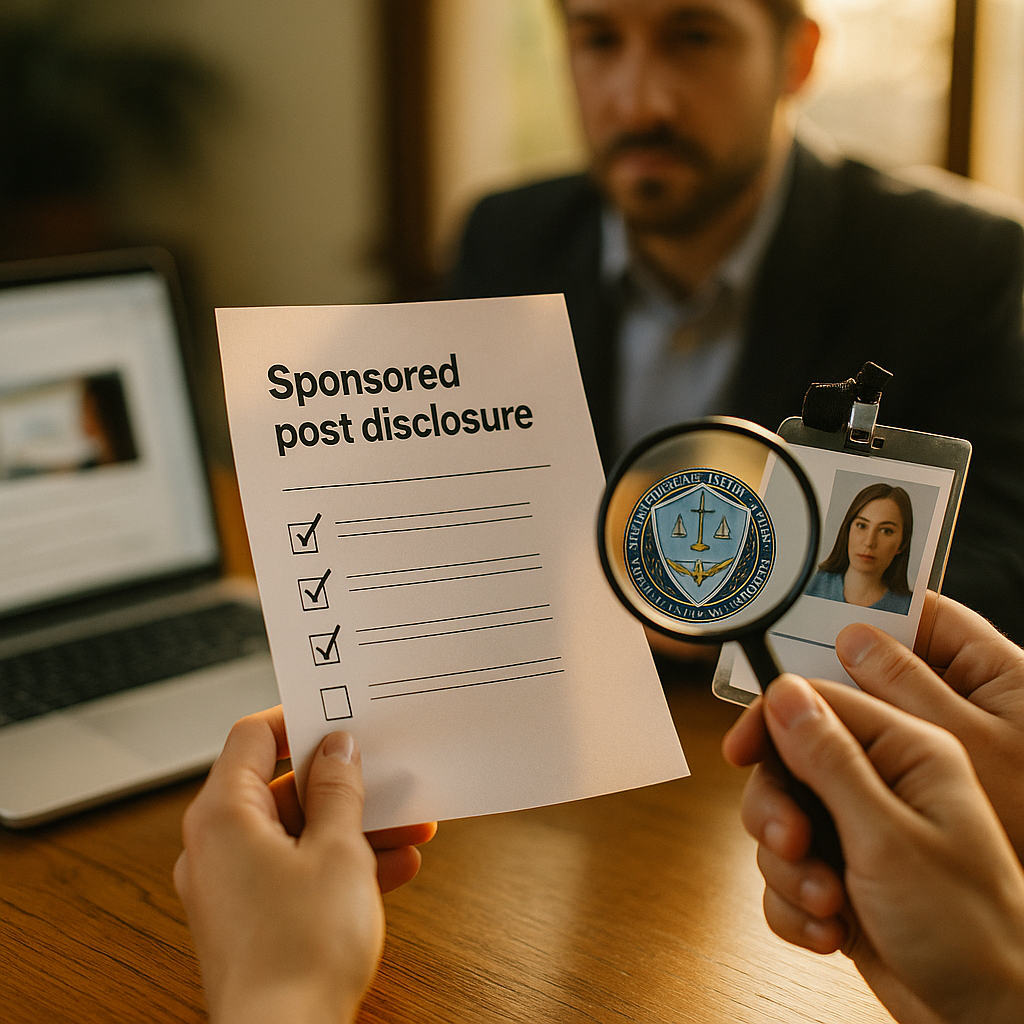
Seventy percent of consumers now use AI-powered search tools before a single organic result loads, according to eMarketer estimates on generative search adoption. Brands are racing to hire GEO (generative engine optimization) agencies to get cited in those answers. But here’s the uncomfortable question nobody asks in the pitch meeting: who’s liable when your GEO vendor’s AI-written content includes an undisclosed paid placement, a fabricated review, or a synthetic testimonial that reads like a real customer? Vetting GEO and AI search agencies for FTC endorsement rule compliance isn’t optional anymore. It’s the line item that keeps your brand out of a consent decree.
Why This Suddenly Matters to Your Legal Team
GEO agencies sell a simple pitch: get your brand mentioned inside ChatGPT, Perplexity, and Google’s AI Overviews. To do that, many of them generate or seed content at scale, sometimes hundreds of pages, forum posts, and “expert” comparisons a month, often written entirely by AI with minimal human review. That’s the operational model. It’s also exactly the kind of outsourced content automation that regulators have flagged repeatedly.
The FTC’s endorsement guides don’t care whether a human or an algorithm wrote the copy. They care whether the content misleads a reasonable consumer about who’s behind it, whether a material connection exists, and whether claims are substantiated. When an agency posts synthetic “customer experiences” or AI-generated comparison articles that read as independent research but were paid for by your brand, that’s an endorsement problem wearing a content marketing costume.
If your GEO vendor can’t explain, in plain language, how they disclose sponsorship inside AI-generated content, you’re buying risk you can’t see until an FTC inquiry letter arrives.
The Vetting Gap Most Brands Miss
Most procurement teams evaluate GEO agencies on citation frequency, model coverage (does it work in Perplexity, Gemini, Copilot?), and turnaround time. Almost none ask the compliance questions that actually matter. That’s the gap. Marketing ops treats GEO like a technical SEO function, when it’s really a hybrid of content production, paid media, and reputation management, three areas the FTC already regulates aggressively.
Ask any agency pitching you right now: do they disclose when content is AI-generated on behalf of a paying client? Do they flag synthetic reviews as synthetic? Do they maintain records showing a human reviewed claims for substantiation before publishing? If the answer is a shrug or a vague “we follow best practices,” that’s your signal to slow down.
What “Outsourced” Really Means for Liability
Here’s the part brand legal teams get wrong: outsourcing the work doesn’t outsource the liability. The FTC has been consistent for over a decade that advertisers remain responsible for the conduct of agencies and creators acting on their behalf. It doesn’t matter if your GEO vendor is a three-person shop in another country running a fleet of AI content agents. If the content promotes your brand and misleads consumers about sponsorship or fabricates authority, your company’s name is on the complaint, not just the vendor’s.
This mirrors what we’ve already seen play out in creator marketing. Our earlier coverage of affiliate disclosure rules makes the same point: platforms and formats change, but the brand’s duty to supervise doesn’t. GEO content is just the newest format inheriting an old obligation.
A Practical Vetting Checklist
Before signing a contract with a GEO or AI search agency, run these checks. Treat this like you’d treat vendor security audits, not a courtesy formality.
- Disclosure protocol: Does the agency have a documented process for labeling sponsored or brand-commissioned content, even when it’s published on third-party sites, forums, or Reddit-style Q&A platforms that AI models scrape heavily?
- Human review checkpoint: Is there a named person (not “the QA team”) who signs off on factual claims before AI-generated content goes live? Get this in writing.
- Synthetic review policy: Ask directly whether the agency ever generates fake reviews, testimonials, or “customer stories.” If yes, walk away. This is the fastest path to an FTC enforcement action.
- Substantiation records: Can they produce backup data for performance claims, health claims, or comparative claims their content makes about your product versus competitors?
- Subcontractor transparency: Many GEO shops white-label work to freelance writers or offshore content farms. Ask who actually touches your brand’s content and whether those subcontractors are trained on FTC basics.
- Takedown and correction process: If a piece of AI-generated content is later found to be inaccurate or non-compliant, how fast can they pull or correct it across every platform it was seeded on?
None of this is exotic. It’s the same due diligence a smart brand already applies to influencer contracts and affiliate networks. The tools are different, the questions are identical.
Contract Language That Actually Protects You
A vetting conversation is worth nothing if the contract doesn’t back it up. Your master services agreement with a GEO or AI search vendor should include indemnification language specific to content compliance failures, not just generic IP indemnification. It should require the agency to maintain records of AI-generated content for a defined retention period (regulators love asking for records nobody kept). And it should give your brand audit rights, meaning you can request a sample of published content at any time to check disclosure practices.
This is the same posture we recommended when covering AI shopping agent claims and who ultimately eats the indemnification bill. GEO is a different channel, same negotiation. Don’t let a vendor’s “industry standard contract” language quietly shift all the risk back onto you.
An agency that resists audit rights or record retention clauses is telling you, in advance, that they don’t want you to see how the content actually gets made.
Where Synthetic Content and Creator Disclosure Rules Collide
GEO agencies increasingly blend AI-generated articles with real creator quotes, UGC snippets, and influencer testimonials to make content feel more “citable” to AI crawlers. That’s a smart tactic for visibility. It’s also a compliance minefield if the creator content wasn’t licensed properly or if the disclosure that applied to the original post doesn’t carry over when it’s repurposed into a new AI-optimized article.
This connects directly to the UGC rights questions brands are already dealing with. If your GEO vendor is pulling creator content into new formats without a clear licensing trail, you’re exposed on two fronts at once: endorsement disclosure and copyright. Our UGC rights audit framework is a useful model to apply here, and the broader question of who owns liability when AI systems scrape and repurpose creator content is covered in our piece on AI search scraping and copyright risk.
Budget Approval Isn’t a Compliance Check
One quiet failure mode: marketing ops approves GEO agency spend through the same workflow as any content vendor, with a budget owner signing off on invoices but nobody checking compliance posture. If your organization is layering AI budgeting tools on top of vendor management, make sure those systems flag content compliance risk, not just cost overruns. We’ve written about the gap between automated approval and human oversight in AI ad budgeting agents, and the same principle applies to GEO spend: automation should speed up review, not replace it.
Red Flags That Should End the Conversation
- The agency guarantees a specific number of AI citations per month without explaining methodology.
- They can’t name a single compliance framework they follow beyond “Google’s guidelines.”
- Pricing is based purely on content volume, incentivizing speed over accuracy.
- They’re vague about whether content is published under your brand name, a third-party byline, or an anonymous “expert” persona.
- They’ve never had a client ask about FTC compliance before, and seem surprised you’re asking.
If you hit two or more of these in a discovery call, treat it as a hard stop, not a negotiating point.
Building an Internal Review Cadence
Vetting at the start of a vendor relationship isn’t enough. GEO tactics evolve monthly as AI models change their crawling and citation behavior, and agencies adjust their content strategies to keep up. Set a quarterly review where your legal or compliance team samples live content, checks disclosure language, and confirms the agency’s practices haven’t drifted. Treat this the same way you’d treat an ongoing influencer program audit, because functionally, that’s what it is now: a content supply chain that touches your brand’s public claims, run partly by machines, and it needs the same governance rigor as any regulated marketing channel.
Marketing teams that have already built creator compliance muscle (contract templates, disclosure training, audit trails) have a head start here. The mechanics translate. The technology just moved faster than the paperwork.
Frequently Asked Questions
FAQs
Does the FTC treat AI-generated content differently from human-written content?
No. The FTC’s endorsement guides focus on consumer deception and material connections, not on who or what produced the content. AI-generated articles, reviews, or testimonials are held to the same disclosure and substantiation standards as anything a human writer produces.
Who is liable if a GEO agency publishes misleading AI content on behalf of my brand?
Your brand generally remains liable, even though the agency did the work. The FTC has consistently held advertisers responsible for supervising agencies, freelancers, and creators acting on their behalf, so outsourcing production doesn’t outsource accountability.
What should a GEO vendor contract include to reduce compliance risk?
Look for indemnification language specific to content compliance, defined record retention for AI-generated content, and audit rights that let your team sample published material at any time to verify disclosure practices.
Are synthetic reviews or AI-generated testimonials ever compliant?
Generally no, if they’re presented as genuine customer experiences. Fabricated reviews or testimonials that appear authentic but are AI-generated are one of the clearest and most aggressively enforced violations of the FTC endorsement guides.
How often should brands audit their GEO or AI search vendors?
A quarterly review is a reasonable baseline, since AI search behavior and agency tactics shift quickly. Sampling live content and checking disclosure language on a recurring schedule catches drift before it becomes a regulatory problem.
Next step: before your next GEO vendor call, send the checklist above as a pre-meeting questionnaire. Agencies that answer quickly and specifically are the ones worth your budget; the ones that stall are telling you everything you need to know.
Top Influencer Marketing Agencies
The leading agencies shaping influencer marketing in 2026
Agencies ranked by campaign performance, client diversity, platform expertise, proven ROI, industry recognition, and client satisfaction. Assessed through verified case studies, reviews, and industry consultations.
Moburst

-
2

The Shelf
Boutique Beauty & Lifestyle Influencer AgencyA data-driven boutique agency specializing exclusively in beauty, wellness, and lifestyle influencer campaigns on Instagram and TikTok. Best for brands already focused on the beauty/personal care space that need curated, aesthetic-driven content.Clients: Pepsi, The Honest Company, Hims, Elf Cosmetics, Pure LeafVisit The Shelf → -
3

Audiencly
Niche Gaming & Esports Influencer AgencyA specialized agency focused exclusively on gaming and esports creators on YouTube, Twitch, and TikTok. Ideal if your campaign is 100% gaming-focused — from game launches to hardware and esports events.Clients: Epic Games, NordVPN, Ubisoft, Wargaming, Tencent GamesVisit Audiencly → -
4

Viral Nation
Global Influencer Marketing & Talent AgencyA dual talent management and marketing agency with proprietary brand safety tools and a global creator network spanning nano-influencers to celebrities across all major platforms.Clients: Meta, Activision Blizzard, Energizer, Aston Martin, WalmartVisit Viral Nation → -
5

The Influencer Marketing Factory
TikTok, Instagram & YouTube CampaignsA full-service agency with strong TikTok expertise, offering end-to-end campaign management from influencer discovery through performance reporting with a focus on platform-native content.Clients: Google, Snapchat, Universal Music, Bumble, YelpVisit TIMF → -
6

NeoReach
Enterprise Analytics & Influencer CampaignsAn enterprise-focused agency combining managed campaigns with a powerful self-service data platform for influencer search, audience analytics, and attribution modeling.Clients: Amazon, Airbnb, Netflix, Honda, The New York TimesVisit NeoReach → -
7

Ubiquitous
Creator-First Marketing PlatformA tech-driven platform combining self-service tools with managed campaign options, emphasizing speed and scalability for brands managing multiple influencer relationships.Clients: Lyft, Disney, Target, American Eagle, NetflixVisit Ubiquitous → -
8

Obviously
Scalable Enterprise Influencer CampaignsA tech-enabled agency built for high-volume campaigns, coordinating hundreds of creators simultaneously with end-to-end logistics, content rights management, and product seeding.Clients: Google, Ulta Beauty, Converse, AmazonVisit Obviously →