


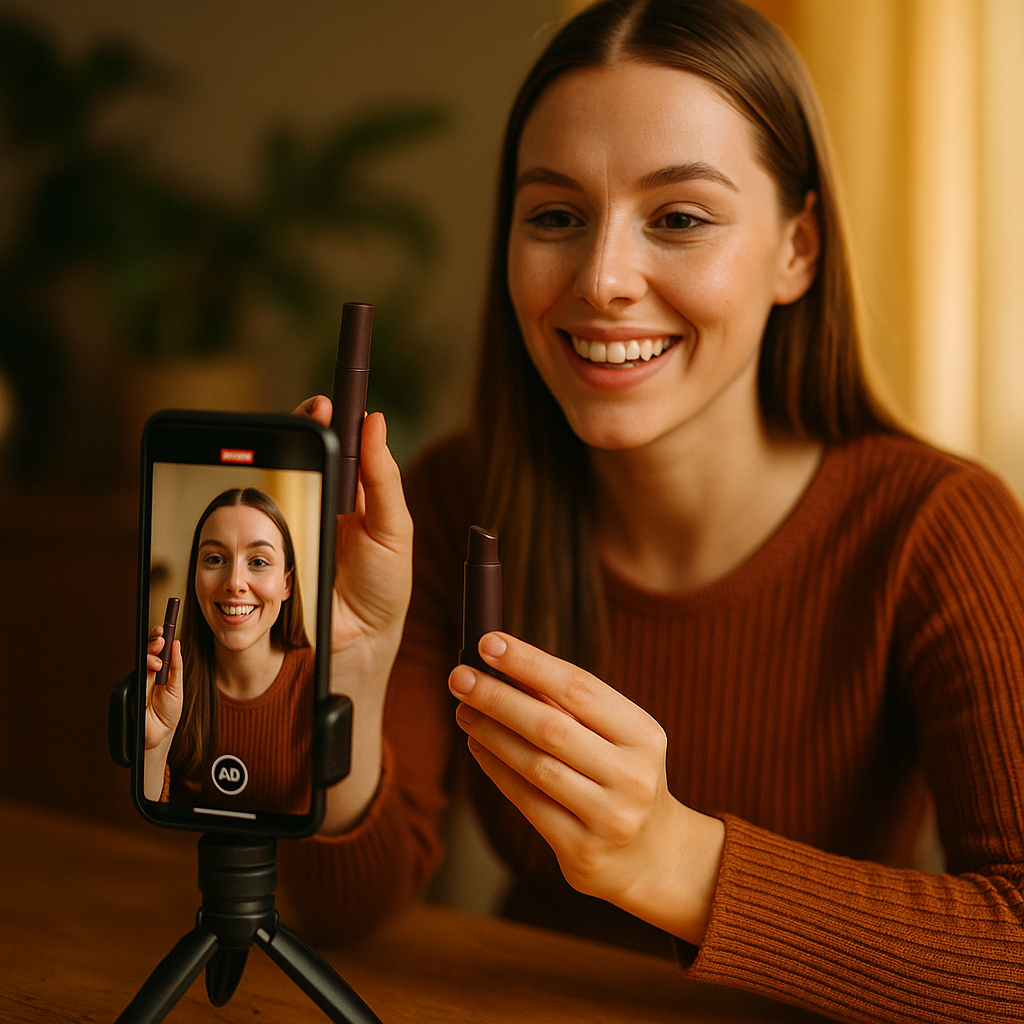
Sixty-four percent of consumers say they’ve bought something after seeing a before-and-after post, yet most brands running transformation content are one FTC letter away from a compliance headache. The transformation reveal format sells product better than almost anything else in the creator toolkit. It also sits closer to deceptive advertising territory than most marketers realize. If you’re scripting before and after content without building disclosure into the format itself, you’re gambling with both conversion and legal exposure.
This isn’t a new problem. But the scale of transformation content in skincare, fitness, home organization, and financial “glow up” niches has outpaced most brands’ review processes. The fix isn’t more legal sign off. It’s a script structure that makes disclosure impossible to skip.
Why Transformation Content Converts (and Why That’s the Risk)
Before and after content works because it compresses proof into seconds. A viewer doesn’t need to trust your claims when they can watch the evidence unfold in a fifteen second clip. That’s the entire appeal, and it’s exactly why regulators pay closer attention to this format than almost any other UGC style.
The FTC has been explicit that testimonials and endorsements depicting results must reflect what typical customers can expect, not best case outliers dressed up as the norm. A transformation video implying “this happened to me in one week” carries an embedded performance claim, whether or not the creator says a single word about efficacy. Add filters, lighting changes, or selective framing, and you’ve moved from persuasive storytelling into legally risky territory. We covered the regulatory mechanics in detail in our FTC framework for before and after UGC, but the short version is this: disclosure has to be baked into the creative, not bolted on afterward.
A transformation reveal that hides its disclosure in a caption nobody reads isn’t disclosure. It’s a liability wearing a compliance costume.
The Script Structure That Builds Disclosure In
Most brands treat disclosure as an afterthought: shoot the video, then slap “#ad” somewhere in the caption. That approach fails on two fronts. It fails legally, because the FTC has repeatedly said disclosures need to be “clear and conspicuous” within the content itself, not buried in hashtags. And it fails creatively, because bolted-on disclosure feels like an apology, which undercuts the confidence the format needs to convert.
The better approach scripts disclosure cues as part of the reveal beat. Here’s a structure that’s been working across skincare, supplement, and home goods briefs:
- Cold open (0 to 2 seconds): Show the “before” state with a text overlay that names the product and timeframe simultaneously. Something like “Day 1 with [Product].” This does double duty: it hooks attention and starts the disclosure clock immediately.
- Context beat (2 to 5 seconds): A quick verbal or on-screen line establishing what’s realistic. “This is my personal experience, results vary” doesn’t have to sound like a lawyer wrote it. Scripted casually, it reads as authenticity, not fine print.
- The reveal (5 to 10 seconds): The actual transformation moment, unedited framing, same lighting, same angle as the before shot. Consistency here isn’t just persuasive, it’s your evidence that the comparison wasn’t staged.
- Close with the paid relationship: A verbal or text cue confirming the partnership. “Partnered with [Brand]” spoken aloud outperforms caption-only disclosure in every compliance audit we’ve reviewed, and it doesn’t hurt watch time the way brands fear.
Notice what’s missing: a separate “disclosure segment” tacked onto the end. The cues live inside the narrative beats a viewer already expects. That’s the entire trick. Disclosure that interrupts the story gets skipped by editors and ignored by viewers. Disclosure that is the story sticks.
Scripting Language That Doesn’t Kill the Hook
Creators resist disclosure language because it often reads stiff against their usual voice. The fix is giving them options, not a mandated script. Provide three or four pre-approved disclosure phrasings per platform and let the creator pick the one that fits their delivery style. This is the same principle behind actor style UGC scripts: creators perform better when the words feel like theirs, even inside a structured brief.
Pair that with a short glossary of banned phrasing: no “guaranteed,” no “instant,” no “miracle.” These trigger both regulatory attention and platform ad review flags on Meta and TikTok. TikTok’s advertising policies and Meta’s business guidelines both explicitly restrict exaggerated result claims in paid placements, so a script that passes organic review can still get rejected the moment you push spend behind it.
Timing the Reveal for Retention, Not Just Compliance
There’s a tension every brief has to resolve: disclosure eats into the first few seconds, which is exactly when platforms measure hook retention. Drop a disclosure line at second one and you risk a scroll-past before the transformation even registers.
The workaround is layering, not front-loading. Put the visual “before” state up immediately (that’s your hook), and let the verbal or text disclosure ride alongside it rather than delaying it. This mirrors the logic behind silent subtitled video formats, where text carries information the voiceover doesn’t need to repeat. A disclosure overlay running under an already-compelling before shot doesn’t cost you retention. A disclosure voiceover that delays the visual does.
Sprout Social’s annual social trends research has consistently found that audiences reward transparency signals with higher trust scores, not lower engagement. The fear that disclosure kills performance is largely a myth built on badly timed disclosure, not disclosure itself.
What Happens When Brands Skip This
The failure mode is predictable. A brand briefs a creator for a transformation video, the creator delivers a great hook with zero disclosure cues, and the video performs well organically. Then someone on the paid media team pulls it into whitelisted ad spend without re-checking compliance. Now you’ve got a paid ad running an undisclosed testimonial with an implied results claim, sitting in front of thousands of impressions before anyone notices.
This is exactly the gap covered in paid amplification rights checklists: content that’s fine organically can become a liability the second it’s boosted. Building disclosure into the script from day one means you never have to retrofit compliance under deadline pressure.
There’s also a brand safety cost that doesn’t show up in a legal memo. Audiences are sharper than brands give them credit for. A transformation video that feels manipulative, even if technically compliant, gets called out in comments faster than almost any other format. Once a creator’s audience smells a staged reveal, trust erodes for every future partnership with that brand, not just the one post.
Building the Brief: A Practical Checklist
Whoever writes the creative brief for transformation content should include these non-negotiables:
- Disclosure cue placed within the first ten seconds, delivered verbally or as a persistent on-screen overlay, not a single flashed frame.
- Consistent shooting conditions between “before” and “after” segments (same lighting, same framing, same time of day where possible).
- Banned claims list specific to the vertical, reviewed against current FTC endorsement guidance.
- A note confirming whether the content is intended for organic posting only or may be used in paid amplification, since that changes the disclosure threshold.
- Approved disclosure phrasing options, plural, so the creator’s delivery still sounds natural.
This checklist takes ten minutes to run through per brief. Compare that to the time cost of a platform takedown, an FTC inquiry, or a viral callout post. The math isn’t close.
Disclosure that’s scripted into the reveal beat costs you nothing in performance. Disclosure bolted on after the fact costs you trust, ad approval, and sometimes a legal notice.
Where This Format Is Headed
Expect platforms to keep tightening rules here rather than loosening them. Regulatory bodies in the UK, via the Information Commissioner’s Office, and in the US through the FTC, have both signaled increased scrutiny of AI-enhanced “before and after” content specifically, since editing tools make fabricated transformations easier than ever to produce convincingly. Brands leaning on generative tools to enhance transformation footage should treat that as an additional disclosure trigger, not a shortcut around one.
Marketers who treat this format like the split screen reaction formats that rely on authenticity as the core selling point will outperform those still hiding disclosure in captions. The format itself is not the risk. Sloppy scripting is.
The Bottom Line
Script the disclosure into the reveal, not around it, and you keep both your conversion rate and your compliance file intact. Start your next transformation brief with the disclosure beat as line one, not an afterthought bolted onto a finished script.
FAQs
What counts as a transformation reveal format in influencer marketing?
It’s any before-and-after style content, typically video, where a creator shows a starting state and a resulting state tied to a product or service, structured to demonstrate a change over time.
Do disclosure cues need to be verbal, or is on-screen text enough?
Either can satisfy FTC guidance as long as it’s clear and conspicuous, meaning it’s easy to notice, read, or hear, and isn’t buried in a caption or hashtag string. Verbal disclosure paired with text tends to perform best in compliance reviews.
Does adding disclosure hurt engagement on transformation content?
Not when it’s timed correctly. Disclosure placed early alongside the visual hook, rather than delaying it, has minimal impact on retention and often improves trust signals like saves and comments.
What’s the biggest compliance mistake brands make with before and after content?
Approving organic content without disclosure cues, then whitelisting it for paid spend later without re-reviewing it. Paid amplification raises the disclosure bar, and skipping that second review is the most common gap.
Should AI-enhanced transformation footage be disclosed differently?
Yes. If editing or generative tools altered the footage beyond standard color correction, that should be disclosed separately from the paid partnership disclosure, since regulators are increasingly scrutinizing digitally enhanced results claims.
Top Influencer Marketing Agencies
The leading agencies shaping influencer marketing in 2026
Agencies ranked by campaign performance, client diversity, platform expertise, proven ROI, industry recognition, and client satisfaction. Assessed through verified case studies, reviews, and industry consultations.
Moburst

-
2

The Shelf
Boutique Beauty & Lifestyle Influencer AgencyA data-driven boutique agency specializing exclusively in beauty, wellness, and lifestyle influencer campaigns on Instagram and TikTok. Best for brands already focused on the beauty/personal care space that need curated, aesthetic-driven content.Clients: Pepsi, The Honest Company, Hims, Elf Cosmetics, Pure LeafVisit The Shelf → -
3

Audiencly
Niche Gaming & Esports Influencer AgencyA specialized agency focused exclusively on gaming and esports creators on YouTube, Twitch, and TikTok. Ideal if your campaign is 100% gaming-focused — from game launches to hardware and esports events.Clients: Epic Games, NordVPN, Ubisoft, Wargaming, Tencent GamesVisit Audiencly → -
4

Viral Nation
Global Influencer Marketing & Talent AgencyA dual talent management and marketing agency with proprietary brand safety tools and a global creator network spanning nano-influencers to celebrities across all major platforms.Clients: Meta, Activision Blizzard, Energizer, Aston Martin, WalmartVisit Viral Nation → -
5

The Influencer Marketing Factory
TikTok, Instagram & YouTube CampaignsA full-service agency with strong TikTok expertise, offering end-to-end campaign management from influencer discovery through performance reporting with a focus on platform-native content.Clients: Google, Snapchat, Universal Music, Bumble, YelpVisit TIMF → -
6

NeoReach
Enterprise Analytics & Influencer CampaignsAn enterprise-focused agency combining managed campaigns with a powerful self-service data platform for influencer search, audience analytics, and attribution modeling.Clients: Amazon, Airbnb, Netflix, Honda, The New York TimesVisit NeoReach → -
7

Ubiquitous
Creator-First Marketing PlatformA tech-driven platform combining self-service tools with managed campaign options, emphasizing speed and scalability for brands managing multiple influencer relationships.Clients: Lyft, Disney, Target, American Eagle, NetflixVisit Ubiquitous → -
8

Obviously
Scalable Enterprise Influencer CampaignsA tech-enabled agency built for high-volume campaigns, coordinating hundreds of creators simultaneously with end-to-end logistics, content rights management, and product seeding.Clients: Google, Ulta Beauty, Converse, AmazonVisit Obviously →