


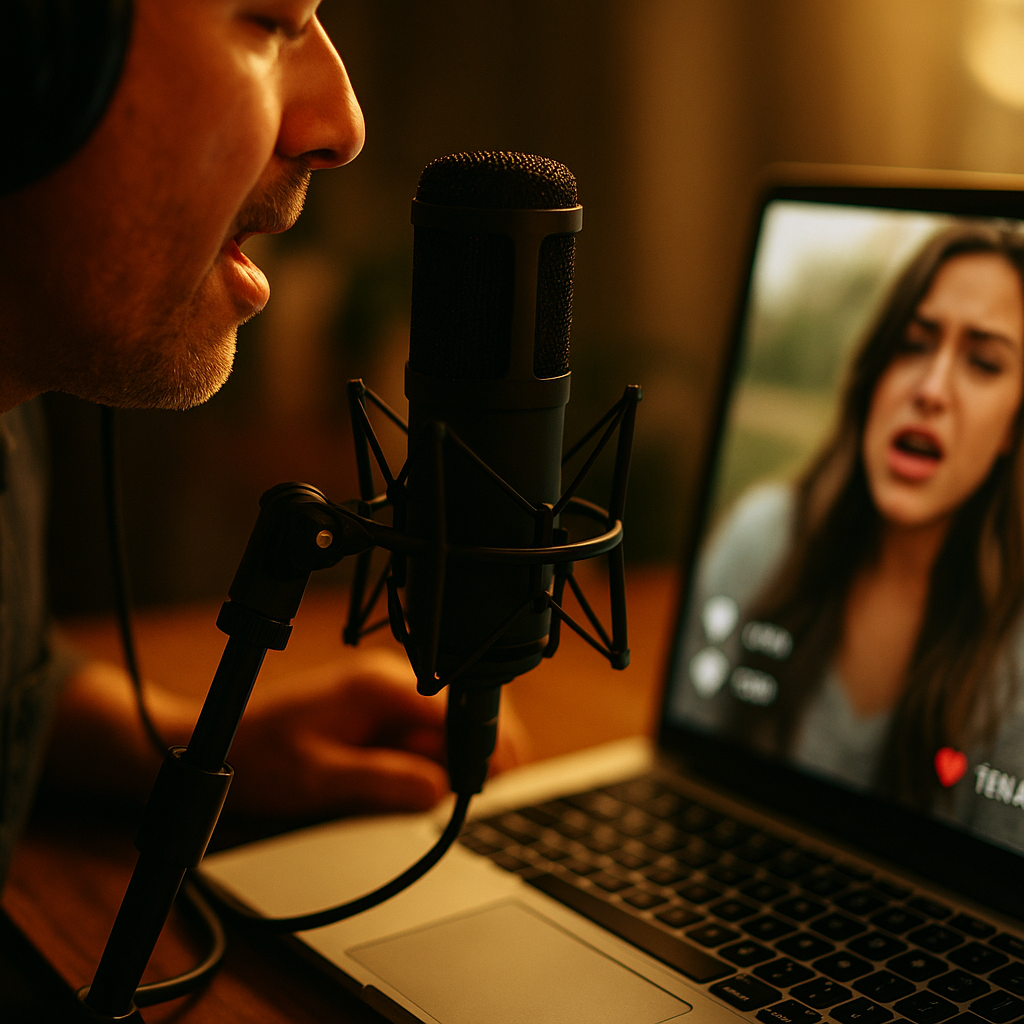
Every marketer has felt it: a trending sound hits your For You Page, and your gut says “we need this now.” But the voiceover trend audio format has quietly become the safest way to ride viral sounds, letting brands layer their own message over trending audio instead of gambling on lip sync or dance replication. Here’s how to do it without a legal headache.
Why Voiceover Trend Audio Exists in the First Place
Sound trends move fast. A snippet from a podcast clip, a movie quote, or a meme-worthy audio bite can dominate TikTok and Instagram Reels within 48 hours. Brands that try to replicate the exact visual format (the dance, the lip sync, the skit) often look like they’re trying too hard. Voiceover trend audio sidesteps that by keeping the trending sound as background texture while a creator or brand voice delivers the actual message on top.
It’s the difference between mimicking a meme and using its momentum. You’re not pretending to be part of the joke. You’re borrowing the audio’s reach while your message stays yours.
Brands that layer original voiceover onto trending audio see higher completion rates than those that copy the trend’s visual gag verbatim, because the message stays on-brand even when the sound is borrowed.
The Format, Broken Down
At its simplest, this format has three layers:
- The trending audio bed, kept low in the mix or used only in the first few seconds to trigger platform recognition and algorithmic association.
- A voiceover track, either creator-recorded or brand-recorded, that delivers the actual product message, hook, or CTA.
- Visual support, usually product demos, text overlays, or founder-style talking head footage that reinforces the voiceover rather than competing with it.
This is distinct from a straight lip sync trend, and it’s also different from the silent, subtitle-driven approach covered in silent subtitled video formats. Here, sound matters. The trending audio is doing algorithmic work even when it’s mixed quietly under a voiceover.
Why Not Just Use the Original Trend Verbatim?
Two reasons: legal exposure and brand fit. Original trend formats often involve a creator’s face, catchphrase, or choreography that doesn’t translate to a brand account without looking derivative or, worse, without proper attribution. Voiceover trend audio lets you use the sound (which is licensed at the platform level for in-app use) while keeping full creative control over the visual and verbal message. You get the algorithmic lift of trending audio without copying someone else’s bit.
Rights and Risk: What Actually Needs Checking
Here’s where most brand teams get nervous, and rightly so. Using a trending sound inside TikTok’s or Instagram’s native creation tools is generally covered under each platform’s music licensing agreements for organic, in-app posts. That’s not the same as paid amplification.
The moment you push a video with trending audio into paid media, boosted posts, Spark Ads, or Meta’s ad platform, licensing coverage can change. Some sounds are cleared for organic use only. Others carry commercial restrictions tied to the original artist or label. This is precisely the gap covered in paid amplification rights checklists, and skipping that check is how brands end up with takedown notices mid-campaign.
Practical rule of thumb: if the sound is a well-known song, verify commercial usage rights before spending a dollar on amplification. If it’s a voice clip, meme audio, or user-generated sound effect, check whether the original creator has claimed commercial terms via the platform’s sound library. TikTok’s Commercial Music Library exists specifically to solve this for brand accounts, and it’s worth checking TikTok’s advertising resources before assuming a trending sound is fair game for paid use.
The single biggest compliance mistake brands make with trend audio isn’t using it organically. It’s boosting it into paid media without checking commercial licensing status first.
Matching Message to Sound Without Losing the Plot
Not every trending sound fits every brand message, and forcing it usually backfires. The best voiceover trend audio executions share a rhythm match: the pacing of the voiceover script mirrors the emotional beat of the underlying sound. A frantic, high-energy trend sound paired with a calm, deadpan voiceover can work as contrast, but it needs to be intentional, not accidental.
A few pattern types that consistently perform well:
- Problem-reveal sounds, where the trend’s audio has a “wait for it” build, paired with a voiceover that reveals a product benefit at the punchline moment.
- Relatable complaint sounds, often sarcastic or exasperated tones, paired with a founder or customer voice explaining how the product solves that exact frustration.
- Upbeat, high-tempo sounds, used as background texture for fast product demo cuts with minimal voiceover, letting the energy of the sound carry momentum.
This pairing logic overlaps with what’s covered in trend jacking templates for legal UGC replication, since matching tone to trend is half creative judgment and half legal guardrail. Get the tone wrong and the ad feels tone-deaf even if it’s technically cleared.
Script Structure That Keeps Legal Happy
Voiceover scripts riding trend audio still need the same disclosure and claims discipline as any other paid content. If a creator is being compensated to say something, FTC disclosure applies regardless of how catchy the underlying sound is. Teams building these briefs should borrow structure from FTC disclosure hook frameworks, which show how to weave “#ad” or “partner” language into a hook without killing the trend’s natural cadence.
A workable script skeleton looks like this: three seconds of trend audio alone to establish recognition, then voiceover enters with the hook, disclosure lands naturally within the first line (not buried at the end), product message in the middle, CTA on the last beat where the sound often has its own natural pause or drop.
Speed Is the Whole Point, So Build for It
Trend audio has a shelf life measured in days, not weeks. If your approval chain takes a week to greenlight a script, the sound will be dead before the ad goes live. This is where the 48 hour trend response clock becomes operationally critical. Brands that win with this format have pre-approved script templates, pre-cleared legal language, and a bench of creators ready to record voiceover same-day.
Same-day meme jacking briefs exist for exactly this reason, and the same logic applies to audio. Build a lightweight internal workflow: someone flags the trending sound, a template script gets filled in within an hour, legal has a 15-minute checklist (not a full review cycle), and a creator or in-house voice records within the same business day. Reference same-day meme jack workflows for how other teams have compressed this cycle without sacrificing compliance.
Who Should Record the Voiceover?
This is a genuine strategic choice, not a minor production detail.
- Creator voiceover feels native and blends into organic feeds, which is why it tends to outperform on completion rate for cold audiences.
- Founder or executive voiceover adds credibility for B2B or high-consideration purchases, similar to the trust signals covered in founder-led creator video formats.
- Brand voice (professional VO talent) works best for retail and DTC categories where consistency across dozens of ad variants matters more than individual creator authenticity.
Testing all three against the same trending sound is cheap and fast. Run a small budget split across variants before committing spend, since the “right” voice for one trend rarely predicts the winner for the next.
Measuring What Actually Worked
Don’t just track views. Trend audio inflates reach numbers for reasons that have nothing to do with your message landing. Watch retention curves instead, specifically the drop-off point right after the voiceover enters. If viewers bail the second the trend audio gets interrupted by your message, the pairing was wrong, not the product.
Compare against a control: the same script delivered without trend audio, using original sound or license-free background music. If performance is roughly equal, the trend wasn’t actually adding lift, and you’re better off investing production time elsewhere, perhaps in multi-hook shoot sessions that generate more evergreen assets per production day. Data platforms like eMarketer and Sprout Social both publish regular benchmarks on short-form video retention that are useful for setting realistic completion-rate targets before you evaluate a specific trend’s lift.
Next Step
Build a one-page internal checklist covering commercial licensing status, disclosure placement, and a same-day approval path before the next trending sound hits your feed. Speed without that checklist is how brands end up explaining a takedown notice instead of celebrating a viral hit.
Frequently Asked Questions
Is it legal for brands to use trending audio in organic social posts?
Generally yes, for organic in-app posts, since platforms like TikTok and Instagram license large music catalogs for use within their native creation tools. The complexity increases once that content moves into paid advertising, where licensing terms often differ.
Do I need FTC disclosure if I’m just using a trending sound with my own voiceover?
Yes, if a creator is being paid or given free product in exchange for the content, disclosure rules apply regardless of the audio used. The trending sound doesn’t change the disclosure obligation.
Can I use trending audio in paid ads on TikTok or Meta?
Sometimes, but you need to verify commercial usage rights first. TikTok’s Commercial Music Library is built specifically for brands wanting cleared audio for paid campaigns, and Meta has similar restrictions around music use in Advantage+ and boosted content.
How fast do I need to move to capitalize on a trending sound?
Most trend audio has peak relevance for three to seven days before saturation sets in. Brands with pre-approved script templates and a fast legal checklist can realistically turn around a voiceover trend audio execution within 24 to 48 hours.
What’s the biggest mistake brands make with this format?
Matching tone poorly, either forcing a mismatched message onto a sound’s emotional register, or skipping the paid licensing check and getting content pulled mid-flight after already spending media budget.
Top Influencer Marketing Agencies
The leading agencies shaping influencer marketing in 2026
Agencies ranked by campaign performance, client diversity, platform expertise, proven ROI, industry recognition, and client satisfaction. Assessed through verified case studies, reviews, and industry consultations.
Moburst

-
2

The Shelf
Boutique Beauty & Lifestyle Influencer AgencyA data-driven boutique agency specializing exclusively in beauty, wellness, and lifestyle influencer campaigns on Instagram and TikTok. Best for brands already focused on the beauty/personal care space that need curated, aesthetic-driven content.Clients: Pepsi, The Honest Company, Hims, Elf Cosmetics, Pure LeafVisit The Shelf → -
3

Audiencly
Niche Gaming & Esports Influencer AgencyA specialized agency focused exclusively on gaming and esports creators on YouTube, Twitch, and TikTok. Ideal if your campaign is 100% gaming-focused — from game launches to hardware and esports events.Clients: Epic Games, NordVPN, Ubisoft, Wargaming, Tencent GamesVisit Audiencly → -
4

Viral Nation
Global Influencer Marketing & Talent AgencyA dual talent management and marketing agency with proprietary brand safety tools and a global creator network spanning nano-influencers to celebrities across all major platforms.Clients: Meta, Activision Blizzard, Energizer, Aston Martin, WalmartVisit Viral Nation → -
5

The Influencer Marketing Factory
TikTok, Instagram & YouTube CampaignsA full-service agency with strong TikTok expertise, offering end-to-end campaign management from influencer discovery through performance reporting with a focus on platform-native content.Clients: Google, Snapchat, Universal Music, Bumble, YelpVisit TIMF → -
6

NeoReach
Enterprise Analytics & Influencer CampaignsAn enterprise-focused agency combining managed campaigns with a powerful self-service data platform for influencer search, audience analytics, and attribution modeling.Clients: Amazon, Airbnb, Netflix, Honda, The New York TimesVisit NeoReach → -
7

Ubiquitous
Creator-First Marketing PlatformA tech-driven platform combining self-service tools with managed campaign options, emphasizing speed and scalability for brands managing multiple influencer relationships.Clients: Lyft, Disney, Target, American Eagle, NetflixVisit Ubiquitous → -
8

Obviously
Scalable Enterprise Influencer CampaignsA tech-enabled agency built for high-volume campaigns, coordinating hundreds of creators simultaneously with end-to-end logistics, content rights management, and product seeding.Clients: Google, Ulta Beauty, Converse, AmazonVisit Obviously →