


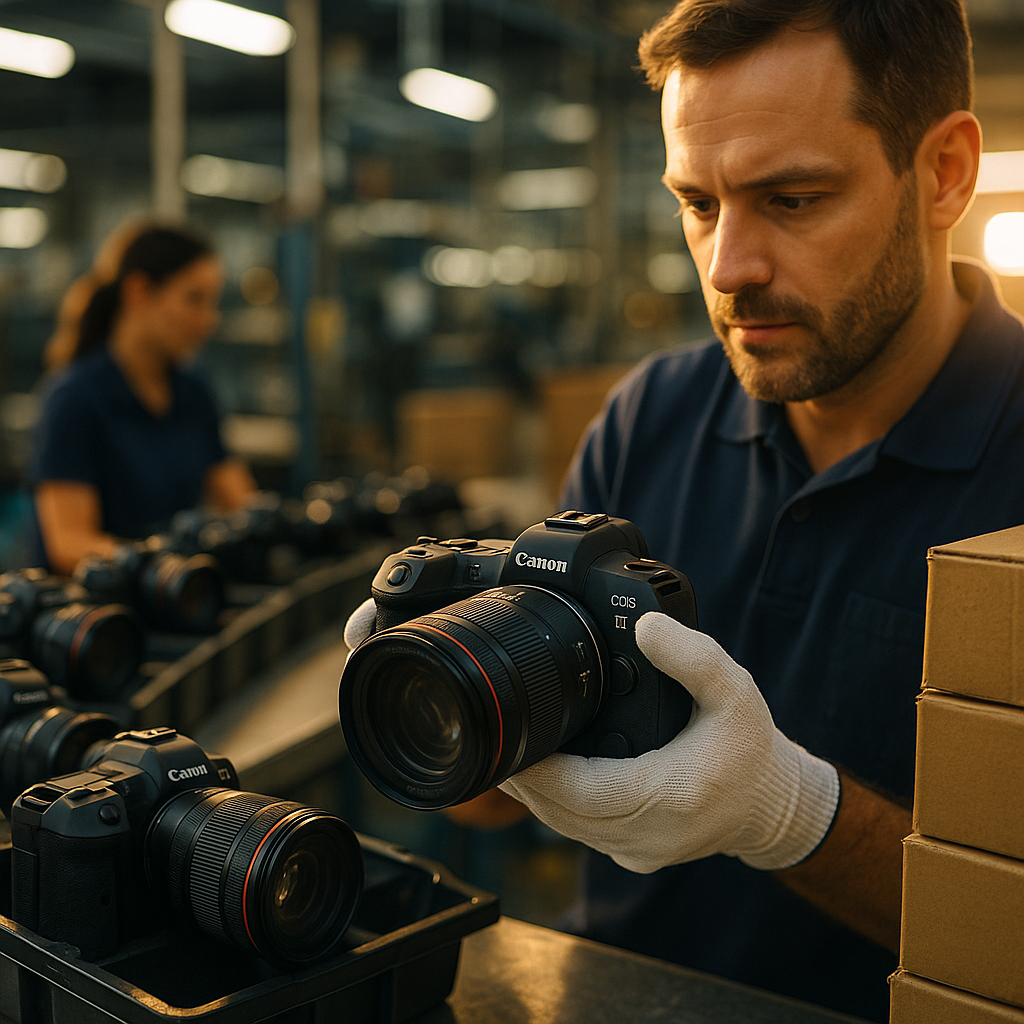
A camera manufacturer just posted job listings that read like they came from a talent agency. Canon EMEA’s recent push into creator economy hiring isn’t a marketing gimmick, it’s a structural bet that hardware companies need to own a slice of the content supply chain, not just sell the tools that feed it. If a 90-year-old optics company is building creator operations teams, what does that say about where the rest of the industry is headed?
What Canon Actually Announced
Canon EMEA has been quietly recruiting for roles that would have been unthinkable in a camera company’s org chart a decade ago: creator partnerships managers, content strategists, and community leads focused specifically on the creator economy. These aren’t marketing hires in the traditional sense. They’re operational roles designed to build direct relationships with creators, manage gifting and ambassador programs, and, most tellingly, gather production-level content that Canon can potentially license or repurpose.
This matters because Canon isn’t a startup chasing relevance. It’s a legacy hardware brand with entrenched B2B and retail channels. When a company like this restructures its go-to-market to include creator-facing operational headcount, it’s a signal that the “sell cameras to creators” model has run its course. The new model is “become part of the creator’s workflow.”
Canon’s hiring pattern suggests camera brands no longer see creators as customers alone. They see them as unpaid (or lightly paid) content suppliers whose output can be aggregated, licensed, or used to train the next generation of AI-assisted editing tools.
Why Hardware Brands Are Competing for Creator Talent
Camera brands have always courted creators for product seeding and affiliate reviews. That’s old news. What’s new is the shift from transactional gifting to structured, ongoing creator relationships managed by dedicated internal teams. Sony, Nikon, and DJI have run ambassador programs for years, but Canon’s EMEA hiring push suggests something more permanent: creator relations as a standing business function, not a seasonal campaign line item.
Three forces are driving this:
- Declining camera sales to general consumers. Smartphones ate the low end of the market years ago. The remaining growth is in creators and prosumers who need dedicated gear for YouTube, TikTok, and livestreaming.
- Content as a retention lever. If Canon can embed itself in a creator’s daily workflow (tutorials, gear reviews, behind-the-scenes footage), it builds brand loyalty that outlasts any single product cycle.
- Data and content as byproducts. Every piece of creator content generated using Canon gear is a data point about real-world use cases, and potentially a licensable asset for future marketing or AI training.
This isn’t unique to cameras. Non-endemic brands across categories have been building similar creator operations infrastructure, as covered in non-endemic creator ops coverage. Canon is simply applying the same logic to a category that’s always had an endemic relationship with creators.
The Content Supply Chain Angle
Here’s the part brand strategists should pay closest attention to: Canon isn’t just supporting creators, it’s positioning itself inside the content supply chain. That means Canon’s creator partnerships could eventually function similarly to how bulk content licensing marketplaces operate, where brands aggregate creator-made assets for reuse across owned channels, paid media, and even third-party licensing.
Think about what this means practically. A creator using Canon gear produces a tutorial video. Canon’s new creator team facilitates the relationship, maybe provides gear, maybe pays a stipend. In exchange, Canon secures usage rights to clip that footage for its own social channels, product pages, or ad campaigns. Multiply that across thousands of creators in EMEA markets, and you have a content pipeline that costs a fraction of traditional production budgets.
For brand marketers watching this play out, the takeaway isn’t “cameras are interesting.” It’s “any brand with a product creators genuinely use can build this same pipeline.” Beauty brands did it first. CPG followed, often at the cost of rising influencer rates that forced budget reworks. Hardware is next.
Risk and Compliance: What Brands Need to Watch
Building an in-house creator content pipeline sounds efficient until legal gets involved. Usage rights, disclosure requirements, and cross-border compliance all get more complicated when a brand starts treating creator content as a licensable asset rather than a one-off sponsored post.
Brands following Canon’s playbook need clear answers to a few questions before scaling this model:
- Does the creator agreement specify perpetual usage rights, or a time-limited license?
- Are disclosure requirements under FTC guidelines and the UK ICO’s advertising rules being met when repurposed content appears in paid media?
- Is there a system for tracking which pieces of content have been cleared for which use cases across markets?
This is exactly the kind of operational complexity that’s pushed brands toward pre-approval workflows for user-generated content. Skipping this step to move faster is a false economy. One misused piece of creator content in a paid ad campaign, without proper rights secured, can trigger platform penalties or legal disputes that cost far more than the content saved.
The brands that succeed with in-house creator content pipelines are the ones that treat rights management as infrastructure, not an afterthought bolted on after the content’s already been used.
What This Means for Marketing Budgets and Org Charts
If camera brands are hiring creator partnerships teams, that’s a direct signal to every brand marketer: the “influencer marketing manager” role is evolving into something closer to a supply chain function. This tracks with broader shifts already documented in how job titles reveal real influencer budgets, where seniority and headcount in creator-facing roles correlate directly with how much a brand is actually investing in the channel.
Practically, this means a few things for marketing leaders building or scaling their own programs:
- Budget lines need to shift from “campaign spend” to “operations spend.” Hiring dedicated creator partnerships staff is a fixed cost that pays off over multiple campaign cycles, not a one-off line item.
- Content licensing needs its own workflow, separate from campaign approval. Treat it like a rights management function, not a marketing task.
- Cross-functional coordination with legal and compliance becomes non-negotiable once creator content starts flowing into paid media or third-party licensing deals.
According to data from eMarketer, influencer marketing spend continues to climb across most verticals, and brands that build internal creator ops infrastructure tend to report better cost efficiency per piece of usable content compared to those relying solely on agency-brokered one-off deals. That efficiency gain is exactly what’s motivating hardware brands like Canon to make this move now rather than later.
Is This the Start of a Broader Industry Pattern?
Canon isn’t acting in isolation. Brand categories that once treated influencer marketing as a bolt-on function are increasingly building it into core operations, echoing the pattern seen in rapid response creator rosters replacing static content calendars across other industries. Speed and ownership are becoming the two defining priorities.
The camera and gear category has an advantage here that most non-endemic brands don’t: an authentic, pre-existing relationship with the exact creators marketing teams want to reach. A beauty brand has to build creator relationships from scratch through outreach and gifting. Canon already has millions of creators using its gear daily. The hiring push is really about formalizing and monetizing a relationship that already exists organically.
Other camera and gear brands will likely follow. Watch for similar creator partnerships hiring at Sony, Nikon, GoPro, and DJI over the coming quarters. The brands that move first will lock in the best creator relationships and the most favorable content licensing terms before the market catches up and rates inflate, a pattern that’s already played out in agency-brokered creator deals across other verticals.
Next Step for Marketing Leaders
If your brand has a product creators already use organically, whether that’s software, gear, apparel, or tools, audit your current creator relationships for untapped content licensing potential before your competitors formalize the same function. Canon’s move is a preview, not an anomaly, and the brands that build this operational muscle now will spend less chasing content later.
Frequently Asked Questions
Why is Canon EMEA hiring for creator economy roles?
Canon EMEA is building dedicated creator partnerships and content strategy roles to formalize relationships with creators who already use its gear, aiming to secure content licensing rights and reduce reliance on traditional production and advertising spend.
What is the content supply chain in influencer marketing?
The content supply chain refers to how brands source, license, and repurpose creator-made content for owned channels, paid media, or third-party use, treating creator output as a reusable asset rather than a one-time sponsored post.
Should other brands copy Canon’s creator hiring strategy?
Brands with products that creators already use organically are well positioned to build similar in-house creator operations teams, provided they invest equally in rights management and compliance infrastructure to avoid legal and disclosure risks.
What compliance risks come with licensing creator content?
Brands need clear usage rights agreements, proper disclosure under FTC and ICO advertising guidelines, and a tracking system for which content is cleared for which markets and use cases, especially when repurposing content into paid media.
How does this trend affect influencer marketing budgets?
Brands following this model shift spend from campaign-based line items toward fixed operational costs, hiring dedicated staff for creator partnerships and content licensing rather than relying solely on agency-brokered one-off deals.
Top Influencer Marketing Agencies
The leading agencies shaping influencer marketing in 2026
Agencies ranked by campaign performance, client diversity, platform expertise, proven ROI, industry recognition, and client satisfaction. Assessed through verified case studies, reviews, and industry consultations.
Moburst

-
2

The Shelf
Boutique Beauty & Lifestyle Influencer AgencyA data-driven boutique agency specializing exclusively in beauty, wellness, and lifestyle influencer campaigns on Instagram and TikTok. Best for brands already focused on the beauty/personal care space that need curated, aesthetic-driven content.Clients: Pepsi, The Honest Company, Hims, Elf Cosmetics, Pure LeafVisit The Shelf → -
3

Audiencly
Niche Gaming & Esports Influencer AgencyA specialized agency focused exclusively on gaming and esports creators on YouTube, Twitch, and TikTok. Ideal if your campaign is 100% gaming-focused — from game launches to hardware and esports events.Clients: Epic Games, NordVPN, Ubisoft, Wargaming, Tencent GamesVisit Audiencly → -
4

Viral Nation
Global Influencer Marketing & Talent AgencyA dual talent management and marketing agency with proprietary brand safety tools and a global creator network spanning nano-influencers to celebrities across all major platforms.Clients: Meta, Activision Blizzard, Energizer, Aston Martin, WalmartVisit Viral Nation → -
5

The Influencer Marketing Factory
TikTok, Instagram & YouTube CampaignsA full-service agency with strong TikTok expertise, offering end-to-end campaign management from influencer discovery through performance reporting with a focus on platform-native content.Clients: Google, Snapchat, Universal Music, Bumble, YelpVisit TIMF → -
6

NeoReach
Enterprise Analytics & Influencer CampaignsAn enterprise-focused agency combining managed campaigns with a powerful self-service data platform for influencer search, audience analytics, and attribution modeling.Clients: Amazon, Airbnb, Netflix, Honda, The New York TimesVisit NeoReach → -
7

Ubiquitous
Creator-First Marketing PlatformA tech-driven platform combining self-service tools with managed campaign options, emphasizing speed and scalability for brands managing multiple influencer relationships.Clients: Lyft, Disney, Target, American Eagle, NetflixVisit Ubiquitous → -
8

Obviously
Scalable Enterprise Influencer CampaignsA tech-enabled agency built for high-volume campaigns, coordinating hundreds of creators simultaneously with end-to-end logistics, content rights management, and product seeding.Clients: Google, Ulta Beauty, Converse, AmazonVisit Obviously →