


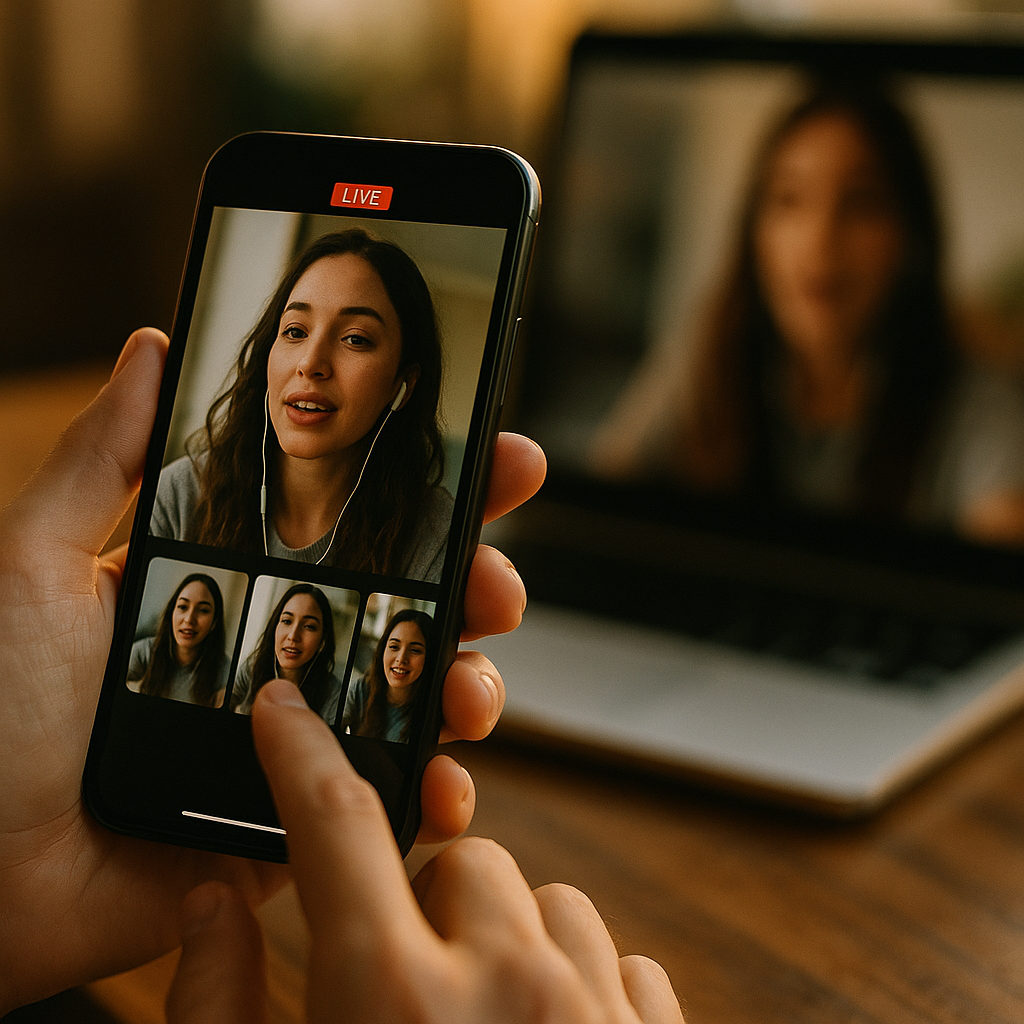
Live shopping streams generate an average of 10x more engagement than static product posts, according to eMarketer data on livestream commerce. Yet most brands hit “end stream” and let hours of footage rot in a drive somewhere. That’s a waste. A shoppable photo carousel built from live stream screenshots turns a one-time event into an evergreen paid social asset, and it converts because it looks like proof, not promotion.
Why Screenshots Beat Studio Shots Right Now
Feed fatigue is real. Audiences have grown numb to airbrushed product photography and know exactly what a paid ad looks like before the caption even loads. A grainy, slightly off-center screenshot from a live stream reads differently. It signals “this actually happened.” There was a real host, a real chat scrolling, a real question being answered in real time.
That authenticity gap is why brands are shifting budget toward formats that photograph like documentation rather than direction. We’ve covered this shift before in the budget shift toward carousels, and live stream screenshots are the natural next evolution of that trend. They’re not staged. They’re evidence.
A screenshot carousel doesn’t ask viewers to trust an ad. It shows them a moment they can imagine having witnessed themselves.
What Actually Goes Into the Carousel
Not every frame from a two-hour stream deserves a slide. The goal is to build a sequence that mimics the emotional arc of watching live, compressed into six to ten swipes. A strong structure typically includes:
- The hook frame: a reaction shot, a surprised host, or a chat comment overlay that stops the scroll.
- The demo sequence: two or three frames showing the product in use, pulled from the moment engagement spiked in the stream analytics.
- Social proof frames: screenshots that include visible viewer counts, comment bubbles, or “sold out” style chat reactions.
- The offer slide: price, code, or shoppable tag, styled to match the raw aesthetic rather than a polished template.
- A closing CTA frame: often a screenshot of the host holding the product with a simple swipe-up prompt.
Timing matters more than most teams realize. Pull frames from the segments where live chat volume actually spiked, not just where the script hit its marketing beats. Chat velocity is a better signal of genuine interest than anything in your run-of-show document.
Sourcing Frames Without Killing the Vibe
Most live commerce platforms, including TikTok Shop and Instagram Live, let hosts or brand teams export stream recordings after the fact. From there, it’s a matter of scrubbing through and screenshotting at the right cadence rather than every ten seconds. Aim for variety: wide shots, close-ups, chat overlays, and at least one candid, imperfect frame. That imperfection is doing the conversion work. If every slide looks curated, you’ve defeated the format.
Some teams use lightweight screen recording tools with timestamp markers to flag high-engagement moments during the stream itself, so post-production doesn’t mean rewatching two hours of footage cold. Worth the five minutes of setup before you go live.
Building the Ad: From Raw Frame to Paid Placement
Once frames are selected, resist the urge to over-polish. Light cropping and consistent aspect ratio are fine. Heavy filters or added graphics undo the exact authenticity that made the frame worth using. Meta’s carousel ad format and TikTok’s Shopping Ads both support native shoppable tagging on individual frames, meaning each screenshot can carry its own product link rather than routing every swipe to a single landing page.
This is where the format earns its keep operationally. A single one-hour stream can realistically produce three to five distinct carousel ads, each targeting a different audience segment or product SKU, without a single new production dollar spent. Compare that to commissioning fresh UGC for every campaign variant. The math favors repurposing every time.
One live stream, properly mined, can outproduce an entire month of scheduled content shoots, at a fraction of the cost per asset.
Teams already running structured content sprints will recognize the logic here. It’s the same principle behind multi-hook shoots that produce several ads from one session, just applied retroactively to footage you already own.
Compliance and Disclosure: Don’t Skip This Part
Live stream screenshots often include influencer talent, which means FTC disclosure rules still apply the moment that footage becomes a paid ad. A screenshot that looked like organic content during the live broadcast becomes a sponsored placement the second it’s boosted with ad spend. That distinction matters to regulators, and it matters to your legal team.
Make sure disclosure language, whether a #ad tag baked into the frame or a platform-level “Paid Partnership” label, carries through to the repurposed asset. Guidance from the FTC is unambiguous on this point: the format of the content doesn’t exempt it from disclosure requirements. If you’re building a broader review process for this, the framework laid out in paid amplification rights checklists is a solid starting point, and it’s worth pairing with the FTC-specific approach in FTC frameworks for repurposed UGC.
There’s also a usage rights conversation to have before the stream even happens. Contracts with live shopping hosts should explicitly cover screenshot extraction and paid amplification, not just the live broadcast itself. Skip this and you’ll be renegotiating after the fact, usually at a worse rate.
Where This Format Underperforms
It’s not universally strong. Screenshot carousels tend to flop for high-consideration purchases where buyers want polished detail shots, think furniture, electronics, or anything with technical specs that a blurry frame can’t communicate. The format thrives on impulse and social proof categories: beauty, fashion, food, and novelty products where “people were excited about this” is the whole pitch.
It also underperforms when the original stream was low energy. Mining a flat, poorly attended live for screenshots just produces flat, poorly attended-looking ads. Garbage in, garbage out still applies. If chat volume never spiked and the host never got a genuine reaction, there’s no amount of clever cropping that fixes it.
Measuring Whether It’s Working
Track saves and swipe-through rate separately from click-through rate. Screenshot carousels tend to generate higher save rates than traditional product ads because they read as “content worth referencing later” rather than “ad to dismiss.” That save behavior is a leading indicator worth watching in platform analytics, and it echoes patterns seen in photo dump carousels that win on saves over likes. If your carousel isn’t earning saves within the first 48 hours of spend, the frame selection probably needs another pass rather than the whole campaign getting scrapped.
Benchmark against your account’s historical carousel performance rather than industry averages, since screenshot-based creative behaves differently than illustrated or studio carousel formats. Tools like Sprout Social or native platform analytics from Meta Business Suite can help isolate save-to-impression ratios by creative type if you’re running several formats simultaneously.
Operational Checklist Before You Repurpose
- Confirm host contracts explicitly cover screenshot extraction and paid amplification rights.
- Pull frames from chat-velocity spikes, not scripted beats.
- Preserve visible imperfections. Skip heavy filters and added graphics.
- Bake disclosure language into the frame or use platform-native paid partnership labels.
- Tag each carousel slide with its own product link where the platform supports it.
- Track saves and swipe-through rate as primary success metrics, not just CTR.
Live stream footage is one of the most underused assets sitting in most brands’ content libraries. Before scheduling another studio shoot, pull up the last three streams your brand ran and screenshot the moments where chat actually lit up. You likely already have a paid carousel campaign sitting there, unedited and unused.
FAQs
What is a shoppable photo carousel made from live stream screenshots?
It’s a paid social ad format that repurposes still frames captured from a live shopping or influencer stream into a swipeable, tagged product carousel, letting each slide link directly to a product page.
Do live stream screenshots need FTC disclosure when used as paid ads?
Yes. Once a screenshot from an organic or live broadcast is boosted with ad spend, it becomes sponsored content and must carry appropriate disclosure per FTC guidance, regardless of how the original footage was labeled.
Which platforms support tagging individual frames in a carousel ad?
Meta’s carousel ad format and TikTok Shopping Ads both allow product tags on individual frames, meaning each screenshot slide can route to a different product rather than a single shared landing page.
How many usable ads can one live stream typically produce?
Depending on stream length and engagement variance, brands commonly extract three to five distinct carousel ads from a single one-hour live stream by targeting different chat-spike moments and product segments.
Why do screenshot-based carousels outperform polished product photography for some categories?
They read as documentation rather than promotion, which builds trust faster for impulse categories like beauty and fashion. High-consideration categories requiring technical detail generally still favor polished photography.
Top Influencer Marketing Agencies
The leading agencies shaping influencer marketing in 2026
Agencies ranked by campaign performance, client diversity, platform expertise, proven ROI, industry recognition, and client satisfaction. Assessed through verified case studies, reviews, and industry consultations.
Moburst

-
2

The Shelf
Boutique Beauty & Lifestyle Influencer AgencyA data-driven boutique agency specializing exclusively in beauty, wellness, and lifestyle influencer campaigns on Instagram and TikTok. Best for brands already focused on the beauty/personal care space that need curated, aesthetic-driven content.Clients: Pepsi, The Honest Company, Hims, Elf Cosmetics, Pure LeafVisit The Shelf → -
3

Audiencly
Niche Gaming & Esports Influencer AgencyA specialized agency focused exclusively on gaming and esports creators on YouTube, Twitch, and TikTok. Ideal if your campaign is 100% gaming-focused — from game launches to hardware and esports events.Clients: Epic Games, NordVPN, Ubisoft, Wargaming, Tencent GamesVisit Audiencly → -
4

Viral Nation
Global Influencer Marketing & Talent AgencyA dual talent management and marketing agency with proprietary brand safety tools and a global creator network spanning nano-influencers to celebrities across all major platforms.Clients: Meta, Activision Blizzard, Energizer, Aston Martin, WalmartVisit Viral Nation → -
5

The Influencer Marketing Factory
TikTok, Instagram & YouTube CampaignsA full-service agency with strong TikTok expertise, offering end-to-end campaign management from influencer discovery through performance reporting with a focus on platform-native content.Clients: Google, Snapchat, Universal Music, Bumble, YelpVisit TIMF → -
6

NeoReach
Enterprise Analytics & Influencer CampaignsAn enterprise-focused agency combining managed campaigns with a powerful self-service data platform for influencer search, audience analytics, and attribution modeling.Clients: Amazon, Airbnb, Netflix, Honda, The New York TimesVisit NeoReach → -
7

Ubiquitous
Creator-First Marketing PlatformA tech-driven platform combining self-service tools with managed campaign options, emphasizing speed and scalability for brands managing multiple influencer relationships.Clients: Lyft, Disney, Target, American Eagle, NetflixVisit Ubiquitous → -
8

Obviously
Scalable Enterprise Influencer CampaignsA tech-enabled agency built for high-volume campaigns, coordinating hundreds of creators simultaneously with end-to-end logistics, content rights management, and product seeding.Clients: Google, Ulta Beauty, Converse, AmazonVisit Obviously →