


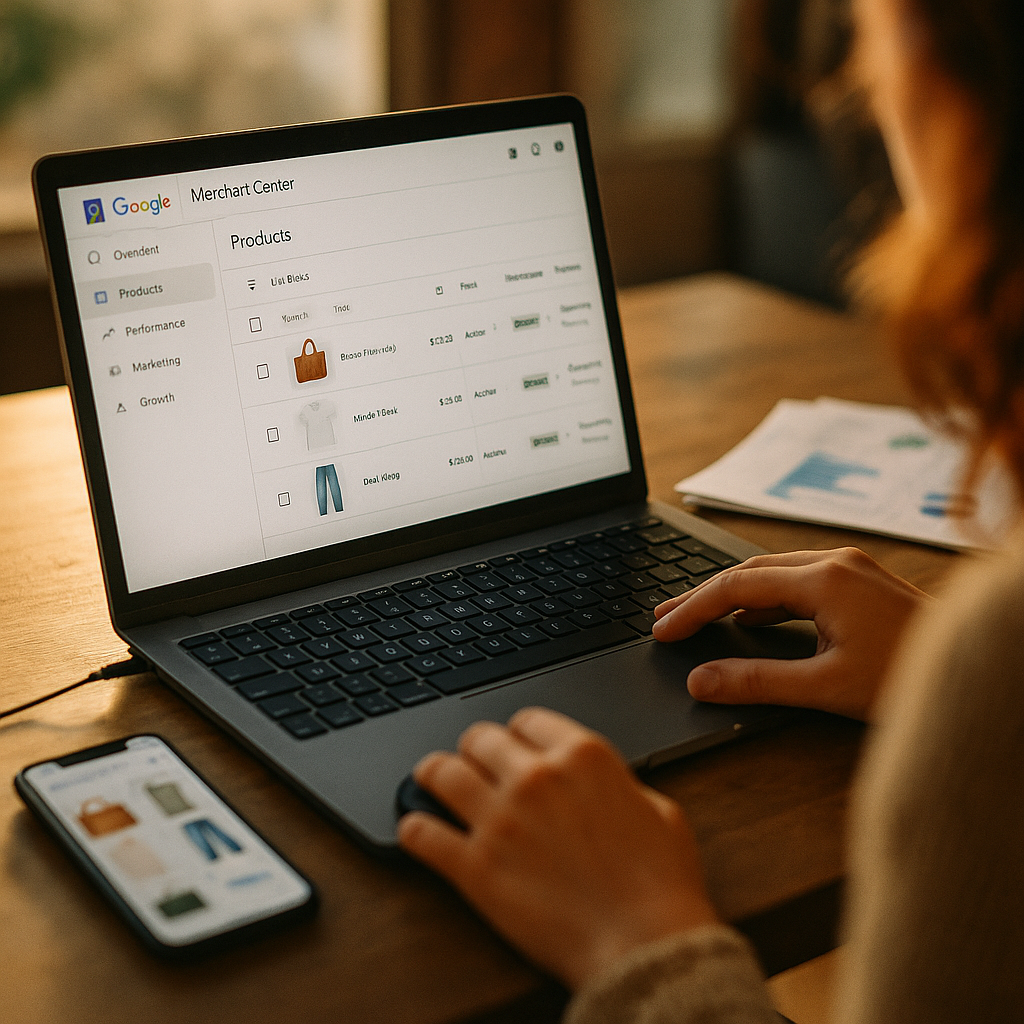
Google quietly set an expiration date on the Content API for Shopping, and most creator commerce teams haven’t noticed. By the time the legacy endpoints go dark, any brand running creator linked shopping feeds through outdated integrations will see product listings vanish from Search, Shopping tabs, and AI Overviews overnight. The Merchant API cutover isn’t a developer footnote. It’s a compliance deadline with real revenue attached.
If your influencer program pushes product feeds through creator storefronts, affiliate widgets, or livestream shopping integrations, this migration touches you directly. Here’s what’s changing, who’s exposed, and the exact steps to stay listed.
What the Merchant API Cutover Actually Changes
Google has been retiring the legacy Content API for Shopping in favor of the newer Merchant API, which uses a modular, sub-API structure (Products, Inventories, Reports, Promotions, and so on) instead of one monolithic endpoint. The old API still technically works for some accounts, but Google has been progressively shutting off write access and has signaled that full deprecation is coming. Once it’s gone, any feed still calling the old endpoints simply stops updating. Prices freeze. Inventory goes stale. Promotions expire and never refresh.
For a standard retailer, this is an IT ticket. For brands running creator linked shopping, it’s messier, because the feed isn’t just coming from your own ecommerce platform. It’s coming from TikTok Shop integrations, creator storefront plugins, affiliate link aggregators, and third-party livestream commerce tools, each of which has its own timeline for adopting the new API.
A feed that silently stops updating is worse than a feed that fails loudly. Stale creator product data can sit live for weeks, feeding shoppers wrong prices and out-of-stock items before anyone notices the drop in conversions.
Why Creator Shopping Feeds Are Uniquely Exposed
Most Merchant Center accounts pull from a single, centrally managed product feed. Creator commerce breaks that model. A brand might have its core catalog feeding Google Shopping normally, while a dozen creator storefronts, affiliate marketplaces, and shoppable video integrations each generate their own sub-feeds, often through middleware that hasn’t been audited since it was first set up.
That middleware is the risk. Agencies and MarTech vendors built a lot of creator commerce plumbing in the last few years on top of the Content API because it was the stable, documented option at the time. Few of those vendors have publicly confirmed Merchant API readiness. If you’re relying on a creator storefront plugin, a TikTok Shop sync tool, or a link-in-bio commerce app to push listings into Google Shopping, you need a direct answer from that vendor, not an assumption.
- Shoppable livestream integrations that auto-generate product feeds from live selling events
- Creator storefront plugins (Shopify collections curated by influencers, synced to Google Shopping)
- Affiliate marketplace feeds where multiple creators link to the same SKUs under different promo terms
- Dynamic remarketing feeds tied to creator-driven landing pages
Each of these is a separate point of failure. And unlike a core ecommerce feed, nobody on the brand side may “own” these integrations in any formal sense. They were often set up by an agency, a freelance developer, or the creator platform itself, and ownership tends to get fuzzy exactly when a migration deadline hits.
The Compliance Checklist: What to Audit This Quarter
Treat this the way you’d treat any regulatory deadline: inventory first, remediate second, verify third. Here’s the sequence that’s worked for retail and DTC teams navigating similar platform migrations.
- Map every feed source. List every integration pushing products into Google Merchant Center, including anything tied to creator storefronts, affiliate tools, or livestream commerce. Don’t assume you have a complete list; pull it directly from Merchant Center’s data sources panel.
- Confirm API version per source. For each feed, ask the vendor or agency directly: is this running on Content API for Shopping or Merchant API? If they can’t answer quickly, that’s a signal the integration hasn’t been prioritized.
- Check authentication method. Merchant API uses OAuth 2.0, and legacy service account setups may need to be reconfigured entirely, not just pointed at a new endpoint.
- Test sub-API coverage. Merchant API splits functionality across multiple sub-APIs. A vendor might have migrated Products but not Promotions, meaning creator discount codes stop syncing even if the base catalog still works.
- Audit error reporting. Merchant Center’s diagnostics should flag failed pushes, but creator feeds run through third-party middleware sometimes fail silently upstream, before Google ever sees the request. Ask vendors how they monitor for failed syncs.
- Set a rollback plan. If a creator feed breaks mid-migration, know in advance whether you can revert to manual listing updates without losing the whole campaign’s visibility.
This isn’t a one-and-done audit. Run it on a recurring cadence through the migration window, because vendors are updating their own integrations on staggered timelines, and a feed that passes today could break next month when an upstream partner pushes an update of their own.
Who’s Actually Responsible When a Feed Breaks?
This is the question nobody wants to answer in the contract, and it’s exactly the kind of gap that shows up during a platform transition. If a creator’s storefront plugin fails to migrate and the brand’s products drop out of Google Shopping for three weeks, is that the agency’s liability, the creator’s, or the brand’s own MarTech team’s?
Most influencer agreements don’t address platform API maintenance at all. They cover content deliverables, usage rights, and disclosure obligations, but rarely technical uptime for the commerce integration layer. That’s worth fixing now, before a migration-related outage becomes a dispute. Brands that have already tightened their contract language around attribution and platform dependencies, similar to the approach covered in our creator contract coverage, are better positioned to assign responsibility cleanly when a vendor’s integration lags behind a platform deadline.
It also intersects with GMV reporting. If a creator’s shopping feed goes stale and sales dip, your attribution data gets distorted right alongside the actual revenue loss. Teams that have built clean audit trails for storefront performance, the kind discussed in our piece on GMV reporting, will have an easier time isolating a Merchant API outage from a genuine demand drop. Without that separation, finance teams may misread a technical glitch as a failed campaign and pull budget from a program that was actually performing fine.
Platform-Specific Wrinkles Worth Knowing
TikTok Shop’s integration with Google Shopping has its own sync mechanics, and sellers running creator-linked product drops there should treat this migration as a second compliance checkpoint on top of the seller performance standards already in place. If you’ve been tracking seller demotion risk through TikTok Shop’s compliance scoring, the same operational discipline applies here: a feed outage caused by an unmigrated API can tank visibility metrics even when the seller account itself is in good standing. Our breakdown of seller compliance checklists covers the adjacent risk surface worth cross-referencing.
Affiliate commission tracking is another pressure point. If a creator’s shopping feed drops out of Google during the exact window their affiliate codes are driving traffic, reconciling who gets paid for what becomes a mess, particularly when 1099 reporting is already layered on top of affiliate payouts. Brands managing that complexity should revisit how affiliate commission data is tracked so a feed outage doesn’t also corrupt tax reporting downstream.
Practical Steps Over the Next 90 Days
Start with the vendors, not the code. Email every creator commerce platform and plugin provider in your stack and ask for their Merchant API migration status in writing. If a vendor can’t give you a date, that’s your highest-priority replacement candidate. Then run a parallel feed test: push a small subset of SKUs through the new Merchant API alongside the legacy feed, and compare what shows up in Merchant Center diagnostics. Discrepancies there are far cheaper to fix now than after full cutover.
Google’s own Merchant Center support documentation is the authoritative source for migration timelines, and it’s updated more frequently than most third-party summaries, including this one. Pair that with your own internal tracker so nobody on the team is relying on memory for which feeds have been confirmed migrated.
Industry data on retail media and commerce integrations, tracked by firms like eMarketer, consistently shows that shoppable social and creator commerce now account for a meaningful and growing share of ecommerce discovery traffic. Losing Google Shopping visibility during a migration window isn’t a rounding error. It’s a direct hit to one of the fastest-growing acquisition channels brands have.
Build the Audit Trail Now, Not After Something Breaks
Document every step of your migration: which feeds were tested, which vendors confirmed readiness, which dates things went live. This isn’t just good practice, it’s the paper trail you’ll want if a creator partnership underperforms during the transition and someone asks why. Teams that have already built documentation habits around AI attribution standards, like the pre-launch checklist approach in our attribution compliance coverage, can largely reuse that same documentation discipline here.
The Bottom Line
The Merchant API cutover rewards brands that treat it as an operational deadline rather than a background IT update. Get vendor confirmations in writing, test feeds in parallel before fully committing, and put feed uptime language into your next round of creator and agency contracts. Do that now, and the cutover becomes a non-event instead of a quarter-end scramble to explain a traffic drop nobody can trace.
Frequently Asked Questions
What happens to creator shopping feeds if they aren’t migrated to Merchant API in time?
Feeds still running on the legacy Content API will stop updating once Google fully deprecates it, meaning prices, inventory, and promotions tied to creator storefronts will freeze and eventually be removed from Google Shopping surfaces.
Who is responsible for migrating creator storefront integrations?
Responsibility typically falls on whichever vendor built the integration, whether that’s a Shopify app developer, a livestream commerce platform, or an affiliate marketplace tool. Brands should get written confirmation of migration status directly from each vendor rather than assuming compliance.
How can brands tell if a creator feed has already broken due to the API change?
Check the diagnostics panel in Google Merchant Center for failed pushes or stale timestamps on product data. Feeds routed through third-party middleware can also fail upstream before Google ever logs an error, so direct vendor confirmation is still necessary.
Does the Merchant API cutover affect TikTok Shop or Instagram Shopping integrations with Google?
Yes. Any integration that syncs product data into Google Merchant Center, including TikTok Shop sellers using Google Shopping visibility tools, needs to confirm its own Merchant API readiness independently of the social platform’s internal systems.
Should influencer contracts address platform API maintenance?
It’s worth adding language covering feed uptime responsibilities and liability for integration failures, since most existing creator contracts focus on content deliverables and disclosure rather than technical maintenance of commerce integrations.
Frequently Asked Questions
What happens to creator shopping feeds if they aren’t migrated to Merchant API in time?
Feeds still running on the legacy Content API will stop updating once Google fully deprecates it, meaning prices, inventory, and promotions tied to creator storefronts will freeze and eventually be removed from Google Shopping surfaces.
Who is responsible for migrating creator storefront integrations?
Responsibility typically falls on whichever vendor built the integration, whether that’s a Shopify app developer, a livestream commerce platform, or an affiliate marketplace tool. Brands should get written confirmation of migration status directly from each vendor rather than assuming compliance.
How can brands tell if a creator feed has already broken due to the API change?
Check the diagnostics panel in Google Merchant Center for failed pushes or stale timestamps on product data. Feeds routed through third-party middleware can also fail upstream before Google ever logs an error, so direct vendor confirmation is still necessary.
Does the Merchant API cutover affect TikTok Shop or Instagram Shopping integrations with Google?
Yes. Any integration that syncs product data into Google Merchant Center, including TikTok Shop sellers using Google Shopping visibility tools, needs to confirm its own Merchant API readiness independently of the social platform’s internal systems.
Should influencer contracts address platform API maintenance?
It’s worth adding language covering feed uptime responsibilities and liability for integration failures, since most existing creator contracts focus on content deliverables and disclosure rather than technical maintenance of commerce integrations.
Top Influencer Marketing Agencies
The leading agencies shaping influencer marketing in 2026
Agencies ranked by campaign performance, client diversity, platform expertise, proven ROI, industry recognition, and client satisfaction. Assessed through verified case studies, reviews, and industry consultations.
Moburst

-
2

The Shelf
Boutique Beauty & Lifestyle Influencer AgencyA data-driven boutique agency specializing exclusively in beauty, wellness, and lifestyle influencer campaigns on Instagram and TikTok. Best for brands already focused on the beauty/personal care space that need curated, aesthetic-driven content.Clients: Pepsi, The Honest Company, Hims, Elf Cosmetics, Pure LeafVisit The Shelf → -
3

Audiencly
Niche Gaming & Esports Influencer AgencyA specialized agency focused exclusively on gaming and esports creators on YouTube, Twitch, and TikTok. Ideal if your campaign is 100% gaming-focused — from game launches to hardware and esports events.Clients: Epic Games, NordVPN, Ubisoft, Wargaming, Tencent GamesVisit Audiencly → -
4

Viral Nation
Global Influencer Marketing & Talent AgencyA dual talent management and marketing agency with proprietary brand safety tools and a global creator network spanning nano-influencers to celebrities across all major platforms.Clients: Meta, Activision Blizzard, Energizer, Aston Martin, WalmartVisit Viral Nation → -
5

The Influencer Marketing Factory
TikTok, Instagram & YouTube CampaignsA full-service agency with strong TikTok expertise, offering end-to-end campaign management from influencer discovery through performance reporting with a focus on platform-native content.Clients: Google, Snapchat, Universal Music, Bumble, YelpVisit TIMF → -
6

NeoReach
Enterprise Analytics & Influencer CampaignsAn enterprise-focused agency combining managed campaigns with a powerful self-service data platform for influencer search, audience analytics, and attribution modeling.Clients: Amazon, Airbnb, Netflix, Honda, The New York TimesVisit NeoReach → -
7

Ubiquitous
Creator-First Marketing PlatformA tech-driven platform combining self-service tools with managed campaign options, emphasizing speed and scalability for brands managing multiple influencer relationships.Clients: Lyft, Disney, Target, American Eagle, NetflixVisit Ubiquitous → -
8

Obviously
Scalable Enterprise Influencer CampaignsA tech-enabled agency built for high-volume campaigns, coordinating hundreds of creators simultaneously with end-to-end logistics, content rights management, and product seeding.Clients: Google, Ulta Beauty, Converse, AmazonVisit Obviously →