


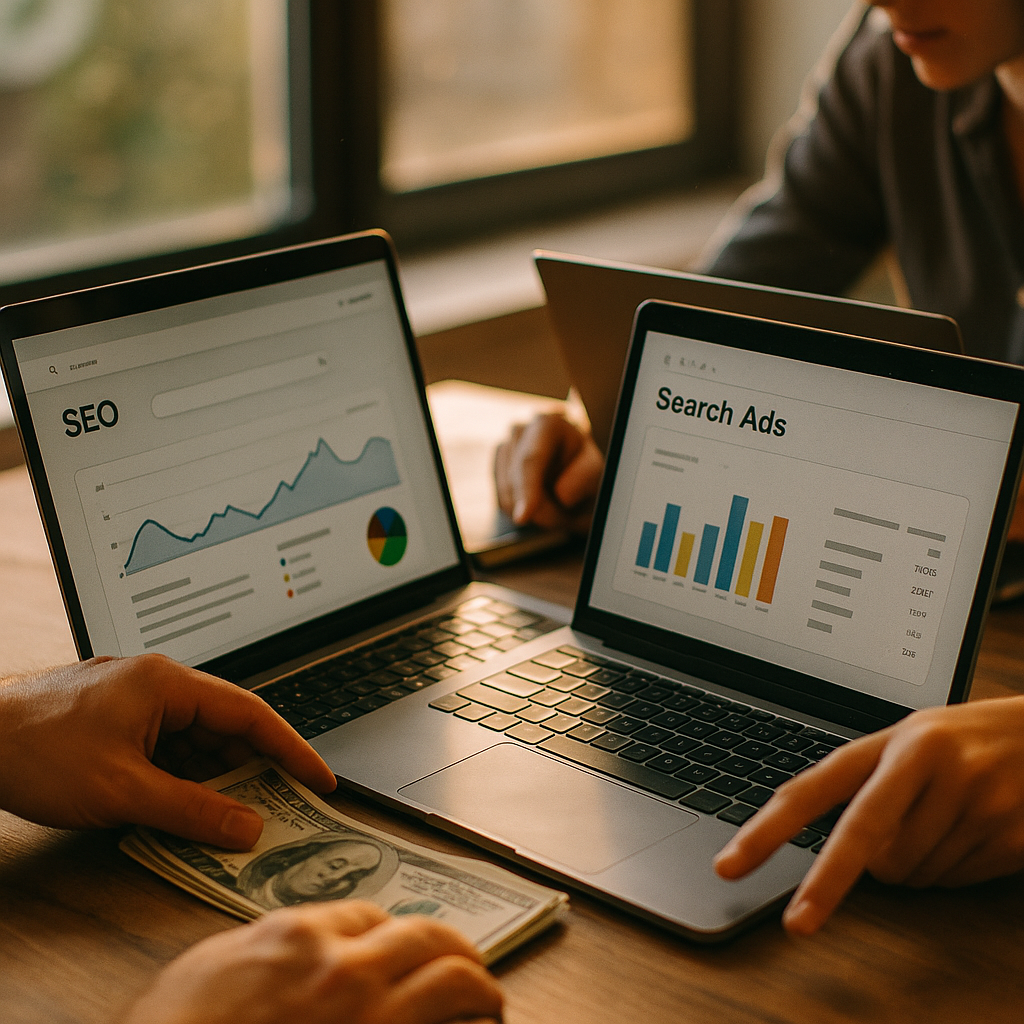
Only 36 percent of brands have a dedicated budget line for generative search optimization, yet most marketers admit they’re already losing visibility inside AI Overviews and chatbot answers. That gap is where AEO and GEO convergence lives right now: a quiet reallocation of marketing dollars away from legacy SEO tactics and toward content built to be cited, summarized, and surfaced by generative engines. If your 2026 plan still treats answer engine optimization and generative engine optimization as separate line items, you’re already behind.
Two Acronyms, One Budget Fight
AEO (answer engine optimization) and GEO (generative engine optimization) started as distinct disciplines. AEO was about structuring content to win featured snippets and voice search results. GEO came later, aimed squarely at getting content cited inside ChatGPT, Perplexity, and Google’s AI Overviews. For a while, marketing teams ran them as parallel experiments, often owned by different people with different KPIs.
That separation is collapsing. Google’s AI Overviews now appear on a majority of informational queries, and tools like Perplexity and Microsoft Copilot pull answers from the same pool of structured, authoritative content that ranks well in traditional search. The practical result: the tactics that win AEO placement (clear answers, schema markup, structured data) are the same tactics that win GEO citations. Brands that keep these as separate budgets are duplicating work and diluting measurement.
When answer engines and generative engines start rewarding the same content signals, treating AEO and GEO as separate disciplines isn’t just inefficient, it’s a budgeting error that compounds every quarter.
Where the Money Is Actually Moving
Marketing leaders aren’t quietly shifting a few percentage points here. Several agency surveys this year show CMOs pulling spend out of display and even some paid search to fund content restructuring projects aimed at generative visibility. That mirrors a pattern readers of this publication have seen before: budget reallocation follows attention, and attention is moving to AI-mediated discovery. The same dynamic drove the 93 percent budget surge in creator spend, and generative search is triggering a similar internal justification exercise.
What makes this reallocation different is the urgency. SEO shifts used to play out over 18 to 24 months. Generative search behavior is changing monthly as Google updates its AI Overview rollout and competitors like OpenAI and Perplexity expand shopping and local answer features. eMarketer has flagged generative search as one of the fastest-growing referral categories marketers are tracking heading into next year, even though direct attribution remains messy.
- Content teams are restructuring existing assets into Q&A formats rather than writing net-new pages.
- Brands are investing in structured data and schema implementation as a core technical SEO line item.
- PR and digital PR budgets are growing because third-party citations influence what generative engines surface as “authoritative.”
Why Creator Content Keeps Showing Up in AI Answers
Here’s the part most SEO teams miss: generative engines don’t just pull from brand-owned pages. They pull from Reddit threads, YouTube transcripts, TikTok captions, and creator reviews, because those sources carry conversational, first-person authority signals that LLMs are trained to weight heavily. A product review video with a clear verdict and timestamped chapters can outrank a brand’s own landing page in an AI-generated answer.
This is forcing a rethink of creator briefs. It’s no longer enough to ask a creator for an authentic review. Brands now need creators to structure content in ways that generative engines can parse: clear claims, specific comparisons, named competitors, and searchable phrasing. That overlaps directly with the shift documented in vertical video ad brief rebuilds, where format discipline became a budget requirement rather than a nice-to-have.
Attribution gets harder here, not easier. If a generative engine summarizes a creator’s video and a consumer never clicks through, how do you credit that influence? This is the same measurement anxiety raised at Advertising Week’s creator attribution sessions, and GEO convergence is pouring gasoline on it.
The Verification Problem Nobody Wants to Own
If generative engines are citing creators as authoritative sources, brands have a new incentive to inflate presence rather than build genuine audience trust. That’s dangerous. The same inflated-metrics risk that plagued influencer marketing for years, detailed in reporting on impression inflation, is resurfacing in a generative search context. A brand that pays for volume without vetting creator credibility risks having low-quality, unverified content become the “voice” that an AI engine attributes to its category.
Compliance teams should be paying attention too. The FTC’s disclosure guidance already applies to sponsored creator content regardless of where it ends up getting surfaced, including inside an AI-generated summary. If a generative engine strips disclosure language when it paraphrases a sponsored post, that’s a compliance gray area brand legal teams haven’t fully mapped yet. Expect this to become a bigger conversation at industry events similar to how ad conferences have shifted toward procurement-focused sessions.
What a GEO-Ready Operating Model Looks Like
Forward-leaning brands aren’t waiting for perfect measurement before acting. They’re building cross-functional pods that combine SEO, content, and influencer teams under one generative visibility goal. A few patterns worth copying:
- Consolidate ownership. One team, one dashboard, one budget for AEO and GEO combined. Splitting them invites duplicated vendor spend.
- Audit existing creator content for citability. Does it make clear claims? Is it structured enough for an LLM to extract a verdict? Retroactively tagging and repackaging top-performing creator content is cheaper than commissioning new assets from scratch.
- Build retention into the creator roster. Generative engines reward consistency and repeated citation of the same voice over time, which is why retention rate as a program health metric matters more now than reach alone.
- Track citation share, not just rankings. New tools are emerging to monitor how often a brand or its creators get cited inside AI answers. Treat this as a KPI alongside traditional organic traffic, similar to how Sprout Social frames share-of-voice tracking for social.
None of this works without executive buy-in on measurement ambiguity. Finance teams want attribution models with clean lines. Generative search doesn’t offer that yet, and HubSpot’s own research on AI search behavior acknowledges the industry is still building standardized reporting frameworks. Brands that wait for perfect data will lose the visibility race to competitors willing to operate on directional signals.
Agencies Are Already Repricing Around This
Retainer structures are shifting too. Several agencies have quietly added GEO auditing and schema implementation as billable line items separate from traditional SEO retainers, a pattern that echoes the broader move toward multi-year retainers replacing one-off campaigns. Expect procurement teams to push back on this at first, then quietly accept it once competitive visibility gaps become obvious in board reporting. The reversal toward agency-led execution documented elsewhere in this publication applies directly here: most in-house teams don’t have the bandwidth to monitor generative engine behavior across multiple platforms simultaneously.
Statista’s advertising forecasts continue to show search budgets growing even as click-through rates on traditional results decline, a contradiction that only makes sense once you factor in generative answer citations as a new, unmeasured form of visibility. Brands that figure out how to value that visibility before their competitors do will own a measurement advantage that’s hard to reverse-engineer later. Check Statista’s advertising data for the underlying search spend trends driving this shift.
The takeaway is simple: stop budgeting AEO and GEO as separate experiments. Combine the teams, fund the citation audit now, and treat your best creator content as a search asset, not just a campaign deliverable.
Frequently Asked Questions
What is the difference between AEO and GEO?
AEO (answer engine optimization) focuses on structuring content to win featured snippets, voice search answers, and direct query responses. GEO (generative engine optimization) focuses on getting content cited or summarized inside AI-generated answers from tools like ChatGPT, Perplexity, and Google’s AI Overviews. The tactics increasingly overlap, which is why brands are merging the two into a single strategy.
Why are marketing budgets shifting toward generative search optimization?
Generative engines now influence a significant share of informational and shopping queries, and marketers are seeing referral traffic patterns change faster than traditional SEO cycles. Brands are reallocating budget from display and some paid search into content restructuring, schema markup, and creator content audits to maintain visibility inside AI-generated answers.
How does creator content factor into generative engine optimization?
Generative engines frequently cite creator reviews, comparison videos, and first-person content because it carries conversational authority signals that large language models weight heavily. Brands are updating creator briefs to request clearer claims, structured comparisons, and searchable phrasing so that content performs well inside AI summaries, not just on the platform it was posted to.
Can brands measure ROI from generative search visibility yet?
Measurement is still immature. Most brands are tracking citation share (how often they or their creators appear in AI-generated answers) as a directional metric rather than a precise attribution model. Standardized reporting frameworks are emerging, but marketers are largely operating on proxy signals for now rather than clean conversion data.
Does FTC disclosure guidance apply to creator content that appears in AI-generated summaries?
Disclosure obligations apply to the original sponsored content regardless of where it later gets surfaced or paraphrased. If a generative engine strips disclosure language when summarizing a sponsored post, that creates a compliance gray area that brand legal teams are still working through, and it’s a growing concern heading into next year.
Top Influencer Marketing Agencies
The leading agencies shaping influencer marketing in 2026
Agencies ranked by campaign performance, client diversity, platform expertise, proven ROI, industry recognition, and client satisfaction. Assessed through verified case studies, reviews, and industry consultations.
Moburst

-
2

The Shelf
Boutique Beauty & Lifestyle Influencer AgencyA data-driven boutique agency specializing exclusively in beauty, wellness, and lifestyle influencer campaigns on Instagram and TikTok. Best for brands already focused on the beauty/personal care space that need curated, aesthetic-driven content.Clients: Pepsi, The Honest Company, Hims, Elf Cosmetics, Pure LeafVisit The Shelf → -
3

Audiencly
Niche Gaming & Esports Influencer AgencyA specialized agency focused exclusively on gaming and esports creators on YouTube, Twitch, and TikTok. Ideal if your campaign is 100% gaming-focused — from game launches to hardware and esports events.Clients: Epic Games, NordVPN, Ubisoft, Wargaming, Tencent GamesVisit Audiencly → -
4

Viral Nation
Global Influencer Marketing & Talent AgencyA dual talent management and marketing agency with proprietary brand safety tools and a global creator network spanning nano-influencers to celebrities across all major platforms.Clients: Meta, Activision Blizzard, Energizer, Aston Martin, WalmartVisit Viral Nation → -
5

The Influencer Marketing Factory
TikTok, Instagram & YouTube CampaignsA full-service agency with strong TikTok expertise, offering end-to-end campaign management from influencer discovery through performance reporting with a focus on platform-native content.Clients: Google, Snapchat, Universal Music, Bumble, YelpVisit TIMF → -
6

NeoReach
Enterprise Analytics & Influencer CampaignsAn enterprise-focused agency combining managed campaigns with a powerful self-service data platform for influencer search, audience analytics, and attribution modeling.Clients: Amazon, Airbnb, Netflix, Honda, The New York TimesVisit NeoReach → -
7

Ubiquitous
Creator-First Marketing PlatformA tech-driven platform combining self-service tools with managed campaign options, emphasizing speed and scalability for brands managing multiple influencer relationships.Clients: Lyft, Disney, Target, American Eagle, NetflixVisit Ubiquitous → -
8

Obviously
Scalable Enterprise Influencer CampaignsA tech-enabled agency built for high-volume campaigns, coordinating hundreds of creators simultaneously with end-to-end logistics, content rights management, and product seeding.Clients: Google, Ulta Beauty, Converse, AmazonVisit Obviously →