


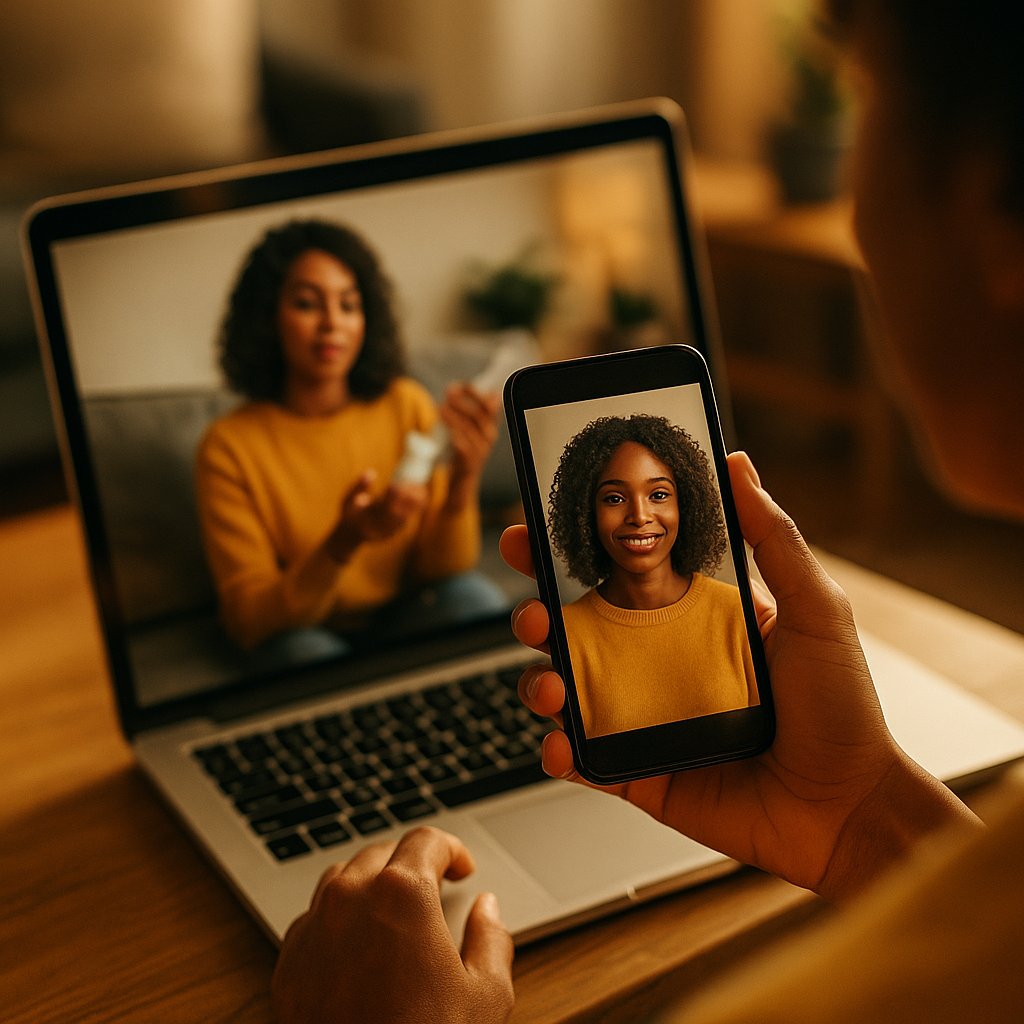
Seventy percent of marketers now say they plan to use AI-generated content in campaigns within the next year, according to eMarketer research tracking creator economy spend. But here’s the twist nobody saw coming: the winning strategy isn’t replacing creators with avatars. It’s blending them. Welcome to AI avatar hybrid UGC, the production model quietly reshaping how brands scale authentic-feeling content without blowing the budget or the brief.
What Hybrid UGC Actually Means
Hybrid UGC pairs a real human creator (their face, their voice, their lived-in credibility) with a synthetic presenter layer that extends, localizes, or scales that content after the fact. Think of it as a division of labor. The creator shoots the authentic hook, the testimonial, the unboxing moment. The AI avatar then handles the repetitive parts: product spec rundowns, multilingual versions, seasonal refreshes, or variant testing at a volume no human schedule could sustain.
This isn’t the same as fully synthetic UGC, where a brand generates a fake “creator” from scratch using tools like Synthesia or HeyGen. That approach has its place, but it carries real trust risk when audiences sniff out that nobody actually used the product. Hybrid models sidestep that by keeping a verified human at the center of the narrative, then using synthetic tools to multiply reach.
The brands getting this right treat AI avatars as a production multiplier for real creator content, not a replacement for the creator relationship itself.
Why Brands Are Testing This Model Now
Three pressures converged. First, content velocity demands outpaced creator bandwidth, agencies need ten variants of a single UGC asset for different funnel stages, as outlined in our breakdown of funnel stage content mapping. Second, localization budgets ballooned once brands realized a single English-language testimonial could theoretically serve twelve markets if dubbed and lip-synced well. Third, paid social platforms reward fresh creative at a pace that burns out even prolific creators.
Avatar tools solve the arithmetic problem. A creator films once. The brand licenses that footage, trains or applies an avatar layer, and generates a dozen derivative cuts: different languages, different product SKUs, different CTAs for different ad sets. Spark Ads teams in particular have leaned into this, since spark ads amplification already rewards brands that can rapidly scale a proven organic winner into paid variants.
The Economics Are Hard to Ignore
A single creator UGC package with usage rights typically costs anywhere from $500 to $5,000 depending on reach and exclusivity. Multiply that across ten languages or twenty product variants and the math gets ugly fast. Avatar-assisted scaling can cut that multiplication cost by 60 to 80 percent in some agency case studies, because the marginal cost of generating variant number eleven is close to zero once the base asset and avatar rig exist.
That said, cheap scale isn’t the only metric that matters. Conversion still depends on whether the content feels real. This is where hybrid models earn their keep over fully synthetic ones.
Where This Gets Risky: Disclosure and Trust
Here’s the uncomfortable question every CMO should be asking: does your audience know which parts are human and which parts are synthetic? The FTC has signaled increasing scrutiny of undisclosed AI-generated endorsements, treating synthetic testimonials the same way it treats fake reviews. If a brand uses an avatar trained on a creator’s likeness to say things that creator never actually said about the product, that’s not a gray area anymore. That’s a liability.
The safer practice, and the one legal teams at larger agencies are now mandating, is explicit labeling whenever synthetic elements appear in a sponsored post. Platforms are catching up too. Meta’s business tools have started rolling out AI content disclosure requirements, and TikTok’s ad platform has similar language baked into its branded content policies.
Undisclosed synthetic endorsements aren’t a gray area anymore. Regulators are treating them like fake reviews, and the penalties follow accordingly.
Practically, this means hybrid UGC campaigns need a disclosure framework baked into the brief, not bolted on after legal review. Flag which segments are avatar-generated. Get explicit creator consent for likeness use beyond the original shoot, ideally with contract language that caps how many derivative assets can be produced and for how long. Creators are increasingly savvy about this too, after seeing peers’ faces and voices repurposed without compensation.
What Hybrid Campaigns Actually Look Like in Practice
A skincare brand films one creator’s genuine “first impressions” review. That raw footage becomes the anchor asset. From there, an avatar layer generates:
- Five language dubs for international TikTok Shop markets, preserving the creator’s actual face but replacing the audio track with lip-synced translations
- A shortened 15-second cutdown with synthetic voiceover summarizing ingredients, paired with text to speech fact videos techniques to keep it from sounding robotic
- A product-specific variant for a different SKU, using the same creator’s likeness (with consent) to extend the campaign without a reshoot
This is meaningfully different from a brand inventing a synthetic spokesperson out of thin air. The audience still saw a real person use the product. The scale layer just stretches that credibility further than one shoot day ever could.
Compare this to founder cameo formats, where executive trust comes from an actual recognizable leader appearing on camera. Hybrid UGC works on a similar trust logic: the human anchor matters, the synthetic layer is infrastructure.
Platform and Format Considerations
Not every format tolerates synthetic layering equally well. Silent, text-driven formats like silent captioned storytime content absorb avatar dubbing more gracefully because viewers aren’t scrutinizing lip sync as closely. Conversely, sound-only demo formats that rely on ASMR-style product audio are poor candidates for avatar layering, since the authenticity of the sound itself is the selling point.
POV-style formats present an interesting middle ground. POV format ads rely heavily on camera angle and perceived intimacy, both of which are harder to fake convincingly with current avatar tech. Brands testing hybrid approaches here report mixed conversion results, suggesting the tech still has ceiling limits for certain intimate formats.
Measuring Whether Hybrid UGC Is Actually Working
Don’t just track production cost savings. Track the engagement and conversion delta between original human-only assets and their avatar-extended variants. If avatar versions see a meaningful drop in watch time, comment sentiment, or add-to-cart rate, that’s a signal the synthetic layer is breaking trust, not just extending reach.
Sprout Social’s own research on platform engagement, referenced frequently by social teams via Sprout Social’s resources, points to comment sentiment as an early warning indicator long before conversion metrics move. If your comments start filling with “wait is this AI?” questions, that’s the moment to review disclosure practices, not double down on scale.
A useful benchmark: treat avatar-generated variants the way you’d treat micro video ad variants, testing them against control creative in small batches before committing budget to a full rollout.
Building the Brief: What to Include
If you’re commissioning hybrid UGC for the first time, the brief needs to specify more than tone and CTA. Include:
- Explicit usage rights scope: how many derivative assets, which markets, what time window
- Disclosure requirements aligned with platform policy and FTC endorsement guidance
- Which segments can be synthetically altered (voice, language) versus which must remain untouched (face, core testimonial claims)
- Compensation structure for likeness reuse beyond the original shoot
Agencies that skip this step tend to discover the gaps during a creator dispute, which is the most expensive time to learn them. Build it into the contract upfront and the production workflow becomes dramatically smoother.
FAQs
Frequently Asked Questions
What is AI avatar hybrid UGC?
It’s a content production model that combines real creator footage with synthetic AI presenter elements, such as dubbed voiceovers, lip-synced translations, or avatar-extended variants, to scale a single authentic shoot into multiple assets without reshooting.
Is hybrid UGC legal without disclosure?
Disclosure requirements vary by jurisdiction, but the FTC has signaled growing scrutiny of undisclosed synthetic endorsements. Best practice is to label AI-generated or AI-altered segments clearly, especially when a creator’s likeness is used beyond their original footage.
How is hybrid UGC different from fully synthetic UGC?
Fully synthetic UGC uses an entirely AI-generated presenter with no real human behind it. Hybrid UGC keeps a verified real creator at the center and uses AI tools only to extend, localize, or scale that original content.
Does avatar-extended content convert as well as original creator content?
It depends on format. Text-driven and caption-heavy formats tolerate avatar layering well. Intimate formats like POV demos or ASMR-style audio content tend to see conversion drops when synthetic elements replace the original sensory authenticity.
What should brands include in a hybrid UGC contract?
Explicit usage rights scope, number of permitted derivative assets, markets and time windows covered, disclosure obligations, and compensation terms for any likeness reuse beyond the original shoot.
Start small: pick one proven UGC asset, test one avatar-extended variant (a language dub or a shortened cutdown), and measure comment sentiment before scaling the model across your roster.
Top Influencer Marketing Agencies
The leading agencies shaping influencer marketing in 2026
Agencies ranked by campaign performance, client diversity, platform expertise, proven ROI, industry recognition, and client satisfaction. Assessed through verified case studies, reviews, and industry consultations.
Moburst

-
2

The Shelf
Boutique Beauty & Lifestyle Influencer AgencyA data-driven boutique agency specializing exclusively in beauty, wellness, and lifestyle influencer campaigns on Instagram and TikTok. Best for brands already focused on the beauty/personal care space that need curated, aesthetic-driven content.Clients: Pepsi, The Honest Company, Hims, Elf Cosmetics, Pure LeafVisit The Shelf → -
3

Audiencly
Niche Gaming & Esports Influencer AgencyA specialized agency focused exclusively on gaming and esports creators on YouTube, Twitch, and TikTok. Ideal if your campaign is 100% gaming-focused — from game launches to hardware and esports events.Clients: Epic Games, NordVPN, Ubisoft, Wargaming, Tencent GamesVisit Audiencly → -
4

Viral Nation
Global Influencer Marketing & Talent AgencyA dual talent management and marketing agency with proprietary brand safety tools and a global creator network spanning nano-influencers to celebrities across all major platforms.Clients: Meta, Activision Blizzard, Energizer, Aston Martin, WalmartVisit Viral Nation → -
5

The Influencer Marketing Factory
TikTok, Instagram & YouTube CampaignsA full-service agency with strong TikTok expertise, offering end-to-end campaign management from influencer discovery through performance reporting with a focus on platform-native content.Clients: Google, Snapchat, Universal Music, Bumble, YelpVisit TIMF → -
6

NeoReach
Enterprise Analytics & Influencer CampaignsAn enterprise-focused agency combining managed campaigns with a powerful self-service data platform for influencer search, audience analytics, and attribution modeling.Clients: Amazon, Airbnb, Netflix, Honda, The New York TimesVisit NeoReach → -
7

Ubiquitous
Creator-First Marketing PlatformA tech-driven platform combining self-service tools with managed campaign options, emphasizing speed and scalability for brands managing multiple influencer relationships.Clients: Lyft, Disney, Target, American Eagle, NetflixVisit Ubiquitous → -
8

Obviously
Scalable Enterprise Influencer CampaignsA tech-enabled agency built for high-volume campaigns, coordinating hundreds of creators simultaneously with end-to-end logistics, content rights management, and product seeding.Clients: Google, Ulta Beauty, Converse, AmazonVisit Obviously →