


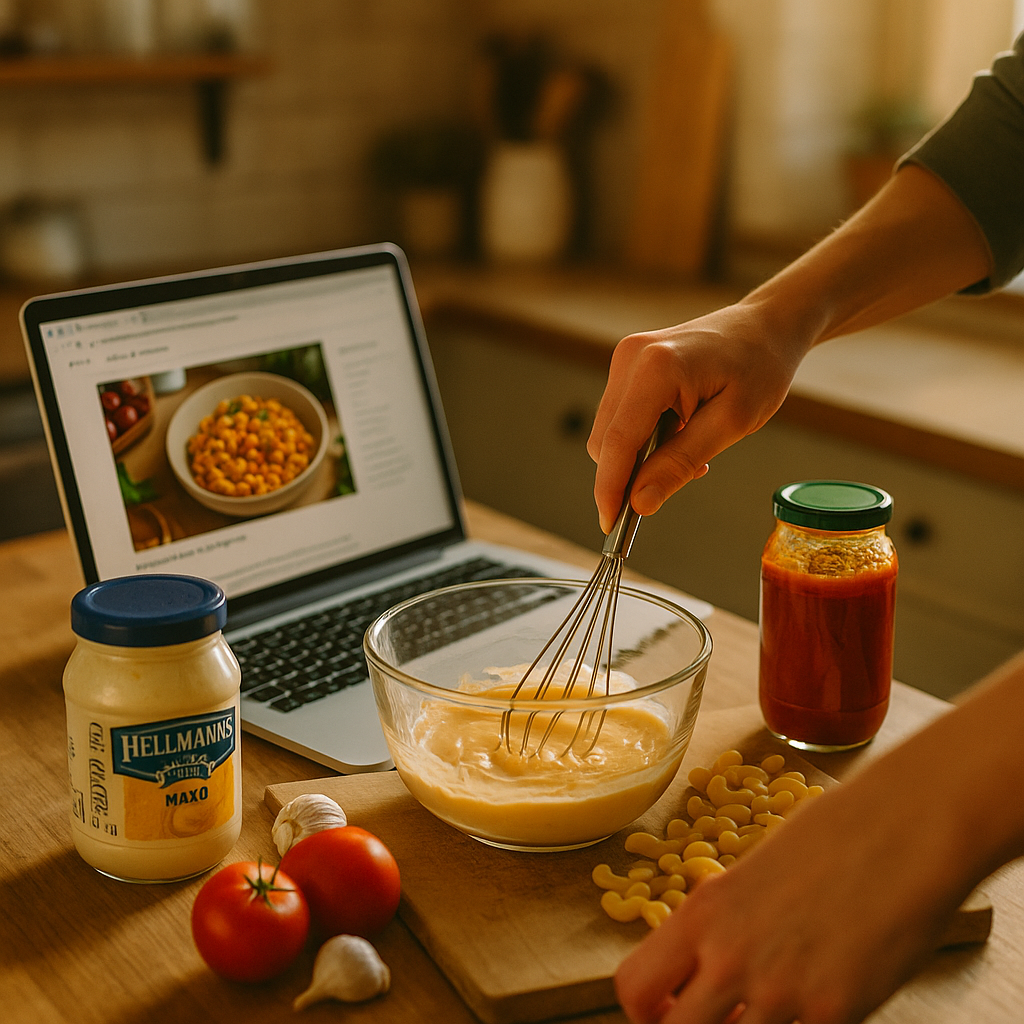
A kitchen hack gets more watch time than a product demo ever will. That is the uncomfortable truth CPG marketers are waking up to as recipe-tutorial hybrids quietly become the highest-converting content format on TikTok Shop. Brands that once leaned on influencer unboxings are now briefing creators to cook, not pitch. The product becomes an ingredient, not an ad. And the conversion data backs it up.
Why a Recipe Outperforms a Review
Think about the last time you watched a straight product review on TikTok. Now think about the last time you watched someone turn a jar of chili crisp into a five-minute pasta dish. One feels like marketing. The other feels like Tuesday night dinner.
That distinction matters more than most brand teams admit. Recipe-tutorial hybrids work because they solve a problem before they sell a product. The viewer gets value (a meal idea, a shortcut, a flavor combo they hadn’t considered) and the product is simply the vehicle that got them there. It’s native advertising in its purest form, except the audience actually wants it.
Recipe-tutorial content doesn’t ask viewers to care about a brand. It asks them to care about dinner, and the brand just happens to be in the pan.
This is the same psychological shift that powers POV storytelling scripts: remove the sales pitch, keep the utility, and let the product earn its place inside a real moment rather than a staged one.
The Numbers CPG Teams Are Actually Seeing
TikTok Shop’s food and beverage vertical has become one of the platform’s fastest-growing commerce categories, and recipe content sits at the center of that growth. Creators in the cooking niche routinely report completion rates well above standard UGC because the format rewards patience. Viewers stick around to see how the dish turns out, and that extra watch time correlates directly with algorithmic reach.
From a brand perspective, the more interesting number isn’t views. It’s add-to-cart behavior tied to specific recipe steps. When a creator holds up a product mid-recipe and says “this is the one I use,” that moment functions like a shoppable sticker embedded in a narrative. Brands running TikTok Shop affiliate programs have found that recipe videos with clear product callouts convert at a noticeably higher rate than lifestyle or unboxing content, largely because the purchase decision feels functional rather than aspirational.
For a deeper look at how commerce is getting stitched directly into video, see how interactive shoppable stickers are turning watch time into checkout time across multiple content categories, not just food.
What Makes the Format Work Mechanically
- Built-in demonstration: The product is used in context, which answers “how does this actually work” without a single word of copy.
- Natural pacing for sound-on viewing: Sizzling, chopping, and pouring create ambient audio that keeps people from scrolling past.
- Replicability: Viewers can follow along in real time, which increases saves and shares, two signals TikTok’s algorithm weights heavily.
- Low perceived bias: A recipe feels like shared knowledge, not a sponsored endorsement, even when it’s clearly labeled as one.
That last point deserves attention from compliance teams. Just because a format feels organic doesn’t mean disclosure requirements disappear. The FTC’s endorsement guidelines still apply in full, and brands that skip proper disclosure on recipe content are taking on the same legal risk as any other sponsored post, regardless of how “helpful” the video feels.
Briefing Creators Without Killing the Format’s Authenticity
Here’s where a lot of CPG teams get it wrong. They hand a creator a strict script with brand talking points, and the result looks like a cooking show hosted by a legal department. Recipe-tutorial hybrids live or die on how natural the product integration feels, which means the brief has to leave room for the creator’s actual cooking style.
A better approach: give creators a short list of required beats (show the product label clearly, mention one specific use case, include a close-up of the finished dish) and let them build the recipe around those beats instead of forcing the recipe around a script. This mirrors the logic behind founder-led video, where structure matters less than perceived authenticity. Over-direction is the fastest way to turn a trusted format into another skippable ad.
Brands working with creator agencies should also push for variety in recipe complexity. Not every tutorial needs to be a 10-step meal. Quick hacks (a 15-second use for a sauce, a single-ingredient swap) often outperform elaborate recipes because they lower the barrier to replication. Sprout Social’s platform research consistently shows that shorter, high-utility content drives more shares per view than longer-form tutorials, even in food and beverage categories where longer videos are the norm.
Where This Format Fits in the Funnel
Recipe-tutorial hybrids aren’t a top-of-funnel awareness play and they aren’t a bottom-of-funnel hard sell either. They sit in the messy middle, where a viewer already knows what category they’re shopping in but hasn’t picked a specific product. That’s exactly the stage where functional proof beats brand storytelling.
If your team is still mapping content formats to funnel stages manually, it’s worth revisiting how funnel stage content mapping can clarify where recipe content should sit in your media plan versus where other formats, like comparison reviews or founder interviews, do heavier lifting.
Retargeting is where this format quietly pays for itself twice. A recipe video that performs well organically can be repurposed as a paid asset aimed at people who’ve already engaged with the brand’s product pages. The content doesn’t feel like remarketing because it never felt like an ad in the first place.
The Production Reality: Cheaper Than It Looks
One objection CPG marketers raise immediately: recipe content sounds expensive to produce at scale. It isn’t, and that’s part of why it’s spreading so fast across mid-tier and challenger brands with limited content budgets.
Most recipe-tutorial hybrids are shot in a single take, in a home kitchen, with a phone. There’s no studio lighting rig, no multi-camera setup, no elaborate post-production. Creators who already have a cooking niche can turn around a branded recipe video in a day or two, often faster than a scripted testimonial that requires multiple takes to sound natural.
That said, editing still matters for retention. Quick jump cuts between prep steps keep pacing tight, and tools built for fast turnaround are making a real difference in how many of these videos a brand can produce per month. Teams scaling recipe content in-house should look at how CapCut AI editing workflows are compressing production timelines without sacrificing the handmade feel that makes this format credible.
Sound design deserves a mention too. A recipe video with flat, muted audio loses the ambient cues that make it feel live. Matching cadence and audio texture to platform norms, the way vertical video sound design principles suggest, can be the difference between a video that feels like a cooking show and one that feels like a muted infomercial.
Measuring Success Beyond Vanity Metrics
Views and likes are easy to report and mostly useless for proving ROI. CPG teams running recipe-tutorial campaigns should be tracking a tighter set of numbers:
- Save rate: A recipe someone intends to actually make gets saved, not just liked. This is the strongest early signal of purchase intent.
- Click-through to product page: Especially from TikTok Shop’s native shopping tab, where the path from video to cart is shortest.
- Repeat creator performance: Does the same creator’s recipe content convert consistently, or was the first win a fluke? One-hit videos are common. Repeatable performance is what justifies ongoing retainer spend.
- Attach rate: Are shoppers buying the featured product alone, or adding complementary items shown in the same recipe? This signals whether the content is driving basket size, not just single-SKU sales.
Platforms like TikTok Ads Manager now surface enough commerce data to tie specific videos to purchase events, which means there’s no excuse for CPG teams to keep reporting on reach alone. If a recipe video doesn’t move a tracked metric past the awareness stage, it’s not earning its place in the content mix, no matter how good the engagement numbers look on the surface.
It’s also worth benchmarking recipe content against other high-trust formats in your library. Brands running stitch compilation reviews alongside recipe tutorials often find the two formats reinforce each other, one proving the product works, the other showing exactly how to use it.
Where This Format Runs Into Trouble
Recipe content isn’t risk-free. Dietary claims, allergen mentions, and nutritional statements inside a casual cooking video can trigger regulatory scrutiny just as easily as a formal ad. A creator casually saying a product is “healthy” or “clean” without substantiation is the kind of offhand comment that gets brands flagged, not creators.
Brand teams should build a lightweight claims checklist into every recipe brief, especially for better-for-you or functional food categories. It takes five minutes to review and avoids the much longer process of pulling flagged content and issuing corrections after the fact. Pairing that discipline with clear FTC-compliant disclosure keeps the format’s authenticity intact without exposing the brand legally.
Next step: pull your last quarter of influencer content, flag anything in the food and beverage vertical that used a straight demo or review format, and test a recipe-tutorial version against it with the same creator and budget. Let the conversion data, not the brief template, decide which format gets more spend next quarter.
Frequently Asked Questions
What exactly is a recipe-tutorial hybrid in influencer marketing?
It’s a content format where a creator builds a recipe or cooking tutorial around a CPG product, demonstrating its use in a real, functional context rather than reviewing or endorsing it directly. The product becomes an ingredient in the narrative instead of the subject of a pitch.
Why does this format convert better than standard UGC on TikTok?
Recipe content earns longer watch time, higher save rates, and lower perceived bias because viewers see a practical use case rather than a sales message. Those engagement signals correlate directly with stronger add-to-cart behavior on TikTok Shop.
Do recipe videos still need FTC disclosure?
Yes. The format’s organic feel doesn’t exempt it from endorsement guidelines. Any sponsored recipe content needs clear, visible disclosure regardless of how natural or unscripted it appears.
How much should a recipe-tutorial video cost to produce?
Significantly less than scripted testimonial content in most cases. Most hybrids are shot in a single take in a creator’s own kitchen, with editing being the main cost driver rather than production setup.
Which CPG categories benefit most from this format?
Sauces, seasonings, snack ingredients, beverages, and pantry staples see the strongest lift, since these products naturally fit into a recipe narrative. Single-use or non-food items see less benefit unless creatively adapted into a broader lifestyle tutorial.
How do I measure ROI on recipe-tutorial content specifically?
Track save rate, click-through to product pages, repeat performance from the same creator, and attach rate for complementary products shown in the video. Views alone won’t tell you whether the format is driving purchase behavior.
Top Influencer Marketing Agencies
The leading agencies shaping influencer marketing in 2026
Agencies ranked by campaign performance, client diversity, platform expertise, proven ROI, industry recognition, and client satisfaction. Assessed through verified case studies, reviews, and industry consultations.
Moburst

-
2

The Shelf
Boutique Beauty & Lifestyle Influencer AgencyA data-driven boutique agency specializing exclusively in beauty, wellness, and lifestyle influencer campaigns on Instagram and TikTok. Best for brands already focused on the beauty/personal care space that need curated, aesthetic-driven content.Clients: Pepsi, The Honest Company, Hims, Elf Cosmetics, Pure LeafVisit The Shelf → -
3

Audiencly
Niche Gaming & Esports Influencer AgencyA specialized agency focused exclusively on gaming and esports creators on YouTube, Twitch, and TikTok. Ideal if your campaign is 100% gaming-focused — from game launches to hardware and esports events.Clients: Epic Games, NordVPN, Ubisoft, Wargaming, Tencent GamesVisit Audiencly → -
4

Viral Nation
Global Influencer Marketing & Talent AgencyA dual talent management and marketing agency with proprietary brand safety tools and a global creator network spanning nano-influencers to celebrities across all major platforms.Clients: Meta, Activision Blizzard, Energizer, Aston Martin, WalmartVisit Viral Nation → -
5

The Influencer Marketing Factory
TikTok, Instagram & YouTube CampaignsA full-service agency with strong TikTok expertise, offering end-to-end campaign management from influencer discovery through performance reporting with a focus on platform-native content.Clients: Google, Snapchat, Universal Music, Bumble, YelpVisit TIMF → -
6

NeoReach
Enterprise Analytics & Influencer CampaignsAn enterprise-focused agency combining managed campaigns with a powerful self-service data platform for influencer search, audience analytics, and attribution modeling.Clients: Amazon, Airbnb, Netflix, Honda, The New York TimesVisit NeoReach → -
7

Ubiquitous
Creator-First Marketing PlatformA tech-driven platform combining self-service tools with managed campaign options, emphasizing speed and scalability for brands managing multiple influencer relationships.Clients: Lyft, Disney, Target, American Eagle, NetflixVisit Ubiquitous → -
8

Obviously
Scalable Enterprise Influencer CampaignsA tech-enabled agency built for high-volume campaigns, coordinating hundreds of creators simultaneously with end-to-end logistics, content rights management, and product seeding.Clients: Google, Ulta Beauty, Converse, AmazonVisit Obviously →