


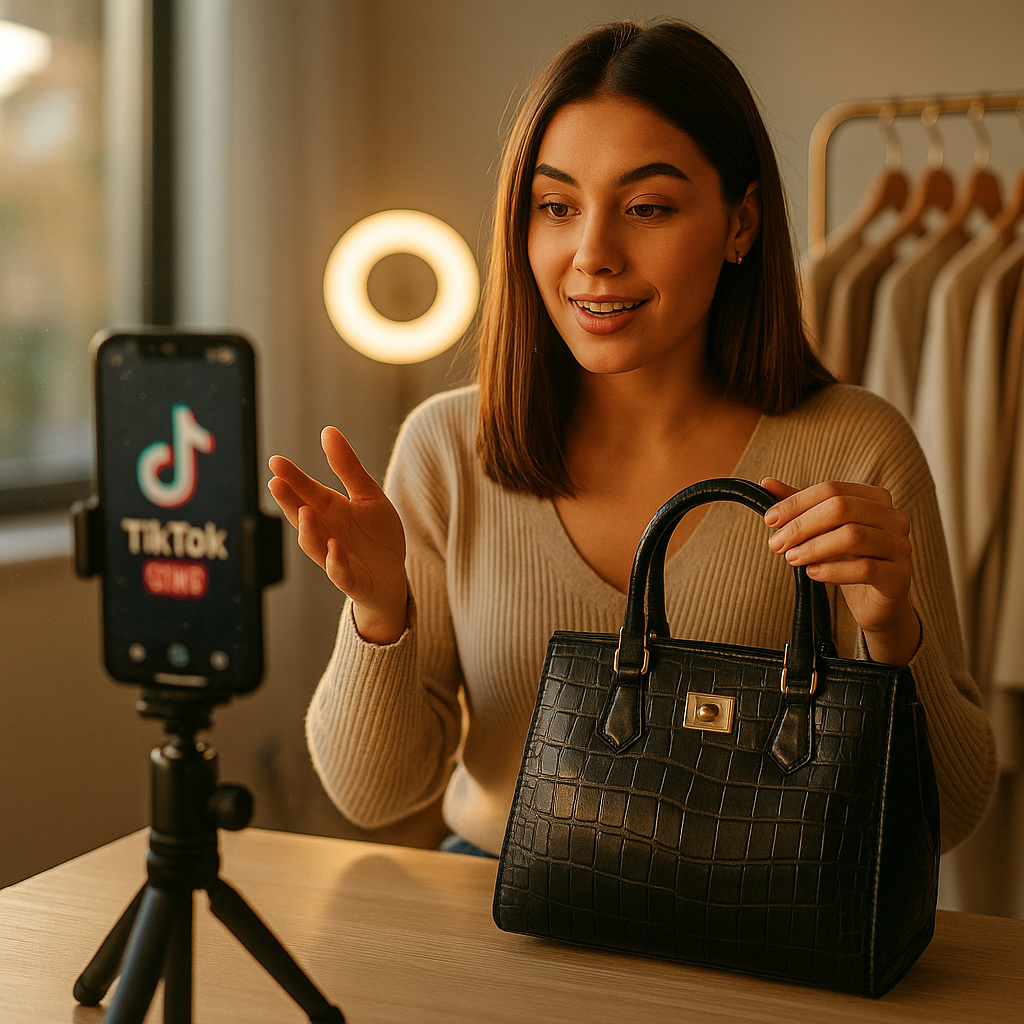
A single TikTok Shop livestream can move more units in an hour than a week of static product listings, yet most brands still treat live commerce like an afterthought bolted onto their content calendar. TikTok Shop live commerce isn’t a gimmick anymore. It’s a conversion channel with its own mechanics, its own creator economics, and its own failure modes that brands keep repeating.
Why Live Commerce Keeps Outperforming Static Listings
Static product pages ask shoppers to imagine. Live demos answer the question before it’s asked. Someone watching a stream sees the fabric stretch, the serum absorb, the blender actually crush ice, all in real time, with a host reacting the way a friend would. That removes friction at exactly the moment a buyer is deciding whether to trust a product they can’t touch.
TikTok’s own merchant data has repeatedly pointed to higher conversion rates on livestreamed product showcases compared to in-feed shoppable videos, and eMarketer has tracked live commerce as one of the fastest growing slices of social commerce spend in the US market. The format rewards specificity. A host who can answer “does this run small” in real time closes sales that a product description never will.
Live commerce doesn’t sell products. It sells certainty, and certainty is what turns a scroll into a checkout.
The Math Brands Keep Getting Wrong
Here’s the mistake: brands budget for a one hour stream like it’s a single ad placement. It isn’t. A stream that converts is the output of weeks of creator vetting, script prep, inventory sync, and post stream clipping that extends the content’s life for another ten days. Treat the live hour as the tip of the iceberg, not the whole project, or your ROI math will never pencil out.
Building the Demo That Actually Converts
Not every product suits a live demo, and not every host suits every product. The brands winning at this aren’t just “going live.” They’re engineering a specific sequence designed to move a viewer from curiosity to cart in under three minutes.
- Open with the objection, not the pitch. Skincare hosts who open with “does this actually work on oily skin” outperform hosts who open with “hey guys, excited to show you this.” Lead with the doubt your buyer already has.
- Show the product failing once. Counterintuitive, but letting a demo stumble slightly (a stain that needs a second wipe, a zipper that catches) builds credibility that a flawless run never does.
- Stack urgency mechanics early. TikTok Shop’s limited time bundle and flash discount tools work best in the first fifteen minutes, when viewer counts peak, not at the end when the room has thinned out.
- Pin the add to cart moment. Hosts who verbally cue “I’m tapping the yellow basket now” and pause for three seconds see noticeably higher click through than those who mention it in passing.
None of this works without inventory sync. If a host sells out mid stream and TikTok Shop shows “sold out” while the comments are still flooded with purchase intent, you’ve just trained an audience to doubt your next stream. Operations is part of the creative brief now, not a separate workstream.
Casting the Right Host
A ring light and a script don’t make a converting host. The best live commerce hosts share three traits: they can talk continuously without dead air, they know the product category well enough to improvise answers, and they have existing audience trust that transfers into purchase confidence. Micro and mid tier creators often outperform mega influencers here precisely because their audiences feel like they’re watching a peer, not a celebrity reading copy.
This is where tiered creator strategy matters. Pairing a known anchor host with a rotating bench of smaller creators who each bring their own niche audience is a proven structure, and it’s covered in more depth in our tiered creator distribution framework. For live commerce specifically, rotating hosts across a multi day campaign also gives you clean A/B data on which personality actually drives revenue, not just views.
What Does Good Measurement Look Like?
Views and peak concurrent viewers are vanity metrics if you’re not tying them to GMV per stream hour. The brands that actually scale live commerce track a tighter set of numbers:
- GMV per stream hour, segmented by host
- Average order value during live versus static catalog
- Cart abandonment rate specific to live sessions
- Replay view conversion (clips posted after the stream ends)
- Return rate on live purchased items versus catalog purchases
That last metric gets ignored constantly, and it shouldn’t. Products that look great under studio lighting during a demo sometimes generate higher returns once a buyer sees them in daylight at home. If your return rate on live commerce purchases creeps above your catalog baseline, that’s a signal your demo is overselling, not converting responsibly.
If your live commerce return rate is climbing faster than your conversion rate, you’re not building a channel, you’re building a refund pipeline.
Compliance Isn’t Optional Here
Live commerce moves fast, which is exactly why compliance teams get nervous. Hosts improvising claims in real time (“this cured my eczema in two days”) create FTC exposure the moment the words leave their mouth, and there’s no edit pass to catch it before it airs. The FTC’s endorsement guidance applies to live content exactly as it applies to static posts, disclosure included, and “I said it live, I didn’t write it” is not a defense regulators accept.
Brands in regulated categories need a pre stream briefing that covers banned claims, required disclosure language, and a kill switch protocol if a host starts improvising into legal risk. This isn’t theoretical. Finance and health brands have already had to build this muscle for other fast moving formats, and the same discipline documented in our FinTok compliance guide applies directly to live commerce scripting.
Platform Risk You Shouldn’t Ignore
TikTok Shop’s live commerce engine runs on TikTok’s broader algorithm, and that algorithm is not a fixed asset you can count on long term. Regulatory scrutiny and platform policy shifts have already reshaped how creator content gets distributed once before, as covered in our piece on TikTok’s algorithmic reach. Building your entire commerce strategy on one platform’s live feature is a concentration risk, not a growth strategy. Diversify your creator testing budget even while TikTok Shop is performing well.
Turning One Stream Into a Content Engine
The stream ends, but the asset doesn’t have to. Smart brands are clipping their best live moments (the unscripted reaction, the honest objection handling, the funny stumble) into short form posts that run for another week or two. This is the same logic driving creator originated formats across other platforms, and the clipping workflow mirrors what we outlined in our creator rights and ROI playbook for longer form content. Make sure your creator contracts explicitly grant usage rights for this repurposing before the stream even starts, not after you’ve found a clip worth running as a paid ad.
Cadence matters too. A single viral stream is a nice case study. A predictable weekly or biweekly stream schedule is what actually builds the habit loop that turns casual viewers into repeat buyers. Think of it less like a product launch event and more like a retail TV segment that happens to live on a phone. Platforms like Sprout Social and HubSpot both publish regular social commerce benchmarks worth checking against your own cadence and conversion data.
Next Step
Start with one product category, one vetted host, and a four week test cadence before you scale spend. Track GMV per stream hour and return rate from week one, and kill or double down based on that data, not on view counts.
FAQs
How long should a TikTok Shop live commerce demo run?
Most converting streams run between forty five minutes and ninety minutes. Shorter sessions don’t give the algorithm enough time to surface the stream to new viewers, while much longer sessions tend to see engagement and conversion drop off after the two hour mark unless the host rotates products frequently.
What is a realistic conversion rate for a live commerce stream?
Conversion rates vary heavily by category, but live sessions typically outperform static shoppable video by a meaningful margin. Beauty and fashion tend to see the strongest lift, while higher consideration categories like electronics convert more slowly and benefit from longer, more detailed demos.
Do I need a celebrity creator to make live commerce work?
No. Mid tier and micro creators with genuine category knowledge often convert better than mega influencers because their audiences trust their product opinions. Casting for expertise and comfort on camera matters more than follower count.
How do I handle compliance risk during an unscripted live stream?
Brief hosts thoroughly before going live on banned claims and required disclosures, and have a producer monitoring the stream in real time with authority to intervene or end the session if a host veers into risky territory. Document the briefing for your own records.
Can I repurpose live commerce footage into other content?
Yes, and you should. Clip the strongest moments into short form posts to extend the content’s reach well beyond the live window, but make sure your creator contract explicitly covers repurposing rights before the stream airs.
FAQs
How long should a TikTok Shop live commerce demo run?
Most converting streams run between forty five minutes and ninety minutes. Shorter sessions don’t give the algorithm enough time to surface the stream to new viewers, while much longer sessions tend to see engagement and conversion drop off after the two hour mark unless the host rotates products frequently.
What is a realistic conversion rate for a live commerce stream?
Conversion rates vary heavily by category, but live sessions typically outperform static shoppable video by a meaningful margin. Beauty and fashion tend to see the strongest lift, while higher consideration categories like electronics convert more slowly and benefit from longer, more detailed demos.
Do I need a celebrity creator to make live commerce work?
No. Mid tier and micro creators with genuine category knowledge often convert better than mega influencers because their audiences trust their product opinions. Casting for expertise and comfort on camera matters more than follower count.
How do I handle compliance risk during an unscripted live stream?
Brief hosts thoroughly before going live on banned claims and required disclosures, and have a producer monitoring the stream in real time with authority to intervene or end the session if a host veers into risky territory. Document the briefing for your own records.
Can I repurpose live commerce footage into other content?
Yes, and you should. Clip the strongest moments into short form posts to extend the content’s reach well beyond the live window, but make sure your creator contract explicitly covers repurposing rights before the stream airs.
Top Influencer Marketing Agencies
The leading agencies shaping influencer marketing in 2026
Agencies ranked by campaign performance, client diversity, platform expertise, proven ROI, industry recognition, and client satisfaction. Assessed through verified case studies, reviews, and industry consultations.
Moburst

-
2

The Shelf
Boutique Beauty & Lifestyle Influencer AgencyA data-driven boutique agency specializing exclusively in beauty, wellness, and lifestyle influencer campaigns on Instagram and TikTok. Best for brands already focused on the beauty/personal care space that need curated, aesthetic-driven content.Clients: Pepsi, The Honest Company, Hims, Elf Cosmetics, Pure LeafVisit The Shelf → -
3

Audiencly
Niche Gaming & Esports Influencer AgencyA specialized agency focused exclusively on gaming and esports creators on YouTube, Twitch, and TikTok. Ideal if your campaign is 100% gaming-focused — from game launches to hardware and esports events.Clients: Epic Games, NordVPN, Ubisoft, Wargaming, Tencent GamesVisit Audiencly → -
4

Viral Nation
Global Influencer Marketing & Talent AgencyA dual talent management and marketing agency with proprietary brand safety tools and a global creator network spanning nano-influencers to celebrities across all major platforms.Clients: Meta, Activision Blizzard, Energizer, Aston Martin, WalmartVisit Viral Nation → -
5

The Influencer Marketing Factory
TikTok, Instagram & YouTube CampaignsA full-service agency with strong TikTok expertise, offering end-to-end campaign management from influencer discovery through performance reporting with a focus on platform-native content.Clients: Google, Snapchat, Universal Music, Bumble, YelpVisit TIMF → -
6

NeoReach
Enterprise Analytics & Influencer CampaignsAn enterprise-focused agency combining managed campaigns with a powerful self-service data platform for influencer search, audience analytics, and attribution modeling.Clients: Amazon, Airbnb, Netflix, Honda, The New York TimesVisit NeoReach → -
7

Ubiquitous
Creator-First Marketing PlatformA tech-driven platform combining self-service tools with managed campaign options, emphasizing speed and scalability for brands managing multiple influencer relationships.Clients: Lyft, Disney, Target, American Eagle, NetflixVisit Ubiquitous → -
8

Obviously
Scalable Enterprise Influencer CampaignsA tech-enabled agency built for high-volume campaigns, coordinating hundreds of creators simultaneously with end-to-end logistics, content rights management, and product seeding.Clients: Google, Ulta Beauty, Converse, AmazonVisit Obviously →