


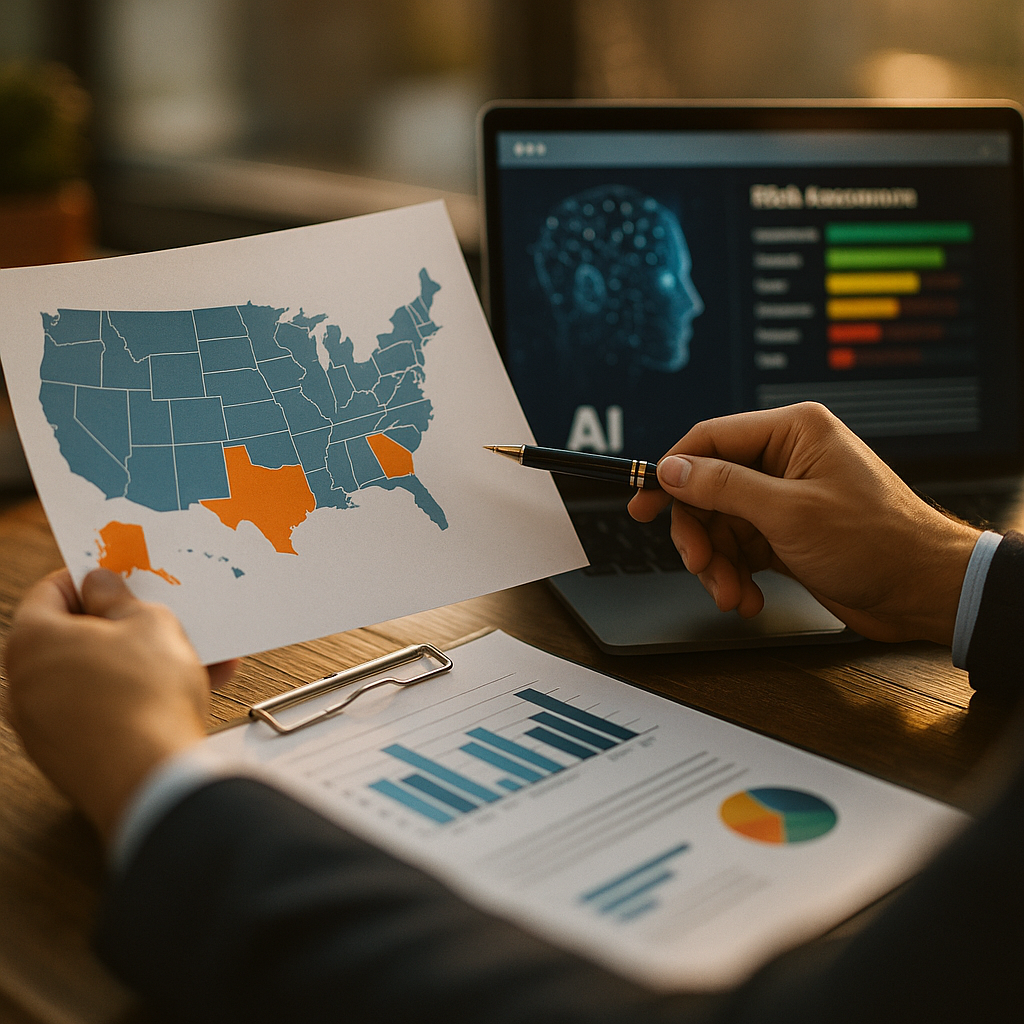
Forty-one states introduced some form of AI transparency or synthetic media legislation in the past two years, and at least nineteen have laws active right now that directly touch branded content. If your influencer program still runs on a single FTC checklist, you’re already behind. AI content disclosure laws have gone local, and the penalties vary wildly depending on where your audience lives, not where your brand is headquartered.
Why a Single Federal Standard Isn’t Coming Anytime Soon
Marketers love a clean national rule. One disclosure format, one hashtag, one training deck. That’s not the world we’re in. The FTC sets a baseline (clear and conspicuous disclosure of material connections), but it hasn’t issued specific AI-generated content labeling rules. States have rushed in to fill the gap, and they’re not coordinating with each other.
California’s AB 853 and related amendments to its AI transparency statutes require clear labeling of synthetic content in advertising contexts starting this year. New York’s RAISE Act framework extends disclosure obligations to AI-generated endorsements. Texas, Colorado, Illinois, and Washington each have separate statutes covering deepfakes, synthetic performers, or AI-assisted political and commercial speech. Some overlap. Some contradict. None of them care that your campaign is national.
A brand running a single AI-voiced UGC ad across all fifty states could technically need five different disclosure treatments to stay compliant, and most legal teams don’t have that mapped.
This is why state AG enforcement has surged past federal action in sheer volume. Attorneys general move faster than the FTC, and they’re increasingly willing to use consumer protection statutes creatively against brands that deployed AI avatars or synthetic voiceovers without labeling them.
The States Setting the Pace
Not every state matters equally for your risk exposure. Focus your tracker on where your campaigns actually run and where your audience actually lives.
- California: Broadest scope. Covers synthetic performers, AI-generated likenesses, and political deepfakes, with carryover enforcement into commercial advertising.
- New York: Strong focus on AI-generated endorsements and influencer content, tied to existing General Business Law disclosure requirements.
- Texas: Deepfake-specific statute with criminal penalties in narrow cases, civil exposure for brands in broader ones.
- Illinois: Biometric and likeness protections intersect with AI content rules, especially relevant if you’re using AI-generated spokespeople.
- Washington and Colorado: Consumer protection statutes amended to explicitly include synthetic media disclosure.
- Florida: Newer entrant, narrower scope, but aggressive early enforcement posture from the state AG’s office.
Twelve other states have pending bills that could activate mid-year. That’s the part most compliance teams miss: a tracker built in January can be stale by summer. Treat this like a living document, not a static PDF.
What Actually Counts as “AI-Generated” Under These Laws?
Here’s where it gets messy. Definitions differ state to state, and that ambiguity is exactly where brands get burned.
Some statutes define AI-generated content narrowly, meaning fully synthetic video or audio with no human performer involved. Others take a broader view, capturing anything where AI tools materially altered a real creator’s voice, face, or likeness, even if the underlying content started as authentic footage. A few states extend the definition to AI-assisted copywriting used in ad captions, which catches a huge swath of everyday influencer marketing nobody thinks of as “synthetic.”
If your team uses AI agents to generate captions, translate creator content, or auto-dub videos for regional audiences, you may already be inside the scope of multiple state statutes without realizing it. The EU has moved in a similar direction with its AI content labeling requirements, and US states are borrowing language from that playbook faster than most legal teams expected.
Penalties Aren’t Symbolic Anymore
Early AI disclosure rules felt like a slap on the wrist. That era is over. California’s penalty structure allows per-violation fines that scale with reach, meaning a viral post without proper labeling can trigger a fine multiplier based on impressions. New York ties violations to existing deceptive practices statutes, which opens the door to class action exposure, not just regulatory fines.
Texas has criminal provisions for malicious deepfake use, though most brand scenarios fall under the civil track. Still, “we didn’t know it was AI-generated” is a weak defense when your own vendor contract shows you commissioned synthetic content.
Compliance teams that still treat disclosure as a single FTC checkbox are underestimating their actual exposure by an order of magnitude.
This mirrors what’s happening with AI watermarking mandates, where the paper trail matters as much as the disclosure itself. Regulators increasingly want proof of process, not just a label slapped on after the fact.
Building a Tracker That Actually Works
A spreadsheet with fifty rows isn’t a tracker. It’s a liability if nobody updates it. Here’s the operational structure that actually holds up under audit.
- Map campaign geography first. Know which states your paid and organic influencer content actually reaches, not just where your brand is incorporated.
- Classify content by AI involvement level. Fully synthetic, AI-assisted edit, AI-generated caption only. Each tier may trigger different obligations.
- Assign disclosure language per state tier. Don’t rely on one generic “#ad” tag. Build templated language that satisfies the strictest applicable state for each content type.
- Audit vendor and creator contracts. Make sure contracts specify who is responsible for labeling AI-generated or AI-assisted content, and build in indemnification language.
- Log enforcement actions quarterly. State AG activity moves fast. What wasn’t enforced last quarter might be this quarter’s test case.
This is the same logic brands are applying to retail media ownership gaps and high-volume gifting disclosure: build the system once, then feed it updated state data rather than rebuilding it every campaign cycle.
Where Contracts Need to Catch Up
Most influencer agreements still reference a single “FTC guidelines” clause and call it done. That language is now insufficient in at least a dozen states. Your contracts need a clause specifying which party bears responsibility for AI disclosure compliance, how content will be labeled, and who absorbs the fine if a state AG comes knocking.
This connects directly to the broader indemnification conversation happening across the industry right now. The Paramount Fanatics settlement showed what happens when liability language is vague. Brands assumed creators or platforms would absorb risk. Courts didn’t see it that way. The same pattern is emerging with AI-specific content, and the indemnification gaps around AI-generated claims are only getting more expensive to ignore.
If you’re running multi-state campaigns through agencies or MCNs, push for a compliance rider that references your internal state tracker explicitly, not a generic “comply with applicable law” clause that leaves everyone guessing.
A Quick Gut Check for Your Next Campaign Brief
Before you greenlight any AI-assisted creator content this year, run it through three questions: Does this content use AI in a way that meets any state’s definition of synthetic or AI-generated? Does the creator’s contract specify who’s responsible for labeling it? Is the disclosure language strong enough for the strictest state your audience targeting reaches?
If you can’t answer all three confidently, you’re not ready to launch. According to eMarketer, AI-assisted content now touches a majority of influencer campaigns in some capacity, which means this isn’t a niche compliance issue anymore. It’s a standard line item in every brief.
Build your state-by-state matrix now, update it quarterly as new bills pass, and bake disclosure responsibility directly into creator and agency contracts before your next campaign ships, not after a state AG’s office calls.
Frequently Asked Questions
What is an AI content disclosure law, in plain terms?
It’s a state or federal rule requiring brands and creators to clearly label content that was generated or materially altered by AI, so consumers know when they’re viewing synthetic media rather than authentic human-created content.
Do these laws apply if my brand isn’t based in the regulated state?
Generally yes. Most state statutes are triggered by where the audience or consumer is located, not where the brand or agency is headquartered, which is why geographic campaign mapping matters so much.
Is a simple “#ad” or “#sponsored” tag enough to cover AI disclosure requirements?
No. Standard FTC-style material connection disclosures address sponsorship, not AI involvement. States with AI-specific statutes typically require separate, explicit labeling that the content is AI-generated or AI-assisted.
Which states currently have the strictest AI content disclosure requirements?
California and New York currently have the broadest and most actively enforced statutes, with Texas, Illinois, Washington, and Colorado close behind in scope and enforcement activity.
Who is liable if an AI-generated influencer post violates a state disclosure law, the brand or the creator?
It depends on the contract. Without explicit liability language, both parties can face exposure, which is why updated indemnification clauses specific to AI content have become essential in influencer agreements.
How often should brands update their state compliance tracker?
At minimum quarterly. Several states have pending legislation that could activate or amend existing rules mid-year, and relying on an annual review leaves campaigns exposed for months at a time.
Top Influencer Marketing Agencies
The leading agencies shaping influencer marketing in 2026
Agencies ranked by campaign performance, client diversity, platform expertise, proven ROI, industry recognition, and client satisfaction. Assessed through verified case studies, reviews, and industry consultations.
Moburst

-
2

The Shelf
Boutique Beauty & Lifestyle Influencer AgencyA data-driven boutique agency specializing exclusively in beauty, wellness, and lifestyle influencer campaigns on Instagram and TikTok. Best for brands already focused on the beauty/personal care space that need curated, aesthetic-driven content.Clients: Pepsi, The Honest Company, Hims, Elf Cosmetics, Pure LeafVisit The Shelf → -
3

Audiencly
Niche Gaming & Esports Influencer AgencyA specialized agency focused exclusively on gaming and esports creators on YouTube, Twitch, and TikTok. Ideal if your campaign is 100% gaming-focused — from game launches to hardware and esports events.Clients: Epic Games, NordVPN, Ubisoft, Wargaming, Tencent GamesVisit Audiencly → -
4

Viral Nation
Global Influencer Marketing & Talent AgencyA dual talent management and marketing agency with proprietary brand safety tools and a global creator network spanning nano-influencers to celebrities across all major platforms.Clients: Meta, Activision Blizzard, Energizer, Aston Martin, WalmartVisit Viral Nation → -
5

The Influencer Marketing Factory
TikTok, Instagram & YouTube CampaignsA full-service agency with strong TikTok expertise, offering end-to-end campaign management from influencer discovery through performance reporting with a focus on platform-native content.Clients: Google, Snapchat, Universal Music, Bumble, YelpVisit TIMF → -
6

NeoReach
Enterprise Analytics & Influencer CampaignsAn enterprise-focused agency combining managed campaigns with a powerful self-service data platform for influencer search, audience analytics, and attribution modeling.Clients: Amazon, Airbnb, Netflix, Honda, The New York TimesVisit NeoReach → -
7

Ubiquitous
Creator-First Marketing PlatformA tech-driven platform combining self-service tools with managed campaign options, emphasizing speed and scalability for brands managing multiple influencer relationships.Clients: Lyft, Disney, Target, American Eagle, NetflixVisit Ubiquitous → -
8

Obviously
Scalable Enterprise Influencer CampaignsA tech-enabled agency built for high-volume campaigns, coordinating hundreds of creators simultaneously with end-to-end logistics, content rights management, and product seeding.Clients: Google, Ulta Beauty, Converse, AmazonVisit Obviously →