


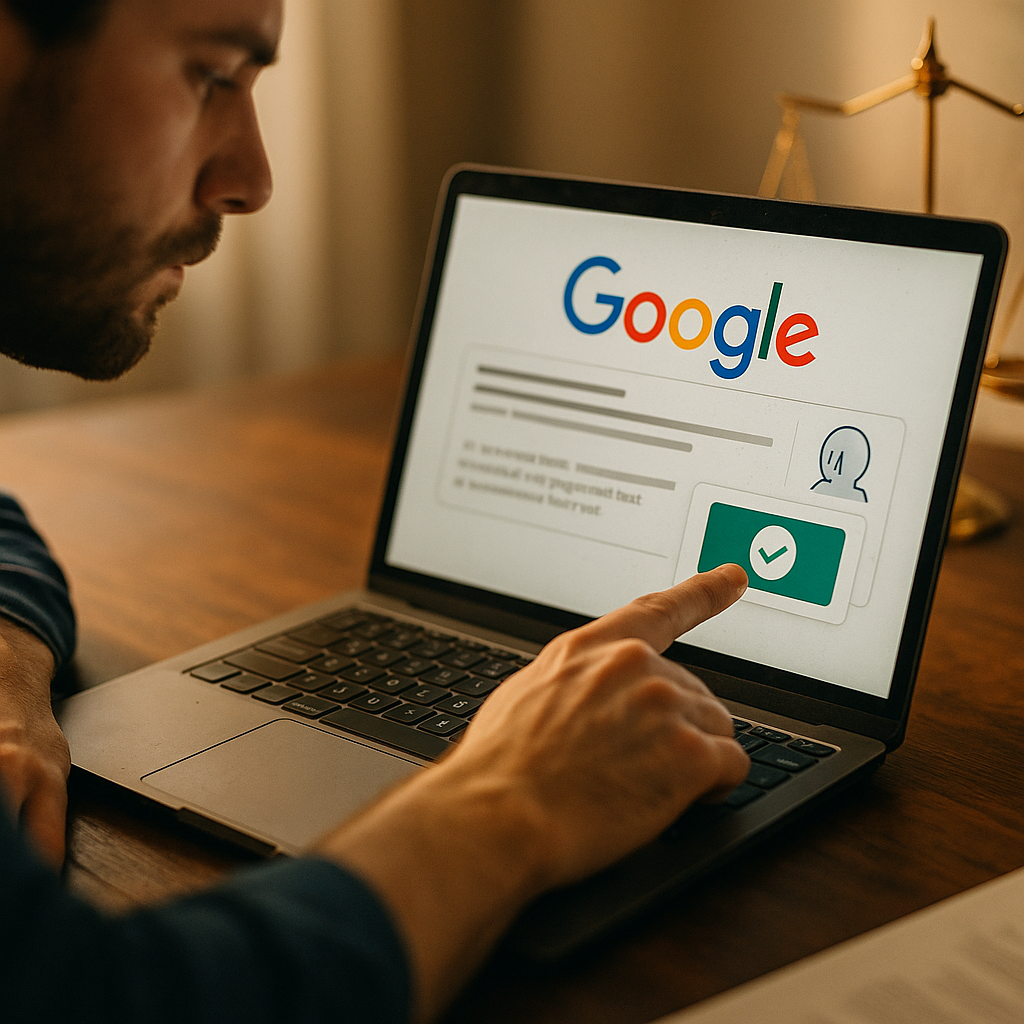
Nearly 62% of brand marketers say their current creator contracts have no specific language covering AI generated claims, according to recent agency survey data circulating since Google rolled out mandatory fact-check labeling on branded content. That gap just became a liability problem. AI content indemnification is no longer a theoretical clause buried in page nine of a standard agreement. It is now the single most urgent renegotiation point for any brand running influencer programs at scale.
What Google’s Fact-Check Mandate Actually Requires
Google’s expanded fact-check labeling system now flags sponsored and creator-generated content that contains unverified or AI-assisted claims, surfacing a “disputed” tag directly in search and discovery surfaces. The policy extends the publisher-side fact-check schema that Google has used for years into influencer and branded content, particularly where AI tools generated voiceovers, product claims, or visual demonstrations. You can see the technical framework in Google’s support documentation on structured fact-check markup.
Here is the part that caught legal teams flat footed: the label applies regardless of who created the content. A creator using an AI script generator to draft a skincare claim, a brand’s internal team approving that script, and the platform distributing it can all share exposure once a fact-check flag attaches to a post. Search visibility drops. Trust signals erode. And unlike a platform takedown, a fact-check label does not disappear when the post is deleted, because cached versions and screenshots keep circulating.
A fact-check flag is not a content moderation action. It is a public, searchable credibility judgment that outlives the post itself.
Why Your Existing Indemnification Clauses Don’t Cover This
Most creator agreements written before this year use indemnification language built for a simpler risk environment: defamation, IP infringement, FTC disclosure failures. Standard boilerplate typically reads something like “creator indemnifies brand against claims arising from creator’s breach of representations.” That language assumes a human made every claim deliberately. It does not anticipate a scenario where an AI co-writing tool inserted a false statistic that neither the creator nor the brand caught before publishing.
Three specific gaps show up repeatedly when legal teams audit their templates:
- No AI tool disclosure requirement. Contracts rarely ask creators to disclose which generative tools touched the content, so brands have no audit trail when a claim gets flagged.
- Vague “accuracy” language. Clauses that say creators will “use reasonable efforts to ensure accuracy” offer no enforcement teeth once an AI hallucination slips through.
- Silent on fact-check remediation costs. Almost no template addresses who pays for content takedown, re-shoots, or search reputation repair after a flag.
This is the same structural weakness that surfaced in the Paramount Fanatics indemnification dispute, where ambiguous liability language left both sides arguing over who should have caught the problem before launch. Fact-check mandates just make that ambiguity public and searchable.
The Five Clauses You Should Be Renegotiating Right Now
If your legal team hasn’t already flagged contract revisions, push them to. Here’s where the actual negotiation leverage sits.
- AI disclosure and tool logging. Require creators to document which AI tools generated or assisted any claims, scripts, or visuals used in sponsored content. This mirrors the disclosure logic already building momentum under AI watermarking mandates reshaping creator agreements.
- Shared verification obligation, not unilateral indemnification. Push away from one-sided indemnification toward a split liability model where brands own pre-publication claim review and creators own disclosure accuracy. One-sided clauses rarely survive negotiation once creators have legal representation.
- Fact-check remediation cost allocation. Spell out, in dollar terms or percentage splits, who pays for content removal, platform appeals, and reputation repair if a post gets flagged.
- Right to pre-publication AI audit. Give brands contractual authority to request a review of any AI-assisted draft before it goes live, with a defined turnaround window so campaigns don’t stall.
- Survival clause for flagged content. Because fact-check labels persist after deletion, indemnification obligations need to survive contract termination, not expire the moment the relationship ends.
Who Actually Eats the Cost When Content Gets Flagged?
This is the question nobody wants to answer in writing, which is exactly why it needs to be answered in writing. In practice, cost allocation tends to follow who had the last opportunity to catch the problem. If a brand’s internal review team approved a script containing an AI generated statistic, most arbitration outcomes lean toward shared liability. If a creator independently used an undisclosed AI tool and skipped the brand’s review process entirely, liability shifts toward the creator, assuming the contract actually requires disclosure in the first place.
That “assuming” is doing a lot of work. Without an explicit disclosure requirement, creators can plausibly argue they had no obligation to flag AI involvement, which pushes liability back to the brand by default. FTC guidance on endorsement disclosures already treats undisclosed material connections as a brand responsibility issue, and fact-check mandates are layering a second, search-visible enforcement mechanism on top of that existing framework.
Agencies managing high volume creator rosters are feeling this acutely. Programs that rely on blended CPM models and bulk creator onboarding, as covered in our analysis of blended CPM contract misclassification risk, often skip individualized contract review entirely. That approach does not survive contact with a fact-check mandate. Mass-produced boilerplate agreements need an AI indemnification rider at minimum, even if a full renegotiation isn’t feasible for every creator relationship.
If your contract doesn’t name which party owns pre-publication AI claim verification, you’ve already decided the answer is “whoever has the weaker legal team.”
Building the Renegotiation Playbook
Renegotiating hundreds or thousands of creator agreements sounds impossible until you break it down by risk tier. Start with your highest-spend, highest-visibility creator relationships, since those carry the most search exposure if flagged. Draft a standardized AI indemnification rider rather than rewriting full contracts from scratch. This keeps legal review costs manageable and gives creators a consistent, predictable ask instead of a one-off negotiation that feels adversarial.
Loop in your compliance and data teams early, because AI disclosure requirements intersect with consent and data handling obligations already reshaping creator agreements under frameworks like the EU Digital Omnibus proposal. If a creator’s AI tool pulls audience data to personalize claims, you’re now managing two compliance surfaces at once, not one.
It also helps to benchmark against platform-level agent liability questions. The same “who’s responsible when the system acts without a human checkpoint” problem is playing out in marketing automation more broadly, as explored in our piece on AI agent liability in automated workflows. The legal logic transfers directly: define the checkpoint, name the owner, document the handoff.
Finally, don’t treat this as a one-time fix. Fact-check mandates will keep expanding in scope, and eMarketer’s creator economy coverage suggests platform-level content verification requirements are likely to tighten further as AI-generated content volume grows. Build a quarterly contract review cadence into your influencer program operations now, rather than scrambling after the next policy update.
What This Means for Creator-Owned IP and Franchise Deals
Brands running format or franchise style creator partnerships face an additional wrinkle. When a creator owns the underlying content format, as outlined in our coverage of creator franchise IP ownership structures, indemnification gets more complicated because the brand may have limited pre-publication review rights over format-owned content. These agreements need their own AI disclosure carve-out, separate from standard sponsored post language, because the brand’s audit authority is inherently narrower.
Data from Statista’s influencer marketing reports shows brand spend on creator partnerships continuing to climb even as regulatory scrutiny intensifies, which tells you the exposure is scaling faster than most legal teams’ contract templates. Waiting for a flagged post to force the conversation is the expensive way to learn this lesson.
FAQs
Common questions marketing and legal teams are asking as fact-check mandates reshape creator liability.
What is AI content indemnification in creator contracts?
AI content indemnification refers to contract clauses that specify which party, the brand or the creator, bears financial and legal responsibility when AI-generated or AI-assisted content contains false claims, inaccuracies, or triggers a platform fact-check flag.
Does Google’s fact-check mandate apply to influencer content or just publishers?
It applies broadly, including sponsored and creator-generated content distributed through search and discovery surfaces, not just traditional publisher content. Any branded post containing unverified claims can be flagged regardless of who created it.
Who is liable if a creator uses an AI tool without telling the brand?
Liability depends heavily on contract language. Without an explicit AI disclosure requirement, creators can argue they had no obligation to flag AI involvement, which often shifts responsibility back to the brand under existing FTC endorsement guidance.
How often should brands update creator contract templates for AI risk?
At minimum quarterly, given how quickly platform-level fact-check and AI disclosure requirements are expanding. Treat contract review as an ongoing operational process, not a one-time legal fix.
Can a fact-check label be removed after content is taken down?
Not reliably. Fact-check flags and the associated credibility signals can persist in cached search results and shared screenshots even after the original post is deleted, which is why remediation cost allocation needs to be addressed in the contract itself.
Next step: Pull your top twenty creator contracts by spend this week, check for an explicit AI disclosure clause, and if it’s missing, get a standardized indemnification rider into legal review before your next campaign launch.
FAQs
Common questions marketing and legal teams are asking as fact-check mandates reshape creator liability.
What is AI content indemnification in creator contracts?
AI content indemnification refers to contract clauses that specify which party, the brand or the creator, bears financial and legal responsibility when AI-generated or AI-assisted content contains false claims, inaccuracies, or triggers a platform fact-check flag.
Does Google’s fact-check mandate apply to influencer content or just publishers?
It applies broadly, including sponsored and creator-generated content distributed through search and discovery surfaces, not just traditional publisher content. Any branded post containing unverified claims can be flagged regardless of who created it.
Who is liable if a creator uses an AI tool without telling the brand?
Liability depends heavily on contract language. Without an explicit AI disclosure requirement, creators can argue they had no obligation to flag AI involvement, which often shifts responsibility back to the brand under existing FTC endorsement guidance.
How often should brands update creator contract templates for AI risk?
At minimum quarterly, given how quickly platform-level fact-check and AI disclosure requirements are expanding. Treat contract review as an ongoing operational process, not a one-time legal fix.
Can a fact-check label be removed after content is taken down?
Not reliably. Fact-check flags and the associated credibility signals can persist in cached search results and shared screenshots even after the original post is deleted, which is why remediation cost allocation needs to be addressed in the contract itself.
Top Influencer Marketing Agencies
The leading agencies shaping influencer marketing in 2026
Agencies ranked by campaign performance, client diversity, platform expertise, proven ROI, industry recognition, and client satisfaction. Assessed through verified case studies, reviews, and industry consultations.
Moburst

-
2

The Shelf
Boutique Beauty & Lifestyle Influencer AgencyA data-driven boutique agency specializing exclusively in beauty, wellness, and lifestyle influencer campaigns on Instagram and TikTok. Best for brands already focused on the beauty/personal care space that need curated, aesthetic-driven content.Clients: Pepsi, The Honest Company, Hims, Elf Cosmetics, Pure LeafVisit The Shelf → -
3

Audiencly
Niche Gaming & Esports Influencer AgencyA specialized agency focused exclusively on gaming and esports creators on YouTube, Twitch, and TikTok. Ideal if your campaign is 100% gaming-focused — from game launches to hardware and esports events.Clients: Epic Games, NordVPN, Ubisoft, Wargaming, Tencent GamesVisit Audiencly → -
4

Viral Nation
Global Influencer Marketing & Talent AgencyA dual talent management and marketing agency with proprietary brand safety tools and a global creator network spanning nano-influencers to celebrities across all major platforms.Clients: Meta, Activision Blizzard, Energizer, Aston Martin, WalmartVisit Viral Nation → -
5

The Influencer Marketing Factory
TikTok, Instagram & YouTube CampaignsA full-service agency with strong TikTok expertise, offering end-to-end campaign management from influencer discovery through performance reporting with a focus on platform-native content.Clients: Google, Snapchat, Universal Music, Bumble, YelpVisit TIMF → -
6

NeoReach
Enterprise Analytics & Influencer CampaignsAn enterprise-focused agency combining managed campaigns with a powerful self-service data platform for influencer search, audience analytics, and attribution modeling.Clients: Amazon, Airbnb, Netflix, Honda, The New York TimesVisit NeoReach → -
7

Ubiquitous
Creator-First Marketing PlatformA tech-driven platform combining self-service tools with managed campaign options, emphasizing speed and scalability for brands managing multiple influencer relationships.Clients: Lyft, Disney, Target, American Eagle, NetflixVisit Ubiquitous → -
8

Obviously
Scalable Enterprise Influencer CampaignsA tech-enabled agency built for high-volume campaigns, coordinating hundreds of creators simultaneously with end-to-end logistics, content rights management, and product seeding.Clients: Google, Ulta Beauty, Converse, AmazonVisit Obviously →