


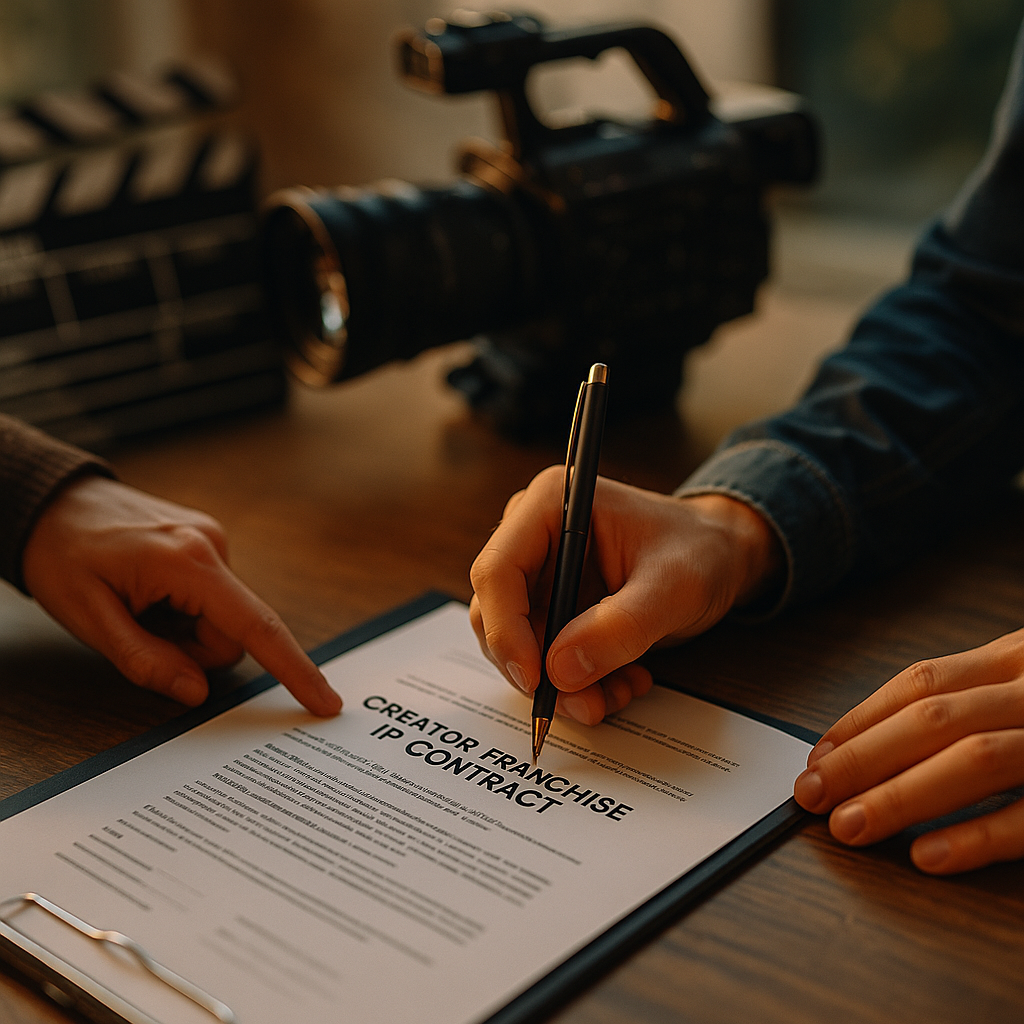
One breakout TikTok series can outlive the campaign that spawned it, the creator who built it, and the brand that paid for it. So who owns it when it does? Creator franchise IP contracts exist because “the brand and the creator split it” is not an answer, it is a lawsuit waiting for a renewal date.
Multi platform series are the new golden goose of influencer marketing. A branded sketch format that works on TikTok, gets a longer cut on YouTube, and spins into a Reels spinoff isn’t a one off deliverable anymore. It’s a franchise. And franchises need the same ownership clarity that a studio demands before greenlighting a sequel.
Why “Just a Content Series” Became a Legal Headache
Five years ago, a branded content deal meant three posts and a usage window. Today, a single successful concept, think a recurring character, a catchphrase, a visual gag, can generate its own fan base, merchandise interest, and licensing inquiries completely separate from the original sponsorship. The creator built the format. The brand paid for its birth. Neither side wrote down who owns the toy line that follows.
This is the gap most standard influencer agreements were never built to close. They cover a post. They don’t cover a property.
A franchise format that generates spinoff revenue without an ownership clause isn’t a marketing win, it’s an unresolved asset dispute with a release date already attached.
Consider the mechanics of how these franchises actually spread. A creator develops a recurring bit for a brand’s TikTok account. It performs well, so the brand asks for a YouTube Shorts version, then a long form YouTube explainer, then a CTV pre roll cut for streaming inventory. Each platform has different rights requirements, and each repurposing decision multiplies the ambiguity around who controls the underlying concept. That’s precisely the terrain covered in our breakdown of cross platform rights gaps, and franchise IP contracts need to go even further because they’re not just licensing a clip, they’re licensing a concept that keeps generating new clips.
What Exactly Is Being Owned Here?
Franchise IP in creator deals typically breaks into four buckets, and smart contracts name each one separately instead of lumping them into a vague “content” definition:
- The format itself. The recurring structure, the segment name, the recognizable bit (a “would you rather” challenge series, a recurring “boss roasts my work” sketch).
- The character or persona. If the creator plays a character distinct from themselves, who owns that character’s name, voice, and visual identity?
- The underlying footage and edits. Raw and finished assets, which is the layer most existing contracts already attempt to cover.
- Derivative and spinoff rights. Merchandise, licensing to third parties, adaptation into other formats (a game, a podcast, a CTV series).
Miss any one of these buckets, and you’ve got a brand that paid for item three while the creator quietly retains one, two, and four. That’s not a hypothetical. It’s the default outcome of silence in a contract.
Where Brand Rights Actually Get Lost
Most disputes trace back to three recurring blind spots.
Platform expansion without renegotiation. A deal scoped for TikTok and Instagram gets stretched to YouTube, then to a brand’s owned CTV inventory, without anyone updating the rights language. The original agreement didn’t anticipate the format traveling that far, so nobody actually granted those rights, they just assumed them.
Creator driven spinoffs. The creator, flush with the format’s success, launches a personal channel version, licenses the concept to a competing brand, or sells merchandise built on a character the brand paid to develop. Without an explicit non compete or exclusivity clause tied to the format (not just the creator), the brand has no recourse.
Agency intermediary confusion. When a talent agency or management company brokers the deal, IP terms sometimes get buried in boilerplate that neither the brand’s legal team nor the creator fully reads before signing. This is the same structural weakness explored in our piece on agency liability exposure, and it applies just as directly to ownership terms as it does to disclosure compliance.
There’s also a quieter risk: bundled deals. When a brand negotiates a multi platform package through one agency relationship, the deliverables often get grouped under a single fee without platform specific IP carve outs. We’ve covered how that structure creates disclosure blind spots in multi platform disclosure gaps, and the same bundling habit creates ownership blind spots too. If the invoice doesn’t separate platforms, the contract probably doesn’t either.
Building a Franchise IP Clause That Actually Holds Up
Here’s what belongs in a contract before a format launches, not after it goes viral.
- Define the franchise explicitly. Name the format, the character, the recurring elements, in the contract body, not just “content to be created.”
- Assign ownership by layer. State who owns the format concept, who owns the specific footage, and who owns derivative rights, as three separate lines, not one bundled grant.
- Set a platform expansion trigger. Require a contract amendment (not a verbal okay) any time the format moves to a new platform or format type, including CTV, podcasts, or owned apps.
- Negotiate a buyout or royalty structure for spinoffs. If the creator wants to take the format independent after the brand relationship ends, define the terms now: a flat buyout, a royalty percentage, or a cooling off period before they can relaunch it elsewhere.
- Include a sunset and renewal clause. Franchise rights without an expiration date become permanent liabilities. Set a term, with renewal options tied to performance.
If your contract doesn’t name the format, the character, and the platforms in writing, you don’t own a franchise. You own an invoice.
Brands that get this right tend to borrow structure from traditional licensing deals rather than standard influencer agreements. Think less “sponsored post terms” and more “option agreement with renewal windows,” the kind of language studios use when optioning a comic book character for a film franchise. It’s more paperwork up front. It’s dramatically less paperwork (and legal spend) when the format blows up and everyone wants a piece.
Classification Risk Hides Inside Franchise Deals Too
Here’s a wrinkle marketers often miss: the more control a brand exerts over a franchise format, dictating scripts, mandating shoot schedules, requiring specific platform cadences, the closer that relationship edges toward employment classification territory. This is the same tension outlined in our coverage of creator misclassification risk, and franchise deals amplify it because ongoing, recurring production work looks a lot more like employment than a one off sponsored post does. Legal teams structuring franchise IP contracts should loop in the same compliance review used for extended retainer deals, not just the standard influencer agreement template.
Insurance and Audit Trails Matter More Than You’d Think
Franchise formats that run for multiple seasons or years accumulate risk the same way any media property does: cast changes, platform policy shifts, and third party claims (someone alleging the format copied their concept) all become live possibilities. Brands running long term franchise formats should treat them with the same risk posture as any owned media property, which means media liability coverage matters. Our guide to creator marketing insurance walks through what that coverage should include, and franchise specific riders are increasingly available from carriers who’ve caught up to the creator economy’s scale.
Audit trails matter just as much. If a franchise format runs for two years across four platforms with three different creators cycling through a recurring character, the brand needs a documented record of every rights transfer, every amendment, every platform expansion. Without it, defending ownership in a dispute becomes a matter of memory and goodwill rather than paper. The same discipline applies here that we’ve detailed in coverage of creator audit trail gaps, documentation isn’t bureaucracy, it’s the thing that actually wins the dispute.
Industry data backs up why this matters at scale. Influencer marketing spend continues climbing year over year according to tracking from eMarketer, and as budgets grow, so does the number of multi season, multi platform formats brands are commissioning rather than one off posts. More recurring formats means more franchise disputes waiting to happen if contracts don’t evolve alongside the spend.
What This Looks Like in Practice
Picture a beauty brand that commissions a recurring “get ready with me, but make it chaotic” series with a mid tier creator. Season one on TikTok performs well. The brand wants a YouTube long form cut, a CTV ad compilation, and eventually a licensed merch line featuring the creator’s recurring catchphrase. None of that was in the original three post sponsorship agreement.
Done wrong: the brand assumes it owns everything because it paid for season one, the creator assumes they own the character because they performed it, and both sides end up in a standoff when a third party offers to license the format for an unrelated product category.
Done right: the original contract named the franchise, assigned format ownership to the brand with a royalty to the creator for continued performance, required amendment for new platforms, and set a three year sunset with renewal options. When the merch opportunity came up, there was already a number attached. No standoff, just a signature.
Brands operating internationally should also check how franchise IP terms interact with local content and advertising law, since ownership definitions that work under U.S. contract norms don’t always translate cleanly elsewhere. The compliance patchwork covered in our piece on international creator compliance is a useful starting reference for any brand scaling a franchise format beyond its home market.
FAQs
Frequently Asked Questions
What is a creator franchise IP contract?
It’s a licensing style agreement that defines who owns a recurring content format, including its characters, structure, and derivative rights, when a creator builds a multi platform series for a brand. It goes beyond standard sponsorship terms by addressing ownership of the concept itself, not just individual posts.
Who typically owns a branded content series if there’s no contract clause addressing it?
Ownership defaults vary by jurisdiction and the specifics of the working relationship, but without an explicit assignment clause, creators often retain more rights than brands expect, especially over format, persona, and any footage they personally shot and edited. This ambiguity is exactly why explicit contract language matters.
Does a franchise IP clause need to be renegotiated every time a format moves to a new platform?
Ideally, yes, or at minimum the original contract should include a platform expansion trigger requiring written amendment. Platforms like CTV, podcasts, or owned apps carry different rights and liability considerations than the original social platforms, so assuming expanded usage without updating terms is a common source of disputes.
How does franchise IP ownership affect creator misclassification risk?
The more creative and production control a brand exercises over a recurring format, scripting, scheduling, mandating cadence, the closer the relationship can edge toward employment classification under labor law standards. Brands running long term franchise formats should review classification risk alongside IP terms.
Should franchise content deals include insurance coverage?
Yes, particularly for formats expected to run multiple seasons or across several platforms. Media liability coverage can protect against third party IP claims, reputational disputes, or platform policy conflicts that standard campaign insurance may not address.
What happens if a creator wants to take a branded format independent after the relationship ends?
That scenario should be addressed in the original contract through a buyout clause, royalty structure, or cooling off period. Without pre negotiated terms, this typically becomes a contentious and expensive negotiation after the fact rather than a straightforward, pre agreed transition.
If your brand has a format worth repeating, get the franchise IP terms in writing before season two gets greenlit, not after a creator’s agent calls asking what the merch split looks like.
Top Influencer Marketing Agencies
The leading agencies shaping influencer marketing in 2026
Agencies ranked by campaign performance, client diversity, platform expertise, proven ROI, industry recognition, and client satisfaction. Assessed through verified case studies, reviews, and industry consultations.
Moburst

-
2

The Shelf
Boutique Beauty & Lifestyle Influencer AgencyA data-driven boutique agency specializing exclusively in beauty, wellness, and lifestyle influencer campaigns on Instagram and TikTok. Best for brands already focused on the beauty/personal care space that need curated, aesthetic-driven content.Clients: Pepsi, The Honest Company, Hims, Elf Cosmetics, Pure LeafVisit The Shelf → -
3

Audiencly
Niche Gaming & Esports Influencer AgencyA specialized agency focused exclusively on gaming and esports creators on YouTube, Twitch, and TikTok. Ideal if your campaign is 100% gaming-focused — from game launches to hardware and esports events.Clients: Epic Games, NordVPN, Ubisoft, Wargaming, Tencent GamesVisit Audiencly → -
4

Viral Nation
Global Influencer Marketing & Talent AgencyA dual talent management and marketing agency with proprietary brand safety tools and a global creator network spanning nano-influencers to celebrities across all major platforms.Clients: Meta, Activision Blizzard, Energizer, Aston Martin, WalmartVisit Viral Nation → -
5

The Influencer Marketing Factory
TikTok, Instagram & YouTube CampaignsA full-service agency with strong TikTok expertise, offering end-to-end campaign management from influencer discovery through performance reporting with a focus on platform-native content.Clients: Google, Snapchat, Universal Music, Bumble, YelpVisit TIMF → -
6

NeoReach
Enterprise Analytics & Influencer CampaignsAn enterprise-focused agency combining managed campaigns with a powerful self-service data platform for influencer search, audience analytics, and attribution modeling.Clients: Amazon, Airbnb, Netflix, Honda, The New York TimesVisit NeoReach → -
7

Ubiquitous
Creator-First Marketing PlatformA tech-driven platform combining self-service tools with managed campaign options, emphasizing speed and scalability for brands managing multiple influencer relationships.Clients: Lyft, Disney, Target, American Eagle, NetflixVisit Ubiquitous → -
8

Obviously
Scalable Enterprise Influencer CampaignsA tech-enabled agency built for high-volume campaigns, coordinating hundreds of creators simultaneously with end-to-end logistics, content rights management, and product seeding.Clients: Google, Ulta Beauty, Converse, AmazonVisit Obviously →