


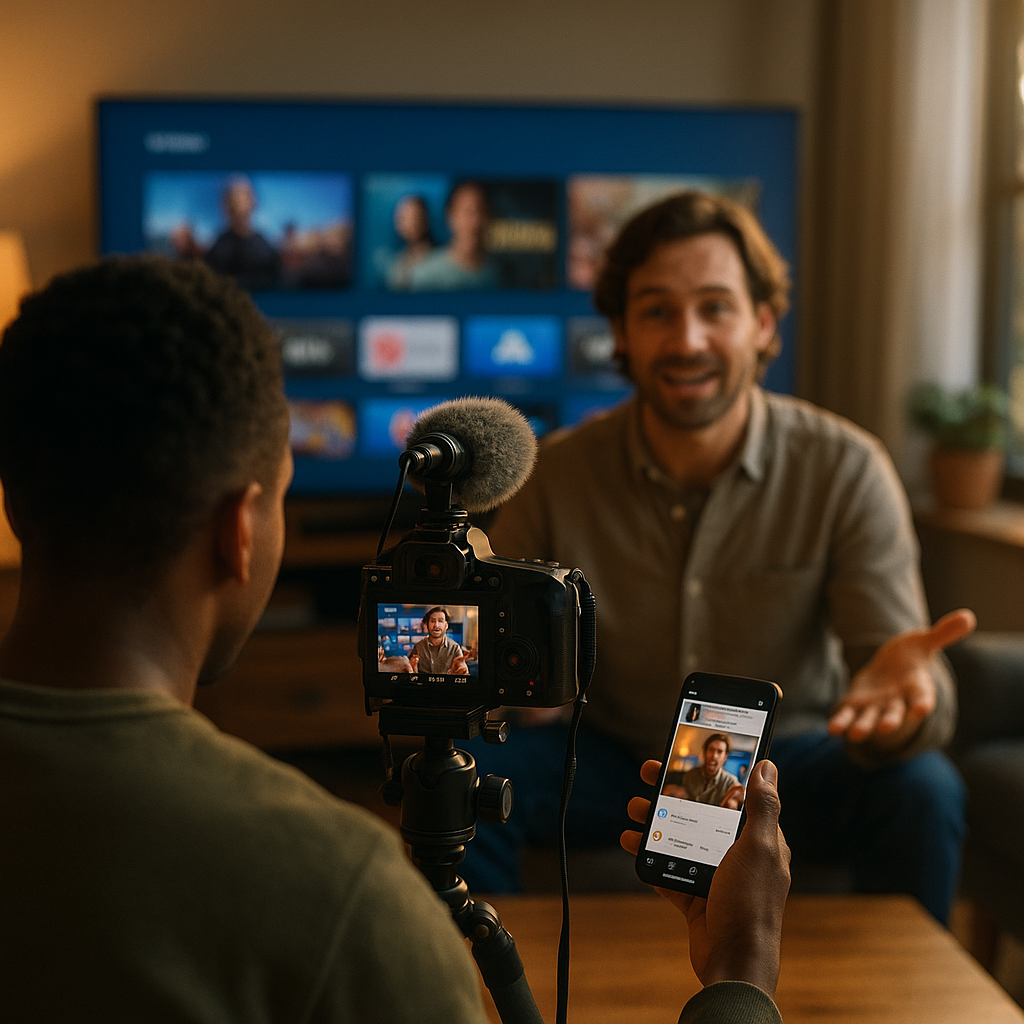
A 30-second creator ad can air on Hulu, get clipped to TikTok, and resurface in a YouTube pre-roll, each with a different disclosure standard and a different regulator watching. As streaming platforms pour budget into creator-led content, the line between broadcast advertising and social endorsement has effectively dissolved. The problem is that the rules governing each format haven’t caught up to each other, leaving brands exposed every time content crosses from CTV into social feeds.
Why CTV Changes the Disclosure Math
Connected TV used to be simple. A 30 or 60 second spot ran, a standards and practices team cleared it, and the FTC’s traditional advertising rules applied cleanly. Creator content breaks that model. Now you’ve got influencers producing branded segments for Roku Channel, Samsung TV Plus, and Amazon Freevee that look and feel like editorial content, not ads. That ambiguity is exactly what the FTC has flagged in enforcement actions for years: if a reasonable viewer can’t tell it’s sponsored, the disclosure has failed.
Streaming adds a wrinkle broadcast never had. The same creator segment often gets repurposed across three or four destinations: the CTV platform itself, the creator’s YouTube channel, a TikTok cutdown, and sometimes a brand’s owned app. Each platform has its own disclosure mechanics (or none at all), and the FTC’s endorsement guides apply regardless of where the content lands. A disclosure that was clear on the original streaming placement can vanish entirely once an editor trims it for a 15 second vertical clip.
A disclosure that satisfies broadcast standards clearance does not automatically satisfy FTC requirements once that same clip is reposted to a social platform. Each distribution point needs its own compliance check.
Where the Rules Actually Diverge
Broadcast and CTV advertising has historically relied on network standards and practices review, sponsorship identification requirements under FCC rules, and relatively generous timing (a disclosure at the start of a segment often suffices). Social platforms operate under a completely different logic: the FTC expects disclosures to be “clear and conspicuous” at the point of exposure, meaning a viewer scrolling past a TikTok shouldn’t have to click or wait to understand it’s an ad.
Here’s where brands get tripped up:
- Timing mismatch. A CTV pre-roll disclosure that appears for two seconds at the start may pass network review but fails FTC “clear and conspicuous” standards if the same cut appears as a social short with no equivalent callout.
- Platform-native tools don’t travel. TikTok’s paid partnership label or YouTube’s “includes paid promotion” tag doesn’t carry over when content is re-uploaded natively to a different platform or downloaded and re-posted by a fan account.
- Format compression kills context. A 90 second CTV segment with a verbal disclosure at the 0:05 mark often gets trimmed to a 20 second clip that cuts that exact moment out.
- Jurisdiction stacking. FCC sponsorship ID rules, FTC endorsement guides, and state level advertising statutes can all apply simultaneously to the same piece of content depending on where it airs.
This is the same multi-surface problem we’ve covered in multi-platform disclosure bundling, except CTV raises the stakes because the production budgets are bigger and the audiences skew toward connected, less ad-literate viewing contexts.
The Contract Gap Nobody Closes Early Enough
Most influencer agreements were written for social-first deliverables: a post, a story, maybe a reel. They weren’t built to anticipate that the same asset would later run as a 15-second CTV spot on a streaming service with national reach. That mismatch creates real legal exposure.
Brands need contract language that specifies disclosure requirements per distribution channel, not just per deliverable. If a creator’s content is going to live on CTV, the agreement should spell out who owns the disclosure placement, whether it’s a verbal mention, a lower-third graphic, or both, and who is responsible for re-adding disclosures when the content gets repurposed downstream. We’ve seen this exact gap play out in CTV creator contract disputes, where rights ownership and disclosure obligations weren’t clearly separated, leaving brands holding liability for a cut they didn’t even approve.
Agencies aren’t off the hook either. If an agency brokers a CTV deal and the disclosure fails once the content migrates to social, the brand can still be on the hook even if the agency handled production. That liability allocation question is covered in depth in agency liability for creator disclosures, and it applies just as forcefully to streaming deals as it does to standard social campaigns.
What “Clear and Conspicuous” Actually Means on a Streaming Screen
The FTC doesn’t publish a CTV-specific disclosure standard, which is part of the problem. Brands are left interpreting general endorsement guidance for a format it wasn’t written for. Here’s a practical read based on enforcement patterns:
- A disclosure should appear in both audio and visual form when possible. Viewers on CTV are often doing something else (cooking, scrolling a second screen), so audio-only or text-only disclosures risk being missed.
- The disclosure needs to persist long enough to be read or heard, not flash for half a second during a transition.
- If the creator appears on camera, a verbal disclosure (“this is a paid partnership with [brand]”) carries more weight than a static on-screen graphic buried in a corner.
- Disclosures should repeat if the segment is long enough that a viewer could join midway, which is common with ad-supported streaming where content loops or interrupts programming.
Compare that to how disclosures function inside the FTC’s endorsement guidance, which emphasizes placement at the point of claim rather than buried in a video description. CTV’s passive viewing context makes that standard harder to meet, not easier, which is exactly why brands can’t just port a social-approved disclosure strategy over to streaming and assume it holds up.
The Audit Trail You’ll Need When Content Gets Clipped
Once a CTV segment exists, you lose control over how it travels. Fans re-upload it. Aggregator accounts clip the best moments. The creator’s own team repurposes it for a dozen platforms without running each version past legal again. None of that stops regulators from holding the original brand accountable.
The fix isn’t glamorous but it works: build a documented chain of custody for every piece of CTV creator content. Who approved the original disclosure placement? What version was published where? Was a compliance check run on every repurposed cut? This mirrors the record-keeping obligations already showing up in regional law, like the approach detailed in audit readiness requirements for influencer records, where regulators expect documented proof of disclosure compliance, not just a good faith claim that it existed.
That audit trail becomes your defense if a regulator or a competitor flags a clip that’s missing its disclosure. Without it, you’re relying on memory and goodwill, neither of which holds up well in an FTC inquiry.
Measurement and Currency Problems Compound the Risk
There’s a secondary issue that doesn’t get enough attention: CTV creator deals are increasingly priced and reported using blended metrics that combine streaming impressions with social engagement. When those numbers get folded into a single reporting currency, disclosure compliance can get lost in the shuffle because nobody is auditing content format by format, they’re auditing performance.
This connects directly to the standardization push happening around measurement. The IAB currency framework for creator contracts is starting to force clearer separation between what’s measured, what’s disclosed, and what’s enforceable, which is a good sign for brands trying to get ahead of this before a regulator forces the issue.
Worth noting too: creator payment structures that blend CPM across platforms, as discussed in blended CPM contract structures, often obscure which specific placement needs which disclosure, because the creator is being paid for an aggregate outcome rather than a single compliant asset. Untangling that at the contract stage saves a massive headache later.
A Practical Checklist for CTV Creator Deals
- Specify disclosure format (verbal, visual, or both) per distribution channel in the contract, not as a general clause.
- Require creators and editors to preserve disclosure segments when repurposing CTV content for social cutdowns.
- Assign a named compliance reviewer for every repurposed version, not just the original master file.
- Document approval timestamps and platform-specific versions for your audit trail.
- Build a takedown or correction clause for clips that lose their disclosure after re-editing by third parties.
- Review your insurance coverage. CTV creator content carries broadcast-level reach with social-level compliance ambiguity, a combination worth confirming against your creator marketing insurance coverage.
None of this is radically different from good influencer governance generally. It’s just applied to a format where the stakes (national reach, blended metrics, unpredictable repurposing) are higher than a standard Instagram post.
Brands that treat CTV creator content as “just another deliverable” in their existing influencer contracts are the ones most likely to discover a disclosure gap after a clip has already gone viral on the wrong platform.
Industry data backs up the urgency here. Streaming ad spend continues to climb according to eMarketer’s connected TV forecasts, and as more of that spend flows toward creator-led formats rather than traditional 30 second spots, disclosure consistency across broadcast and social isn’t optional anymore, it’s a basic cost of doing business in the category.
Next step: pull your current CTV creator contracts and check whether disclosure obligations are tied to the platform of original publication only. If they are, you have a gap the moment that content gets clipped, reposted, or repurposed, and that gap is exactly where regulators and plaintiffs’ attorneys look first.
Frequently Asked Questions
Does the FTC treat CTV creator ads differently than social media ads?
No. The FTC’s endorsement guides apply regardless of distribution channel. What changes is the practical disclosure method, since CTV often requires both verbal and visual cues given the passive viewing environment, while social platforms rely more on text labels and native disclosure tools.
Who is liable if a creator’s CTV content gets re-uploaded without a disclosure?
Liability typically falls on the brand and potentially the agency that commissioned the content, especially if the contract didn’t require disclosure preservation across repurposed versions. Documented approval processes and takedown clauses help limit this exposure.
Can a single disclosure cover both the CTV spot and its social cutdowns?
Only if the disclosure physically appears in every version. A disclosure placed at the start of a long CTV segment doesn’t carry over automatically once an editor trims the footage for a shorter social clip, so each version needs its own compliant disclosure.
What’s the biggest compliance mistake brands make with streaming creator deals?
Treating CTV content like a standard social deliverable in contracts, without specifying disclosure requirements by platform or building in oversight for repurposed cuts. That gap is what typically surfaces during regulatory review or litigation.
Do FCC sponsorship identification rules apply to creator content on streaming platforms?
It depends on the platform and distribution method. Broadcast-style sponsorship ID rules can apply when content airs through traditional network-affiliated channels, while FTC endorsement guides apply more broadly across digital and social distribution, meaning brands often need to satisfy both standards simultaneously.
Top Influencer Marketing Agencies
The leading agencies shaping influencer marketing in 2026
Agencies ranked by campaign performance, client diversity, platform expertise, proven ROI, industry recognition, and client satisfaction. Assessed through verified case studies, reviews, and industry consultations.
Moburst

-
2

The Shelf
Boutique Beauty & Lifestyle Influencer AgencyA data-driven boutique agency specializing exclusively in beauty, wellness, and lifestyle influencer campaigns on Instagram and TikTok. Best for brands already focused on the beauty/personal care space that need curated, aesthetic-driven content.Clients: Pepsi, The Honest Company, Hims, Elf Cosmetics, Pure LeafVisit The Shelf → -
3

Audiencly
Niche Gaming & Esports Influencer AgencyA specialized agency focused exclusively on gaming and esports creators on YouTube, Twitch, and TikTok. Ideal if your campaign is 100% gaming-focused — from game launches to hardware and esports events.Clients: Epic Games, NordVPN, Ubisoft, Wargaming, Tencent GamesVisit Audiencly → -
4

Viral Nation
Global Influencer Marketing & Talent AgencyA dual talent management and marketing agency with proprietary brand safety tools and a global creator network spanning nano-influencers to celebrities across all major platforms.Clients: Meta, Activision Blizzard, Energizer, Aston Martin, WalmartVisit Viral Nation → -
5

The Influencer Marketing Factory
TikTok, Instagram & YouTube CampaignsA full-service agency with strong TikTok expertise, offering end-to-end campaign management from influencer discovery through performance reporting with a focus on platform-native content.Clients: Google, Snapchat, Universal Music, Bumble, YelpVisit TIMF → -
6

NeoReach
Enterprise Analytics & Influencer CampaignsAn enterprise-focused agency combining managed campaigns with a powerful self-service data platform for influencer search, audience analytics, and attribution modeling.Clients: Amazon, Airbnb, Netflix, Honda, The New York TimesVisit NeoReach → -
7

Ubiquitous
Creator-First Marketing PlatformA tech-driven platform combining self-service tools with managed campaign options, emphasizing speed and scalability for brands managing multiple influencer relationships.Clients: Lyft, Disney, Target, American Eagle, NetflixVisit Ubiquitous → -
8

Obviously
Scalable Enterprise Influencer CampaignsA tech-enabled agency built for high-volume campaigns, coordinating hundreds of creators simultaneously with end-to-end logistics, content rights management, and product seeding.Clients: Google, Ulta Beauty, Converse, AmazonVisit Obviously →